

The Irish Language
Grants Taken from One Group and Given to Another
The Ultacht Trust, a British government-backed Irish language group will receive £750,000 in grants £500,000 of which comes from the European Commission.The rest will be generated by the Northern Ireland Office.
The grant is almost ten times that which was cut from the Glor na nGael, the West Belfast organization responsible for seven Irish-language nurseries and adult education groups. Glor na nGael were informed last August by the Northern secretary Mr. Peter Brooke that their annual grant of £90,000 was being cut. The group was deemed to be “improving the standing and furthering the aims of paramilitary groups.”
The Minister of State responsible for community relations, Dr. Brian Mawhinney, refused to comment on Glor na nGael but said it was generally accepted that one of the problems faced by the Irish language in the North was that it had become politicized.
“It has been torn out of the cultural context and has become a political weapon,” he said.
The cutting of the funding to Glor na nGael was deemed by Gerry Adams, MP for West Belfast, as just another example of “community punishment.”
Adams described the move not only as anti-lrish but also anti-West Belfast. He continued on to say, however, that “West Belfast is a fairly independent community and the very fact that the nursery schools have managed to remain open shows just the kind of community spirit that exists here.”
Joe Doherty Case to Supreme Court
The case of Joe Doherty will be brought before the U.S. Supreme Court sometime this fall. To his supporters, it’s unknown whether to treat this as good news or bad.
Because Doherty has won all of the court cases brought against him while he has been jailed in New York for the past eight years, it might seem comforting to know that the highest court in the land is planning on settling the matter once and for all.
But on the other hand, it is a fact that despite all the legal victories that Doherty has had, the government has only to win this one time for Doherty to be extradited back to Northern Ireland.
Doherty, who is the former IRA member who has been trying to get political asylum here in the U.S., had the bad news a few weeks ago that he was being moved from the secluded cell block where he was in the Manhattan Correctional Center to an overcrowded, noisy part of the prison’s general population. Since then, New York City Mayor David Dinkins has visited Doherty in jail and, pointing out that the prisoner “has never been charged with a crime in this country,” he called on the Supreme Court to free him.
Horrors of the Irish Famine Remembered
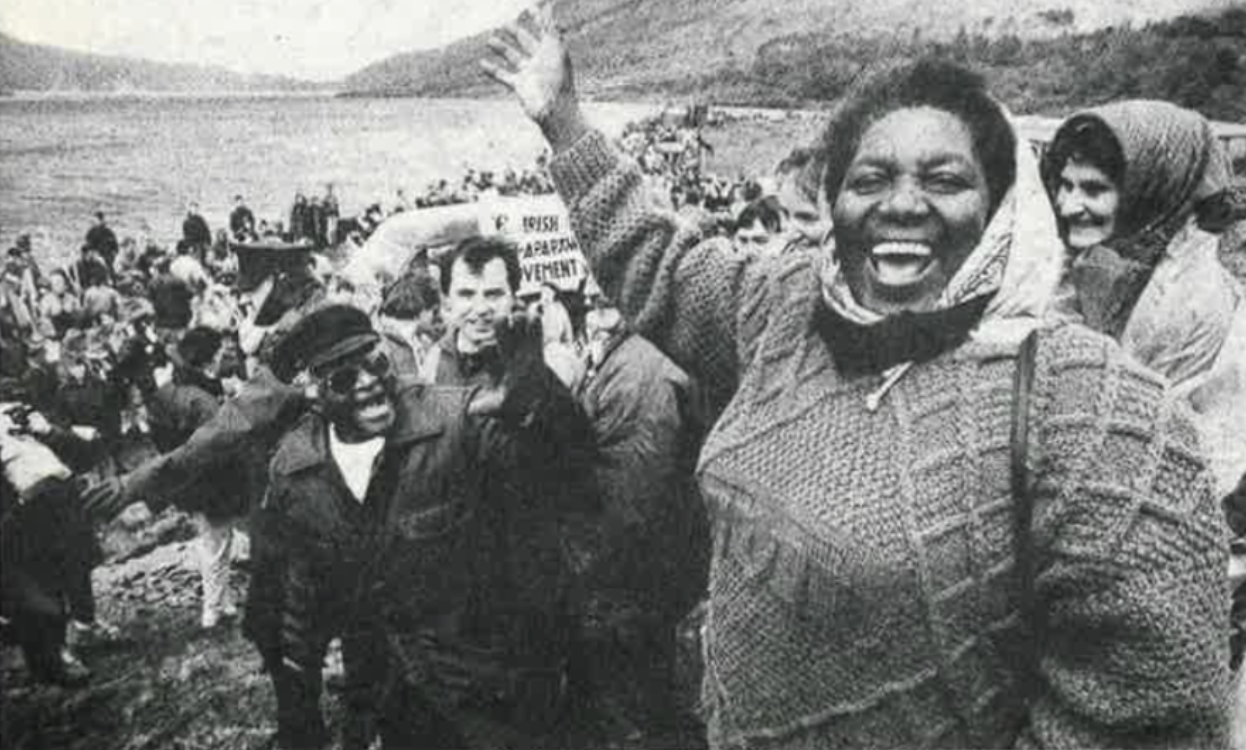
Archbishop Desmond Tutu was one of more than 1,600 people to take part in a recent march in County Mayo, commemorating the Irish Famine.
The marchers retraced the steps of the some 400 men, women and children who perished on a bitter winter’s night in March, 1849. The starving group, having walked from the Doolough valley in west Mayo to the town of Louisburgh, ten miles away, in search of food, were kept waiting by the Board of Guardians in charge of famine relief. Told that there was no food, the emaciated people struggled back towards Louisburgh through a snow storm that few survived.
Irish American Fenians Remembered
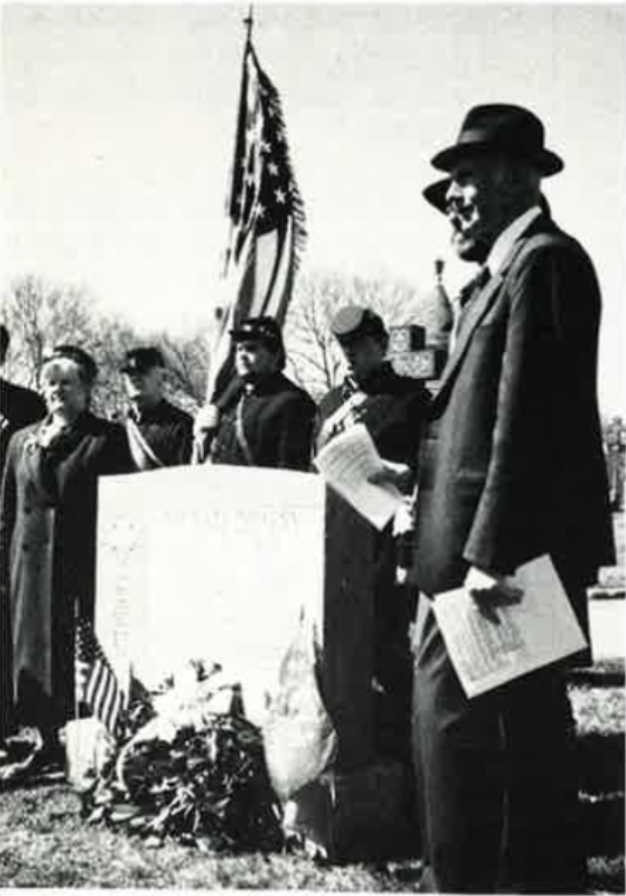
During the five years of the American Civil War, there were more Irishmen at arms than ever in history. They fought against the South, they fought against the North, and in the streets of the North’s urban centers, they also fought against the draft.
To the recently-formed Irish Brigade Association, this is a history which should not be forgotten.
The Association celebrates that history, and in particular the history of the Irish Brigade, a large band of Irish fighting regiments including New York’s famous “Fighting 69th.”
Commemoration ceremonies were held recently at Calvary Cemetery in Woodside, Queens, where 11 of the men from the Irish Brigade are buried. Five of these, including the Congressional Medal of Honor winner, James Rowan O’Beirne, are in unmarked graves.
One of the aims of the Association is to make sure that these men are not forgotten, and efforts are being made to raise money to give them a proper burial site. Another event for the Association, which is made up of dozens of Civil War and Irish history buffs, is the re-enactment of the 1866 Fenian invasion of Canada, on the weekend of June 14-16, along the Canadian border near Ridgeway, Ontario. The battle was fought by 800Irishmen at a time when Canada was still very much a part of Great Britain, and it was hoped that it would aid the cause of freeing Ireland from British rule.
Hundreds are expected to take part in the commemorations of the famous battle, which is largely credited with fortifying the Fenian movement in the States. For information, contact the Brigade at 516-385-2144.
Haughey and Major to Meet
Irish Prime Minister Charles Haughey and John Major, prime minister of Britain have agreed to a meeting sometime in the next two months.
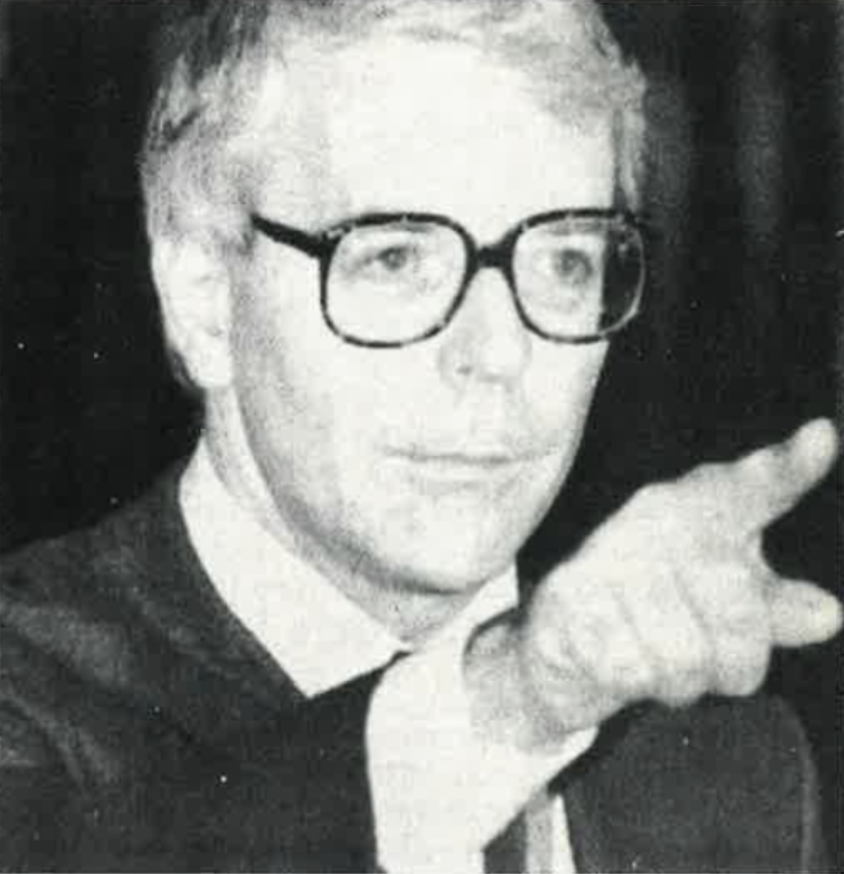
The two met briefly on April 8, after a European Community summit in Luxembourg.
It was the first time the two leaders had met since Major took over from Margaret Thatcher.
Talks on the future of Northern Ireland, between the Unionists, the British government and the Social Democratic and Labor Party, with the Northern Ireland parties meeting separately with Northern Ireland Secretary, Peter Brooke are scheduled to take place in May.
The upcoming meeting between Major and Haughey is being seen as a possible launching pad for these talks.
One of the main topics up for discussion between all parties involved, will be the Anglo-Irish Agreement.
The Unionist parties are opposed to the Agreement, as it gives the Irish government a consultative role in Northern Ireland affairs.
The SDLP, the main Nationalist party in the North, on the other hand, supports the Anglo-Irish Agreement and is strongly committed to the involvement of the Irish government in Northern Ireland’s affairs.
Sinn Féin, which commands more than a third of the Nationalist vote, have not been invited to participate in the talks.
Editor’s Note: This article was originally published in the May 1991 issue of Irish America. ♦
Leave a Reply