
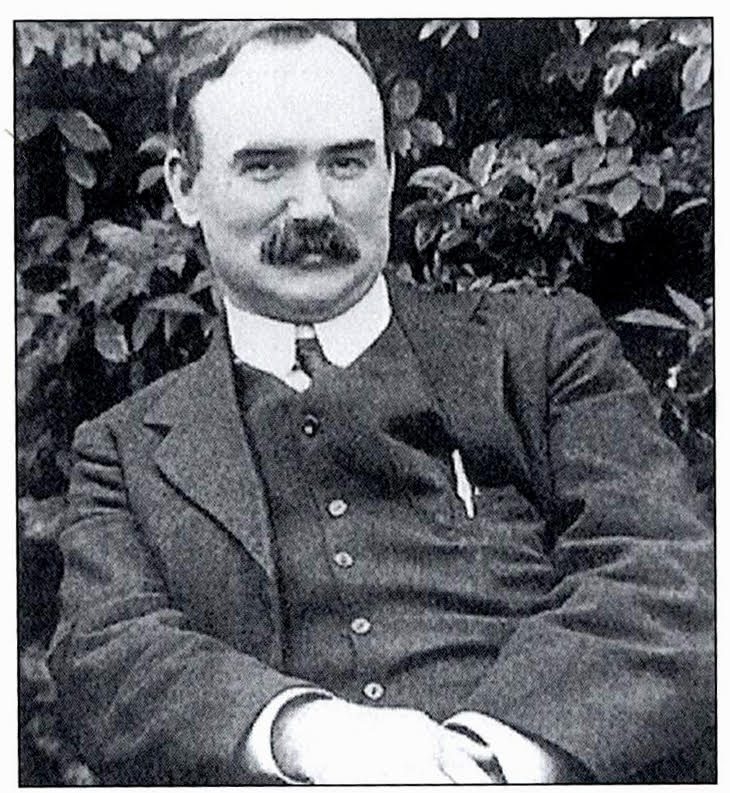
As the anniversary of the Easter 1916 Rising is celebrated in Ireland, David Smith uncovers plans for a movie on the life of James Connolly.
Modern Ireland was born in rebellion on Dublin’s O’Connell Street during Easter Week 1916. As a gunboat bombarded the city centre, and British troops attacked the rebels’ headquarters in the General Post Office, James Connolly, one of the leaders of the Rising, lay wounded and in pain on the floor of the building. Instead of taking morphine and risking damage to the morale of his comrades, Connolly borrowed a detective novel from a fellow rebel who had taken it along in the event that fighting for Ireland’s freedom proved to be a bit of a bore. Connolly lay propped against a pillar reading and smoking a cigarette. “This really is revolution deluxe,” he observed.
When the rebels surrendered, Connolly was carried into captivity on a stretcher. A few days later, still suffering from his wounds, he was propped up in a chair and shot by a British firing squad. The other leaders of the Rising suffered a similar fate. This vengeful action turned the rebels into martyrs and gave birth to a deadlier and more successful assault that in a few years drove the British out of the 26 counties and lay the basis for the modern Irish state.
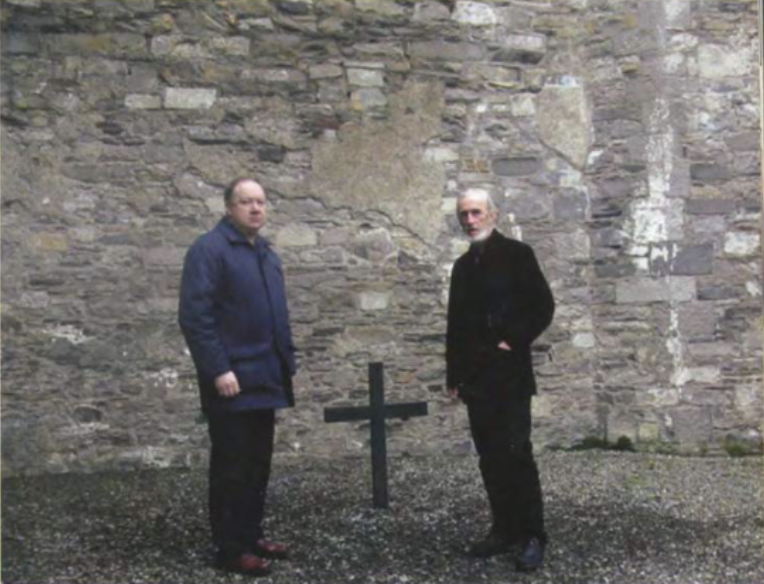
In 1966, the Republic of Ireland celebrated the 50th anniversary of the Rising, but just a few years later the Rising and the War of Independence became the unacceptable face of nationalism as old dogmas were revised to bolster a state which felt threatened by the Troubles in Northern Ireland. It was at the height of this revisionist period that Frank Allen and Tom Stokes met at the University College Dublin/New York University screenwriting summer school in Dublin. They discovered a shared interest in James Connolly and a suspicion of how the new perspective was obscuring the true lives of Ireland’s founding fathers.
From this initial meeting the idea of writing a screenplay based on the life of James Connolly arose. Frank Allen, a teacher in the Irish prison service, had already written a number of plays dramatizing the daily lives and interests of ordinary Dubliners, including O When the Hoops about the departure of the fabled Dublin soccer team Shamrock Rovers from their home at Glenmalure.
Tom Stokes went back to college in his forties as a communications studies student and later became a media teacher.
“We used to share out parts of the narrative,” says Frank. “I would bring along some of my scenes and Tom would bring some of his and we would agree on them and edit them. After a while, maybe nine months down the road, it wasn’t discernible who wrote which scene.”
The open, genial face of Frank Allen breaks into a broad grin as he talks about Connolly’s effervescent wit. “He was rarely at a loss for words,” Allen says, recounting Connolly’s spontaneous response when asked what he was going to do after being laid off from a job: “Starve, I suppose.”
In contrast to Allen’s round features, Tom Stokes had the ascetic look one might expect of someone coming from a family with a strong revolutionary and socialist tradition. His grandfather fought alongside Eamon de Valera at Bolands Mills, another rebel holdout, in 1916.
The most difficult thing for the writers was to encapsulate the rich and varied life of Connolly into a 140-page script. Besides being in the forefront of Irish Revolutionary leaders, Connolly was one of the greatest left-wing theorists of his day and a labor leader both in Ireland and in the United States. But his compassion for the daily struggles of workers wasn’t limited by the accident of his birth.
“When Connolly went to organize Italian shirt-collar workers in New York,” Allen explains, “he addressed them in fluent Italian. When he was fin- ished no one there believed that he was- n’t Italian born. It was only when the workers closely questioned his daughter, Nora, and found that she couldn’t speak any Italian that they believed he was an Irishman. If he was going to organize the workers, he knew he’d have to move them in their own tongue.”
It’s not surprising that Connolly has so much appeal across national boundaries. Born in Scotland to Irish immigrant parents, he always had a strong internationalist outlook. As a young man he served in the King’s Liverpool Regiment of the British Army and wrote many articles about Indian nationalism. Much later in Dublin’s local elections in 1903 he canvassed with leaflets in Yiddish to appeal to what was then a large local Jewish population.
Five years after they began their task, Stokes and Allen had a finished script. They sent a copy to the Irish actor and director Adrian Dunbar whom Stokes met at an Arista scriptwriting workshop in London. Dunbar had been eager to see new drafts of the script and last year they asked him to direct.
“I was surprised and delighted,” says Dunbar, who shares the screenwriters’ distaste for the revisionist view of Irish history. “I have my own version of Irish history,” he says. “The more I discover about the leaders of 1916, the more I admire them. You don’t need a mandate to overthrow a tyrant.”
What struck him about Connolly was “how he was so focused with improving the lot of his fellow human beings even to the detriment of himself, his wife and his family?”
Allen believes that Connolly was a man of great compassion. “More of an everyman than a revolutionary elitist… like so many of the workers he inspired, the welfare of his family was “often uppermost in his mind.”
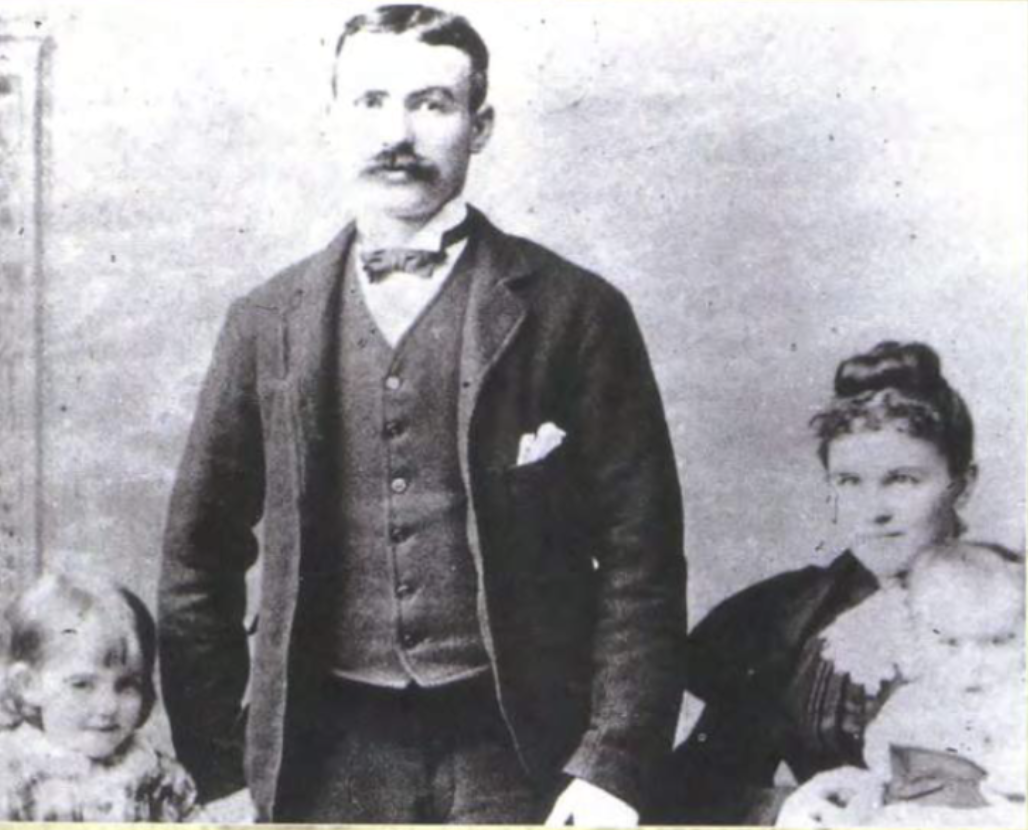
Connolly immigrated to New York in 1903, partly so he could find work to support his family. He arranged for his wife and children to join him later. But on the eve of their departure to America, his twelve-year-old daughter Mona was taken ill. Connolly wasn’t aware that something had happened until he saw the family group passing through Immigration on Ellis Island and strained to find the missing child. It was only then that he learned Mona had been dead for two weeks.
“In his correspondence,” says Allen, “Connolly wrote that the incident darkened his life forever.”
It wasn’t until Connolly returned to Ireland in 1910 that he was able to pay his last respects to his daughter, who had been buried in a paupers’ grave in Dublin’s Glasnevin Cemetery.
Connolly’s experiences in America were mixed. Like many socialists of the time, he believed that the revolution would happen in the United States first, since it was one of the most advanced industrial societies. But, despite the inspiration of being an organizer for the Wobblies (Industrial Workers of the World), his time in America was characterized by his involvement in the internecine struggles of the Socialist Labour Party and his disputes with its leader Daniel De Leon. However, according to Stokes, one firm idea Connolly took away from America was the power that came with having just “one, big union.”
“People forget that the rights we all enjoy are less than a hundred years old. Look what’s happening in France,” says Dunbar. “We may need the unions again before long.”
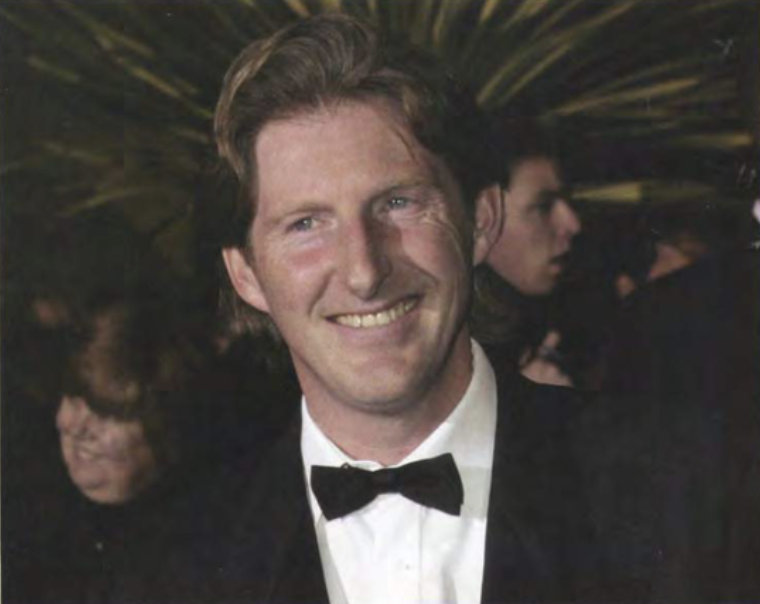
Another early convert to the script was Patrick Bergin, who is set to play the role of James Larkin, Connolly’s colleague in the Irish Labour movement. Bergin’s involvement is particularly apt since his full name is Patrick James Connolly Bergin, and his father was a well-known Irish trade unionist and Labour leader.
Still, the story of a trade unionist and socialist as subject of a large-scale motion picture maybe a hard sell these days. Membership in trade unions is declining, and socialism seems like a political system whose day has well gone. But Stokes believes that there is a large audience out there.
“There’s been terrific interest from the trade union movements in Ireland, Scotland and England. Members of those unions are a ready-made audience,” he says.
Both Stokes and Allen have been active in trying to raise money from the trade union movements in Britain and Ireland to finance the film. The Service, Industrial, Professional, and Technical Union (SIPTU), Ireland’s largest trade union, has promised financial support. Connolly was General Secretary of the antecedent of this union, the Irish Transport and General Workers Union, which merged with the Federated Workers Union of Ireland in 1990 to form SIPTU. But they’ve also been overwhelmed with small donations from trade union members. It’s obvious that Connolly’s legacy still strikes a chord.
This doesn’t surprise Dunbar. He feels that the legacy of Connolly has not been properly examined.
‘The zeitgeist is that it’s a well-worn subject, but there has never been a real good look at it. In schools the Proclamation was stuck halfway up the wall where no one could read it. But there has never been a film on the subject. How would it be if the British never made a film about World War II or Robin Hood? They’ve made 17 films about Robin Hood!”
Dunbar also talks about what a big part America played in Connolly’s life. “His job as an organizer for the Wobblies took him all over the country. He was in Boston, New York, Chicago, Phoenix, People should ask themselves if Connolly was ever in their town, he traveled so much.” Jim Larkin’s success as a trade unionist in Ireland, and a feeling that change was in the air, led Connolly to return from America in 1910.
Connolly came to identify the freedom of Irish workers with the freedom of Ireland. This was the path that led him to join the other rebels in the General Post Office in Easter 1916.
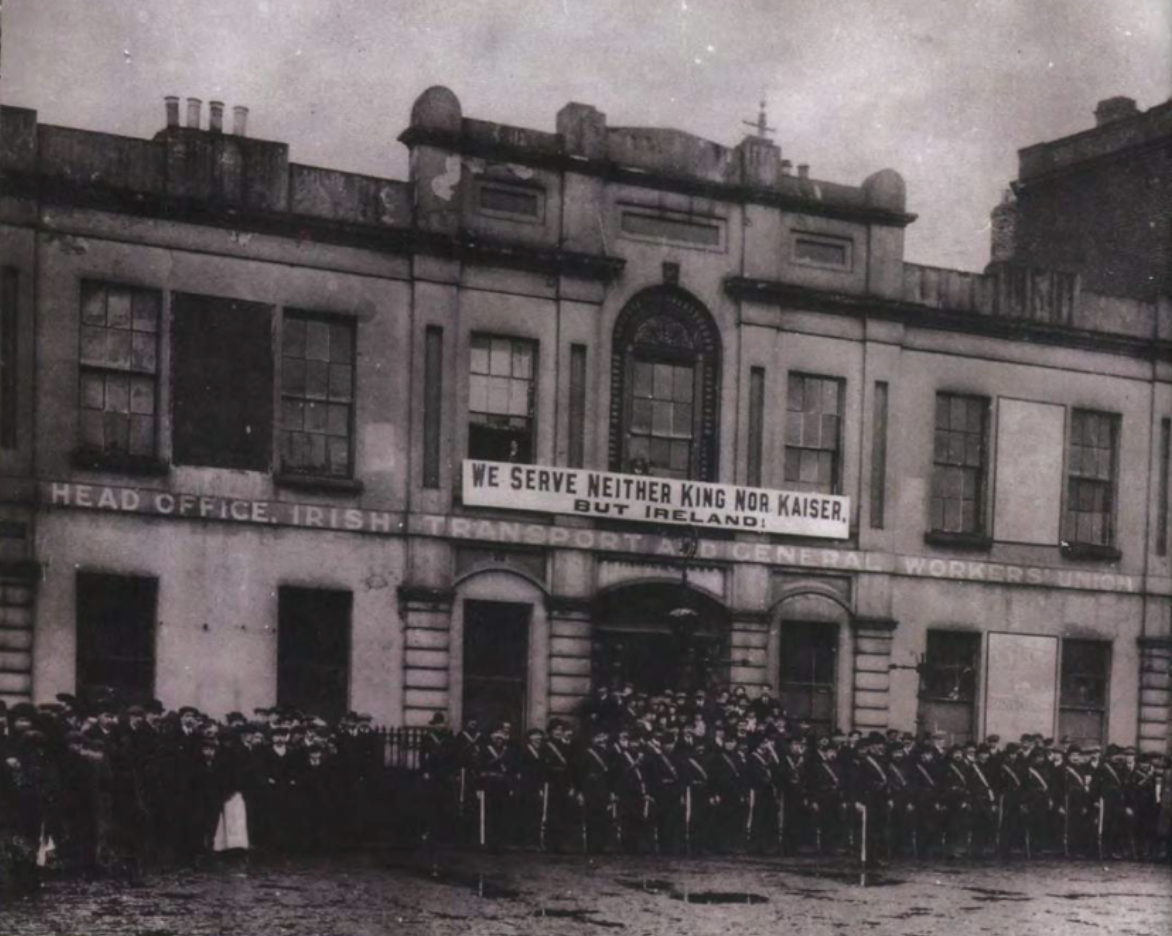
He became the Belfast organizer for Larkin’s Transport and General Workers Union. In 1913 he co-founded the Labour Party, and in 1914 he helped organize opposition to the Employers Federation in the Great Lock-Out of workers that August. In 1913, he founded the Irish Citizen Army to defend the rights of the working people at Liberty Hall, Dublin, the headquarters of the ITGWU. Some followers of Connolly felt that, as a socialist, he should not be at the forefront of a nationalist revolution. Connolly himself recognized the dichotomy of uniting his socialist principles with the destinies of Irish nationalists. “The socialists will wonder why I am here, Lillie,” he said to his wife on the eve of his execution, “but do they forget that I am an Irishman?”
Stokes believes that much of what Connolly epitomized can be found in the text of the Easter Proclamation. “We can only judge the rebels on the basis of the Proclamation, the document they bet their life on. The Proclamation itself is a beautiful document, modeled in part on the American Declaration of Independence. The fourth paragraph is Connolly’s paragraph,” he says. It reads: The Irish Republic is entitled to, and hereby claims, the allegiance of every Irishman and Irishwoman. The Republic guarantees religious and civil liberty, equal rights and equal opportunities to all its citizens, and declares its resolve to pursue the happiness and prosperity of the whole nation and of all its parts, cherishing all the children of the nation equally, and oblivious of the differences carefully fostered by an alien government, which have divided a minority from the majority in the past.
Adrian Dunbar believes that the Proclamation has relevance today. “The Proclamation is a seminal work for any human rights activity today. Connolly was far ahead of his time on women’s rights and on [human] rights in general. If we paid more attention to the Proclamation I’m sure we wouldn’t have problems like waiting lists for hospitals.”
“People forget that the rights we all enjoy are less than a hundred years old.” Dunbar continues, and with a nod to Ireland’s current immigration problems, he also repeats Connolly’s belief that we have to treat “the strangers within our gates” the same as we treat our citizens and fellow Irishmen.
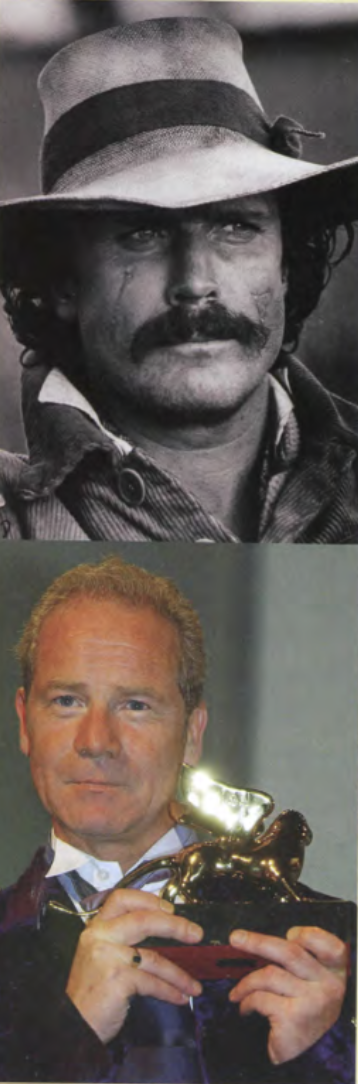
Besides Patrick Bergin to play Jim Larkin, Dunbar has also lined up the Scottish actor Peter Mullan to play Connolly and Susan Lynch to play Lillie.
Raising funds is still ongoing, and as yet the money promised from Ireland’s biggest union hasn’t come through. But Stokes and Allen are hopeful that their dream project, James Connolly – The Movie, will soon be realized.
“In an ideal world,” says Dunbar, “we’d be able to start shooting this movie in the autumn.”
Editor’s Note: This article was originally published on page 48 of the June/July 2006 issue of Irish America. ♦
Leave a Reply