
Riots Return To Belfast as Racist Violence Takes Hold
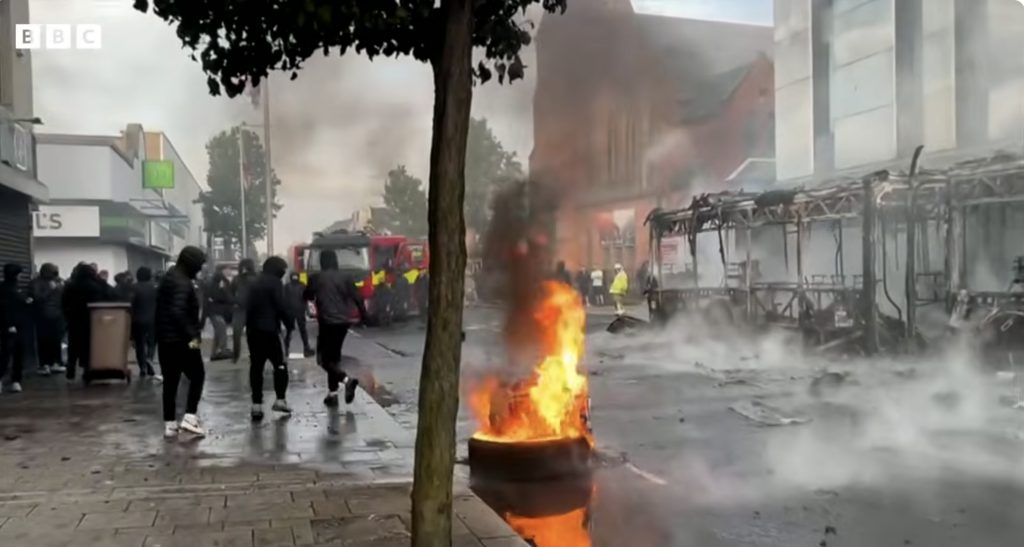
An horrific knife attack on Monday night in Belfast (June 8) has been followed by widespread unrest, rioting and racists attacks. It has put the city, and Northern Ireland, back in international news in the way it hasn’t been since the 1998 Good Friday Agreement that ended the decades-long conflict, often euphemistically called The Troubles.
The attack was filmed and quickly shared on social media. A Sudanese migrant has been charged with attempted murder, and while the victim’s family has called for calm, and said there are “many migrants who make a deeply valuable contribution to our country”, several days and nights of unrest have followed.
Far right racist attacks are becoming increasingly common across Europe, and elsewhere in the world, as anti-migrant sentiment increases and is exploited and fuelled on social media. But Northern Ireland’s history adds other challenges to those trying to calm the rhetoric and stop the violence.
In Belfast and elsewhere, a tradition of paramilitarism means there is an existing vocabulary and long experience ready to ignite street violence.
In the days following the knife attack, those connected to Loyalist paramilitaries organised the targeting of homes of migrants, and circulated lists of addresses where migrants were said to live. Vehicles were set on fire, and vehicle checkpoints set up.
These tactics date back more than 50 years, reminiscent of the early years of the conflict where paramilitary groups took control of neighbourhoods through fear and intimidation, assuring locals they were protecting the community by purging it of dangerous undesirables.
I spent the days before the attack talking to anti-racist and migrant groups in Belfast, who warned of increasing racism and threats, and that the police were largely ignoring or downplaying links between Loyalist paramilitary groups and organized far right racism.
The local activists told me that there is some racism in every community, and far right groups from the south of Ireland were trying to encourage those in nationalist neighbourhoods in the north to join them in scapegoating migrants. But a far bigger problem, they said, was the high degree of organization in Loyalist areas, notably those with strong traditions of the Ulster Volunteer Force (UVF) in Belfast, and the Ulster Defence Association (UDA) in other parts of the north.
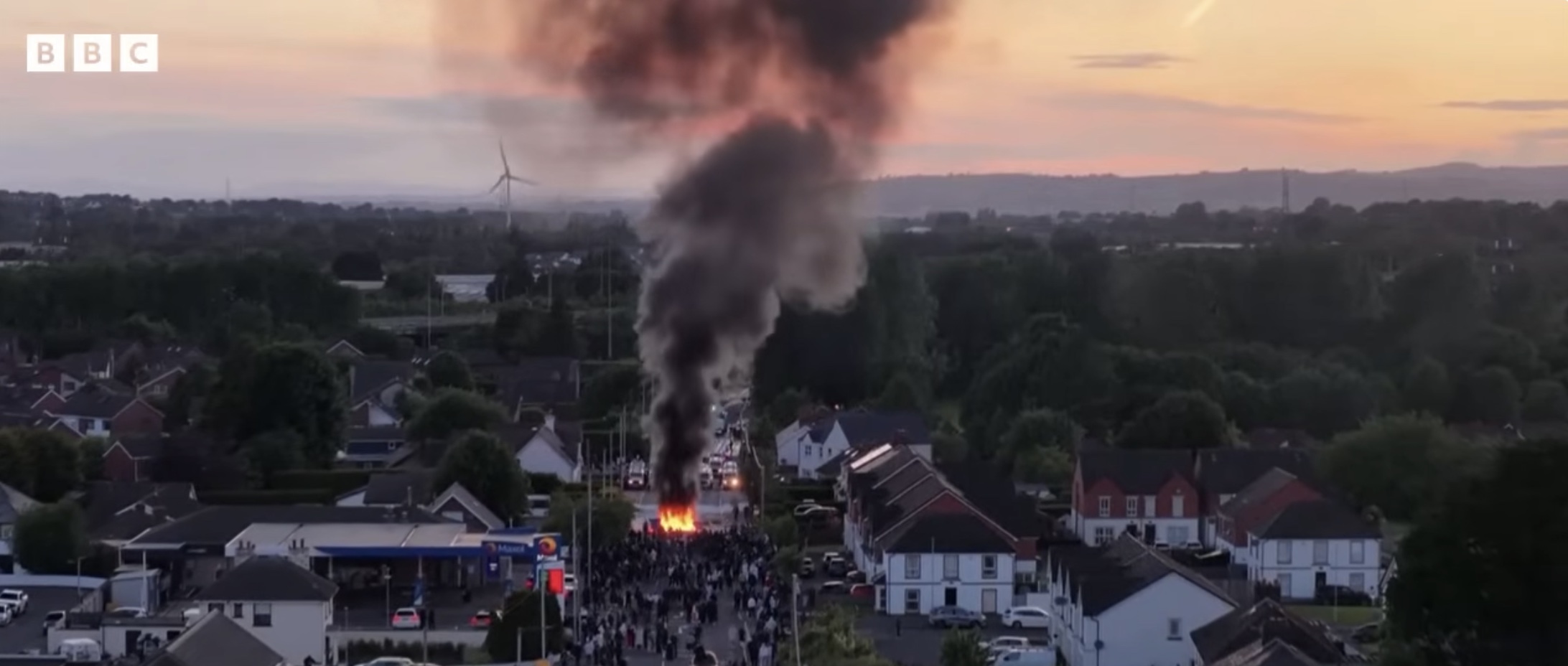
The violence this past week has not emerged from nowhere. There has been an intensification of anti-Islamic and anti-migrant rhetoric online for years. In 2024, the UN Committee on the Elimination of All Forms of Racial Discrimination (CERD), expressed concern over widespread reports of “paramilitary groups and affiliated individuals perpetrating acts of racist violence and intimidation to deter persons belonging to ethnic minorities and migrants from taking up housing or establish business in certain areas…”
Last month racist murals began to appear in Belfast and elsewhere, presenting migrants collectively as a threat. The activists I spoke to last week warned that the summer could see much more violence, and it now has begun.
Across Europe far right groups have electoral success as a top priority, and that is important in Northern Ireland too, where elections take place next year. But there is also an old-style, more basic aiml in Northern Ireland too, which is to take and keep physical control of districts, deciding who can live and work there, who can set up business there, even who can walk through the neighborhood. The military checkpoints in and out of communities, masked men roaming streets, the flying of paramilitary flags, the painting of graffiti and murals, and shows of force with large numbers of people in paramilitary uniform are all powerful markers of territory and local power. It’s all very 1969, and now all very 2026.
There has also been strong resistance to the rising racism, with many in Belfast and elsewhere offering support, solidarity and offers of help to those forced out of their homes, and to foreign workers at hospitals and other workplaces too scared to go home at night after their shifts have ended. The victim of the knife attack’s family has pleaded that “this terrible tragedy should not be used to divide people or fuel hostility.”
The local trying to calm the street protests also warn of armchair experts and keyboard warriors offering views from afar, who are contributing to the problem with disinformation, hot takes and political agendas.
The next few weeks will be crucial in whether the violence is controlled, calmed and stopped, or if it spirals into something we haven’t seen since the end of the last century.
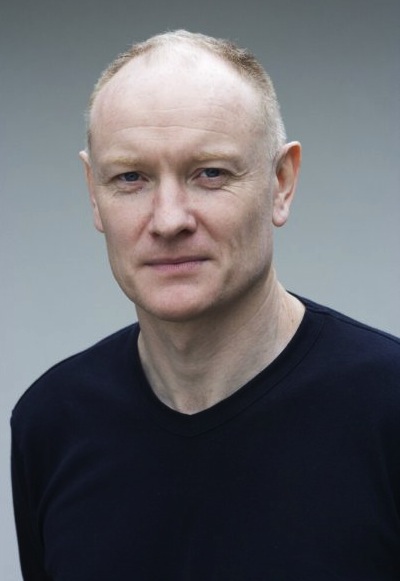 Brian Dooley is a prominent Irish human rights activist, author, and expert on transnational civil rights and human rights defenders.
He is the author of several books focusing on political identity, civil rights, and U.S. politics. Notable titles include: Black and Green: The Fight for Civil Rights in Northern Ireland and Black America (Pluto Press, 1991), Choosing the Right Path (a study of Robert Kennedy) and his recently published Defiant: Profiles of Resistance (eleven accounts of ordinary Europeans who became unlikely human rights defenders).
Praying for peace and community harmony to prevail in Belfast. I am afraid our current US president is a malign influence in this terrible spread of anti-immigrant bias.
Many of us of Irish descent here in the USA are one with you seeking peace and unity in Ireland.