
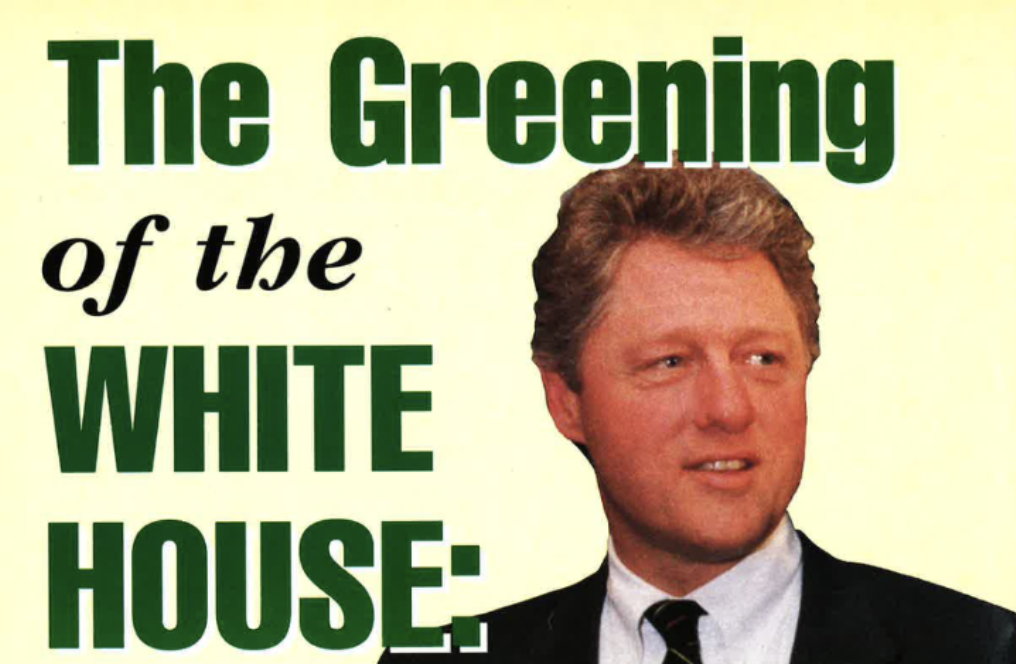
On record with the strongest statement on Irish issues of any President of modern times, President-elect Bill Clinton is already catching flak from the British government and media. But what is he really likely to do on Irish issues in the White House?

On the mid-November day that Bill Clinton arrived in Washington, D.C. on his first visit as President-elect of the United States, The Washington Times, the right-wing daily, rounded on him sharply for his Irish issues position.
From the British government perspective (and their influence was clear from the line of the November 18 editorial titled “Mr. Clinton and the Irish Question”) it was a timely blast across the bow for Clinton, who had strayed far from the position they preferred on Northern Ireland.
“What’s new this year is that President-elect Bill Clinton managed wrongheadedly to interject himself into the situation in the course of the campaign, criticizing the security forces in Northern Ireland for brutality, wanton killing and collusion with paramilitary Protestant groups… in all Mr. Clinton evinced considerable sympathy for the causes espoused by Sinn Fein, the political wing of the IRA, this according to The London Sunday Times,” the Washington Times editorial stated.
Clinton’s Irish position has now, clearly, become a source of great concern for the British government. Irish America has learned that the election totals were hardly counted on November 3 when a British delegation was dispatched to Little Rock, and another top-level delegation sent to key Democratic leaders, including House Speaker Tom Foley, to try to influence the new President’s position on Ireland.
Also symptomatic of the British concern over Clinton were front-page headlines in several British newspapers, including the London Sunday Times and the Sunday Telegraph, speculating on the impact of Clinton’s statement, which was released to former Congressman Bruce Morrison, national chairman of the Irish Americans for Clinton group.
What most troubled the newspapers was Clinton’s call for the British government to “establish more effective safeguards against the wanton use of lethal force and against further collusion between the security forces and Protestant paramilitary groups.”
In his statement, Clinton came down firmly on the side of the MacBride Principles, the set of fair hiring guidelines first drafted by Nobel Peace Prize winner Sean MacBride that are bitterly opposed by the British but accepted by the Irish government.
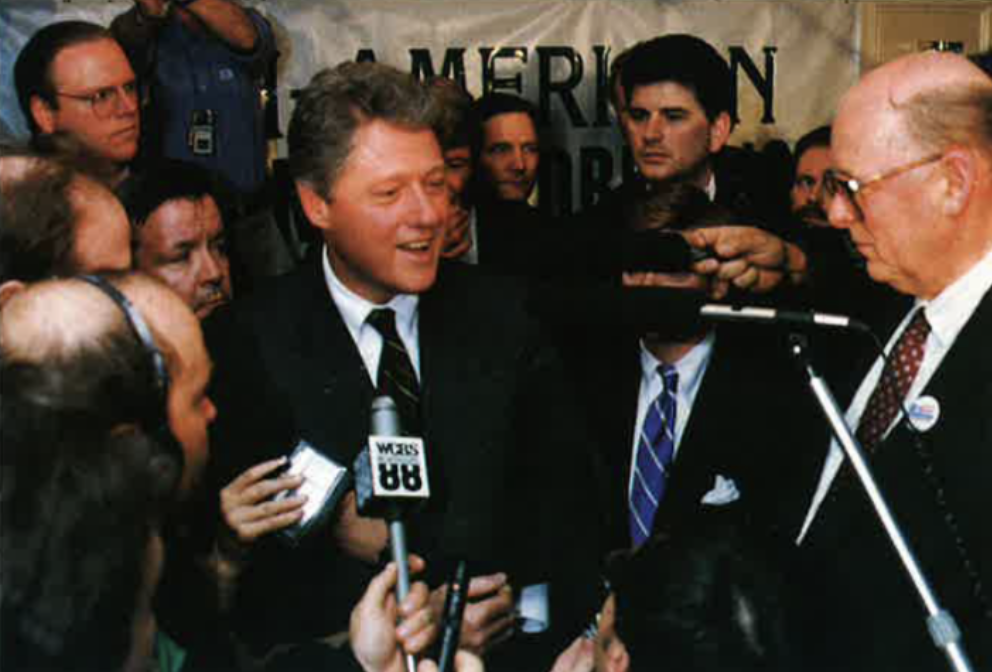
He also stated that “the appointment of a U.S. special envoy to Northern Ireland could be a catalyst in the effort to secure a lasting peace.” The impact of that statement on a British government consumed with keeping Northern Ireland as an internal problem was considerable, according to one Clinton source.
That the next President is on the record with “the most important Irish statement by a presidential candidate in my lifetime,”according to Paul O’Dwyer, the 85-year-old civil rights lawyer and activist, is clearly of paramount concern to British interests.
That he was assisted throughout his campaign by the largest grass-roots support effort among Irish American groups for any candidate in recent times is also a source of great concern to the British.
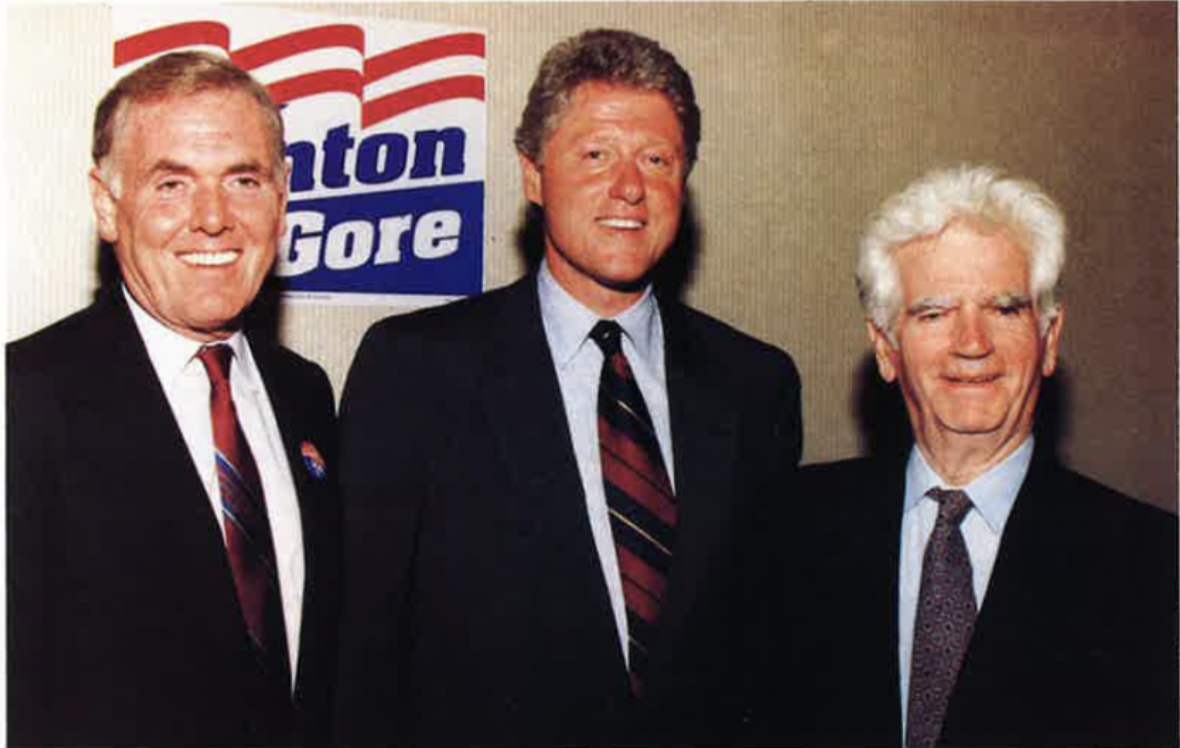
Clinton had acknowledged that help both in his statement and in a meeting with Boston Mayor Ray Flynn and Paul O’Dwyer in New York before the election.
The Northern Ireland question is one of the few thorny problems between the two trans-Atlantic partners who have long enjoyed a special relationship. With the end of the Cold War and the special relationship suddenly much less important, the idea of an American President taking an independent stance on Northern Ireland is obviously anathema to the British.
Following the signing of the Anglo-Irish Agreement in 1985, a consensus emerged which put forward the views of the Irish and British governments in tandem and which was widely accepted on Capitol Hill and the White House.
This view was that both governments were working towards a negotiated solution; that American tax dollars, funneled through the International Fund for Ireland (now a total of $190 million), would be helpful for peace and reconciliation; and that most Irish American organizations were out of touch with the realities on the ground in Northern Ireland.
The latest flurry of concern is a far cry from the position that prevailed previously.
During the twelve years of the Reagan/ Bush era Ireland only figured around St.
Patrick’s Day and on other rare occasions. When Northern Ireland was discussed by U.S. politicians, it was mostly in the context of agreeing with joint British/Irish government pronouncements.
There were a few issues that still bedevilled the British. The MacBride Principles campaign seeking to force U.S. companies to adopt fair hiring practices was bitterly opposed by them, but the success of the Principles as a grass-roots phenomenon among Irish American organizations and the clear impact they were having on forcing more equal hiring practices in Northern Ireland severely weakened the British position. Importantly, successive Irish prime ministers Charles Haughey and Albert Reynolds both stated they did not oppose the Principles campaign.
But those were mere burrs under the saddle in contrast to the latest Clinton positions, which threaten special envoys, outspoken comments on human rights abuses in Northern İreland, support for the MacBride Principles from the White House, and no meddling in court decisions for or against IRA suspects arrested over here, stances which would surely unhorse a major aspect of the special relationship.
Worse for the British, the Clinton presidency begins at a time when the latest talks in Northern Ireland have broken down — many experts say irretrievably – and there is no positive news on political developments to spin to a new administration.
Also underlying the Clinton stance is the renewed strength of the Irish American lobby, which has shown, first with immigration reform legislation achieved in tandem with the Irish government, and more recently with their role in national political races, that they are becoming a far more effective force than they have been.
How Clinton’s Agenda Was Shaped
It was Sean MacBride who framed the kernel of the latest Irish American argument. “There are no votes in the British government position on Northern Ireland for any U.S. politicians. That gives Irish Americans a major advantage if they can organize,” he told the Irish American Unity Conference in San Antonio, Texas, in June of 1983. His words have reverberated since.
Back in the days when the Irish lobby consisted mostly of No-raid picket lines outside British consulates, his thesis was hardly a consideration. Now, with a far more sophisticated and mainstream approach, the lobby has become far more effective in presenting its concerns on issues such as Northern Ireland. While rabid IRA supporters are still a significant force, far cooler heads with a much more mainstream nationalist perspective have prevailed.
A major factor in moderating the Irish American stance has been the success of the role of the Irish government, which moved from a confrontational stance during Garret FitzGerald’s era to a much more conciliatory approach, parting company only with those groups which advocated for the support of the IRA, but helping to forge a broad area of nationalist consensus on issues of importance to them and Irish Americans.
Thus, as positions have evolved in Northern Ireland over the past 23 years of the Troubles, so too have the politics of the Irish American groups, a fact that is regularly missed in Irish and British coverage of the Irish American dimension.
The MacBride Principles campaign was the first example of a far more sophisticated, civil-rights-oriented approach. In legislatures across the country, from state governments to city councils, Irish American groups succeeded in passing MacBr-ide legislation despite the best efforts of opponents.
Such successes and the related success in organizing a successful grass-roots Irish American effort to legalize tens of thousands of Irish illegals through successive Donnelly and Morrison visa programs saw the first flexing of a significant Irish American political muscle.
Suddenly American politicians accustomed to annual St. Patrick’s Day statements paying lip service to Irish issues sat up and took notice. The upsurge in Irish organizations following the flood of new emigration and the growth of political action groups in key states, energized originally by the immigration battle, was duly noted.
From the presidential election perspective, a key watershed was the Senate election race in Pennsylvania when Democrat Harris Wofford defeated Richard Thornbuh, Bush’s attorney general and a hated figure among activist Irish Americans because of his role in sending IRA prisoner Joe Doherty back to Britain. The anti-Thornburg mood among Irish Americans was picked up in Democratic Party polling.
Irish Americans were also a key constituency for the Democrats to try and woo back. The Reagan Democrats were a key swing vote in the 1992 election, and the leadership of the Democratic Party was anxious to re-establish the connection.
Right from the start, the Clinton campaign established a beachhead. Chris Hyland, a Georgetown roommate of Clinton’s based in New York, was placed in charge of building an ethnic coalition for Clinton. Hyland was so successful that he ended up as deputy national political director and one of 48 top Clinton aides named to the transition team.
Hyland made a shrewd choice among Irish Americans, contacting former Congressman Bruce Morrison, a hero for his work on immigration reform, to head up the Irish Americans for Clinton group.
Morrison, who had run unsuccessfully for governor of Connecticut, was looking for an issue to keep his profile up among the Clinton forces (he attended law school at Yale with Clinton) and readily agreed.
Morrison and others were successful in establishing Irish Americans for Clinton in several key states, and also in raising significant amounts of funds for Clinton, including large contributions from leading Irish American businessmen.
Clinton himself is well briefed and knowledgeable on Irish issues. Overlooked in the press reports of his Oxford years is the fact that Northern Ireland was a major news story at the time in Britain. The civil rights marches, the rise of Bernadette Devlin, and the focus on the long history of discrimination against Catholics were all a major part of the backdrop to his Oxford sojourn.
As the Democratic primary season got under way John Dearie, then a member of the New York State Assembly for the Bronx, organized an Irish issues forum for the New York Democratic primary which Clinton attended. All those present were highly impressed at Clinton’s presentation, speaking without notes and seemingly with ease on the immigration question, the special envoy issue, the Mac-Bride Principles, and the Joe Doherty case.
Meanwhile, on the Republican side, there was only silence on Irish issues. An opinion poll carried in our sister publication, the Irish Voice newspaper, found that Irish Americans believed by a margin of 70 percent to 10 percent, with 20 percent undecided, that the Democratic Party was more sympathetic to Irish issues. That same poll showed Clinton six points ahead of Bush with Irish voters.
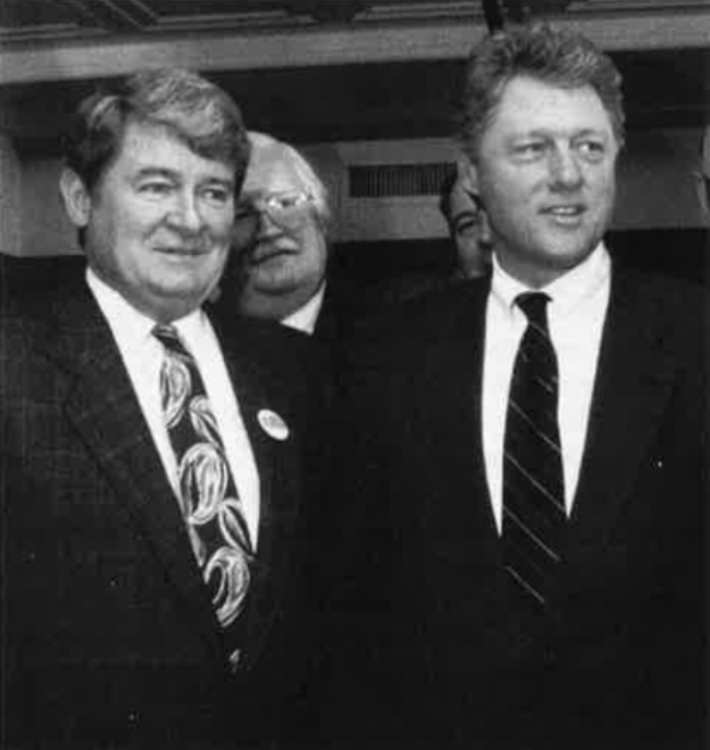
Other factors emerged, and a key emissary to the Reagan Democrats was Boston Mayor Ray Flynn, one of the most outspoken Irish Americans on Irish issues. Flynn traveled far and wide with the Arkansas governor and was instrumental in shaping the Clinton agenda.
In addition, the Clinton campaign aide responsible for Ireland as part of her European brief was Nancy Soderberg, a former staffer in Senator Edward Kennedy’s office who had handled the Irish issue for the Massachusetts senator. Soderberg displayed a very sure hand throughout in knowing the positions, and how far the Clinton statements should go.
Contrary to British media reports, that final Clinton position, as outlined in the letter to Bruce Morrison, is a highly nuanced one, with Clinton dropping many of his earlier commitments, such as ending visa denial to Sinn Fein spokesmen or mentioning the Joe Doherty case by name.
Another key factor in the Clinton statement was the breakdown of the Northern talks, which inevitably ended up with some fingerpointing between the British and Irish governments.
Using White House and Irish American pressure for a speedy resumption of action in the North is obviously a good tactic for the Irish government. In addition, there were dozens of other Irish lobby groups that worked hard to ensure a Clinton victory, such as the Irish American Unity Conference, the Political Education Committee and most notably the Irish American Political Action Committee, which took large ads in The New York Times op-ed page welcoming Clinton’s positions.
What then will the Irish agenda be for the Arkansas governor? The British will seek to dissuade him from changing the current hands-off policy. The special envoy may well evolve into a U.S. representative who will have as his property in the building of new economic and trade links between Northern Ireland and the U.S. Significantly, Northern Secretary Sir Patrick Mayhew has said he would approve of that in his answer to a query by John Hume.
On the human rights front, Clinton is almost certain to be supportive of the MacBride Principles, and to address more forcefully human rights issues and abuses as documented by Amnesty International in Northern Ireland.
Though the British will be very persuasive, his advisers are unlikely to forget how important those same Irish ethnic votes will be in 1996. As a consummate politician, Clinton is unlikely to forget either.
Excerpts from Clinton’s statements on Ireland:
“Because Ireland has given so much to our country, we owe a special debt in return. We
commend the Democratic leaders in Congress who acted to end the long history of discrimination against Ireland and other nations in our immigration laws. And we will work to ensure that political considerations do not hinder the workings of our courts in asylum cases.
“Senator Gore and I share the goal of all Irish Americans for peace in Northern Ireland. We believe that the United States must reflect that concern more effectively in its foreign policy. We condemn the violence and bloodshed which has scarred Northern Ireland and oppose all attempts to achieve political change through terror and vio-lence. We call on people of all nations to end their financial support for those who seek to gain their goals by violence.
“A permanent and peaceful solution to the crisis in Northern Ireland can only be achieved if the underlying causes of the strife and instability are dealt with vigorously, fairly and within a time frame that guarantees genuine, substantial and steady progress. I believe the appointment of a U.S. special envoy could be a catalyst to secure a lasting peace. “We believe that the British government must do more to oppose the job discrimination that has created unemployment levels two and a half times higher for Catholic workers than Protestant workers. There can be no lasting settlement in Northern Ireland until such discrimination is ended. The MacBride Principles set forth appropriate guidelines for investment to help achieve these goals.
“We also believe that the British government must establish more effective safeguards against the wanton use of lethal force and against further collusion between the security forces and Protestant paramilitary groups.”
Editor’s Note: This article was originally published on page 21 of the January February 1993 issue of Irish America. ♦
Leave a Reply