

St. Patrick’s Day ’92: The Controversy Heard Round the World
What would a St. Patrick’s Day Parade be without a little controversy?
The trouble that surrounded last year’s New York City parade seemed to spread around the world, as groups of Irish lesbians and gays moved to assert themselves as bona fide members of the Irish community. Parade organizers in New York City and Boston endured a series of lawsuits and political action in their attempts to bar the homosexual groups from marching, while their counterparts in Cork City, Ireland, took the different route and welcomed a local gay group into the march.
In New York, it seemed as if everyone was suing everyone else because of the denied parade application of the Irish Lesbian and Gay Organization. Mayor David N. Dinkins’s administration sided firmly with the ILGO’s contention that they deserved to take part, just like any other Irish group in the city would, in what they saw as a public, non-Catholic celebration. But the parade’s organizers, the Ancient Order of Hibernians, said that they were in the right to bar the ILGO because they saw the parade as a private, Catholic event, and the presence of a homosexual group would run counter to the parade’s message.
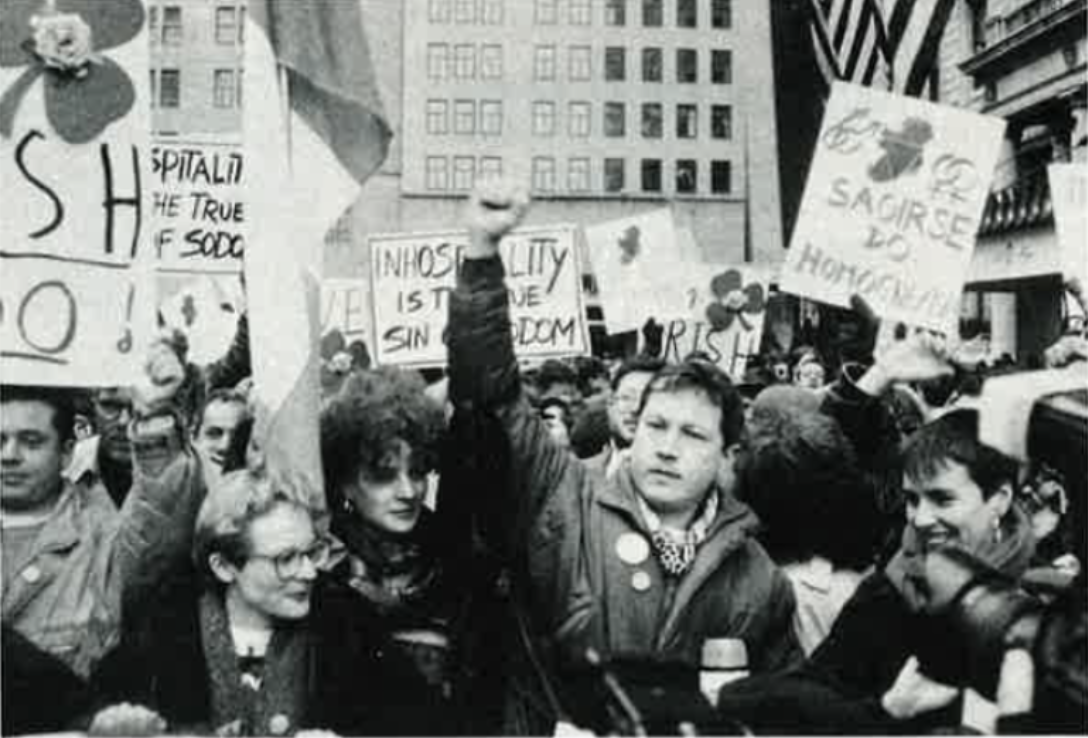
The filing of two lawsuits, one by City Hall and one by the ILGO in a tederal court, was stiff opposition to the Fifth Avenue parade, which is certainly no stranger to controversy: in years past there have been challenges to the parade committee regarding what some see as its narrow, exclusive way of running the parade, including some legendary battles over the selection of the parade’s Grand Marshal.
The verdict of both suits was more or less that, although the parade committee had unfairly discriminated against the ILGO, the court’s concerns about infringing on the constitutional freedom of association prevented them from forcing the AOH to take in the ILGO. Still, both suits are far from over and are subject to appeal before the 1993 march.
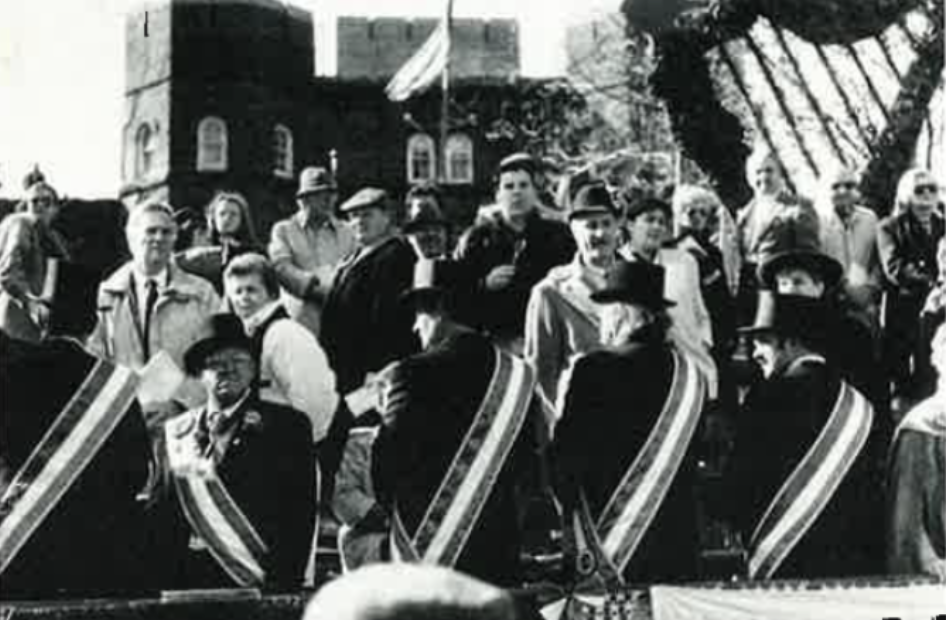
Boston’s own Irish homosexual group was formed in the past year, modeled after the New York group. Because the Boston parade, unlike the New York parade, receives money directly from the city government, a judge ruled that the organizers would have to allow the Boston ILGO to march. March they did, and similar to the New York group which marched in a compromise deal in the 1991 parade, they drew heavy police attention as well as much heckling from the sidelines. The parade organizers say they are considering restructuring next year’s parade so as not to accept city funding, in the hopes of not being forced to allow the gay group in.
But 3,000 miles away in Cork City, organizers opted to avoid the messes made in New York and Boston by simply welcoming a local gay group to march. Not only did the group march peacefully and to much cheering, but they were also awarded with the “Best New Group” prize by the organizers.
Abortion Controversy Rocks Ireland
The nebulous uncertainties of the 1983 anti-abortion amendment in the Irish Constitution hit the fan in a major way recently when a 14-year-old rape victim from Dublin sought to get an abortion in Britain. That 1983 amendment, which said that the Irish government was entitled to do whatever is necessary to protect the life of the unborn, resulted in a flap which was prominent on the front pages of newspapers around the world.
In the end, the Irish Supreme Court passed another unclear ruling, which said that abortion may, for the first time, be considered legal in Ireland if the life of the expectant mother is endangered.
It all started when, on January 7 of this year, the girl told her parents that she had been raped by the father of one of her friends and that she was pregnant.
The distraught teenager threatened suicide if she was forced to have the child, and after talking with the family doctor and a psychologist, the family decided to travel to Britain, where the girl could terminate her pregnancy legally. It is estimated that more than 100 Irish women a week make the trip to England for legal abortions.
Before leaving however, the girl’s parents told police of their intended trip to England, and asked whether a tissue sample from the fetus might be used as evidence to convict the rapist. Upon arriving in England however, the family was informed that the Irish Attorney General had issued an injunction barring the girl from travelling to have the abortion. The family obeyed the injunction and returned home.News of this prompted tens of thousands of people to protest rallies in Dublin, as well as at Irish consulates around the world. Some of these people were indeed some of the same people who had voted for the 1983 amendment, not aware of its far-reaching potential.
The issue was headed for the five-man Supreme Court, which by a vote of four to one said that abortion should be permitted in instances where the life of the expectant mother was in danger. Based on a psychological evaluation, the Court ruled that the 14-year-old’s life was in such danger and that she was free to go.
The problem was settled, for now, but it is now unknown what the new ruling will mean. If abortion is to be legal in Ireland, then there are issues such as the access to information about abortion, which is currently banned, and even about the availability of abortion in Ireland itself.
And who or what will be the judge of whether a woman’s life is at risk, particularly in the instance of threatened suicide? With its decision, the Court has urged politicians to pass legislation which would determine the parameters of the law.
Joe Doherty: At Home in the H-Block
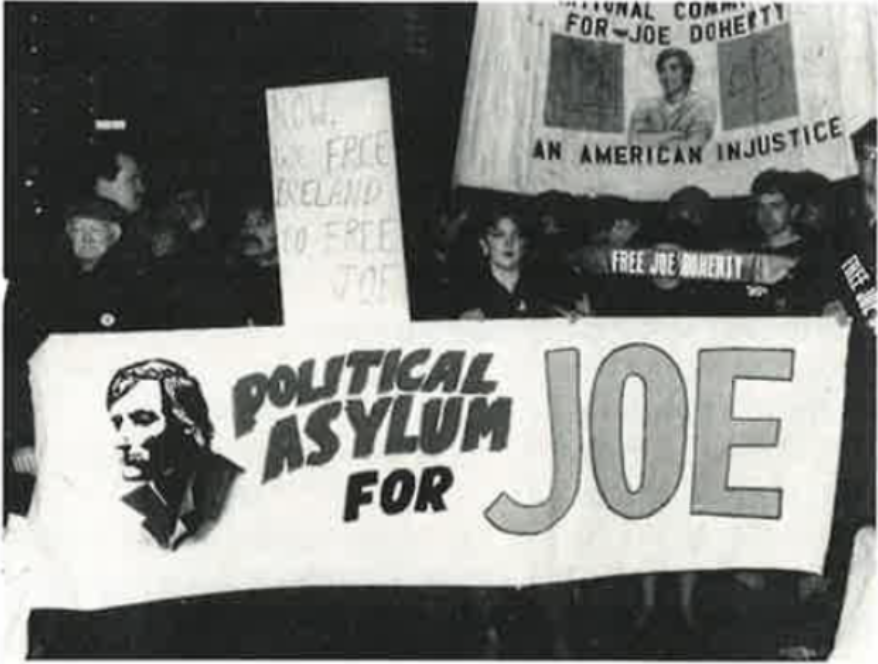
After nearly a decade of fighting the U.S. government’s efforts to send him back to a prison in Britain, Joe Doherty has settled into the republican wing of Belfast’s Maze prison, a.k.a. the “H-Blocks.” Although he and his supporters are disappointed with the Bush administration’s decision not to allow him a hearing for political asylum, Doherty was grateful for the support of his many supporters in the U.S.
Doherty was woken up at 3:45 a.m. the morning of February 19 at his cell in the Lewisburg, Pennsylvania Penitentiary for the long trip by plane to England. In a column which he had since sent back to the Irish Voice newspaper, Doherty says he was flown out of Andrews Air Force base in Washington, D.C. aboard a U.S. Air Force jet.
In London he was formally arrested by British police for his escape from prison in 1981, when he was an active IRA member.
Doherty said that he was placed in solitary confinement in the Crumlin Road jail in Belfast for a month, while he says that his jailers tried desperately to get him to “conform.” He was given the choice of serving his sentence at Maghaberry Prison, a brand-new, state-of-the-art prison with educational and training programs, if he agreed to conform to prison rules, i.e., wearing prison uniforms, accepting the prison system’s hierarchy, etc. He would also be given a drastically reduced sentence, which could mean a release in two years.
However, Doherty refused.
To go to Maghaberry instead of the republican wing of the Maze would be to run counter to everything that republican prisoners have fought for in Northern Ireland, i.e., their standing as political prisoners of war.
In the H-Blocks, republican prisoners retain their military structure, as in military camps. It is still unsure how long Doherty will have to serve, or if his time spent in U.S. prisons will be deducted from the total.
Editor’s Note: This article was originally published in the April 1992 issue of Irish America. ♦
Leave a Reply