
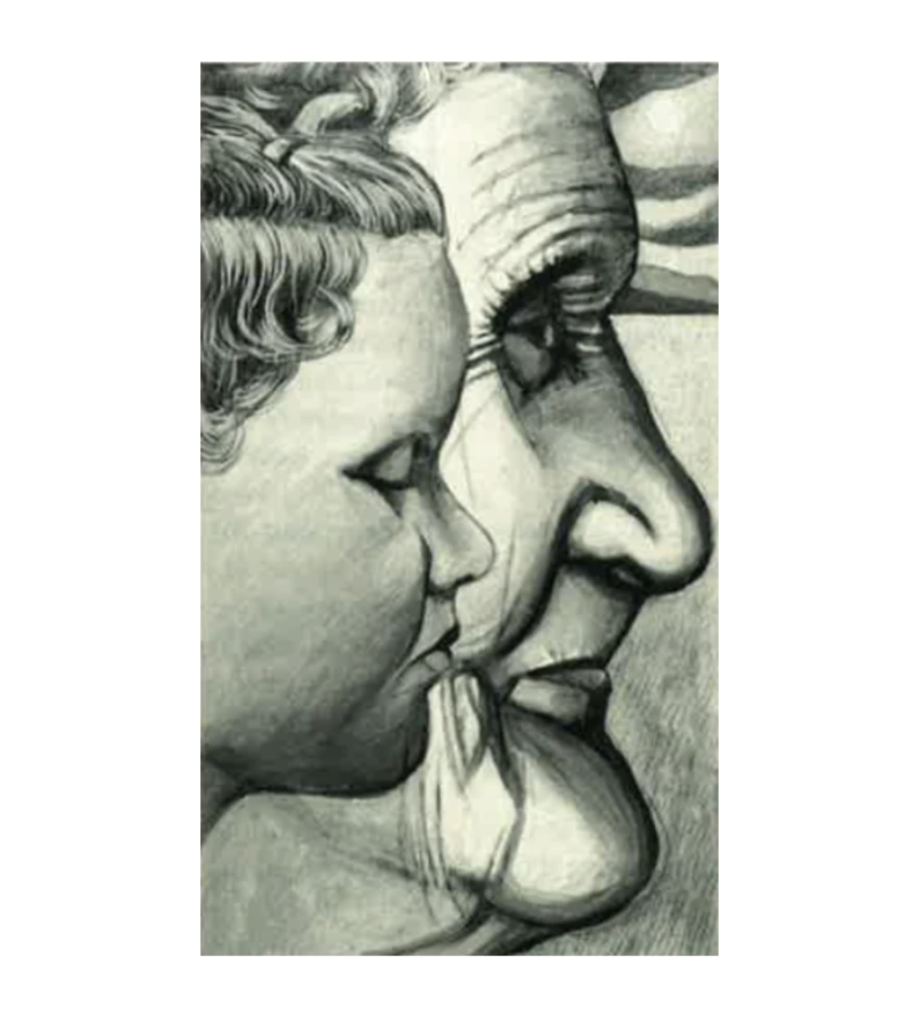
At the beginning of the New Year, with the rain of reality on the window of her home. I hold my newest neighbor, Aoife Miniter, in my crooked arm. Aoife is three months old, a child of Connemara, healthy and strong and very beautiful. Her parents, Pat and Mary, are my neighbors and my friends.
Aoife is their second child, their eldest being Cathal, who is a rogue, who calls me Mormack, who swaggers through this world with his hands in his overall pockets, and who, like all toddlers, knows well that the sea below his living-room window is only knee deep.
Pat is a mechanical engineer from Killimor in Clare and Mary is a nurse from Salthill in Galway. They met while both were working in the Middle East. Their home brims with loving and caring and it matters a great deal to me that his mother, six months pregnant with him, nursed my Ann in the last days of her dying. Aoife, in the crook of my arm, does not yet know that her paternal grandfather, P.J., went to heaven a week ago. I met P.J. for the first time about a week before he died. He had been ill for some time.
He was a lovely man. God, he said, is good. His face was just a small bit wistful as his three sons brought me out to O’Connor’s pub in Mullagh for a drink. We sat beside the original stone wall of the building, comfortably talking, watching Clare sets being danced the old way. Next time I saw P.J. he was in his coffin in Kilrush, his hair still dark as a crow’s wing and his face at peace.
There are many good things about being an integral part of an old community, largely living the old ways in the old stonelands of the West of Ireland. I would argue that the continuity of the generations is so strong and overlapping that Death is robbed of some of its sting. Where children grow up in the same echoes as their ancestors, walk the same roads, school in the same schools, hear the same seas in their sameness of tides and turbulences, the same regional richnesses of speech, eat potatoes from the same green gardens, drink the same spring water, then the whole genetic and biological baggage is so enriched and enhanced that the deceased parents and grandparents of this wonderful Stoneworld still walk abroad as gentle ghosts in the faces and forms of children.
I look at the little Aoife in the crook of my arm. Maybe it is fanciful but I think, already, I see a little of P.J. about her eyes and forehead. She had not much hair yet but, when it comes, will it, too, be as black as a crow’s wing?
Or will she, in her rising up, eventually be the icon of another ancestor? Will she be the living spit, as they say, of her mother? Will it be the swaggering Cathal who will walk or talk most like the grandfather just departed?! remember traveling through West Cork once with the fabled Pope O’Mahoney, the genealogist. He could point at the children along the roads and say, with an authority which I verified with awe.
“That is a grandson of Con O’Sullivan” and “That is one of our own.” I asked the Pope which feature of the families was the most outstanding to him. It was the way of walking, he said, and the carriage of the heads, Man. Many families living on the same lands for centuries, he said, seemed to develop a distinctive gait all of their own. And the O’Sullivans, he said, had been chiefs and warriors in their time. It always showed in the manly way they bore their heads.
I can look at my own sons and daughter, indeed, any time I wish, and see, here, in the turning of a head, their lovely mother. Or there, in the twisting of a thought, my long dead father. Or even, sometimes, almost with fear, I can see traces of my own self, both flattering and otherwise. Ciara can open an old wound, often enough, when she smiles at me in a certain way, under a dancing pair of eyes. As long as Dara lives, and he is but thirteen, then Sandy, his grandfather, is not dead at all.
Scobie has the arms and shoulders of Ann’s father, Mick Conlan. As long as Cuan lives, and goes down to Clare, there will be old people who will see his dead grandmother, Kitty, in his face. Here, in this old place, the graves are never fully closed.
I hold the little Aoife in the crook of the arm. The rain taps at the window.
Her father and her mother are sorrowing. That is as natural as the rain falling. But this time next year, with the Lord’s tending, this small morsel will already be walking the world, albeit unsteadily. And, in only a few year’s time, when she goes down to her ancestral place, near where the Shannon meets the sea, it is somehow right and fitting and wonderful to think that there will be old people who will see her, with hair as black as a crow’s wing, and they will say, maybe, “Isn’t that child the walking image of her grandfather?” God, as P.J. said himself, is good.
Editor’s Note: This article was originally published in the February 1991 issue of Irish America. ♦
Leave a Reply