
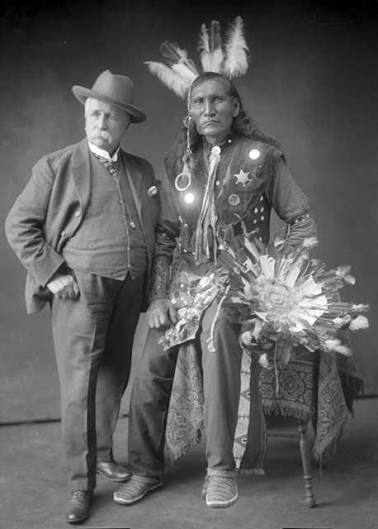
He was called the “Little Shadow Catcher” by the Indians, due to his 5’ 5” height and his miraculous ability to capture images on paper. Some whites called Barry the “Sioux Charmer,” due to his friendly relations with many Natives, especially those of historical and topical importance.
In the remote 19th-century settings where photographer David F. Barry operated, photographs were like magic – only more compelling emotionally, as they transposed the human form onto paper. Though he made many pictures of forts, battlefields and various white people on the Western frontier, Barry is best-known for his photographs of Native Americans.
The Lakota tribe bestowed on him the nickname “Little Shadow Catcher,” which conveys both Barry’s short stature and the deftness with which his images captured the pride and defiance but also the acute sense of pain that encompassed so much of Native American life in that era.
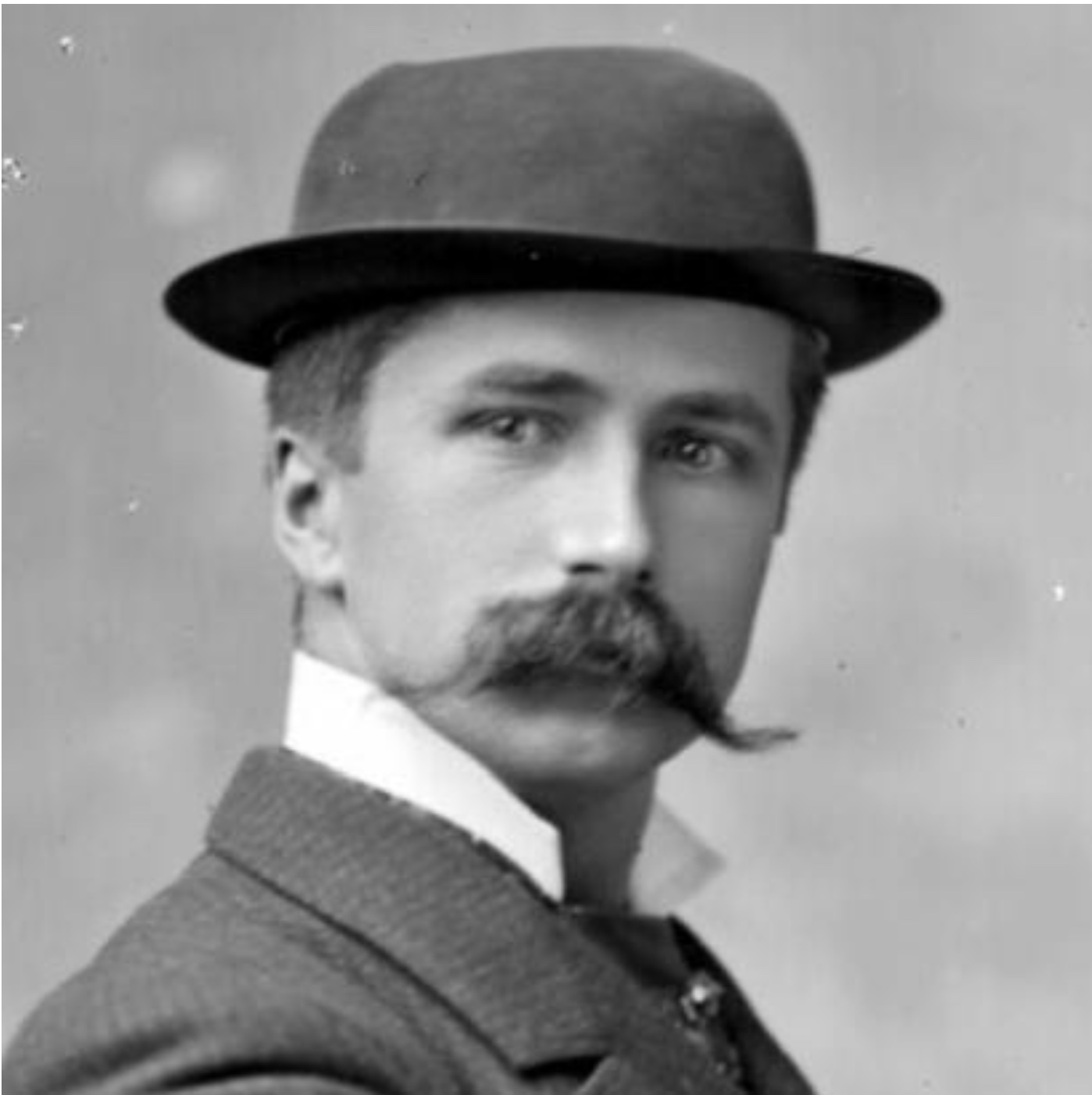
Barry was born in the upstate New York village Honeoye Falls on Mar. 6, 1854. Both parents were Irish immigrants: His father, Edmund Barry, was born in 1824 in Killarney, County Kerry. And his mother, Bridget Brophy Barry, was born in 1835 in County Kerry.
When he was a boy, Barry moved with his family to Wisconsin. As a young man, he began working as an assistant for the notable photographer Orlando Scott Goff, who taught him the trade. Goff later moved to Dakota Territory (Montana, North & South Dakota). After establishing a studio in Bismarck, he sent for Barry to come work with him.
It is uncertain exactly what year Barry rejoined Goff, but multiple sources say 1878. In any event, Barry and Goff were partners in the photography business by the end of the 1870s, at which point Barry was exploring all over Dakota Territory.
These days, anyone with a smartphone and a finger can instantly become a photographer (to some extent, at least) and snap up terabytes of images. In Barry’s day, though, you had to lug around cumbersome and heavy equipment. And, given his subject matter, he had to transport these items into forbidding terrain.
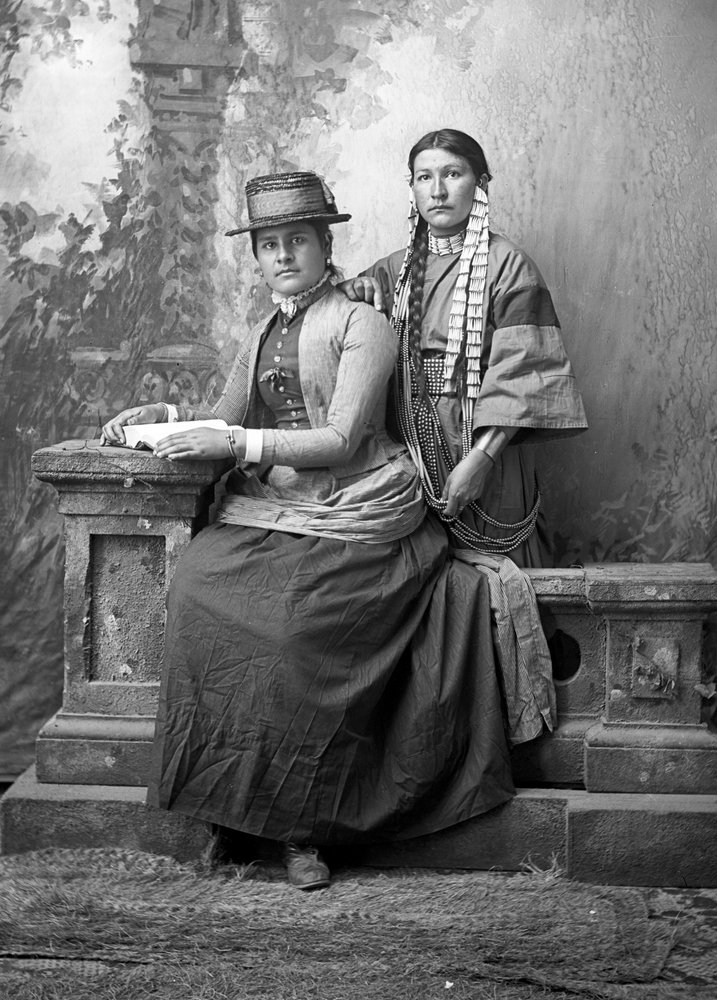
With his portable studio, Barry was able to make on-the-scene portraits of people who would not have been able or willing to visit a permanent studio in an urban setting.
Even with portability, there were certain complications. Many of his subjects were souls in turmoil, facing a loss of land and identity. They weren’t so inclined to have a little white man with strange equipment order them to sit and stay still. A skillful approach (and perhaps some form of compensation) was needed.
Also, despite being removed from the battlefield, some of these old chiefs could be a bit volatile. While at Fort Buford, Dakota Territory, Barry had a rather intense photo shoot with Chief Gall – a Battle of the Little Bighorn veteran who had received his name by eating the raw gall bladder of a dead animal.
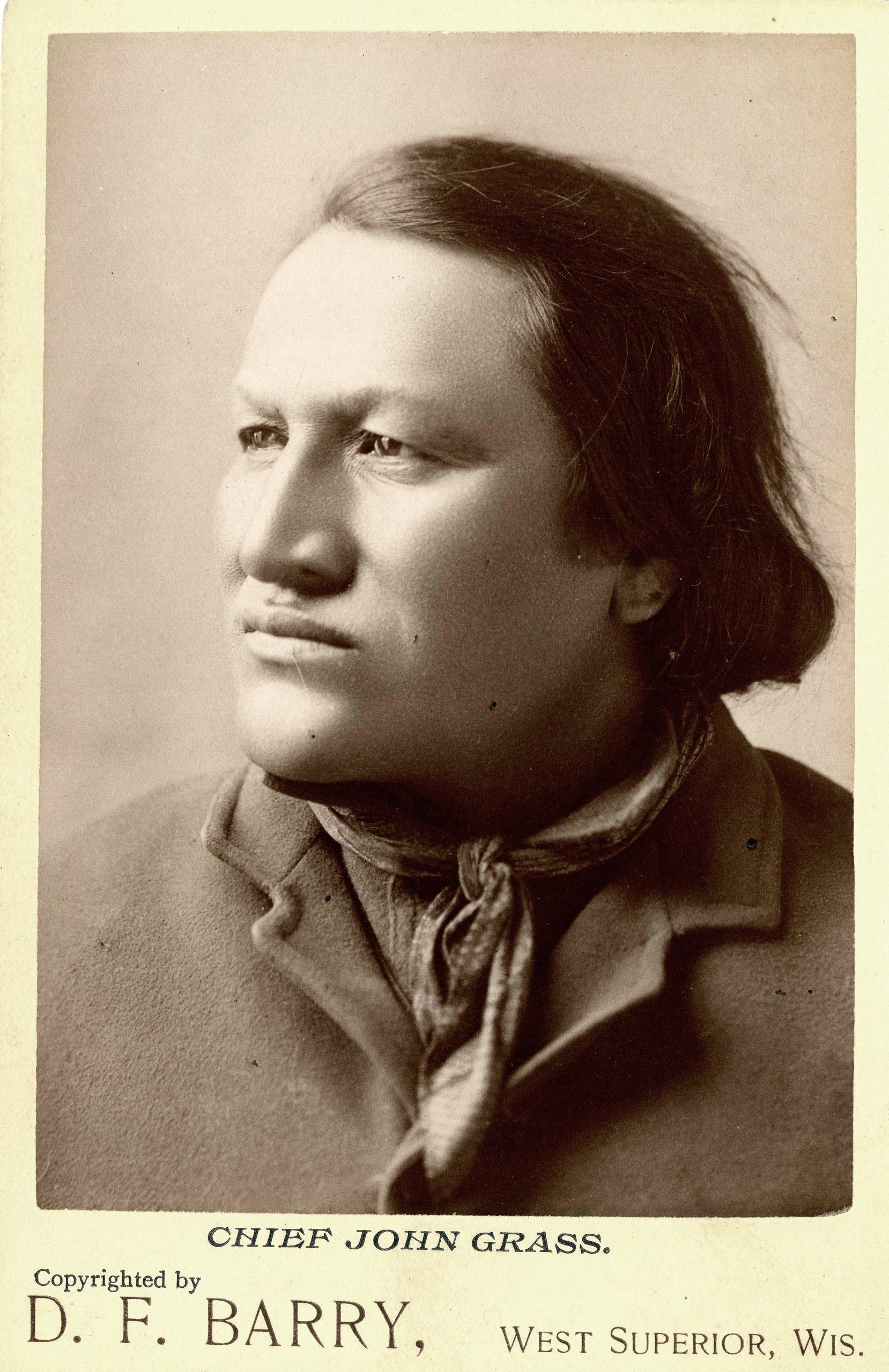
There was some discrepancy as to how much Chief Gall would be paid for agreeing to have his picture taken. Adding to the tension, the chief abruptly decided he wanted the photo for his own collection. When Barry resisted, the chief pulled a knife. Barry then emerged with a pistol.
Fortunately, it seems the conflict went no further than this mutual display of weaponry, and the two later even formed a friendship of sorts.
In fact, Barry often got along so well with these guys that some white people began calling him the “Sioux Charmer.”
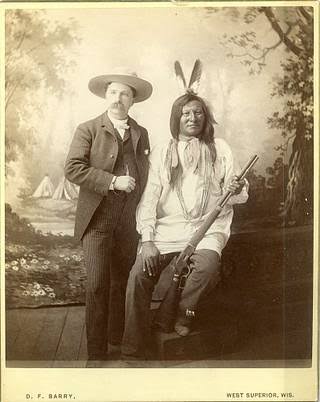
He was especially close with Chief Rain-in-the-Face (they even posed for a photograph together). Following the chief’s death, Barry said, “One of the most savage and treacherous of the Sioux Indians was the truest friend I ever had, either white or red man.”
But Barry’s work was not just about preserving the memory of individuals. It was about capturing a whole region before “progress” took conditions past the point of no return.
“Barry’s photographs have kept the days of the Golden West fresh in our memories,” wrote Usher L. Burdick, who edited a collection of Barry’s notes involving the Battle of Little Bighorn.
Many people who had never ventured within 1,000 miles of the Great Plains thirsted for Barry’s images of the vast and “untouched” Western frontier, even if they knew they would never make it ten miles beyond their crowded urban tenement.
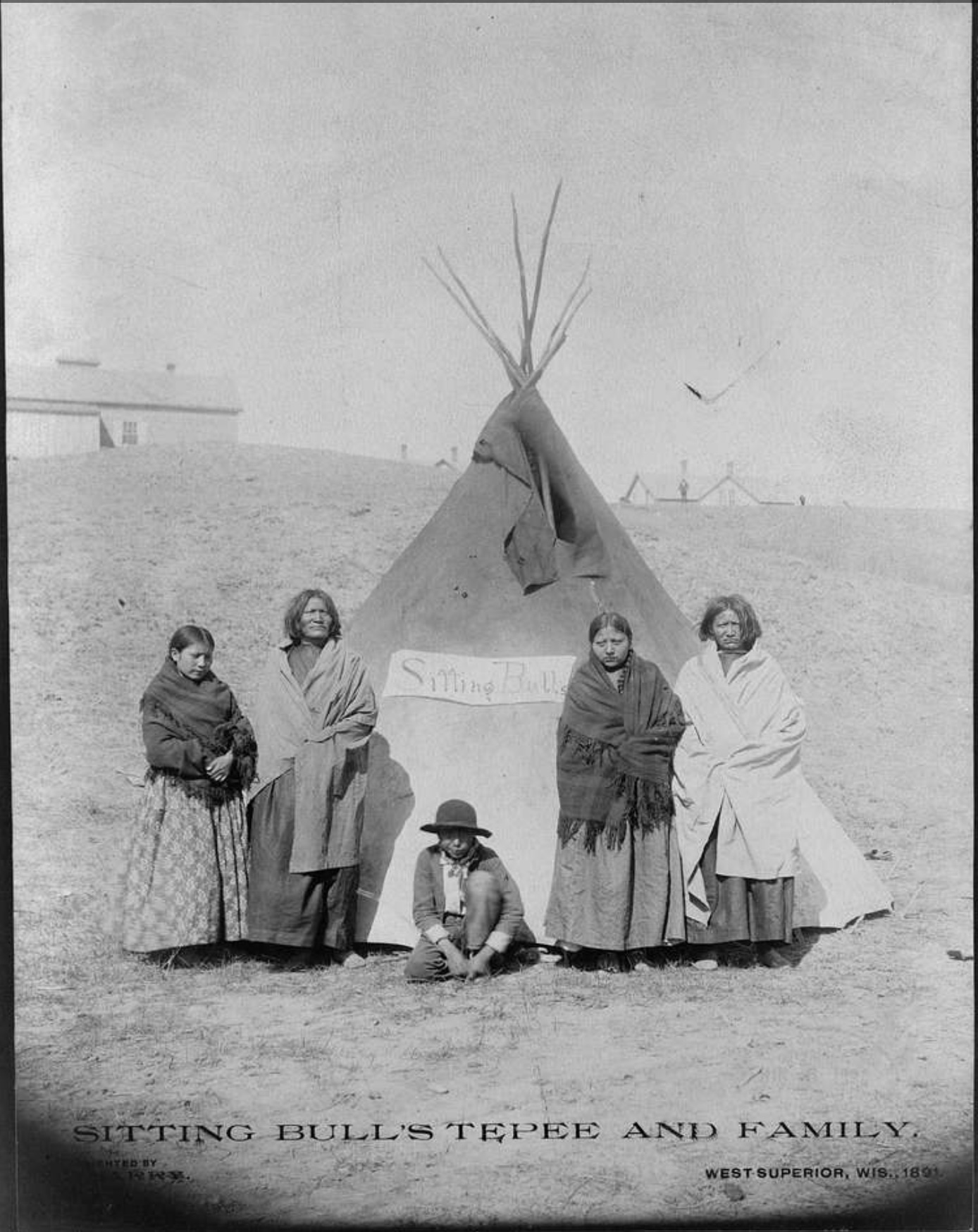
These pictures are also historically poignant, showing aging men of respect and valor who likely knew that, no matter how resilient their people remained, the indomitable forces of westward expansion and technological progress were going to bring culture, as they knew it, to a bitter end.
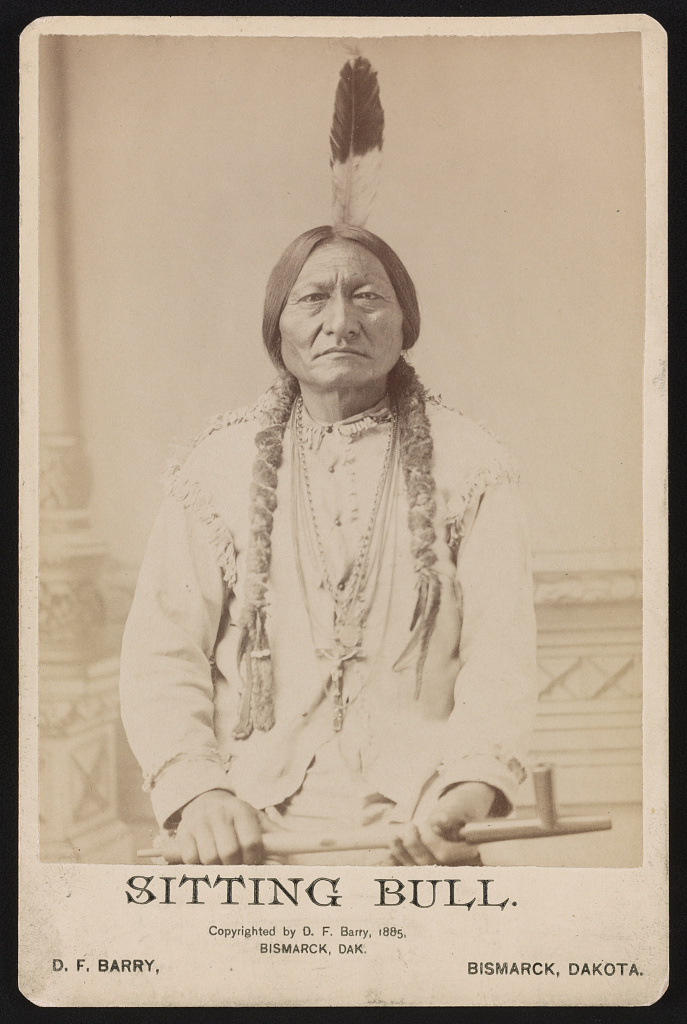
After running studios in Dakota Territory, Barry relocated to Superior, Wisconsin, along with his wife Margaret Barry née Young, whom he had married in 1884. They lived in Superior from 1890 to 1897 and later briefly lived in New York City before returning to Wisconsin, where Barry ran a gallery for many years.
Barry died in Superior, Wisconsin, on Mar. 6, 1934, which was his 80th birthday. His wife had died two years earlier. They had no children.
The period in which Barry thrived as a photographer was not a kind one to Native Americans. Theirs was a way of life under constant threat and encroachment. But with gumption, skill and a portable studio, the ‘Shadow Catcher’ was able to preserve their proud and authentic image before an overwhelming reality took hold.
Leave a Reply