
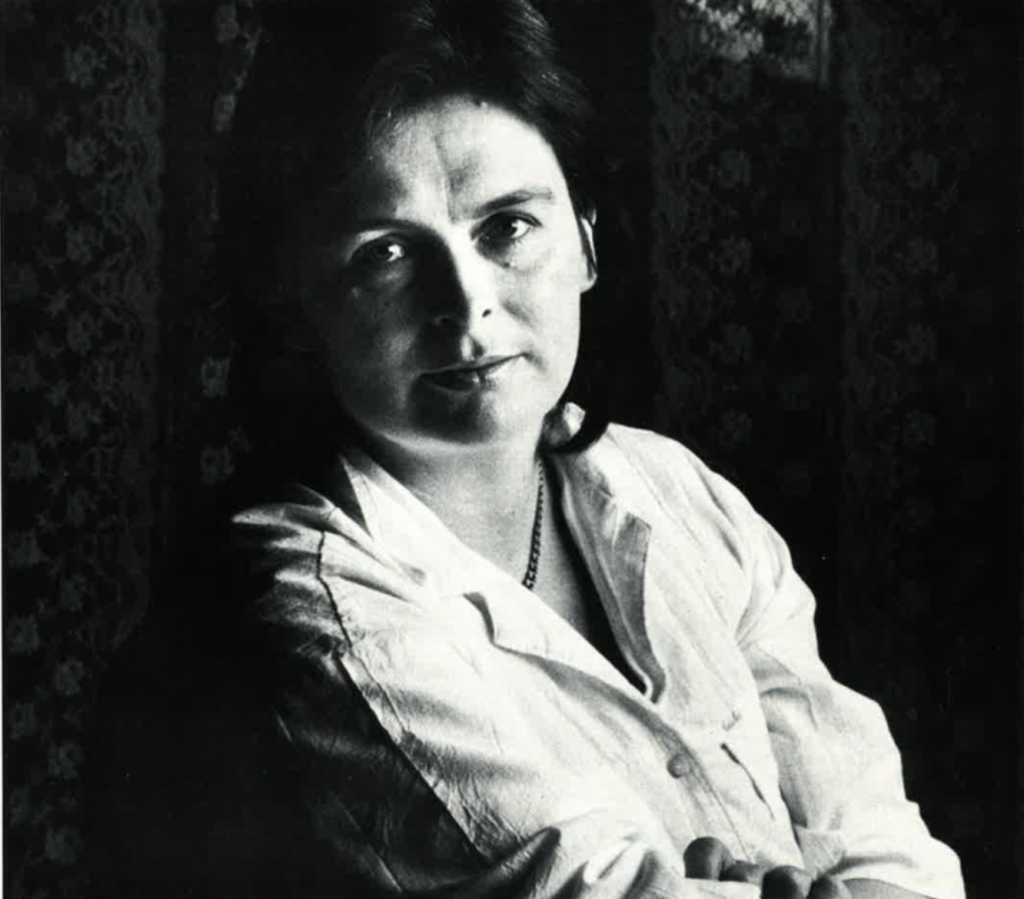
Six years after she lost her job for raising questions about the validity of her superior’s scientific research data, Dr. Margot O’Toole, a Dublin-born biological researcher living in Boston, has been vindicated in spectacular fashion. Once shunned as a supposed troublemaker, she is now being hailed as a hero. And in the course of her now famed fight against the status quo of the scientific world, she has become living proof of her mother, Elizabeth’s theory that “the apple doesn’t fall far from the tree,” meaning that she had equally heroic ancestors as a natural inspiration to her in her battle for the truth to be told.
We won’t try to beef up Elizabeth’s theory with sketchy data or with wishful thinking or with sloppy science. Surely everyone, scientists and all, know that the proof of the pudding is in the eating….
When Dr. O’Toole was recently lauded as “heroic” by the National Institutes of Health, and as the “Hero Who Exposed [A] Science Hoax,” by the New York Times, it came as no surprise to her mother, or to any of her family. They knew that she comes from a long line of straight-shooters and other such plain-speaking people.
And so, though this is a story about incorrect data, and maybe wishful thinking and sloppy science, please note that it was always a foregone conclusion on which side of the fence an O’Toole would stand with regard to all of those things. Look at the evidence.
Dr. Margot O’Toole’s forebears, millers in Carrigaholt, got run out of County Clare for giving grain back to the people. That was an age ago. And her late father, James, felt the whip of many a lashing tongue for his controversial play, Man Alive, when it was produced in Dublin’s Olympia Theatre in the early sixties. That was a generation ago. And so, Elizabeth O’Toole declares, “As the old people used to say, what’s bred in the marrow comes out in the bone.”
Right now Elizabeth O’Toole, a teacher in Brookline, Massachusetts, is entitled to a little elation that her homespun theories are being backed up by giants of the scientific world. At last they agree that it must now bow to the truth her daughter first confronted it with in 1986.
Few stood by Dr. Margot O’Toole in the early days except her family. They followed her through every twist and turn of a series of investigations that would take years to vindicate her.
Eventually, that vindication came with a report by the National Institutes of Health supporting her opinion of the suspect data. That report described her as “heroic” and pointed out that, “notwithstanding the losses and costs she incurred, Dr. O’Toole maintained her commitment to scientific integrity.”
After the NIH report was leaked to the press in March, the media jumped on its revelations as proof of the biggest scientific scam in recent memory. But Dr. O’Toole told Irish America magazine she is simply “relieved” that what the New York Times described as “the most celebrated investigation of scientific misconduct in the United States,” has ended with confirmation that she was right all along.
The exposure of the hoax has drawn in a number of eminent scientists, including a Nobel laureate, Dr. David Baltimore.
Though he had not written the data, as a senior advisor he had signed as co-author for the material and had vouched for it down through the years. Dr. Baltimore, who repeatedly attacked investigations of Dr. O’Toole’s allegations, once belittled her as “a disgruntled postdoctoral fellow.” He will be the subject of a separate NIH investigation, arising out of his conduct during this controversy.
The scientist whose work was discredited by Dr. O’Toole and by the NIH investigation, Dr. Thereza Imanishi-Kari, refuses to comment on the matter. While she will have a chance to respond to the damning NIH report, Dr. Imanishi-Kari faces the possibility of being barred from government funding for future work.
In 1986, Dr. O’Toole, 38, was a junior researcher in molecular biology, and a postdoctoral fellow at the prestigious Massachusetts Institute of Technology. Working under Dr. Imanishi-Kari, she was engaged for a year on an experiment that should have verified the data produced by her boss. The data, which had been included in a report for the noted scientific journal, Cell, suggested that transplanted genes could stimulate a recipient’s immune system to produce certain antibodies. The finding represented a significant advance in immunology.
The data didn’t add up for Dr. O’Toole.
However, what really alarmed her was the discovery of seventeen pages of data by Dr. Imanishi-Kari which she says showed information about the work published in Cell, to be false. Dr. O’Toole explains, “I approached my thesis adviser, Dr. Henry Wortis, at Tufts University, in an informal way.” Dr. Wortis said he found no evidence of misconduct.
At that stage, says Dr. O’Toole, she “was hoping that her [Dr. Imanishi-Kari’s] friends could get her to withdraw the paper. Basically, they told me to be quiet, that the department would lose money and grants.” Surely the faulty nature of the data was bound to emerge at some stage? Dr. O’Toole’s reply to that question gives the lie to that painfully innocent theory: “There is an awful lot of science that is just wrong. The most extraordinary things turn out not to be true from time to time. In most cases this is not due to fraud, but due to error. The attitude to my challenge was that, yes, over the years it will be found out that this was not right either, but it will be thought a mistake. I said this meant that an awful lot of people would be wasting their time for years.”
Dr. O”Toole, whose husband, Paul Brodeur, had just started work at the same lab as Dr. Imanishi-Kari, then tried official university channels for her complaint – “but they wouldn’t do anything about it either.” She was worried then and is still worried that her complaint would rebound on her husband’s career.
Dr. Imanishi-Kari told her to pack her bags, she says. The whistle-blower was being sent on the fastest train out of town…
Thus, in jig time, she was out of a job, the object of disdain among the scientific community, of virulent rumor and abuse, of allegations of incompetence and even the suggestion that, as a nursing mother, she was not acting rationally.
It took two years for the NIH to start its investigation. Meanwhile, Dr. O’Toole was persona non grata in the science world.
Looking for another job in the field, she would, she recalls, “try to get people on the phone and they wouldn’t even speak to me. This case reveals a lot about the attitude of scientists. There’s an old boys’ network. The scientific community rounded up to protect itself from outside scrutiny and from the bad PR that might jeopardize public funding.”
Her family, who had moved from Stillorgan, Dublin to the United States when she was fourteen, rallied round. When mortgage payments became too much, she and her husband and three children moved in with her mother, Elizabeth, a native of Cratloe, County Clare. [Her father, James is deceased. He was born in Shanghai and his family came from Lissycasey, County Clare.] Dr. O’Toole’s younger sisters, Elly May and Jacqueline, came to her support and she got a job with her brother, Larry, in his Gentle Giant moving company in Boston—”I answered the phones and looked after the computers. Initially I was in a terrible state of shock. They all admitted I was right; they just told me to shut up.”
She says, “When the facts started to come out, mainly through the efforts of Congressman John Dingell of Michigan, some members of the scientific community began to support me, notably Dr. Mark Ptashne of Harvard University and Dr. Linus Pauling. Some of the better brains started to realize that truth is important in science.”
Still, it took a long time for the balance to tip in Dr. O’Toole’s favor. It took several investigations by U.S. Health Institutes and three Congressional hearings, all of which served to inflame the temper of scientists who gathered in their hundreds at meetings to discuss the case and to complain about unsubstantiated charges and about unwarranted government interference in their work. Mention the name Margot O’Toole in scientific company in those days and you would have provoked the same effect as a Bunsen burner flaming away under their posteriors…
What finally broke open the case was the involvement of the Secret Service at the request of Congressman Dingell. After a forensic examination, they concluded that the famous seventeen pages of notes could not have been written when Dr. Imanishi-Kari said they had. Pages showed altered dates, were marked with different pens, and were written on different paper.
One year ago Dr. O’Toole told Dr. Plashne of her desire to get back into science. She says, “I called him on it. That was very hard for me to do.” Through his efforts she got a job in the Genetics Institute in Cambridge, Massachusetts in immunology research.
Now that the NIH has substantiated her conclusion that the supposedly groundbreaking data was faked, Dr. O’Toole says she hopes this will lead to a fundamental reappraisal of methods and attitudes in the world of science. She is eager to deflect praise to others, “I don’t really deserve credit for this. It should go to the investigators and to Congressman Dingell. When he took up the case he was deluged with criticism from scientists around the country. One wrote that he would not sleep until Dingell was out of office.” Dr. Walter Gilbert, a Nobel laureate at Harvard University, told the New York Times, “The whistle-blower herself did not want to call this fraud in the beginning. but she reported it to people who should have known better. The people in authority failed to investigate properly. There is a canon of the establishment which says that when someone objects, that person must be a malcontent and be badly motivated and that science is holier than anyone or anything. This is the issue: what happens when a scientist is called upon to be unsure of his or her work.”
Her mother gave a different explanation: “I think Dr. Baltimore didn’t realize her name was O’Toole. When he said she shouldn’t pursue it, that’s what got her Irish up. It isn’t a big deal for an O’Toole to throw away a career for a principle. That she might hurt the career of a husband and other people who depend on her, that is what caused her pain.”
Jacqueline, her sister, says, “It might be hard to grasp the technical parts of this story, but it’s not hard to grasp the human part of it—that basically people would not admit or correct a mistake. You don’thave to be a scientist to understand that. But it isn’t over yet. For one thing, while the relevant authorities say there are questions about the paper, they still haven’t acknowledged that they acted in a completely inappropriate or unprofessional manner. In a way, this is just the end of the beginning.”
Editor’s Note: This article was originally published in the May 1991 issue of Irish America. ♦
Leave a Reply