
No wonder that people involved in the Irish tourism industry are so alive to the value of cultivating business meetings and incentive travel. While other aspects of the travel trade bow to such hazards as tough economic times or terrorist threats to foreign travel, one area that seems resistant to such pressures is incentive/business tourism.
If we can define business tourism as all that encompasses the meetings and conventions of the corporate world, then incentive travel can perhaps be defined as the more enjoyable end of that market!
The whole – lucrative – business took off in the seventies as a concept for rewarding hard-working employees. And it hasn’t looked back since. Even in the recession of the early ’80s business and incentive meetings was a growth industry. Now hundreds of thousands of meetings of American companies, associations, etc. take place every year. And every year, they look further and further afield for likely locations.
And there are plenty of meetings to go around. In May, 1990 Meetings and Conventions magazine gave the results on “the meetings industry explosion.” It pointed out that “Even in the Roaring’ 80s, few industries could match the skyrocketing 236 percent growth that the meetings industry has experienced since 1979.” It added that “In fact, in the last two years— a time when other industries were contracting or cooling down—the meetings industry grew a full 37 percent, by far the largest two-year jump ever recorded.” Irish tourist interests are as geared up as any on the international scene to cater to a market that will continue to burgeon as the nature of business becomes ever more global, and as American and other non-European corporations investigate the opportunities available in 1992 when trade and other barriers come down in the European Community. Indeed, Irish tourist interests arguably are better prepared than most to satisfy the myriad needs of this demanding market.
For example, business and incentive planners are specifically catered for through the Convention Bureau of Ireland, part of whose task is to help Irish organizations planning for conferences of their overseas associates, with a consultancy service that covers all the bases.
(Sixty percent of all conferences originate through these contacts.)
The comprehensive nature of the service provided by the Bureau is shown by the fact that it comprises Aer Lingus, the national airline, the Tourist Board, bus, rail and shipping companies, the Irish Hotels Federation, regional tourism groups, the Royal Dublin Society and Trinity College, Dublin, as well as leading trade unions. It operates under the control of a representative council. The Convention Bureau of Ireland can be contacted at the Irish Tourist Board, Baggot Street Bridge, Dublin 2. Telephone (01) 765871; FAX: (01) 764764.
The fact is that with a trend among American companies to bring their major meetings abroad, Irish tourist interests would be daft not to try and woo some of that business. (Foreign meetings for American companies have doubled since 1987. They had suffered a temporary dip in the two years before that because of the perceived threat to Americans from terrorists.)
But it’s a multi-billion dollar business, and every country under the sun is aware of how lucrative it is. Thus meeting planners (that’s a full-time career for more and more people) who make no bones about wanting to “get the most bang for their buck” have no shortage of international applicants.
Ireland should give plenty of bang for that buck. Like others of the 12 European Community countries the coming into effect next year of the Single European Act will mean a reduction in the paperwork and visas required by foreign travelers, adding to the attractions of holding such events in Europe.
For the American business/ incentive traveler Ireland has other advantages. It’s nearer to the United States than the rest of Europe. The traveler does not have to deal with a foreign language. Hotel rates are extremely competitive. There is not a shoal of time barriers to cross (a very important factor for sales people, who want to keep in touch with their home offices.) And there are no currency problems. Beyond that the Irish Tourist Board and the Irish Convention Bureau offer help on suitable locations, agenda, schedule, facilities, program support, etc.
How many of the people can you please all of the time? Working to please the business/incentive market is a good test of that challenge.
A recent report in Meetings & Conventions magazine gave a hint of the wide range of requirements— “Did you know that corporate groups are often more concerned with tasty meals than adequate meeting space, while associations feel the opposite…. “Attendee convenience often determines the lure of one destination over another. It’s not surprising, then, that the glamor of a destination or the availability of recreational and sightseeing activities was way down on the list for corporate and association planners. Several planners agree that one hour is the maximum time they consider for transfer from airport to property— ‘if it’s strictly a business meeting, I want it near an airport, but not so close that noise interferes.'”
The study found that climate, recreational facilities and the image of a location reign supreme when the meeting is an incentive. But for corporate planners, food is a premium. If the food is lousy, they’ll all remember it!
The fact that the Irish tourist industry is compact, and thus tightly controlled, but also extremely varied and used to catering to a wide range of travelers is an advantage in this line of business. Its long-established and well-known tourist venues are easily adaptable to the needs of the corporate/incentive traveler.
People in Irish tourism are also set on catering specifically to this sector of the market, and proving that the country provides the ideal venue for the corporate planner. For example, in June, President Mary Robinson officiated at the opening of the Castletroy Park Hotel in Limerick.
Close to Shannon International Airport in the southwest, this 109-room hotel was custom-built at a cost of $18 million, by EGB Management, which identified the need for such a facility outside Dublin.
A four-star hotel set on 12 acres, it’s strategically located five minutes from Limerick city, half an hour from Shannon Airport, which in turn is a mere five-hour flight from JFK Airport in New York.
It’s a business, conference and tourist center with all of the traditional comforts of a top-quality Irish hotel, but with the addition of high tech state-of-the-art conference facilities.
Ireland rates high as a destination for international meetings. Last year it earned over £32 million from 240 conferences that catered for over 63,000 delegates, making it a record year. The country has venues which can easily handle up to 4,500 delegates in one venue. There is easy access to the country’s two international airports, Shannon and Dublin. And, most importantly for busy business travelers, there are no long waits at those airports unlike at other European airports. Beyond that there is in all centers a full range of ancillary services for the smooth running of a conference, (translation, secretarial, etc.)
An indication of the keen awareness of Ireland as a good conference venue is further given by the news that the prestigious International Conference Resorts (ICR) are steaming ahead on a custom-built hotel close to Shannon Airport.
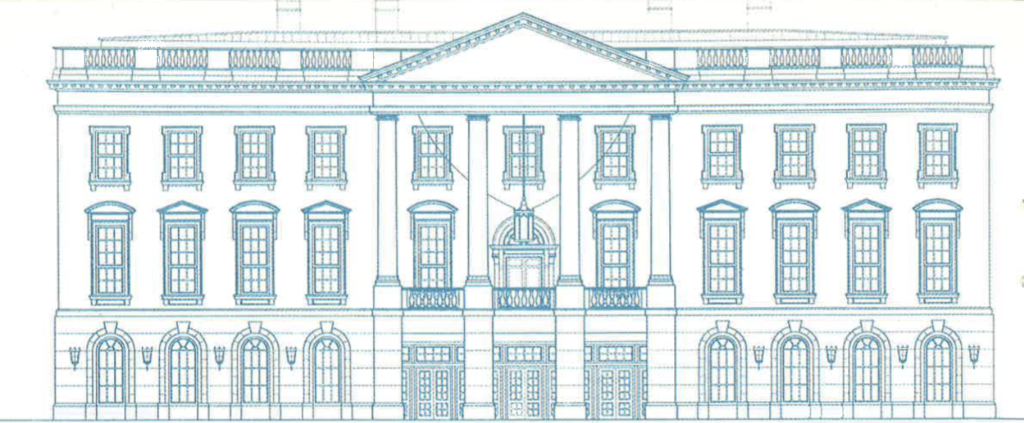
This is the Hoban House International Conference Resort and Golf Course (named, incidentally, for the Kilkenny-born architect of the White House).
At a St. Patrick’s Day news conference in Washington, ICR president, Richard Joaquim announced that ground would be broken on the site this summer, and that Hoban House, a
300-room facility built around a championship golf course, would be ready for its first guests by spring of 1993. Hoban House, built on 150 acres, will, like Castletroy Park Hotel, be located in the heart of the southwest.
Hoban House, all 40,000 square feet of it, will be the most extensive conference center in Europe, which, as well as having the state-of-the-art services necessary to run a good conference, will have a full range of leisure facilities.
The fact is that people in Irish tourism have a long history of working for this type of traveler. They need little incentive to do that. It’s just good business.
Editor’s Note: This article was originally published in the September 1991 issue of Irish America. ♦
Leave a Reply