
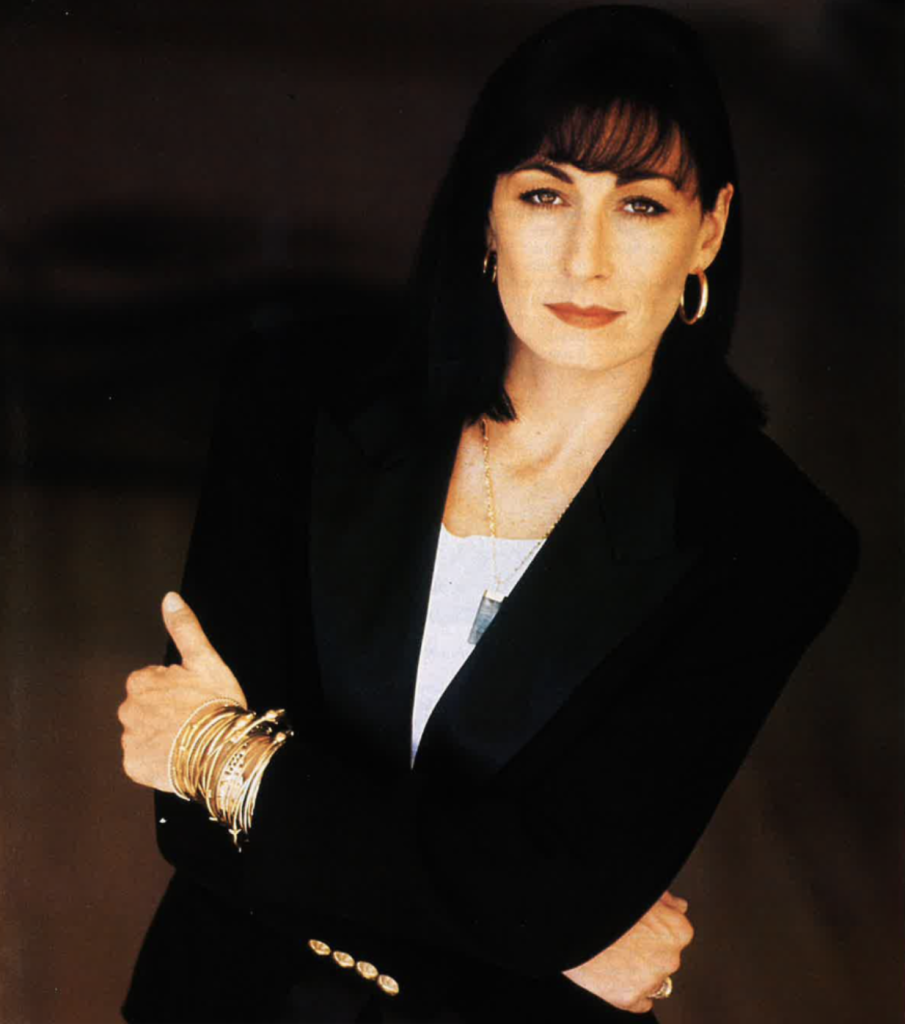
Anjelica Huston’s portrayal of Maerose in Prizzi’s Honor, earned her an Academy Award in 1986.
Since then she has starred in Nicolas Roeg’s Witches, in Paul Mazursky’s Enemies, a Love Story, in Woody Allen’s Crimes and Misdemeanors and most recently as Lily the complex con artist in The Grifters.
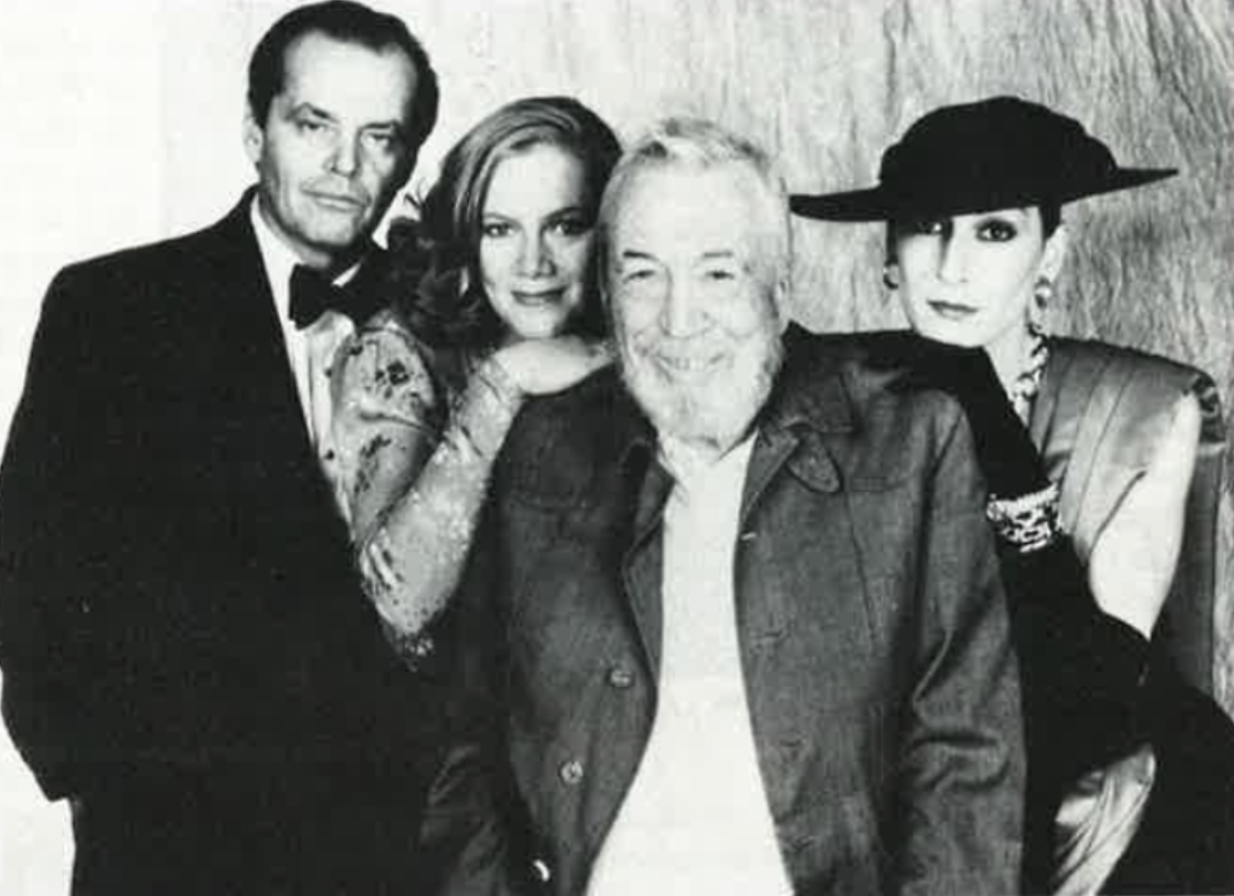
But perhaps her most poignant performance was as Gretta in the film version of James Joyce’s short story, The Dead. It was a family affair. Brother Tony wrote the screenplay and father John Huston directed. It was to be his last film.
Ireland has a special place in the Huston heart. John Huston brought his young wife Ricki Soma and children Tony and Anjelica to live there in the 1950s and it was there they remained until the mid-70s. And it is about Ireland that Anjelica Huston opened this interview with editor Patricia Harty in Beverly Hills recently.
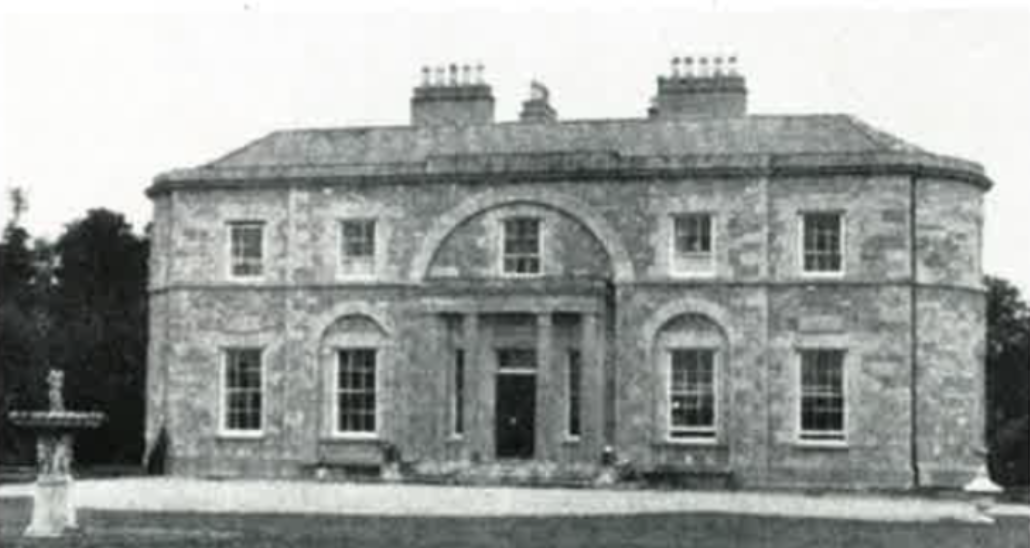
Anjelica Huston: I was about one-and-a-half, two years old when my father moved to Ireland. He had just finished making Moulin Rouge and had gone to Ireland on a hunting trip and had fallen in love with it. He came back and demanded that my mother pack up and that we all move. And so he rented a house in Wicklow for a couple of years, while the house in Galway was being rebuilt.
I have very early memories of that house.
It was very large and drafty with an enormous kitchen and big gardens. The sort of things I remember are the small mishaps that happen to you when you’re a child—like getting my arm caught in the ringer of the washing machine. It was there that I learned how to ride. I had an old pony called Honeymoon, who eventually collapsed underneath me as I was cantering around the fields like one of those comic children.
Most of all, I remember one night when my parents came and woke my brother and me. We came down onto the front steps of the house and the sky was just full of shooting stars, meteors it was one of the most beautiful things I can ever remember, lying in my father’s arms or my mother’s I can’t remember who was in whose arms —and the sky being alive with falling stars.
And then the work on St. Clerans was nearing completion and my father moved us to Galway.
There were stables and a barn and very beautiful gardens with a river running through the property.
I remember years of wonderful long summers with excursions to ruined castles and trips up to Connemara and the fair in Galway. They always had a fair in the summer. It lasted three days. We loved the bumper cars. And Galway races. And just life with one’s pony and with one’s animals. Where we lived was sort of remote, so we didn’t really play with a lot of other children.
Even when my brother was sent to the Brothers in Loughrea and I went to the Sisters for awhile-that was still seven miles away. So, apart from kids that came to visit us from America and Paddy Lynch’s—the groom’s children—we didn’t really have a lot of friends. So, it was a lot of creating your own interests and catching frogs, or whatever. [Laughs] And a lot of dress-ups. We used to dress up all the time.
IRISH AMERICA: How did your mother take to Ireland?
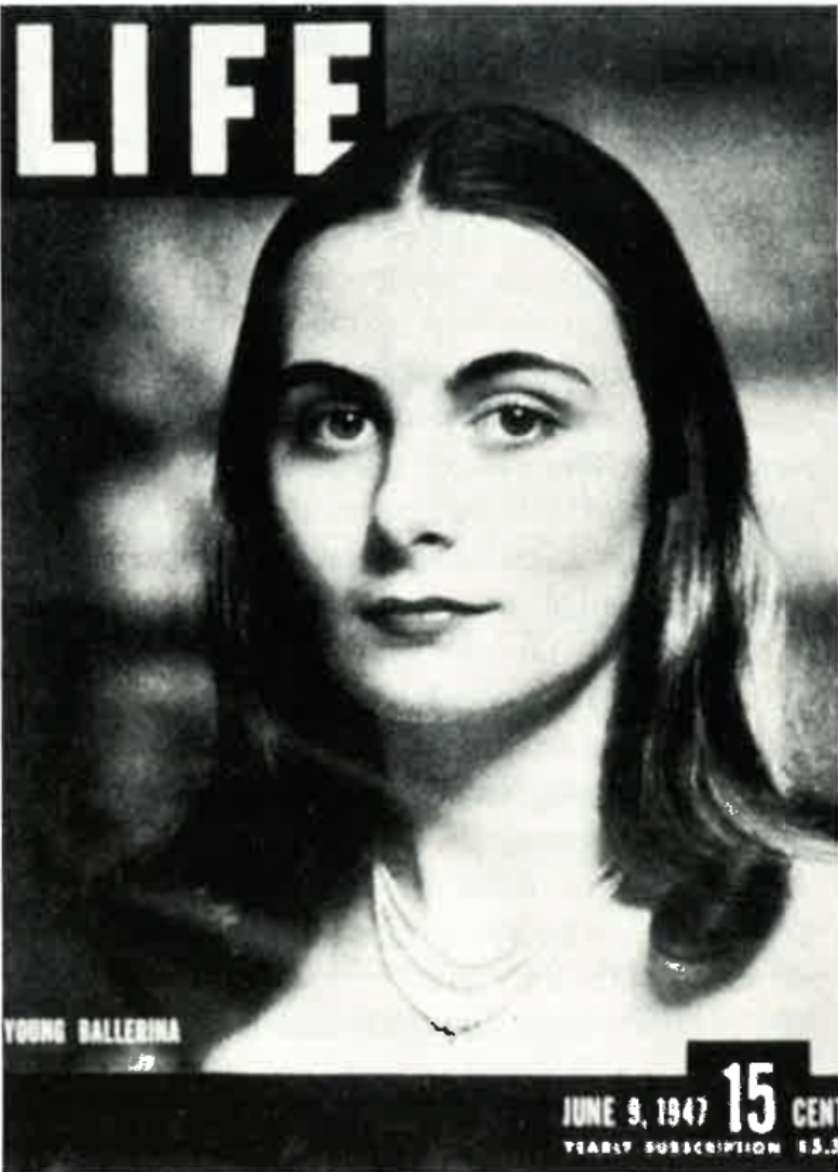
I think it was lonely for her. She was brought up in New York and had been a dancer with the New York City Ballet which she left to become an actress. She was under contract to David Selznick when she met my father. In fact, for the second time, because he’d met her when she was still very young, 14 or so, in her father’s restaurant. But I think, yeah she did alot of needlepoint. Definitely the sign of a lonely woman. [Laughs].
My father used to go off and work a lot so she used to take trips. She’d go to Paris and she’d go to London and so forth. But it must’ve been remote for her. She was very young. She had me when she was 18.
What did your grandfather think of all this?
I think my grandfather thought my father was a gambler. And he wasn’t fond of gambling. He, of course, had his own philosophies. He was a Northern Italian—or his parents were Northern Italian peasants who’d had a very tough life. At about age 30 he took up yoga and decided to go to America. First he started as a bellboy in a hotel. Then finally he paid for all of his relatives to come over and he put them to work in his restaurant, “Tony’s Wife.” It was on 57th Street. In the war it became a speakeasy. It was quite famous, the attraction being that he would stand on his head and sing Italian opera. In fact, when we stayed with him we were forced to sing “Oh, what a beautiful morning, oh, what a beautiful day,” every morning at 6 a.m. He was kind of rotund and wore big bow ties. And he had various philosophies, strange philosophies, like if you stood on your head and sang every day you’d live forever. Which he did, until finally he was burned, aged 90-something, in a fire in Long Island.
Your mother, having grown up with all the activity of a restaurant, must have missed that excitement living in Ireland.
Yes. I think so. My parents were fairly social, and there were people around. But when my father was away working, there would be long, quiet stints. And certainly the west of Ireland is very remote. I think I still shout on long distance, because in those days, you’d have to get on the phone and twist this little knob, and then you’d get the operator in Craughwell, and then they’d put you through to Loughrea and then through to Galway and then to Dublin. So you’ve gone through about five operators by the time you get to Dublin, never mind the United States. Everyone would have all these crossed lines.
[Laughs]
Do you think growing up in Ireland had an effect on your life?
Definitely. I was, to a certain extent, quite spoiled, but I don’t think anything like the kind of spoiled that you can get around here. We had to invent our own pastimes. We weren’t spending hours in Toys R Us. We didn’t have any TV until I was about 12 or 13.
So, you invented your own games. You played with your horses, or you dressed your dogs up, or whatever. But there was none of that kind of immediate consumerism that you see among kids here. If they see something on television they want it immediately. They have it by that afternoon, and by that evening it’s discarded.
Do you think that having to create your own entertainment as a kid led to your wanting to be an actress?
I think so. Also, it seemed glamorous, it was what my father did. I think probably those things are in the blood, but I was always dressing up and play-acting. I dare say, if I had watched a lot of television I might’ve felt the same way. So, it’s a little hard to tell.
What was your father’s attraction to Ireland?
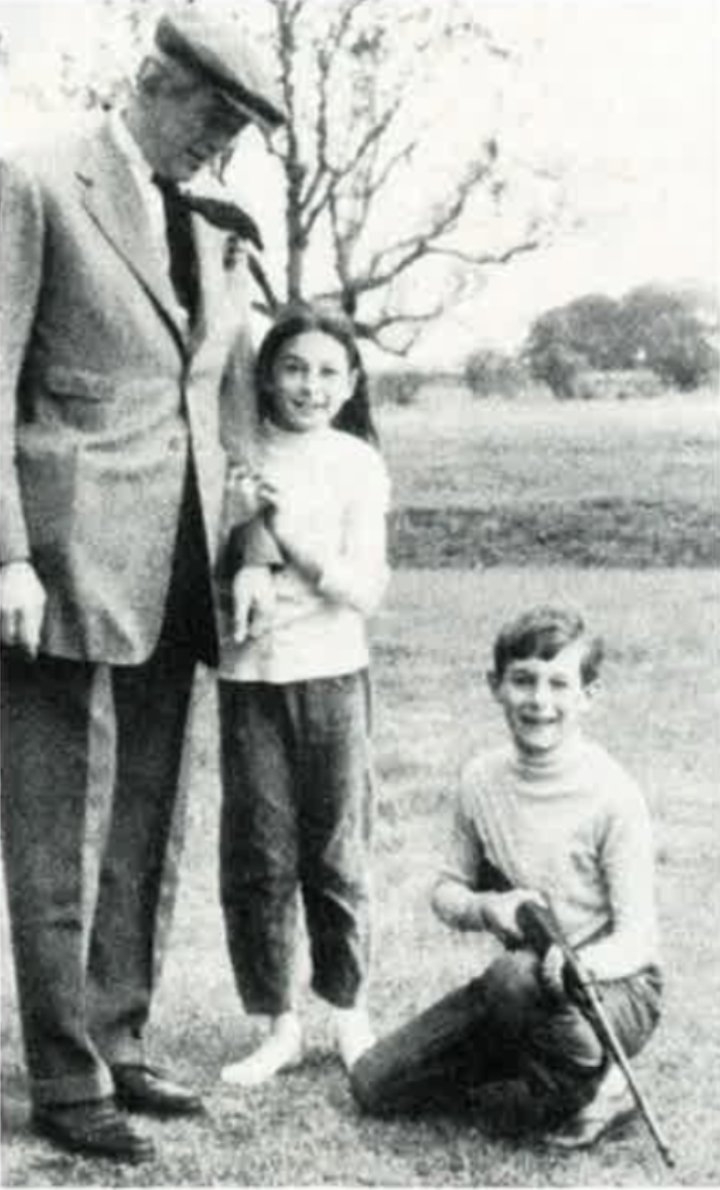
He loved it because it was wild-and because he loved horses. He loved to hunt. He liked the people. He liked untamed places. And Ireland had a good deal of that. There was something sort of untamable about the earth itself.
And he was an adventurer. He liked places that weren’t normal and compact. I think Beverly Hills was his anathema. He hated the idea of living here. He didn’t like anything about it.
He thought it was altogether too safe. I always have this image of him on a horse galloping around the countryside.
Did you brother Tony like Ireland?
Oh, yes. He still lives there a good deal of the time.
Do you go back?
I’ve been back a couple of times. Il’s hard to go back to the West. I went back to Galway about 15 years ago. I stopped to ask directions and this man said, “Welcome to John Huston country,” it was very eerie, he didn’t know who I was. And it was very peculiar to see the house subdivided. It wasn’t what it had been. Since then an American has bought it. But I don’t know in what state it finds itself these days.
What was it like working on “The Dead” with your father and your brother Tony?
The actors were fantastic. I wasn’t really aware that so many really beautiful actors were working now at the Gate and at the Abbey. It was very poignant. It was very sweet. Everyone was really happy to be working on that film. There was a lot of mutual respect. I think it was very special for all of us.
Your father had a real appreciation for Joyce.
Joyce changed his life. He always said he changed his life.
Can you talk a bit about Gretta the character you played in “The Dead”?
There’s a line of Gretta’s— “We used to go out walking in the rain, Gabe. You know the way they do in the country?” Lines like that are so unmistakably Irish, if you’veever spent those long evenings there where it’s light until 11 o’clock at night or so.
And it’s kind of misty and you put on your Wellington boots and go out with the dogs [Laughs]. And you do it with a friend or you do it alone.
Whenever I said that line, it always got me.
There are a lot of things she says in that scene that were touching. But that one line would bring back so much. So many times, spent walking in the country —and it’s my whole experience of remembering a time when it was golden; the romance at that time, the first time you fell in love— all of that is somehow in my collective memory of Ireland. It is a very romantic country, very brutal and very romantic and very reticent and very passionate at the same time.
Did your father differ from other directors that you worked with?
Everybody’s different. It’s not really a matter of how different he was from everyone else. I would say that his casting was great. He had very little to tell you after he had cast a movie. He knew exactly what he wanted it to look like, he didn’t accept false moves. He would listen very, very closely. Sometimes at the first rehearsals he would sit and listen with his eyes closed.
People would sometimes think he was falling asleep. He was, in fact, listening very, very intently. He could listen like practically nobody else.
And by the time we did The Dead he had it down to a fine art. It was easier to him than breathing. He was all hooked up to machines. But he knew exactly what he wanted. He was as economical as it’s possible to be. He shot less footage for the movie than they shot on the documentary of the making of the movie. He knew exactly how he wanted to see it, from where he wanted to cover it. And so it was nice to work for him, because there was not a moment’s doubt with what he had to do and you didn’t have to go through all that wasted time searching.
You got very close to him in the last years, didn’t you?
We were always close. We had our differences, but I don’t think our problem was ever that we weren’t close. Too close at times, I would say. He was very perceptive, very judgmental, he wasn’t afraid of calling you to task. He didn’t like excuses, he didn’t like being lied to. He didn’t run from the truth.
I used to think he wanted me to be like Tricia Nixon. There was that idea on one hand, and then some kind of extravagant idea on the other hand. I don’t know how the two met: But we came to find peace within it, yes.
Is there any one landmark event that affected your life?
There have been a few landmark events.
Moving from Ireland to go to school in England, that was just a horror. I hated it. I hated London. I hated getting up in the morning to go to school there. I was the sort of idiot in the class. Up until then I’d had mostly tutors supplemented by a convent. So, I really had no idea of what the Lycée Français [students were expected to excel in French] would be like. It was alien territory. And then my mother’s crash—-and coming to America after she died. There were lots of those kinds of milestones.
Do you feel like an immigrant over here?
I do to a certain extent. But I always felt a little displaced in my childhood, because my parents weren’t like anyone else’s.
They were obviously not English. They were not Irish. They were mixtures which was on one hand occasionally something to be proud of, but usually something to be hidden or ashamed of.
Especially when you’re a kid.
You didn’t want your parents being too different. I remember my mother putting on knee-high Russian dancer’s boots to go to Dublin one day. I was mortified. Take them off! So when I finally came back to live here, it seemed to me that my parents were very definitely Beverly Hills people.
Irish, Italian, whatever had gone on— whatever the blood-there was something deeply ingrained about Beverly Hills. Now that I’m here I always think of Ireland as my real home. It works in reverse too.
What are you working on now?
Well, I just finished working on a movie called The Addams Family —which is from Charles Addams’ cartoons. Through the years it’s been on television as The Addams Family and later as The Munsters. We’ve gone back to the original Addams Family. It’s a big Thanksgiving movie.
It was fun.
You’ve had so many great roles, each one of them so different. And now Morticia in “The Addams Family,” which is a great part.
That strange Morticia. Well, they sort of come to you. There’ll be something about any given one of them that just locks in your attention. Generally it’s because they’re well written; there’s nothing like a well-written part. It comes off the page and out it speaks.
I really think you captured the character of Lily, the tough but fragile con artist in “The Grifters.”
That’s what was so great about that script, all the shades and colors of that character. There’s a line in Chinatown, which is my father’s, that “Given the right circumstances, people will do anything.” And that’s very much how I felt about Lily.
Is your work the most important thing in your life?
Gee, I hope not.
You seem to be constantly working, though.
People seem to think that, but actually there was a long gap between Witches and Grifters. They held Witches for about a year before they released it. So it looked as though I’d been working every second. In fact, I’d had a good nine-month break between the two movies. And certainly between Grifters and Addams I had another pretty long break.
What do you like to do when you’re not working?
I like to go up to my farm, which is up north and play with my horses and my animals, my gardens. It’s like a sort of mini-recreation of St. Clerans. I can go up there and not look in the mirror for weeks.
That’s what I like to do.
Do you have a philosophy of life?
No. Just take the days as they come. And don’t turn your back for too long.
When you said that your parents were Beverly Hills, do you think that that better-equipped you for this business?
I would say it helped me a lot, because I saw early how it works. I also had years of listening to my father say, you need a good script.
Well, guess what? [Laughs] You do. So, I got on-the-job training, as it were.
I was lucky in that I wasn’t tremendously successful when I was very young, because you’re considered old hat by the time you’re 25. And also I’m not so bowled over by a modicum of success that—you know, it flies me out the window.
Are there any projects that you have of your own that you want to do?
I want to do Maude Gonne MacBride [Irish nationalist and unrequited love of W.B. Yeats]. I’ve just gotten the rights to Nancy Cardozo’s book, Lucky Eyes and a High Heart. And in fact, I want to go to Ireland and talk to a few writers shortly.
Hopefully, I’ll be getting that off the ground.
Would you like to do more stage work?
I’m prone to stage fright. But, yeah, I would like to do more.
I can imagine it’s terrifying.
Very scary.
We can all be great at moments. But how do you manage to be consistent, to hold onto your confidence?
That’s the hardest thing on stage. In movies you can always go back and say, okay, I’m not pleased with the take. Can we try again? Or if something doesn’t work during the take, you can always stop it and try it again. But on stage, it’s a one-time thing and for that reason it can be very devastating. There are times when you go on and you feel great; the night goes really wonderfully. Then the next night you can start off on exactly the same foot, but everything is dreadful, and you don’t know why and you can’t get it back. You never know until you open your mouth. And it doesn’t even have to do with the way you think you’re feeling.
Then, of course, you hold yourself hostage and blame yourself. It can be awful.
But I think it’s like anything else. The more you do it, the more consistent you become.
You said Peggy Feury, your acting teacher, really helped you. You also said something about her being Irish American, and that really helped.
She was great. We had a spark of recognition. She was very soulful. I think, yes, being Irish had a lot to do with it. I like Irish people. I just do. [Laughs]. There’s no explanation for it. But, apart from that, I liked her very much as a woman too.
What kind of techniques did she use?
It was just the things that she saw, things that she noticed, things that you might not have noticed. She was very literal. She was very bright. She was very funny. And she was very spiritual, not in a cloying way. We didn’t do a lot of [Laughs] crystal work or anything like that. But she had a very highly developed sense of the world and the universe.
Maybe she was related to Michael Feury [Gretta’s first love in “The Dead.”]
She might have been. I thought about her a lot when I was saying Michael Feury’s name. I thought of him as like a brother of Peggy Feury, you know. A Martin Feury used to work for us when we were growing up; there are a lot of Feurys in the west. Feurys and Lynchs and Burkes.
Would you like to do more comedy?
Oh, I do comedy all the time. I mean, some things might not look like comedy, but they’re couched in comedy. The things that work best dramatically have both comedy and tragedy. At some point I think you have to search for the laughter, and you have to look for the jokes. You can’t expect to be provided with them.
That’s mostly what makes it all go around— being able to laugh at yourself and at others, throw the other stuff behind you, and get on with it.
My father and his father had this game where they’d make each other laugh.
Whether they were with people or alone together they were constantly putting each other on. It seems to me a nice sort of tack on life that you would actually want to make someone else laugh.
That’s what I love about going back to Ireland – the wit and humor – hearing these old guys tell the stories.
If you really want to talk about something, roll down the window and talk about the weather. You can talk to an Irishman about the weather for close to two hours. [Laughter]. And they will never stop a conversation, which is wonderful, you know. It’s the greatest. I love it. I’m hoping to go back there and talk about the weather myself soon.
Editor’s Note: This article was originally published in the September 1991 issue of Irish America. ♦
Leave a Reply