
If you could count back through enough pairs of grandparents, it could be that you have some genetic ties to that astonishing people, the Celts, whose art, conquests and legends burs forth in vivid profusion in the era of Europe’s pre-Christian foundation. An exhibition in the splendid Palazzo Grassi in Venice, Italy this year sets out gleaming treasury of Celtic achievement that has visitors from scores of countries gaping in awe. The assembly of some 2,500 stunning artifacts from two hundred museums forms the most comprehensive display of Celtic art and archaeological findings ever brought together to detail the culture of this passionately gifted and war-wild people. The exhibit is an enthralling revelation of the enormous heritage of beauty and history to which Ireland more than any other European nation is still related even in the modern age. Indeed, recent scholarship and archaeology have confirmed the actuality of Celtic cultural wonders worthy of the most romantic dreamings of those Gaelic League pioneers who sought the preservation of the Irish Celtic legacy at the end of the last century.
Thronged with tourists whose admiring exclamations in various languages testify to their appreciation, this exhibit is a panorama that links Ireland’s Celtic past to a realm of Europe far greater in scope and achievement than anything hinted in our history books. It could be argued that it surpasses in cultural significance even the fabled missionary network of the early medieval Irish monks and the vast emigrant dispersion from Ireland in the last three centuries.
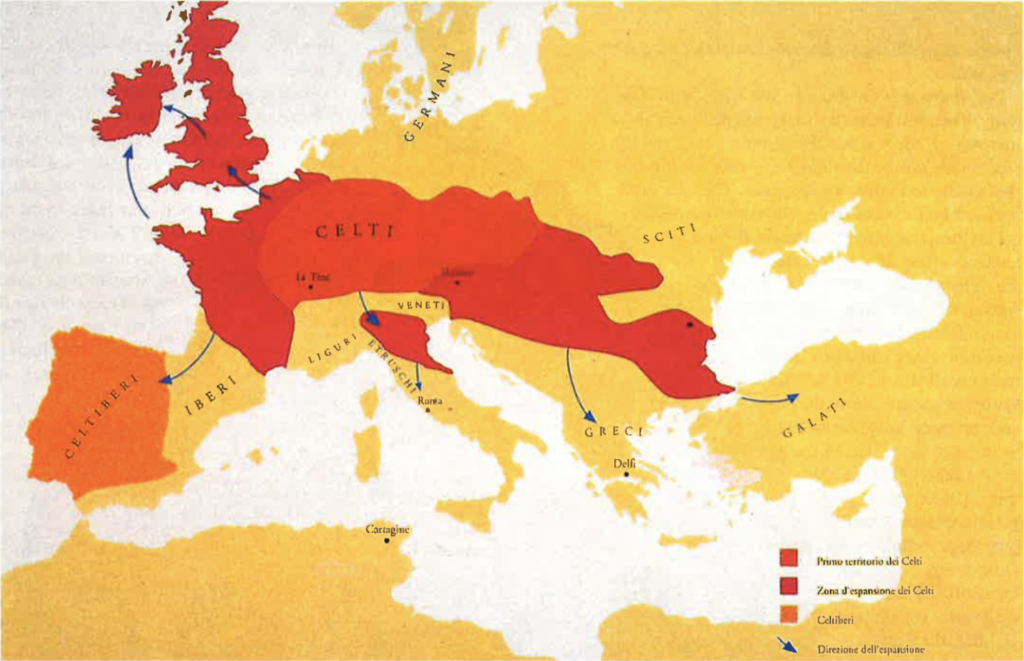
The discovery of the true extent of the Celtic presence in early Europe was greatly advanced by the unearthing of one dimension of their culture through archaeological research at Hallstatt in Austria and at a site called La Tène in Bohemia. The evidence from these sites produced materials that led to a fuller description of a Celtic expansion that began in the seventh century B.C. in the Hallstatt area and a remarkable flowering in the fifth century B.C. in the area North of the Alps. In these cycles of migration and development the Celts had a greater impact and expansion than any of the peoples beyond the Mediterranean basin. They were the medium through which trade and knowledge were exchanged between the Mediterranean and the “barbarians” to the North. The Celts were termed “barbarians” by the Greeks, but the term did not mean uncivilized. It meant those who were different. Through trade and conquest the Celts at length dominated in irregular patterns of settlement from the Dardanelles to Donegal and from the plains beside the Danube to the Atlantic coast in Iberia.
Written information about the Celts is largely derived from Greek and Roman sources. The Greeks, self-conscious cultural leaders of the classical world, generally did not like the Celts. A huge Celtic army had sacked the shrine at Delphi in the fourth century B. C. In the same period the Celts invaded Italy, routing the Etruscans and conquering Rome. Brennus was their war leader. His name has the same root as the name St. Brendan bore and that of the O’Brennan clan. The Romans, certainly the warlords of the classical world, had an attitude toward the Celts of mingled fear and puzzlement. Celtic warriors rode home from battlefields with the heads of their enemies swinging from their saddles, and their prowess as swordsmen and battle heroes ranged them in the Roman mind with mythic giants, Amazons and other war demons. Lavishly outfitted in gold neck torques, splendid shields and weapons, the tall, long-haired Celtic war chief was for several centuries a deeply threatening challenge to Roman discipline and military skill.
But, there was far more to the Celts than war-glory. Their hierarchical society was innovative and industrious, adept at borrowing from others and infused with imaginative creativity that contributed profoundly to Europe’s emergence. They are credited with both agricultural achievements and technical abilities that helped lay the basis for a new level of settled life on the continent. It was the Celts who brought the plow into widespread use, and their crop techniques long influenced European practice. It was in metallurgy, however, that they truly excelled, and this skill lifted.
European peoples above the reliance on stone implements that, went back to the era of the cave dwellers. Mining salt, trading their metal wares great distances, worshipping gods strange to the Greeks and Romans, haughtily conscious of their own wealth and abilities, the Celts represented something of an enigma to Strabo, Aristotle, Polybius and Julius Ceasar and their Hellenic and Roman world.
In the use of metal alone, the record of the Celts shown in the exhibition is astonishing.
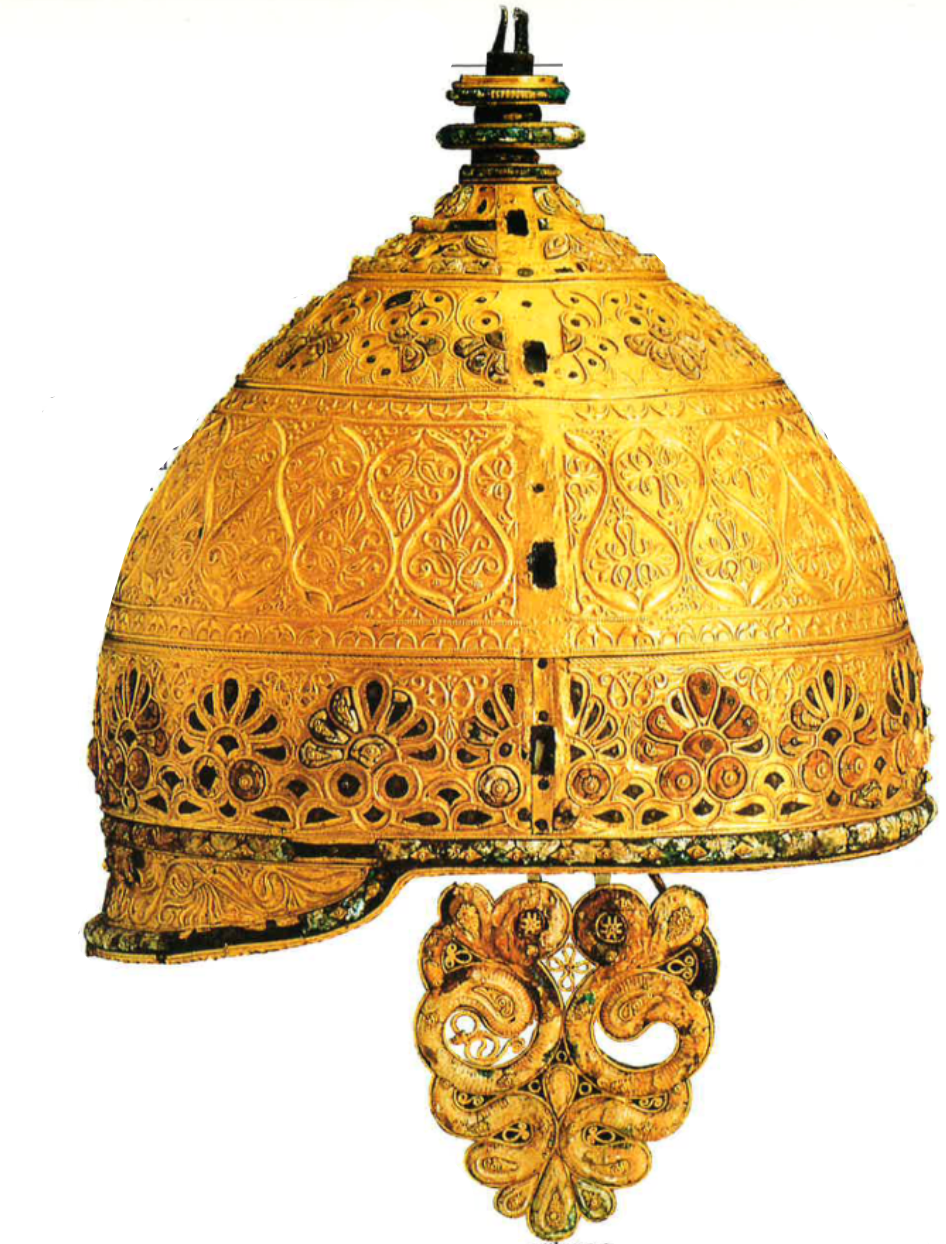
They had the ingenuity to mine in the most mountainous and difficult areas, refine and combine ores with inspired technical skills and then fashion ornaments,
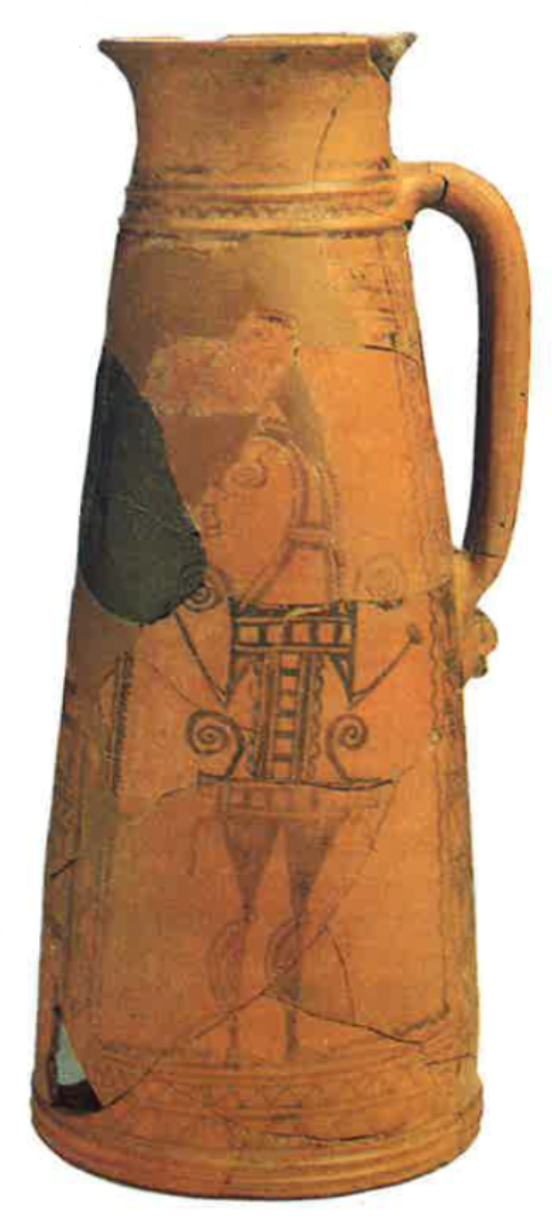
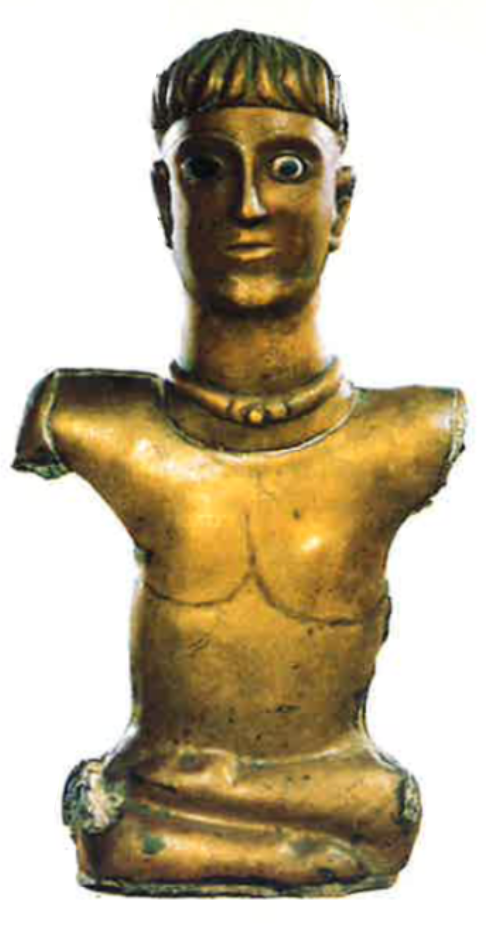
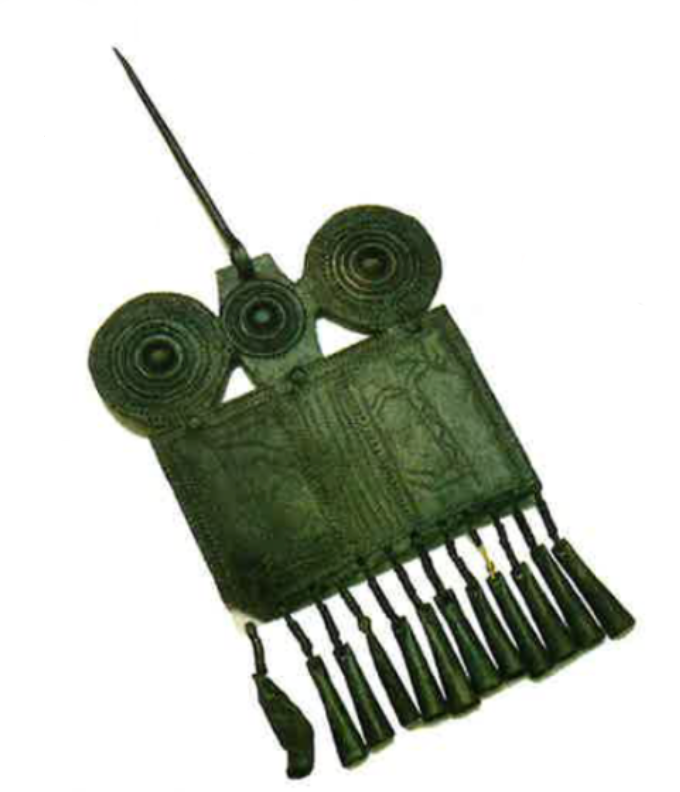
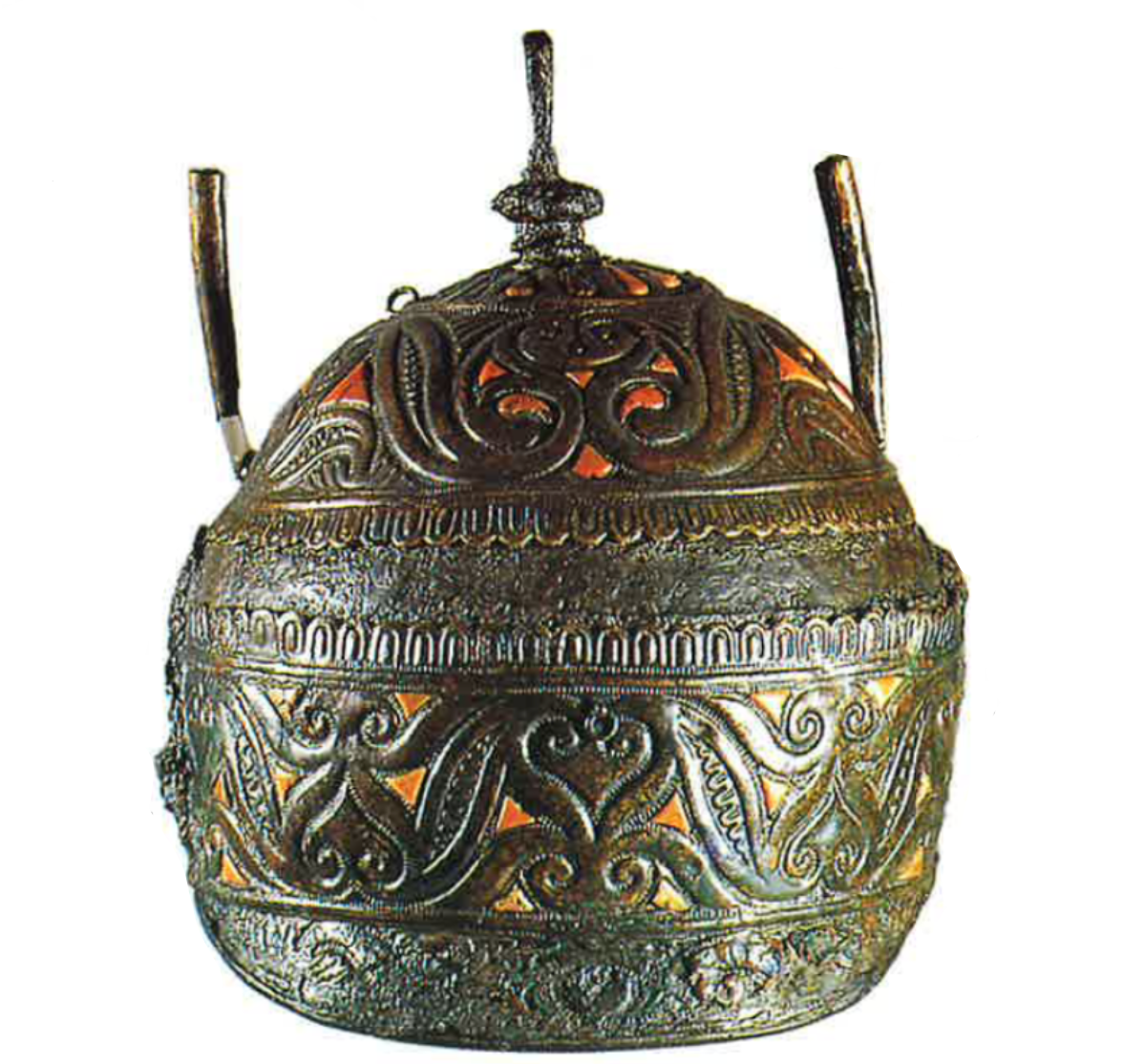
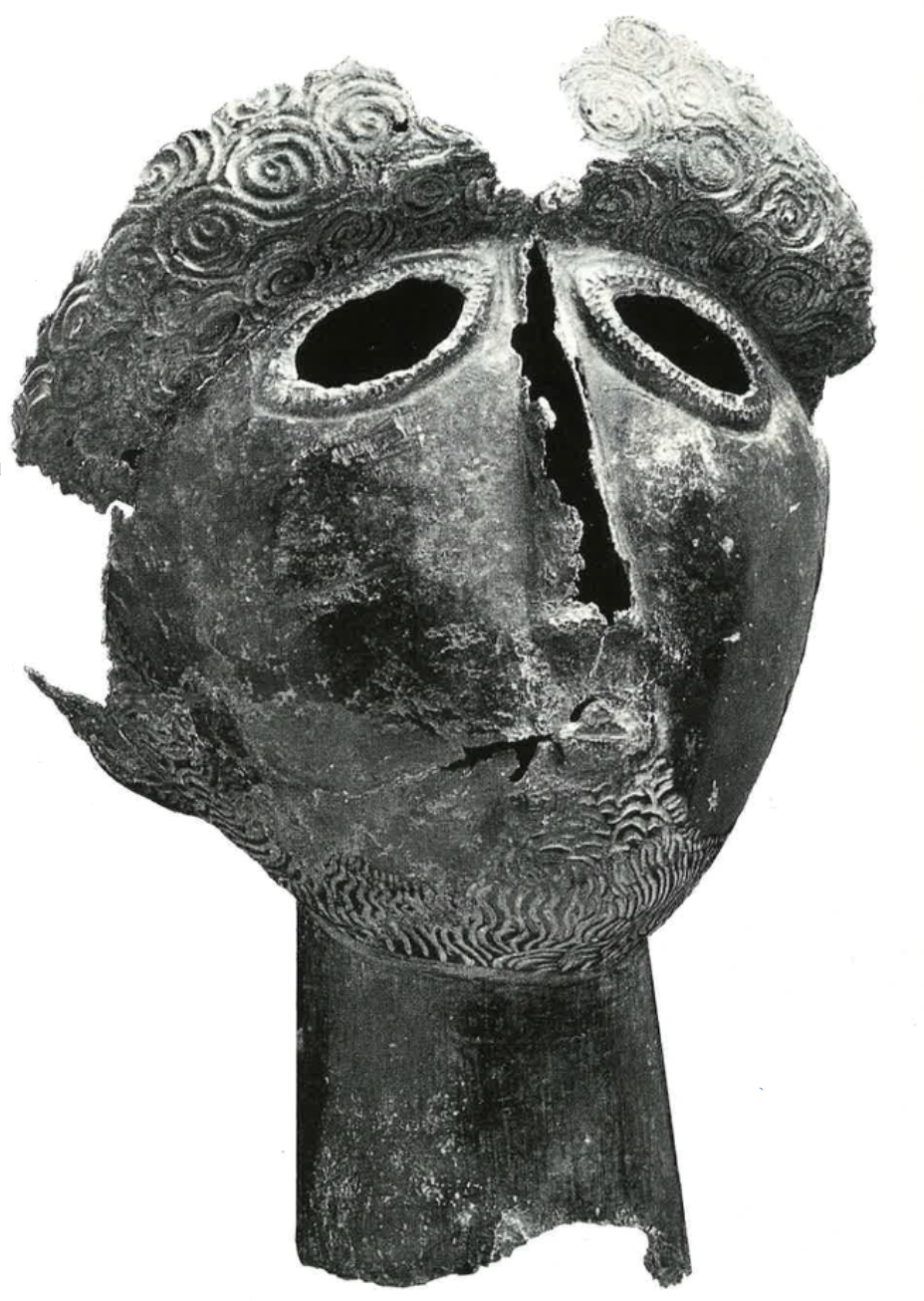
weapons, and chariots of exquisite design and execution. The gold and silver jewelry and miniature figures on display is breathtaking in its elaboration and encirclement of lapis lazuli, amber, coral and a wide span of polished gems. The larger implements such as shields, sword hilts, chariot decorations and sculptured animals maintain the same swirling figurative line that runs away into brilliant artistic fancy and mythic depiction. This art was devoted not only to personal ornament and things of daily utility such as pitchers and cauldrons, but to the nature gods and diverse deities that the druids extolled in the ceremonies organized around a five-year calendar, a monumental example of which is included in the exhibit. The gods of the Irish epics, and the kingly warrior caste of such tales as the Táin Bó Cúailnge (The Cattle Raid of Cooley), are the descendants of this metal flashing, war-daring society ranged across Europe’s heart-land.
We know little of the architecture of the Celts, since it was apparently largely built of wood, but it doubtless matched in decoration their other artifacts. As the Greeks were developing the city state, the Celts developed their own proto-urban settlements that were both military strongholds and religious centers. These fortress towns had fixed lay-outs, paved streets and residential, administrative and artisan areas. Cities such as Milan, Paris and London began with these Celtic settlements, for the output of all the craft and art products of this society required stable and continuous centers where skills could be taught and pursued in a consistent fashion. These centers, called “oppida,” have left their remains in Spain, Yugoslavia and Hungary, and, of course, in the ring forts in Ireland, Scotland and Britain. Money was increasingly important to Celtic trade, and the delightfully designed coins they put into currency are one of the notable curatorial assemblies of the exhibit in Venice. Using alphabets borrowed from Greeks, Romans, Iberians, Etruscans and others, the Celts brought writing into every aspect of their lives.
The entire experience of this spectacle of Celtic magnificence is heightened by the thoroughly gifted setting and mounting of the materials by the largely Italian curators and designers led by Eliana Gerotto.
More than two years of work went into the planning and gathering of the knowledge and artifacts involved, but many lifetimes of study preceded that. Over one hundred scholars took part in the international team backgrounding the show. Some of the notable gallery arrangements include whole walls of Celtic tracery with quotes from ancient authors about the Celts, wonderfully lit display pylons with windows that magnify the tiniest of jeweled ornaments, an entire mini-forest of sacred druid trees with one golden treasure in the middle, and one room with a great silver cauldron, a very marvel of high-relief carving and bands of shining ornament, that was dug from a bog in Denmark.
A computer center designed by IBM permits visitors In see two archaeological sites important to the exhibit, and documentary films and video tapes are available, along with reproductions of some of the artifacts. The general guide booklet is in four languages, including English, as is the giant sixpound paperback, scholarly catalog with its 2,500 photographs, drawings and maps.
This spacious and sensitive presentation, full of color and light, rich in marble figures of Celtic heroes and so wide-ranging in its scale and splendor, is a tribute to the collaborative determination of the European staff and scholars, especially the Italians. Scheduled to be mounted in Venice from March to December 1991, it is to be hoped it will have an American appearance.
These Celtic materials brought together from twenty-four different nations are so extensive that the Irish contribution will perhaps seem limited, concentrated as it is near the end of the long succession of handsomely organized galleries. It contains not only a reproduction of the golden Derryflan miniature boat, but manuscripts and ecclesiastical artifacts from the Christian era. The formation of the treasury of Irish Celtic materials in the permanent exhibit of the National Museum in Dublin probably made it impossible to transport some of the most outstanding Irish holdings. Professor Barry Raftery of University College, Dublin was one of the four leading Celtic scholars on the guiding commission under an Italian chairman, Sabatino Moscati, that planned the exhibition.
Such a visual and scholarly summation of the Celtic world should remind Irish people of the special relation they have to this heritage. Ireland’s attempt to broaden the use of its share of the Celtic language, Irish Gaelic, has long been stalled by bureaucracy and misdirected policy.
The drumbeat of mass media trash has badly punished Ireland’s culture, and the inertia of the government and public has frustrated the best efforts of dedicated educators and cultural leaders who appreciate the resplendent significance of the country’s ties to Celtic culture. The elevation of this cultural inheritance from the
obscurity of the buried past is a summons to Ireland to renew its efforts to extend and vivify its portion of the Celtic drama of Europe.
Some comments from viewers of the Celtic exhibit: “Exquisite…it certainly changed my view of the ‘barbaric’ Celts. Their work seems surprisingly modern – Dr. Robert McCreery of Perrysburg, Ohio, who is himself an artist.
“A unique achievement. I have seen exhibits all over the world, but this one, so difficult to organize, is superb.” -Alberto Georgetti, businessman from Northern Italy.
“…a remarkable exhibition. Bronze sculptures and artifacts brim with a lively force…The Celts fascinate…” —Barry James in a review in the International Herald Tribune, June 8-9,1991.
Editor’s Note: This article was originally published in the September 1991 issue of Irish America. ♦
Leave a Reply