
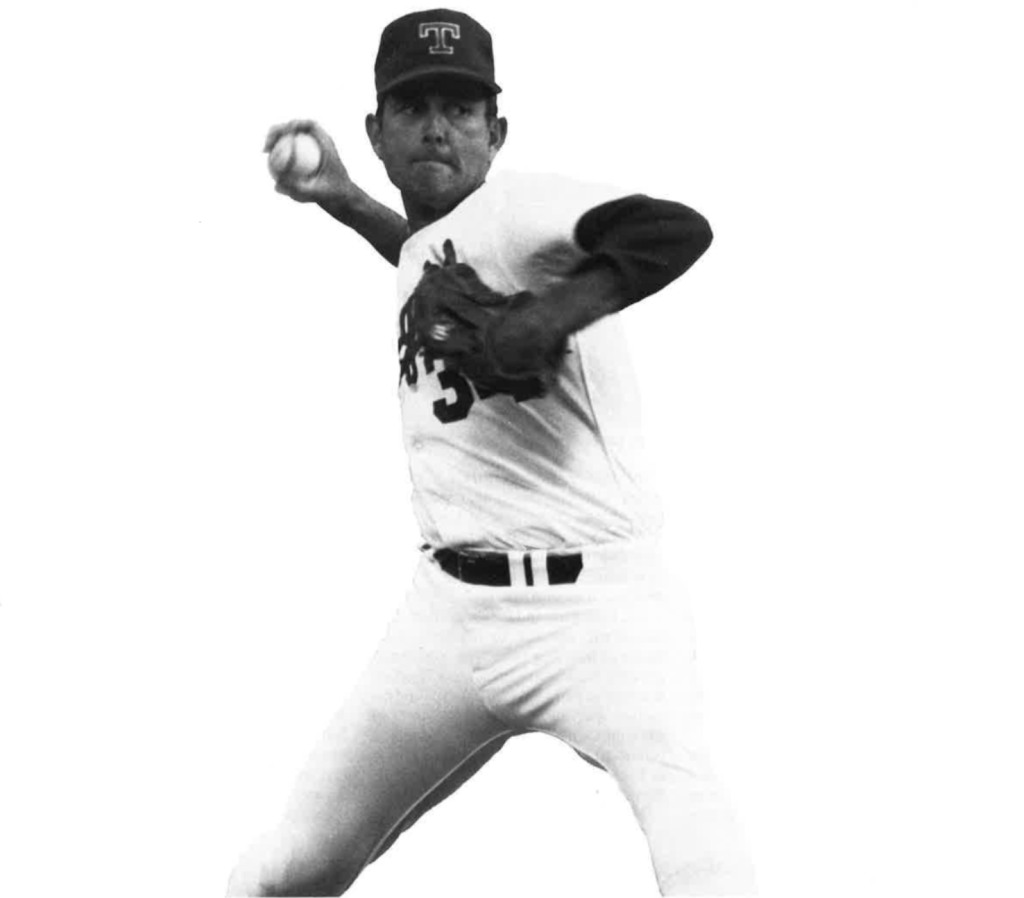
So there we were in the lower depths of Yankee Stadium, following the dark empty corridor we hoped would lead to the visiting team’s dressing room and baseball great, Nolan Ryan.
Truly, though, this dark basement did not evoke the mythic view of the sport. No Boys of Summer or Field of Dreams down here but another side of baseball, the wearying travel, the games lost in the 11th inning, the stiff joints and sore hearts. And here was Nolan Ryan triumphing through grind and glory for 25 years.
His achievements outstrip any fantasy – seven no-hitters – no one else has more than three – and two within this, his 44th year. Over 5,000 strikeouts, a 300-plus game winner, the holder of records galore, the consistent contender not in some filmic glow but day in and day out, year after year.
But as we-Irish America’s editor-in-chief, photographer and writer–made our way toward the field where Nolan Ryan was already working out, we weren’t talking baseball. We were speaking of Nolan Ryan as an Irish American.
Now like so many Americans of Irish descent in this country a long time, only Nolan Ryan’s name indicated a connection to Ireland. If he was of Irish descent he didn’t know it.
The Ranger publicist relayed the message to the editor – Mr. Ryan was happy to meet the representatives of Irish America and invite them to the game – why not just take a picture? “But Nolan and Ryan – Tipperary, certainly,” our editor-in-chief, a Tipperary woman herself, said, “We have lots of Nolans and Ryans. Look at the line-up of last Sunday’s All-Ireland Hurling Final. The Gen Four Ryans on the Tipperary team!”
“And one on the Kilkenny team,” the photographer ventured. (This was ignored.) “Tipperary will simply adopt him.”
“Then there’s the Irish presence in Texas,” I offered. “Nolan Ryan was born in Refugio, Texas and that was settled by emigrants from Ireland in 1820, as was San Patricio de Hibernia nearby. Sam Houston declared San Patricio the first independent Texas county on St. Patrick’s Day. Of course, Sam Houston himself was Irish. Twelve of the 186 defenders of the Alamo were Irish-born and another 32 were of Irish descent including Colonel William Barrett Travis, the commander.”
But when we reached the open space and stood next to the Ranger dugout, looking out at the field, bon mots about hurling or the Alamo withered on our lips. Batting practice was in full swing. TV camera crews, packs of photographers and sports writers roamed among the players who stretched or hefted bats, or flipped the balls to each other.
This was the Big Leagues, literally.
Here was serious sports journalism at work. And did we have one scintillating baseball question or piece of trivia or killer insight amongst the three of us that would capture Nolan Ryan’s attention? No.
Suddenly he was just there – smiling, polite and very self-contained.
Happy to have his picture taken but anxious to get back to the business at hand. Nolan Ryan’s dignity precluded any attempt to get from him more than he felt comfortable in giving. So the photograph was taken and then it was, ”Thank you, Mr. Ryan and goodbye:”
As part of the leave-taking I mentioned how impressed I’d been when I had seen his family at a Rangers-White Sox game earlier in the season. I had learned that his wife Ruth and their teenage sons and daughter often travelled with him and attended most of his home games.
His children enjoyed spending the pregame time with him at the parks. He had made his family life and baseball life mesh, and his handsome, well-spoken happy children were the result.
“You seem to have a wonderful family,” I said.
Nolan Ryan stopped. The piercing eyes sized me up.
For the first time I felt that focused concentration batters must know. “If it weren’t for my family…” he began, then, in the words of a man who only says exactly what he means. “The reason I am still playing baseball is because it’s compatible with their lives. They have grown up very involved in baseball and ….” But he was being called to the field. Wait a minute,” he said, “I’ll come back.” And he did, to talk about the bedrock of his life-his family. With them Nolan Ryan has found his greatest victories.
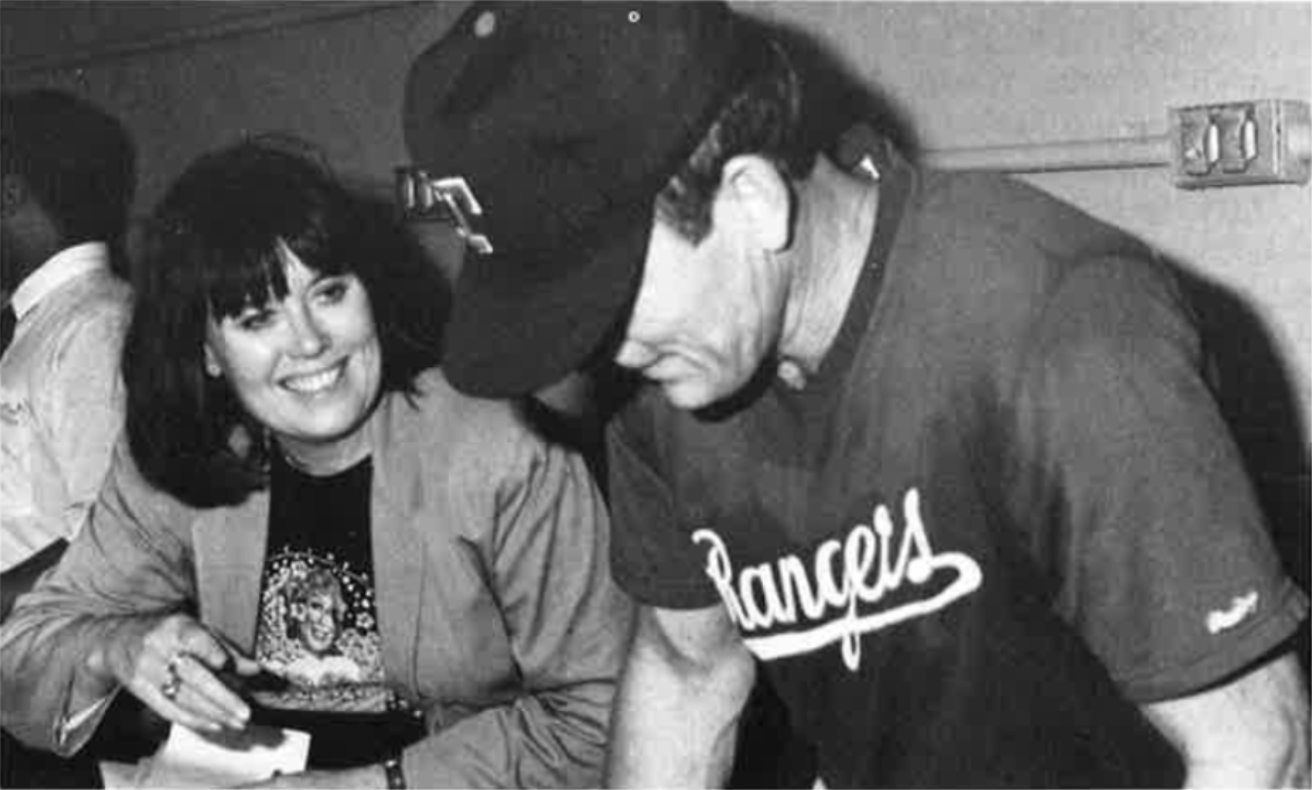
Nolan Ryan: I have always believed that just because I’ve had some success in baseball doesn’t entitle me to feel like I should be treated or act any different than anybody else. I feel that it’s important to instill that in my children. It doesn’t matter what walk of life you come from, people are people, and I think you should treat them all the same. You treat people as you’d like to be treated.
Mary Pat Kelly: I understand that you and your wife Ruth grew up together in Alvin, Texas, where you still live.
Yes. My wife Ruth was very athletic and was a state champion in tennis. Sports has always been a very big part of our lives. I think it’s made the job easier from that standpoint, because she enjoys baseball; she enjoys the baseball life. She had a background in sports and so it wasn’t like she wasn’t coming into something new. And my son Reed just transferred to T.C.U. [Texas Christian University]. He’s a sophomore and when they start the fall program he’ll be playing ball.
What position does he play?
He’s a pitcher.
A pitcher? Any similarities?
Well, our wind-up is very similar. He’s a very smart, intelligent kid so he knows how to pitch. And he’s very competitive, so I think that he may get the opportunity to play professionally some day. My second son, Reese, is also interested in sports. But at this stage he hasn’t developed enough to show whether he’ll have enough talent to play or
And your daughter Wendy, she’s in high school, right?
She’s a freshman in high school. She’s a natural athlete, and whatever she takes up she seems to excel in. She plays basketball and tennis.
Is she like her mom in tennis?
I think she has that kind of potential but she hasn’t decided to dedicate herself to tennis, and so she’s playing all sports.
What made you decide to dedicate yourself? How did it happen for you?
My baseball ability overshadowed my abilities in other sports so it was just natural that I got into baseball.
Was your dad at all involved?
No, he was older. He was 42, when I was born. I was the last of six children. I had four older sisters and a brother. My dad worked two jobs and was occupied with trying to put them through college. So we didn’t have – he didn’t have time – my brother Robert who is seven years older than I am, probably had more of an influence on me as far as pursuing sports goes.
Does your family suffer through these games for you? The tense-ness, etc.!
Well, Ruth and the kids attend a lot of games. But I think they have a pretty good perspective on it. When it’s a special game, like if I have a no hitter going, that’s probably harder on them. I found out as a parent that it’s much harder to be a spectator than it is a participant.
Do you suffer when you watch them play?
Oh, yeah. And I think it’s given me more of a perspective on what parents and wives and children go through watching their father or their son participate.
What is the feeling when you’re watching your kids?
I call it being anxious. Wanting them to do well. Trying somehow through your support to get them through tight spots.
It’s like you’re helpless but you want to do something.
I wonder if that’s how your wife felt, watching you pitch your seventh no-hitter in Texas?
Maybe.
I understand you threw your last no-hitter without proper rest, just so the fans in Arlington could see you pitch?
On a personal basis it was real meaningful to me because it came so late in my career. And it came in Arlington where the fans have been so supportive of me since my moving up there. I still live in Alvin, south of Houston. And we maintain a house during the season in Forth Worth, but during the school months we commute back and forth quite a bit, because the kids continue to attend school in Alvin. I’m down to the wool Texan, and very proud of my heritage and Texas values.
I’ve probably gotten that from my parents. And I think that you don’t realize how much of an influence your parents have on you until you get older. And then you maybe understand and see some of the reasons why you are like you are and why you react like you do.
My mother, Martha, was the more dominant personality in the family. My dad was of a quiet, stern type. But my mother was the one that was out front, and, you know, the one that dealt with her kids and their activities. And was probably the acting force in the family.
Her maiden name was Hancock. Supposedly we were descendants of John Hancock. And the Hancocks came out of Missouri. The way I understand it – my grandfather rafted logs down the Mississippi and ended up in Louisiana. He then came to Texas.
And how did the Ryans get to Texas? They were from Mississippi originally, right?
They were cotton farmers and I think they probably left Mississippi when cotton was moving to Texas because of the virgin land.
Did your father miss the farming? Was there any sense of “the land” with him?
Well, I think that was probably my attraction to it, because that’s how I got in the cattle business. I was always attracted to cattle and being outdoors. I’m not an indoor person. That’s what I do in the wintertime. I work on the ranch. I do it for relaxation and to enjoy it. It’s a very big part of my year round activities. Even on a day like today when I’m in New York on a road trip, I’m always involved in what we’re doing on the ranch, in the projects and different things. We have about a thousand head of cattle. I have to be outside. I get cabin fever real quick. After a couple of days here in New York I get very anxious and restless.
When you’re roping do you ever worry about getting hurt?
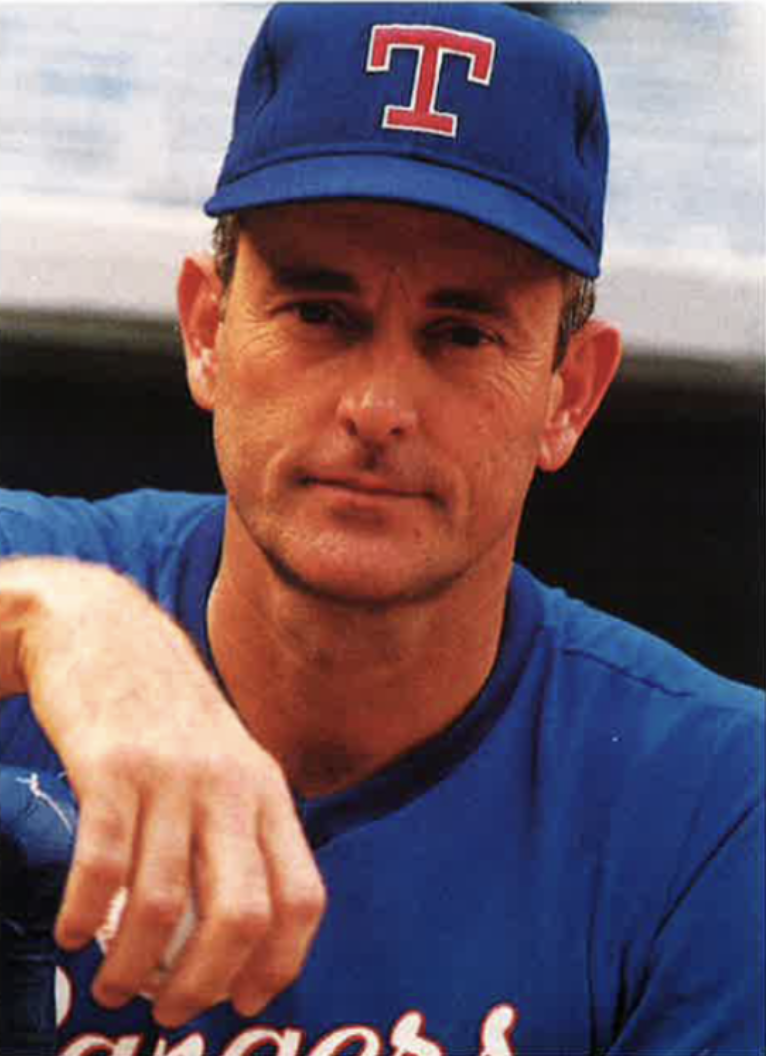
Well, I’ve gotten hurt but I don’t think about those things. You’re going to get kicked and you’re going to get stepped on and you’re going to get hooked and fingers mashed and stuff. That’s just part of it.
And like I say, I don’t think about it. But I also try not to put myself in positions where I would increase my chances of having any of that happen.
What did you think of the “City Slickers” thing where these people are paying thousands of dollars to be on a cattle drive?
I find it amusing.
What is it? The satisfaction of a hard job done?
I get a lot of satisfaction out of doing that type of work. I probably get more satisfaction out of doing a day’s work on the ranch and at the end of the day feeling like I’ve accomplished something than I do out of pitching. I think the reason for that is I don’t feel the pressure-I think it’s just such a different atmosphere that it’s much more relaxing and enjoyable to me.
So you will have the ranch after baseball. What about after baseball?
You deal with a lot of adrenaline after a game. And it’s something your body becomes accustomed to. I don’t know if you substitute for it or how you learn to deal with it. But I don’t expect retirement to be devastating. I think that it’s one of those problems that you have to deal with.
I’ll have to change my lifestyle after 20-something years. There’s going to be a transition period, and there’s going to be adjustments I have to make. Some people have more problems with it than others.
I’d like to think that it won’t be as big a problem for me as it is for other people, because I like to think I’ve kept it in proper perspective. But you know, you can rationalize things and you can anticipate things, but you really don’t know until you experience them. I feel like I should be able to handle it, but it’ll be interesting to see. And I’ve observed ex-teammates, and watched them go through those periods.
One thing is that I have so many demands on my time. A lot of the interests that I have now will still be there after I’m through as a player. And they’re interests that I enjoy and want to be involved in, so I’ll have more time to find for them. From that standpoint it will be easy to fill my time with things that I want do and like to do.
What kinds of things?
The ranch can be very time consuming.
And then I’m also in the banking business in Texas. Those things I can certainly give more time to. And then there’s a lot of things with our family that we haven’t been able to do because of bascball that we’d like to do. Family vacations and outings and things like that. So, filling the time board won’t be a problem.
And you’ll be in Alvin.
Yes, both Ruth and I grew up there. And her parents are still living there. As a matter of fact, they have New York backgrounds. Ruth’s maiden name is Holdorff and they’re Norwegian, her dad is, and her mother was Swedish. Her grandmother came through Ellis Island and all that. Her parents are from Staten Island. They moved to Texas when her older sister was born.
Has Alvin changed?
When I grew up it was a town of five-to-seven thousand people, now it’s a town of oh, twenty-to-twenty-five thousand people. With our lives like they are-we’re gone so much and so involved in sports-we don’t know nearly the people that we used to.
When I grew up there it was an oil, farming and cattle community. And now it’s a bedroom community for the Houston metropolitan area.
Would you be interested in finding out more about the Ryans?
Well, I know I was born in Refugio because my dad took a job there in the oil fields. He was from an area in north Texas.
But our heritage goes back to east Texas where the Ryan Chapel is. I remember going to a family reunion there. I don’t remember if I was six years old or eight years old. I just remember going because it was such an unusual thing for our family to do. I didn’t know any of the people. At that age you really aren’t concerned with that.
But I remember the Ryan Chapel- Methodist, I think, and all those people….
And young Nolan Ryan with Martha Hancock Ryan and his quiet father, with Robert and his sisters-all those Ryans, all those stories. Of Tipperary? Hurling?
The Alamo? The rich land? A little boy watching.
Now, we know Nolan Ryan is a magnificent athlete who conditions his body and his mind and employs skill and experience and hard work to attain his great success.
But the other night at Yankee Stadium it was talking about his pride in his family that animated Nolan Ryan, and if that doesn’t make him an Irish American, nothing does.
Editor’s Note: This article was originally published in the October 1991 issue of Irish America. ♦
Leave a Reply