
Ancient Celtic tradition says that a traveler leaving Ireland for a new land must lie down on the stone bench of a saint in order to be spared the pangs of homesickness.
Robert Haldane did not lie down on the stone bench of a saint before immigrating to America, and he has not been spared homesickness.
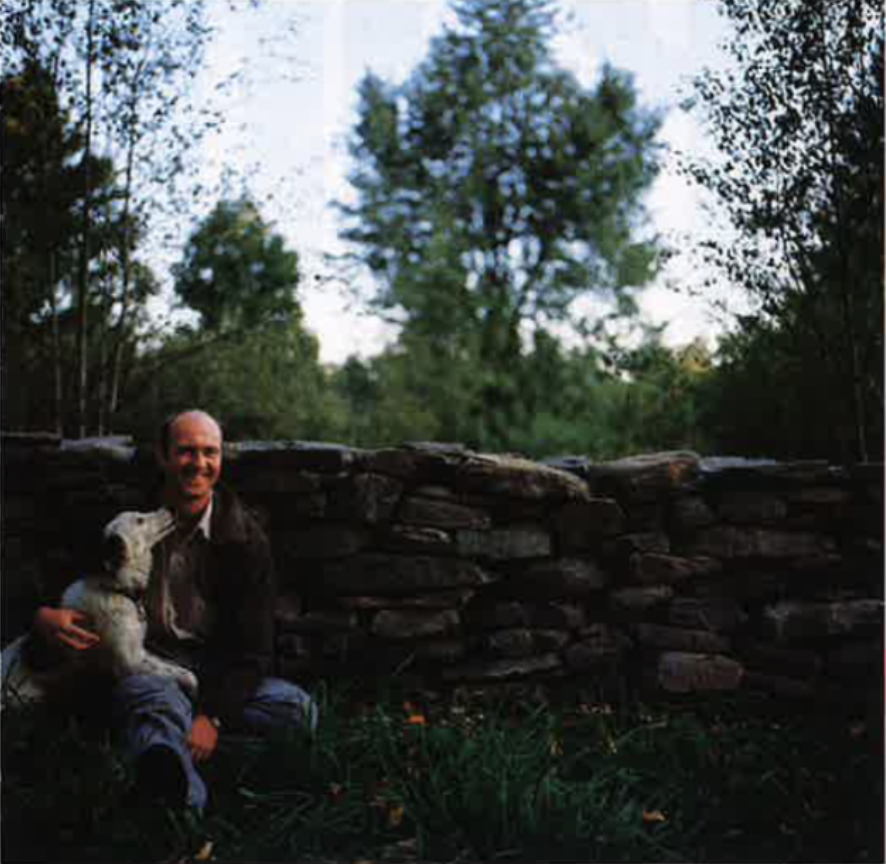
Mr. Haldane, 34, is a landscaper and stone wall builder living in Copake Falls, New York. With his wife Teresa and five children, Conall, Sarah, Rónan, Emer and Ciarán, he came to this country from his native Ireland and his “spiritual homeland,” the County of Donegal, four years ago.
He is tall and willowy, with fine features, pale skin and pale eyes. He has callouses on his hands and blisters on his fingers. He speaks in a rich brogue, plays the tin whistle and sings “a bit.” He coaches the Roe Jan Elementary School soccer team, likes Thomas Hardy novels, poetry and, conversation.
And he loves stones.
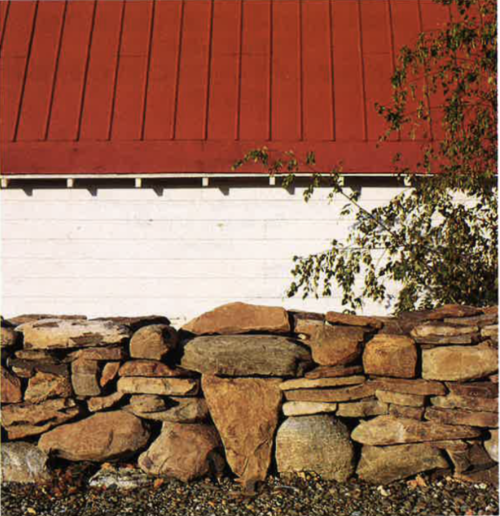
Although Mr. Haldane works with brick, does plantings, patio work, makes walkways and doorsteps, stone walls are his forte. He says that stone is “my poetry.”
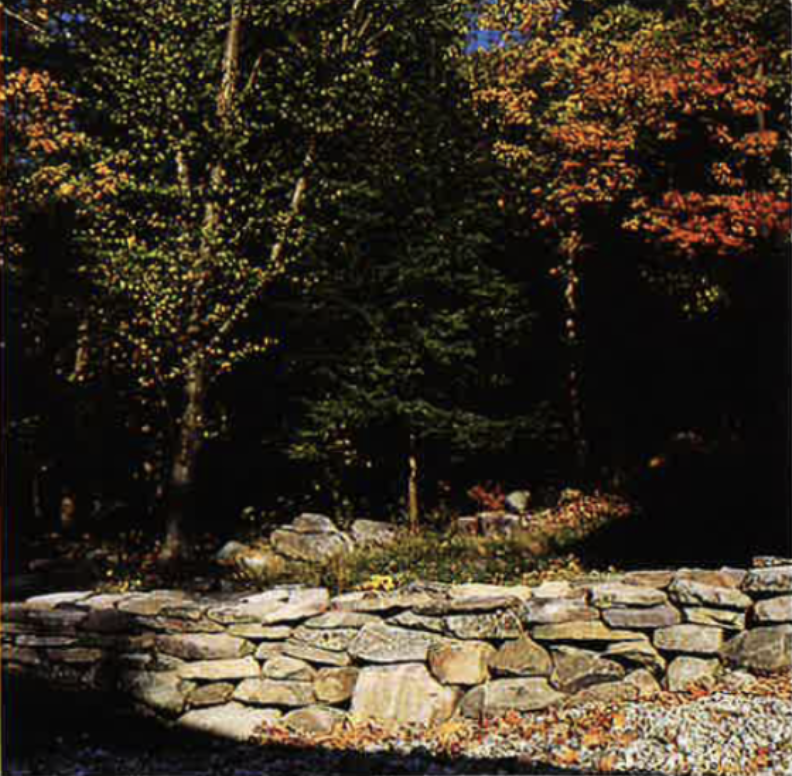
“I build stone walls without mortar, the way the old farmers built them. I don’t cut or contrive them either, I use them the way they come – from nature.” For his stone walls, he works with limestone fieldstones that come from the Catskills. They are a flatter, more regular stone than the round granite stones native to Ireland.
“I draw poetry out of stones. The holes in the wall are important to me – the spaces between the stones. I like to be able to see through the cracks.”
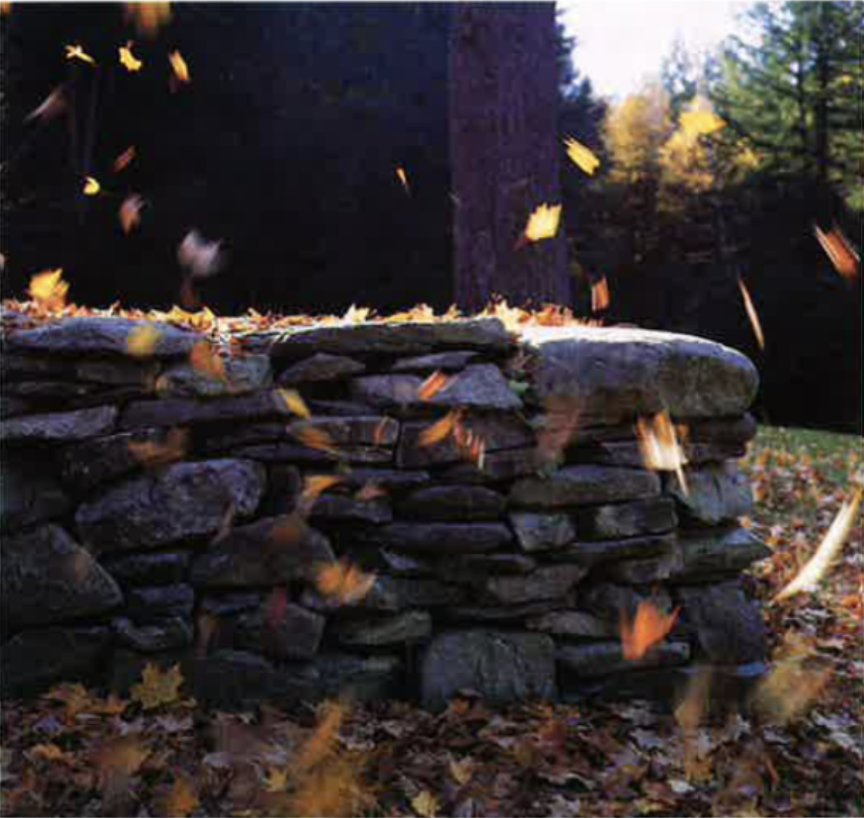
Mr. Haldane thinks that stone walls come to life in the weather – the shadows of a cloudy day, beating rain, the way the snow drifts up against them.
I did a stone wall a while back. A mouse followed me from one stone pile to the next. I’d finish up with one pile and he’d run to the next. When there weren’t any more piles left, he moved to the stone wall, and that is where he lived. I was touched. It meant a lot to me.
“Stones are melancholy, the way the Irish are melancholy,” he says.
“People so often demand that days should always be sunny. They demand color in their gardens. But moods are not always sunny.”
In Ireland stone walls are synonymous with the rural landscape. There are very few trees in Ireland so most of the fencing is done with stones.
Children play with stones. School yards are fenced in with stone walls. Students have to crawl over a stone wall to retrieve a football that has gone out of the school yard.
I remember seeing my children playing with stones just before we were to leave for America.”
Stones have always held a lot of lore for the Irish. “In Gaelic, if you say you are ‘going to the stones,’ you mean you are going to church. In Northern Ireland stones have been such an integral part of the rioting there that in Derry and Belfast all of the stones in the streets have been taken up. The streets are now paved over. But stones will always be with us they are timeless.” Mr. Haldane says he is learning his art as he goes.
Born in the “black north” outside of Belfast, he majored in Irish Studies at Coleraine University in County Derry.
He did most of his landscape training with the Irish Department of the Environment, maintaining and restoring 18th and 19th century gardens for estates that came into the government’s hands as landmarks.
He also did archaeological work for the Ulster Museum in Northern Ireland.
Mr. Haldane’s great-grandfather was a gardener, so he feels that the work he does is in his blood.
Ireland’s depressed economy and the lack of opportunities forced Mr. Haldane and his family to immigrate to the United States.
“I wanted to give my children a better chance.” Also, he says he was curious about life in America.
We had a friend living in Vermont, so we went there. When we arrived, there was eight feet of snow all around me. We had never seen snow like that.
“I didn’t feel I could bring my children up amidst all that snow, so we came here.” He says that Columbia County looks a lot like Ireland, except for all the trees.
“Around here, you could see all the old stone walls that the farmers built running through the countryside if it weren’t for all the over-growth and trees. I do get homesick though. I get homesick mostly for the Irish understated style-of humor and our own special way of talking.” He also says he misses the rain, Irish myths and the weather, the lingering misty Irish weather.
Landscaping is there to convey a feeling – a certain spirituality.
“When I walk into a space, I sense very quickly what needs to be there. It’s the mood that tells me where to go.
“Landscaping is not a totally natural thing to do. You are not copying nature, you are enhancing it.
“People shouldn’t always feel the necessity to fill up a space with geraniums, mums and impatiens. Softness is nice too. I think it’s a mistake that some people throw a few rhododendrons and a bag of mulch into a place and call it landscaping, not that rhododendrons aren’t nice.”
Climbing into a new truck with the name of his business emblazoned on the side, he said that five years ago he could not have imagined owning such a vehicle.
After a short drive, we walked through one of his landscape projects in Red Rock.
There are paths in the manicured woods. Large, carefully chosen stones present themselves as benches along the way. The sheer scope and acreage of the project is stunning. The sun casts long shadows on the winding paths he made.
Hemlock bridges, rough-hewn and strong, span a stream that gurgles below. The stone work around the house is both elegant and functional. Two curved stone and brick terraces rise from the lawn above a small pond that reflects the trees around it.
Stories of Ireland and images from his past float freely through conversations. He sees in his work symbols from his life, family and homeland.
“I have always gotten deeply involved in what interests my heart,” says Mr. Haldane. “It grieves me to see ugly land-scaping.”
Later, looking out from the house over the little world he helped create he picks up a book about Ireland. There on the cover of the book is an old Irish proverb.
He reads it aloud: “What fills the eye, fills the heart.”
“That about says it all, doesn’t it?” he says.
Editor’s Note: This article was originally published in the November 1991 issue of Irish America. ♦
Leave a Reply