
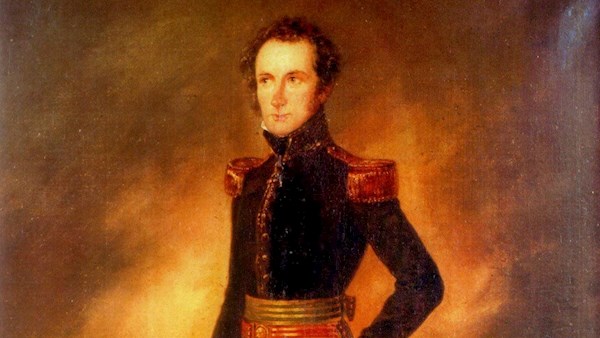
One thousand men of the Irish Legion landed on Venezuela’s Margarita Island in August, 1819, after a 4,500-mile sea voyage from Dublin.
These soldiers of fortune, many of them recently demobilized veterans of the Napoleonic Wars, now sought fame and adventure in the armies of South America’s Liberator, Simón Bolívar.
In the years 1819 and 1820, more than 2,100 Irish soldiers reached Venezuela as members of organized Irish regiments. But the rosters of British units are also studded with such names as Murphy, Larkin, Egan, Casey, Lanagan and Mc-Carthy, testifying to the presence of hundreds of additional Irish troops.
Bolivar dearly valued the dedication and experience of his Irish officers. He appointed a Kerryman, Dr. Thomas Foley, inspector general of his military hospitals. Arthur Sandes, also from County Kerry, rose to brigadier-general under Bolivar and had a street named after him in the Ecuadorian capital of Quito.
And Bolivar owed his life to another Irishman, Lieutenant-Colonel William Ferguson, who died defending the Liberator from political rivals.
But it was a junior officer from County Cork, Daniel Florence O’Leary, who won Bolivar’s highest esteem.
After observing the young Corkonian in action, Bolivar made O’Leary his personal aide-de-camp. As a member of Bolivar’s headquarters, O’Leary attained the rank of brigadier general and played a key role in plotting political and military strategy.
O’Leary’s keen historical instincts, combined with his meticulous collection of war documents, earned the Irishman a place of honor in Latin America’s history.
His memoirs, published in Caracas by his son, Simon Bolivar O’Leary, fill 32 volumes. This extraordinary compilation of eyewitness accounts, correspondence and documents has proved an indispensable resource for every subsequent biographer and historian of the Independence period.
In Colombia, where O’Leary died of a cerebral hemorrhage in 1854, a bust of the Irish hero overlooks a plaza in Bogota, the capital. In 1882, the Venezuelan government removed O’Leary’s remains to its own capital, Caracas. There, with high public honors, the scholarly soldier was laid to rest in the National Pantheon, the sacred burial place of Bolivar himself.
One Liberator to Another
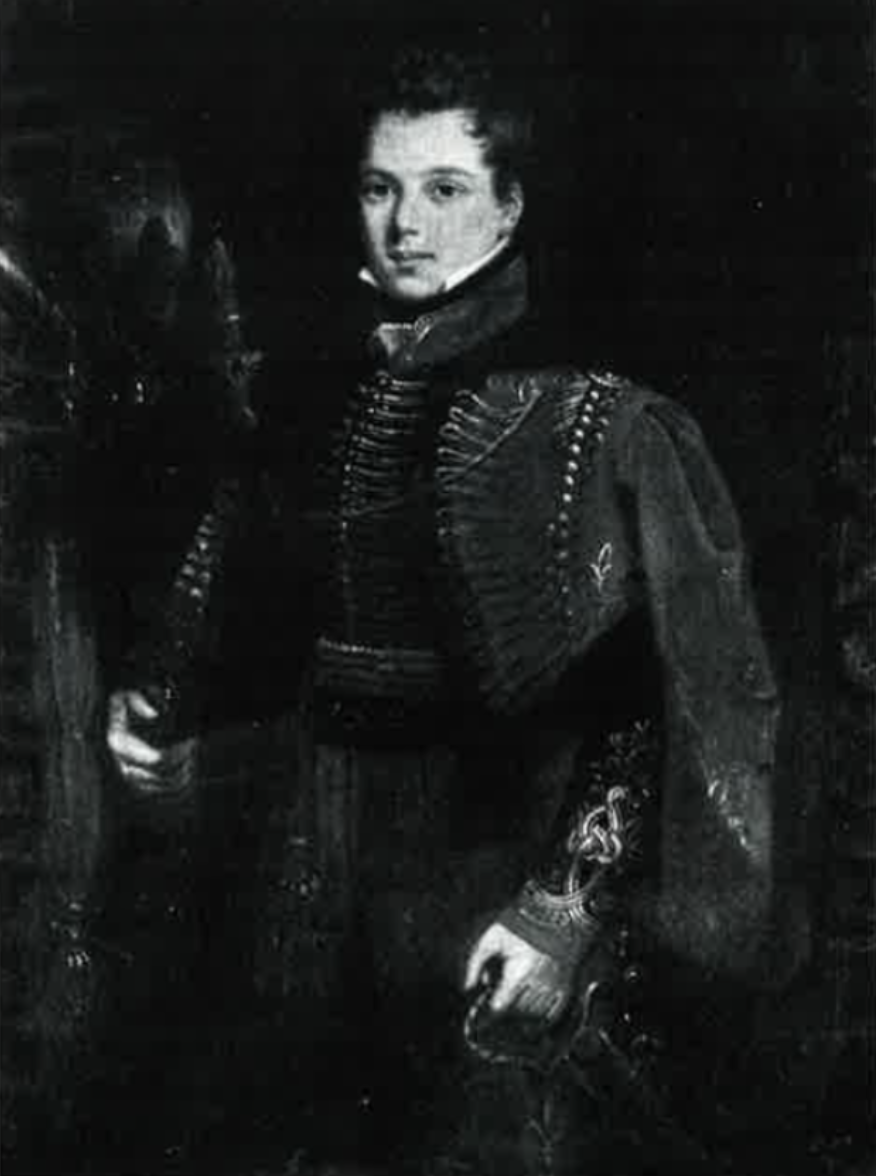
Among O’Leary’s carefully preserved correspondence is an 1820 letter to Bolivar from Daniel O’Connell, the brilliant orator and lawyer who was leading Irish Catholics in their campaign for civil rights. In O’Connell’s eyes, Bolivar’s war with Spain paralleled his own struggle with England. As an expression of personal solidarity, O’Connell now offered his 15-year-old son Morgan to fight at Bolivar’s side.
“Hitherto,” O’Connell wrote to Bolivar, “I have been able to bestow only good wishes upon that noble cause. But now I have a son able to wield a sword in its defense, and I send him, Illustrious Sir, to admire and profit by your example.” With this letter in hand, Captain Morgan O’Connell landed at Margarita on June 12, 1820 and presented himself for duty as the Irish Legion’s youngest officer.
Despite Morgan’s boyish enthusiasm, his father and Simón Bolívar made most unlikely allies.
Bolivar was a man of action, waging war to the death on his royalist foes. O’Connell, on the other hand, was dedicated to non-violent struggle, and repeatedly said that freedom was not worth the spilling of one drop of blood.
But the struggle in far-off Venezuela evoked an age-old Irish tradition of sending its sons to serve in foreign wars. Bolivar’s cause had struck a romantic chord in O’Connell, enabling him to set aside his well-known antipathy to bloodshed.
As O’Connell went, so went the rest of Ireland. In Dublin, supporters organized the Irish Friends of South American Independence, and 2,000 of Ireland’s leading citizens attended the society’s banquet on July 19, 1819. Attracted by posters and handbills, eager young men volunteered for the Irish Legion. Daniel O’Connell sponsored fundraising events, and Mrs. O’Connell honored the Legion’s dashing cavalry regiment with a public presentation of battle flags.
Mixed Motives
Not all those attracted to the Legion shared the O’Connells’ noble motives. Indeed, the problem began with the Legion’s commander, John Devereux from County Wexford. A self-styled major general in the Army of Venezuela, Devereux had no formal military training or experience.
Outfitted in a dazzling uniform and carrying a jewel-studded sword, Devereux was a poster-perfect recruiting agent. But when his recruits sailed off, Devereux remained behind, living handsomely off the fees he had charged officers for their commissions in the Legion.
While working as a cargo shipper several years previously, Devereux met Bolivar when his vessel called at the Colombian port of Cartagena.
Sensing a business opportunity, the Irishman offered to raise a force of 5,000 men, and Bolivar promised him $175 for each soldier who reached Venezuela.
After returning to Ireland and ingratiating himself with O’Connell, Devereux exploited the Irish patriot’s prestige to further his money-making scheme. While the Legion attracted many professional soldiers, Devereux opened the ranks to ne’er-do-wells and idlers. Although he knew that Bolivar’s local soldiers served without salary, Devereux promised Irish recruits one-third more than the British Army paid. And he sealed the deals with visions of land grants and cash bonuses at campaign’s end.
Tropical Tortures
The Legionaries who reached Margarita in August 1819 paid dearly for their commander’s double-dealing. Venezuelan officials, unaware that the Irish were coming, had readied neither housing nor rations. Bolivar, with barely $1,000 in his treasury, could not pay the Irishmen.
Clothing and medical supplies were inadequate, and the fair-skinned Europeans were completely unprepared for the rigors of a tropical climate.
After one look, some 40 Irish officers went home on the ships that brought them. For those who remained, the coming months proved a nightmarish struggle for survival. After training for six hours a day under the tropical sun, the Irish retired to flea-infested fishing shacks and huts scattered around the island. They were forced to scrounge and sell their gear to supplement a daily ration of a handful of rice and half a pint of rum.
The combination of heat, humidity and impure water provided a perfect breeding ground for disease. Dysentery, typhus and yellow fever decimated the ranks. Uniforms and boots deteriorated quickly, leaving many men barefoot and half-naked. Insect bites and thorn punctures quickly turned infectious, and surgeons amputated limbs wasted by tropical ulcers and gangrene.
Margarita’s sandy beaches became Irish graveyards. Every day, burial parties carried the bodies of ten to twenty men to the shore, interring them in crude coffins fashioned from wooden barrel staves. Some soldiers drowned their sorrows in drink, others flouted military discipline or deserted. Language barriers inhibited communication with their new commander, General Mariano Montilla, who spoke no English. By March 6, 1820, when Montilla gave orders to move out, death, desertion and illness had taken a fearful toll: he could muster only 450 of the 1000 Irish who had landed seven months earlier.
Advance and Retreat
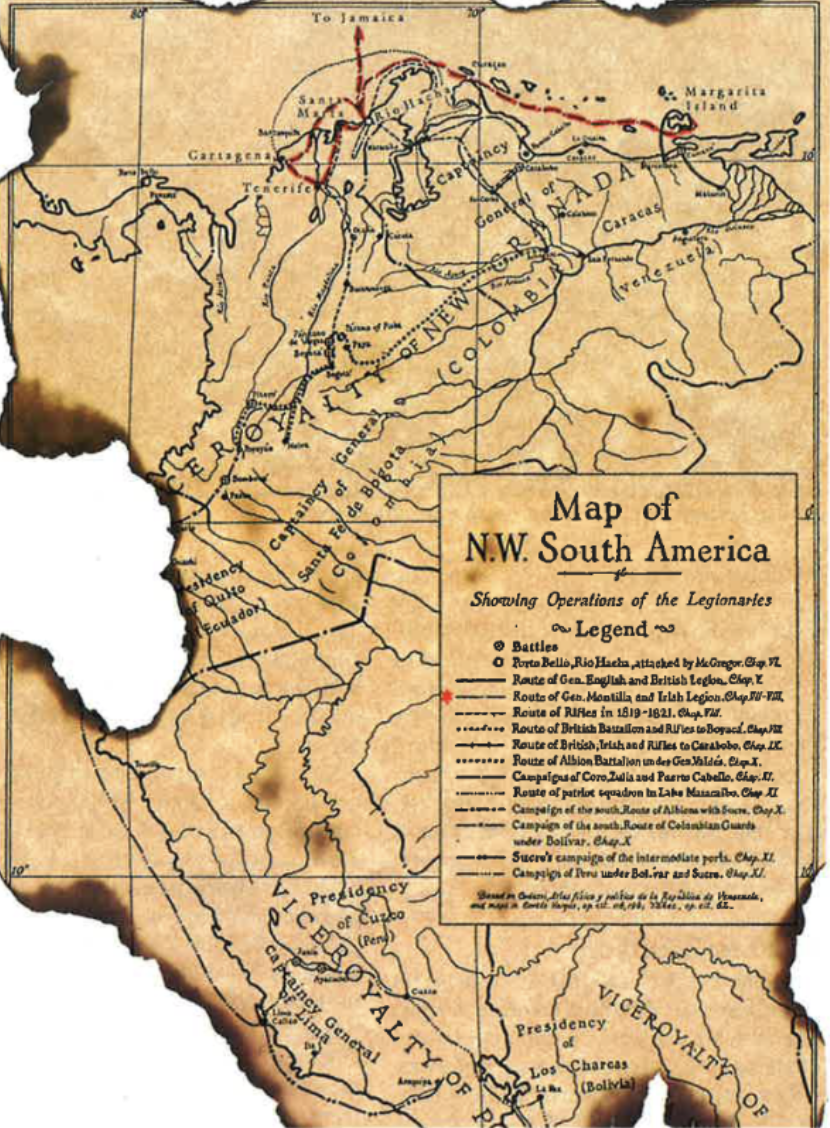
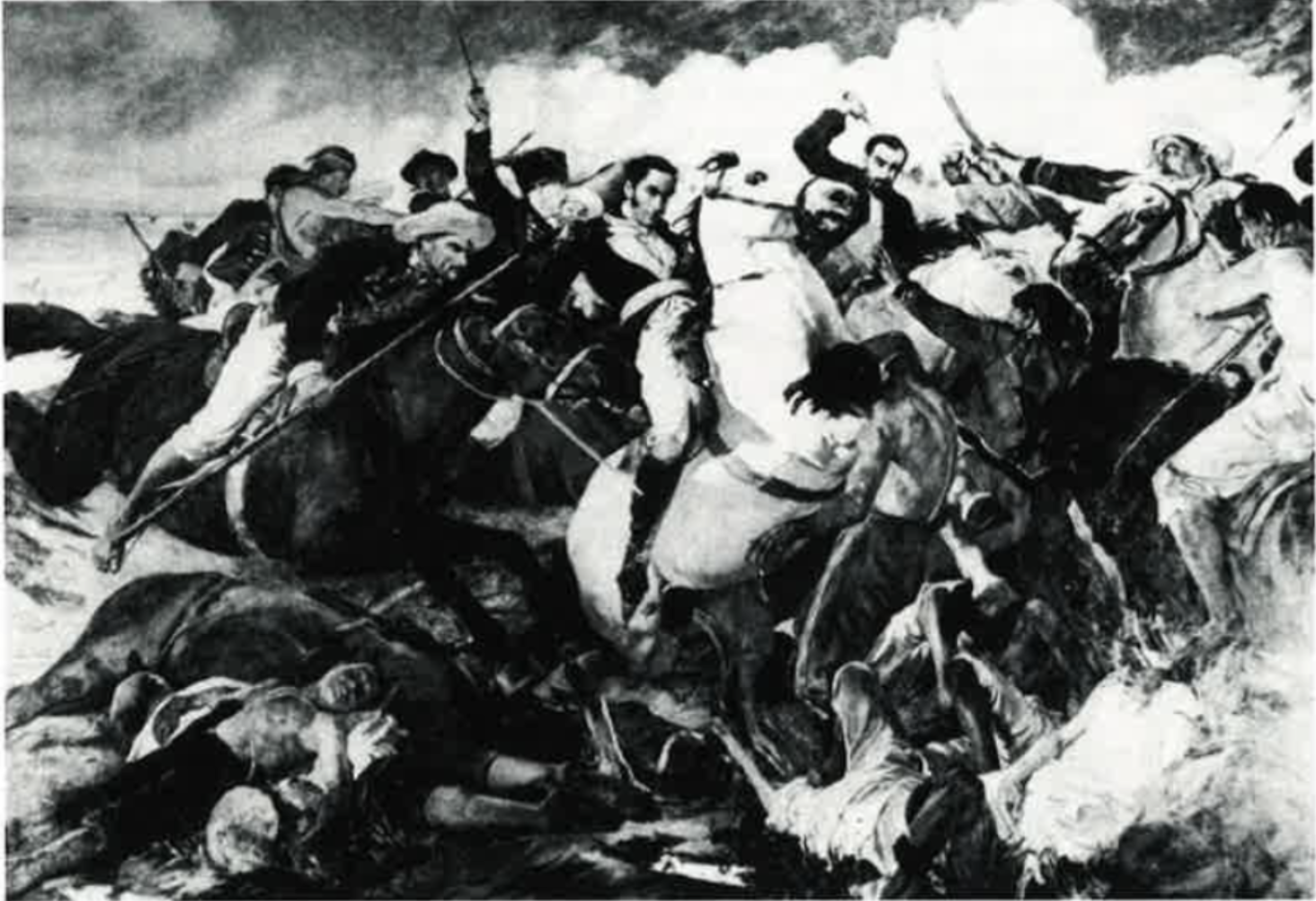
Bolivar employed the Legion as an amphibious raiding force, harassing royalist garrisons on the north coast of Colombia to distract enemy attention from his own inland campaign. The Irish completed their first assignment in style, landing from their ships in rough surf and charging an enemy stronghold in the seaside town of Riohacha. With the royalists routed, the Legion hoisted its flag-an Irish harp on Riohacha’s fort and occupied the town.
From Riohacha, Montilla was ordered to march the Legion southeast across the desolate Guajira Peninsula toward the Venezuelan town of Maracaibo. But Guajira Indians, armed by the Spanish, put up fierce resistance.
They wiped out the advance guard in an ambush, and picked off stragglers searching for water. One detachment of Irish, left behind to guard the column’s rear, burned to death when the Indians set fire to their huts.
Outnumbered and outmaneuvered, Montilla ordered a retreat. No sooner had the Legion reached Riohacha than they were besieged by an enemy force of 1700.
The Irish Lancers, under the command of Colonel Francis Burdett O’Connor from County Cork, saved the day. Supported by two field guns and a company of sharp-shooters, O’Connor led his men in a headlong charge that sent the enemy fleeing.
The feat was all the more remarkable in that the lancers, supposedly light cavalry, had not a horse among them.
Road to Rebellion
Delighted with O’Connor’s bravery, Montilla ordered another advance, declaring that his Irishmen could overwhelm even the largest royalist force. But Montilla’s caution soon overcame his confidence: at the first sign of resistance, he again signaled a retreat. The general’s prudence frustrated the headstrong troops, still nursing grievances over lack of pay and shortages of water.
Discontent now turned to open mutiny in the Irish ranks. Refusing to take orders from Montilla, many demanded to be returned to Ireland. As discipline collapsed, some soldiers ransacked the town, stealing alcohol and looting valuables. Fires broke out, and before they could be extinguished the fort had blown up and the town had burned to the ground.
Although other, non-Irish soldiers were also involved in the incident, Montilla blamed all the destruction on the Legionaries. Furious, he ordered the mutineers expelled to the British colony of Jamaica.
“The soldiers,” wrote the general, “have combined dishonor with barbarity, for they requited the friendship and kindness of the inhabitants of Riohacha by setting fire to the town.”
Montilla’s assessment was by no means unanimous. Colonel O’Connor, whose lancers remained loyal, acknowledged that the mutineers’ complaints – if not their behavior – were perfectly justified. Another contemporary observer laid the blame on Montilla’s timid brand of leadership, as well as his inexperience in managing “such turbulent spirits” as the Irish.
But the general had the last word, and O’Connor’s men had the thankless task of disarming their compatriots and loading them on transports at bayonet-point. On June 4, 1820, some 300 mutineers sailed for Jamaica, where some found employment in British army units. The remainder were offered free transport to Canada, where they started new lives.
An Underage Emissary
Captain Morgan O’Connell reached Margarita eight days after the Irish mutineers left for Jamaica. Bolivar, who had noted his pleasure at the departure of “these vile mercenaries,” was too astute a diplomat to offend the son of his Irish counterpart.
Morgan was accorded the appropriate privileges of his rank, and toasts were drunk to the health of his father, the “most enlightened man in all Europe.” Bolivar made sure that the untrained Irish lad stayed out of danger. “I have numberless hardships to go through,” said Bolivar, “which I would not bring him into, for the character of his father is well known to me.” But ceremonial duties soon bored the restless young Irishman, and after a year at Bolivar’s headquarters Morgan left for home.
If South America did not satisfy Morgan’s taste for adventure, he had more than his fill on the return journey. He survived a bout of tropical fever, and was shipwrecked twice in succession, ending up stranded in Cuba. He was rescued by a schooner captain, who turned out to be a long-lost Irish cousin.
But the captain was promptly killed in a fight with his boatswain, and Morgan hitched a ride to Jamaica on a Danish ship commanded by an Irishman from Cork. From Jamaica, another Irish officer offered Morgan passage home on a British warship.
Arriving in January 1822, Morgan was greeted by his proud father as a prodigal son returned. His South American adventure, declared Daniel O’Connell, had made a man of Morgan. Otherwise, said O’Connell, “it would have been difficult to tame him down to the sobriety of business.”
A Charmed Life-and Death
O’Connell could not so easily dismiss the misadventures of his protegé John Devereux. Returning veterans of the Irish Legion accused Devereux of cowardice, greed and betrayal. Bolivar’s naval commander wrote to the Dublin newspapers, bitterly describing Devereux’s recruits as bandits. Embarrassed and in fear of his life, Devereux finally set out for Venezuela.
After searching fruitlessly for his disbanded legion at Riohacha and Jamaica, Devereux reached Margarita Island. Here, at least, the rogue’s reputation had not preceded him. Strutting around in a field marshal’s uniform, and waving his jewel-encrusted blade, he threatened personal vengeance on every Spaniard in South America.
Despite his record, the wily Devereux soon managed to reingratiate himself. By 1822, Devereux was a member of Bolivar’s general staff in Bogota. Displaying a blind spot equal to O’Connell’s, Bolivar forgave the con man for the Irish defections and confirmed him in the rank of major general. Undeterred by the fact that he had not set eyes on his troops since they left Ireland, Devereux busied himself collecting the commissions promised him for the men and material of his Legion.
Throughout his service under Bolivar, Devereux managed to arrive at engagements too late to see combat, but never too late to claim credit for victory. Later, Devereux filed a disability claim for injury to his eyesight during field service in Colombia, even though he was safely in Bogota at the time.
By 1824, when he returned to Europe, Devereux had amassed a fortune of £150,000. Despite this “splendid sufficiency,” as he described his ill-gotten gains to Daniel O’Connell, he busied himself promoting mining ventures and other money-making schemes in South America. In stark contrast to his recruits, Devereux lived to the ripe old age of 82, when he died in the fashionable Mayfair district of London.
Bound for Glory
Although the mutiny at Riohacha marked the end of the Irish Legion as an integral unit, many Irish soldiers went on to distinguish themselves in Bolivar’s service.
Foremost among them was Colonel O’Connor’s loyal band of Irish Lancers, whose dedication and valor more than offset the misconduct of their compatriots.
After dispatching the mutineers to Jamaica, O’Connor’s men – finally outfitted with horses – rode off to besiege the ports of Cartagena and Santa Marta. The lancers repulsed a royalist counterattack on General Montilla’s headquarters at Cartagena, and were in the thick of bloody fighting at Santa Marta that left 690 royalists dead. Afterwards, Colonel O’Connor personally accepted the surrender of the city.
After the liberation of Colombia, O’Connor and his surviving lancers went south to participate in the Peruvian campaign of General Antonio José de Sucre. As Sucre’s chief of staff, the Irish officer set the strategy for the Battle of Ayacucho, which rang the death knell for Spanish rule in South America.
It was here, in Peru, that the Irish Lancers met their end. The regiment, 170 strong when it charged at Riohacha, could muster fewer than 100 at the end of the Colombian campaign. By 1824, death and disease had reduced the unit to one enlisted man. This sole survivor, a young trumpeter named Patrick, was stricken with a fatal fever in the Peruvian mining village of Recuay. In his memoirs, O’Connor related how Patrick, with March 17 approaching, struggled to survive until his saint’s feast day, and then gave up the fight.
O’Connor himself, at Sucre’s side, went on to liberate Upper Peru and establish there the new nation of Bolivia. Promoted to general, O’Connor became a Bolivian citizen and, after the war, lived out his life as a farmer and family man in his adopted nation. A wartime friend once suggested that O’Connor invest his savings in England. “The English, retorted O’Connor, “had forced his father off the family farm in Ireland,” he would consequently keep his money safely in Bolivia.
Editor’s Note: This article was originally published in the November 1991 issue of Irish America. ♦
Leave a Reply