
When Lord Mountjoy lamented in Parliament in April 1784, “America was lost by Irish emigrants,” he probably had in mind the stunning naval feat of six Irish brothers from Machias, Maine.
After Capt. Jeremiah O’Brien, the oldest brother, heard how “embattled farmers stood, and fired the shot heard round the world” in Concord, he organized the first challenge to supremacy of the British Empire’s naval power.
Jeremiah’s father, tailor Morris O’Brien, emigrated from Ireland in 1737 and became part of New England’s growing Irish population. Morris married Mary Cain in Kittery in 1739.
So many Irish had emigrated that Boston’s Cotton Mather wrote in 1718: “But what shall be done for the great number of people that are transporting themselves thither from ye North of Ireland?”
He need not have worried. They brought with them potato seeds, a strong work ethic, shipbuilding skills and a fierce spirit of independence.
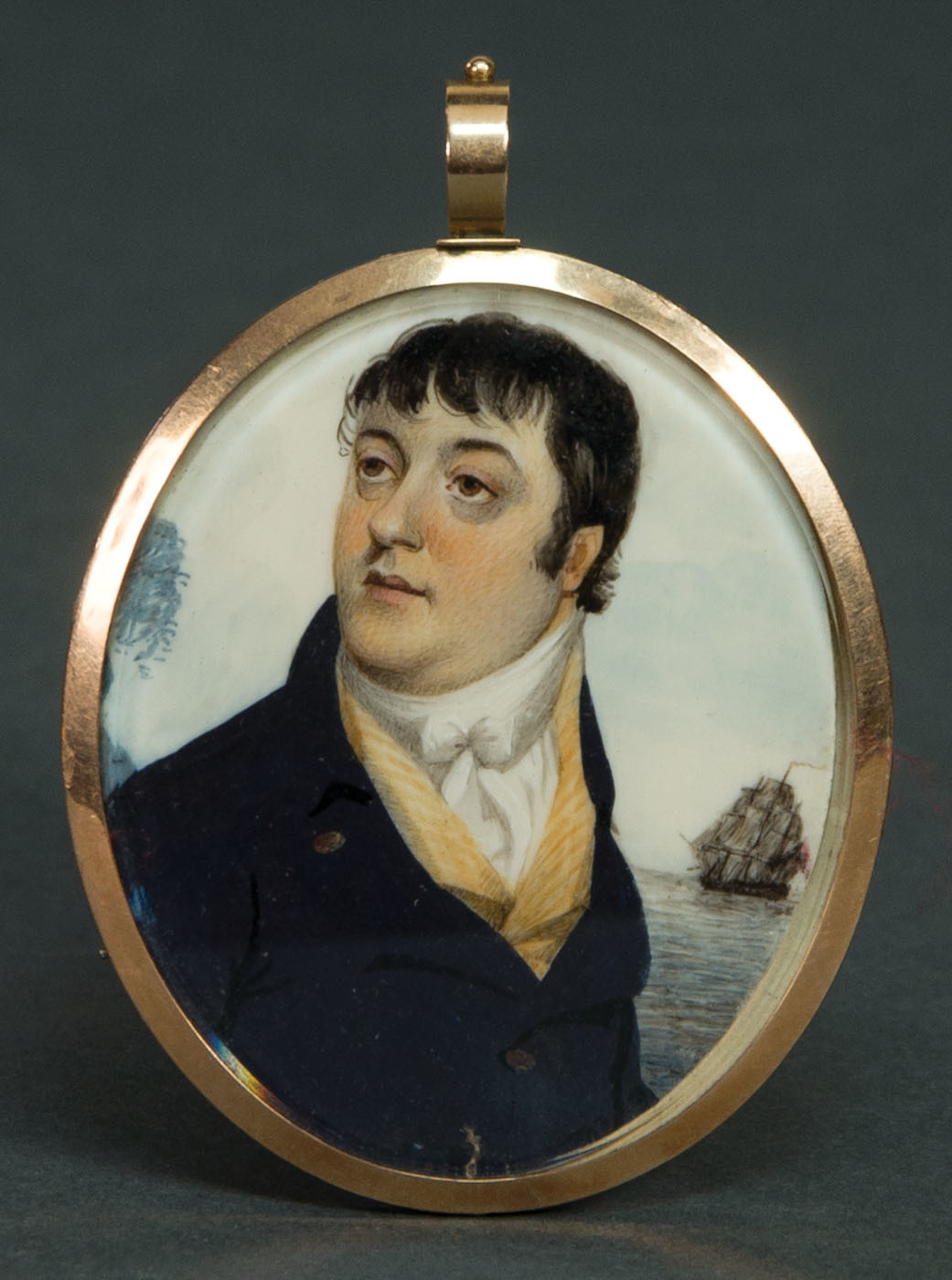
Two months after Colonial Minutemen had routed English troops, the Margaretta, an armed schooner in the King’s service, sailed into Machias Harbor with two British sloops to load up lumber to build barracks for the occupation of Boston.
On June 12, 1775, Jeremiah O’Brien, with younger brothers Gideon, John, William, Dennis and Joseph, sailed out into Machias Bay on the American sloop Unity to seize the three invading vessels. Their 60-year-old father, Morris, was only with some difficulty deterred from accompanying them.
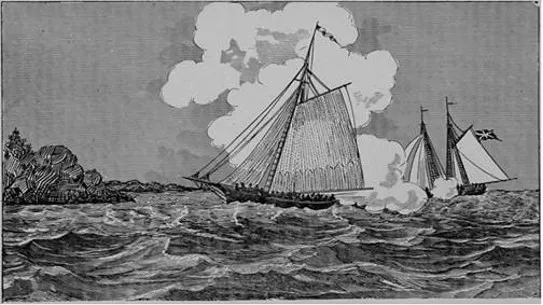
In the first sea fight of the Revolutionary War, the American sloop Unity, in command of Capt. Jeremiah O’Brien of Machias, and the British armed vessel Margaretta, in command of Capt. James Moore, in Machias Bay on June 12, 1775, resulting in the capture of the latter vessel.
James Lyons, chairman of the Machias Committee, reported to the Massachusetts Provincial Congress on June 14, 1775: “Our people, seeing the Margaretta … determined to follow her. About forty men, armed with guns, swords, axes & pick fork, went under the command of Capt. Jeremiah O’Brien. A most obstinate engagement ensued (and) the Margaretta was obliged to yield.”
Capt. O’Brien hauled down the English flag from the Margaretta’s masthead in a bloody struggle and a triumph. James Fenimore Cooper would call this first sea battle of the Revolutionary War “the Lexington of the Sea.” The British retaliated for their humiliating naval loss by burning 400 buildings in Falmouth (modern-day Portland), capturing two American ships and sinking 11 others.
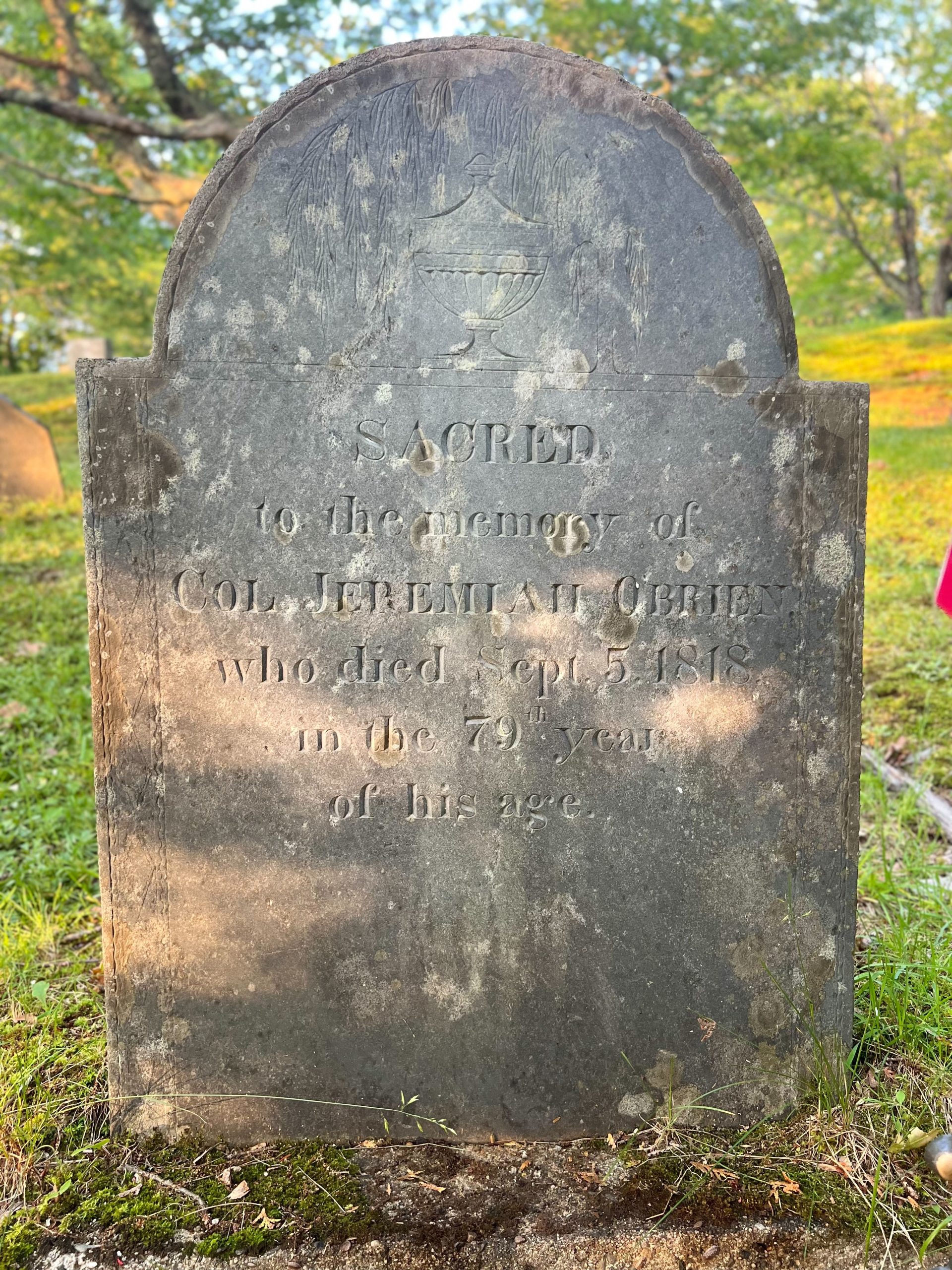
The bold band of O’Brien brothers would have been familiar with the popular broadside, “The Irishman’s Epistle to the Officers and Troops at Boston.” This lively rant targeting defeated British regulars was published May 1775, just one month after their Concord thrashing. Signed “Anonymous,” that it was sung to the tune of the 17th-century quintessential dance jig “Irish Wash Woman” hints at its authorship: “By my faith but I think ye’re all makers of bull With your brains in your breeches, your bums in your skulls Get home with your muskets and put up your swords, And look in your books for the meaning of words. You see, now, my honeys, how much you’re mistaken, For Concord by discord can never be taken.” Jeremiah was later captured. After two years imprisonment in England, he escaped. He was U.S. Customs Collector at Machias when he died, Oct. 5, 1818, age 74.
O’Brien’s renamed cruiser, Machias Liberty, constituted the nucleus of the present United States Navy. A torpedo boat christened “O’Brien” in 1900 was the first of five American vessels so-named. The fourth “O’Brien” was laid down by Bath Iron Works in 1943.
At the American-Irish Historical Society’s Jan. 12, 1904, gathering in New York City, Andrew Sherman, biographer of Jeremiah O’Brien, asserted that the O’Briens of Machias are “unquestionably one of the most interesting families prominently identified with the Seven Years’ Struggle for American Independence. One would look in vain to discover the record of another family, of whom six were actual participants in one of its most brilliant achievements on land or sea.”
America’s revolution would inspire the United Irishmen’s 1798 rebellion and later, the 1916 Easter Week Rising. Ireland, long a province, emerged “A Nation Once Again” after its war of independence and became the Irish Free State in 1921. Having declared independence, the Irish, like the Americans, were “absolved from all allegiance to the British Crown.” No longer subjects, they had finally become citizens in their native land.
Leave a Reply