
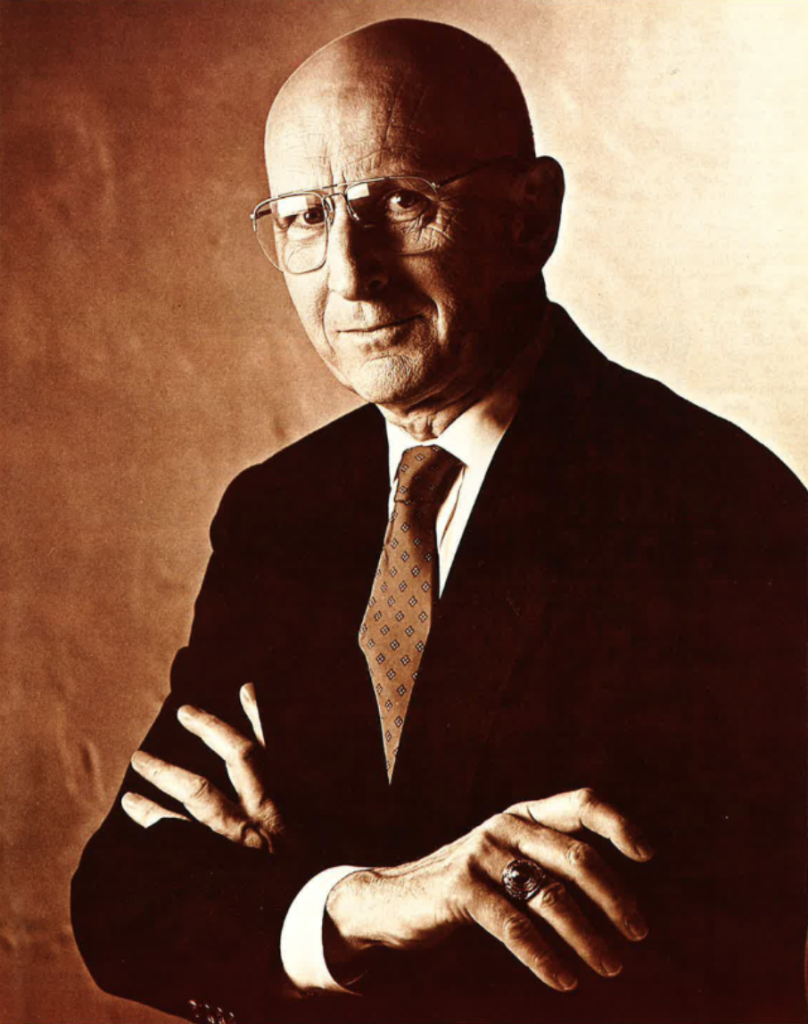
Jim Reilly, one generation out of Kerry, aims to keep several generations ahead of the competition. As general manager of marketing and communications for IBM in the U.S., Reilly is acknowledged as the key figure in putting together the corporate strategy that positions IBM products in the marketplace.
His position at Big Blue gives him the say-so on all aspects of communications, one of the most important functions of a company that owns one of the top three brand names in the world.
According to Advertiser magazine, which recently featured Reilly on the cover, he is one of the most influential men in American advertising and a key player in IBM’s marketing strategy.
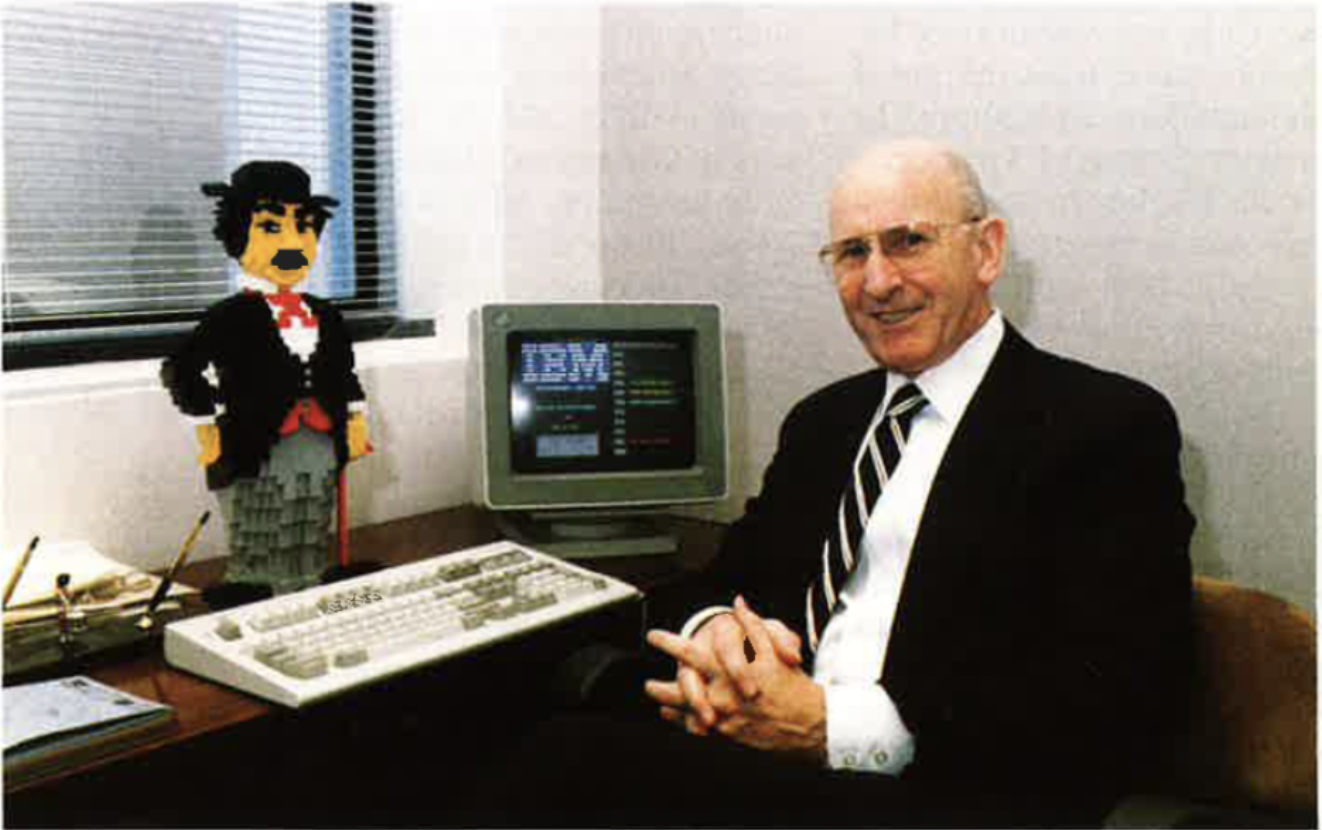
Among the campaigns he helped launch was the overwhelmingly successful “Little Tramp” series, now celebrating its success with tenth-anniversary ads. The advertisements, featuring a Charlie Chaplin lookalike using an IBM P.C., were a key element in removing the major fear factor of the average consumer about the use of personal computers when they were first launched
“Jim Reilly has that rare blend of intelligence on book level and street level, and an amazing ability to make an instant read on complex issues by seeing the bigger picture,” says a fellow worker.
A son of the Bronx, he married Mary Liston whose folks are from Kerry and Cork. They are the proud parents of five children, four boys and one girl. Reilly epitomizes the Irish Bronx success story typified by men such as Robert Daly, head of Warner Brothers; Barry Sullivan of First Chicago, now a deputy mayor in New York; and writer John Patrick Shanley of Moonlighting fame.
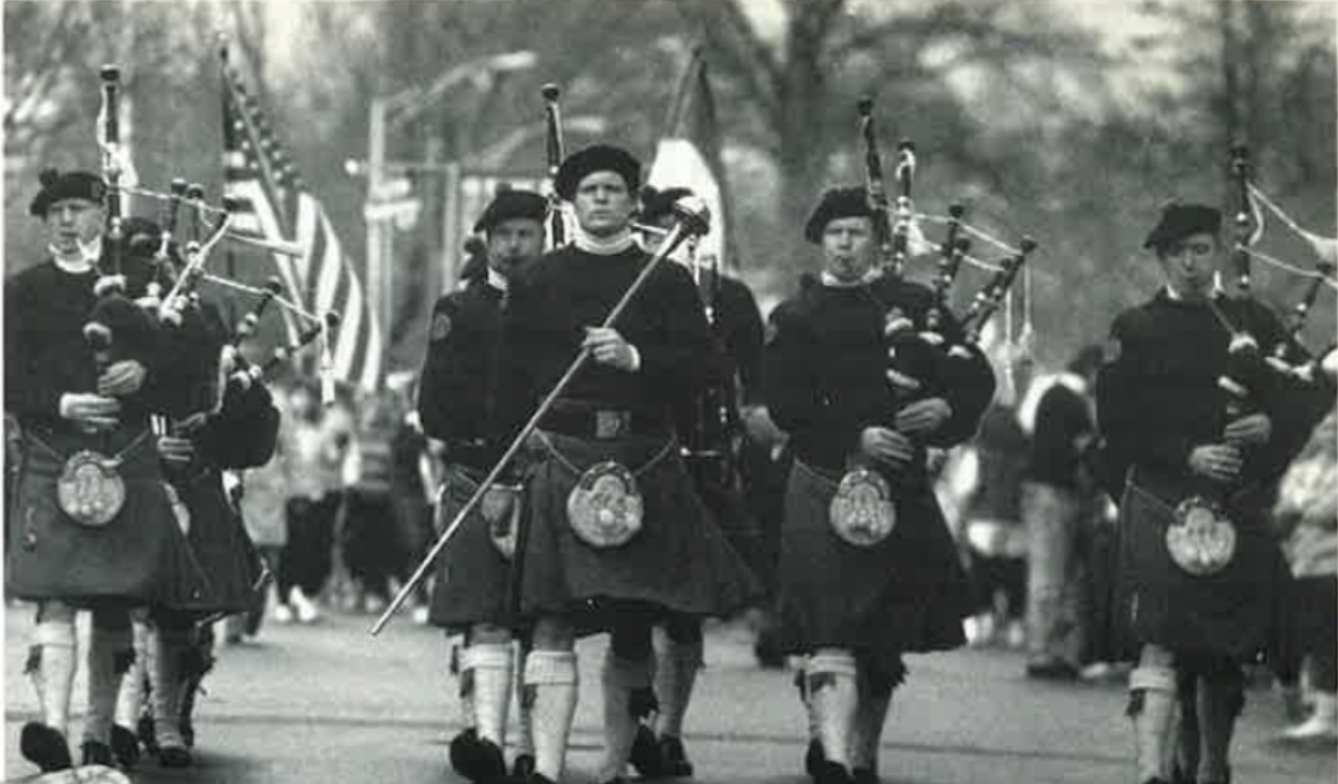
If it were left to Jim Reilly he’d probably prefer to be known for his Irish piping skills. He is the founder and pipe major of the Blackthorn Pipe band and, on the upcoming Labor Day weekend, is looking forward to donning his kilt and heading for several parades with his sons. Also a passionate sailor, Reilly has sailed the Atlantic with his son, is a leading member of the Irish Ocean Racing Club, and at the time of our interview had just taken possession of his new boat called “The Ring of Kerry.”
Irish America: Let’s start with your Kerry roots. Your mother was from Killarney, your father from Tralee.
James Reilly: My father Garret Reilly was a Tralee-man. My mother was born in Killarney and moved up to Tralee — a major move. [Laughs] I still have a bunch of cousins over there right now.
As a matter of fact, my cousin Gerald O Reilly ran the Rose of Tralee Festival for many years.
Irish America: How did your family end up in the U.S.?
Reilly: My father fought the Black and Tans, and my uncle Thomas Ashe was the Irish Republican who died on hunger strike in 1917, so there was a strong tradition there. Ashe taught my father how to play the pipes. My father’s father was captain of a boat called The Irish Co-operator. The Black and Tans would come searching the house, so they would hide the pipes and kilts down on my grandfather’s boat.
My aunt would go out in a rowboat to bring food to the rebels who were hiding in the hills around the Ring of Kerry. My mother remembers that. She was there when they arrested Roger Casement (1916 hero). Her maiden name was Cullinane. Her brother Jimmy was with the Great Southern Hotel for 50 years. He was a great poet and quite a story in his own way.
Irish America: When did your father come to the States?
Reilly: I think it was 1922. He was on the wrong side in the Civil War. I have a letter at home from Kellcher’s Department Store in Tralee, which he used as a reference. He got a job as a porter with the phone company and worked his way up.
Irish America: Thousands of people on the wrong side in the Civil War left. It was like an exodus. It was a bitter time for them, was it not?
Reilly: I wrote a song about it called “Another One Gone.” You can imagine the tremendous feelings these guys must have had about leaving. They couldn’t stand it. My father took it to his grave with him. His love for Ireland was beyond anything you could describe.
Irish America: When was your first visit back?
Reilly: It was through IBM actually. I was in Europe and I went over to Ireland and down to Killarney and they had a homecoming party for me. My cousins were all there and they had the entertainer sing “Boolavogue” for me in honor of my father. They remember him well there. He passed away about 10 years ago.
Irish America: So tell me about growing up in the Bronx.
Reilly: Our neighborhood was in the St. Thomas Aquinas Parish. Magee Hickey of NBC did a TV show on it some years ago. It was mostly Irish and Jewish, all immigrants. There was a symbiotic relationship. The most important gift my father gave me was that he raised me with a lack of prejudice. He was a typical Irish father. Hedidn’t sit around having conversations at night; he was out working overtime.
But one thing he wouldn’t tolerate was any kind of slur against blacks or Jews or anyone. It came from his own Irish experience of prejudice.
Irish America: What about the piping?
Reilly: I’ve always loved it, for reasons which I never understood — except of course that it’s in the genes. I was working with IBM up in Poughkeepsie [New York], and I met a guy who played the pipes. One thing led to another and we formed a band up there. I wish I could have been a professional piper. I love it. I started late. But my kids started young. I sent them to Canada, to piping school. And they’re damned good. They’re in my band, my two boys. I’m the pipe major of the Blackthorn Pipe Band. We play all the parades.
Irish America: How did you start with IBM?
Reilly: I came home from the Navy the day before I was 21, at the tail end of the Korean War. I had done well in the Navy.
I was a first class petty officer when I was 20, the youngest one in the Navy at the time. I took the weekend off and then went looking for work. I took the subway down to Manhattan, and I had a very scientific approach. I looked for the tall buildings. My theory was that tall buildings equaled security and success.
Irish America: There’s something Irish about that.
Reilly: You got it. I walked into a big building called IBM and got a job in the mailroom. And then basically! Started night school with the GI Bill and my own money. I stayed in various communications and marketing-related jobs and worked my way up. I was vice president for communications and marketing services for our personal computer division during the heyday when we were just getting into it, and now I’m responsible for all of IBM’s U.S. communications.
Irish America: What attributes did you have specifically?
Reilly: I think if there’s any kind of Irish gene for communications, I was helped by that. I found it easy to communicate, both verbally and in writing. IBM places a great premium on teamwork, and it just falls naturally, I think, to us guys — a little of that Irish background we talked about, which is the ability to work well with other people. We’ll pick up a shovel alongside the next guy and get on with the job.
Irish America: You also entered the company just at the time when it was expanding.
Reilly: There was no question that it was the right company at the time. It was growing and I grew along with it. It was a great company for diversity. We think of it as a meritocracy. It’s not a question of where you came from, or who you are – that’s all irrelevant. So you can move up to the extent that your ability can move you up. Talent will be recognized and rewarded. And that’s the beauty of the company. In its own way it’s open-minded and fair in its policies, and if you know that there’s a level playing field, you’re going to play your heart out.
Irish America: Let me ask you about your present job. What kind of budgets do you oversee?
Reilly: If I had to total it all up, probably $300 million. But that incorporates a lot of stuff. Basically the job has responsibilities for all of employee communications, advertising, and public relations.
Irish America: Is there a perception that IBM has not changed fast enough?
Reilly: The perception is certainly there that IBM was enormously successful. We are now caught in a historical shift where markets are changing, and we’re changing with them. We are certainly not rolling our flag down. We are forming alliances all around the world, we are re-engineering the way we do business. We are changing our business economic model, if you will.
We are branching out into new industries, and we’re exiting from nonstrategic ones.
We’re basically gearing up for the next round of growth, and we’re targeting important new technologies. We’re clearly shedding those parts of the business that are not as productive in a new environment where competition is now numbered in the hundreds of thousands. It used to be that you could count on two hands the main players in this industry. But technology has now been made accessible to everyone, and any smart person can put together new ways of doing business. So we are like a major institution that has to reorient ourselves for future growth, and that’s exactly what we’re doing.
Irish America: What about all the IBM clones, the companies that are undercutting everything you do?
Reilly: They’re all running into their own problems. Inevitably, the economics of the industry catches up with you, so those people who all came in and did well cloning us now find that they’re being cloned by other people. So it’s all kind of collapsing on itself somewhat. And now as it moves towards the low-priced, high-volume industry, the name of the game becomes distribution. You can buy our stuff on the phone now using 800 numbers, which is somewhat of a departure for us because of our tradition of staying close to the customer.
Irish America: Where do you see the industry in the year 2001? Do you think there will be a couple of players and that’s it, or do you think a lot of fragmentation will have occurred?
Reilly: My guess would be that probably there will still be major players because of the global economies of scale. There’s going to be a global market and I think there will be many, many alliances.
I think there will be a blending between business and consumer markets and what people are calling “infotainment” – a combination of information and entertain-ment. So I think it’ll be an information-driven society we’ll live in. You and I will have access to information sources that we probably haven’t thought about today.
Irish America: Tell me more about your Irish interests. How often do you play the pipes?
Reilly: We practice every week up at Sacred Heart in Dobbs Ferry. I’ve got folks coming in from the Bronx, Westchester, you know, the Tri-county area.
Irish America: Where do you play?
Reilly: At all the Irish parades. New York, Pearl River, Greenwich. We go up to Binghamton, New York. We go up with the FBI band and we party up and party back. We get out at eight o’clock, have a sip of Tullamore Dew, and off we go. We have a great day. We play well, and we wear the ancient Irish blue kilts.
Irish America: How often do you go back to Ireland?
Reilly: I haven’t been back in a while actually, but we’re planning on a Blackthorn victory tour next year. I’ll try to figure out how to save enough money to get my whole band over to play at the Rose of Tralee Festival!
Irish America: When you go back you must think that it’s been a hell of a long odyssey for you in one generation.
Reilly: I guess if you think about it that way it’s true — but you don’t think about it, you know. Maybe in a way that’s part of the bond of the race. They don’t sit around at night checking their report cards.
I think the Irish and Jews and other races have an atavistic, tribal memory that sums up the entire experience and in a way can be understood, if not articulated. There’s a memory that’s kind of in the genes, and it colors your reaction to things. And I think the Irish tribal memory is a combination of sadness and suppressed anger over the centuries of mistreatment.
Irish America: How do you view the Irish economy?
Reilly: I am not totally up on it, and l will make a point to get smart on what’s going on over there. But I think in the information industry, the software industries, the Irish kids could play in that without the slightest bit of a problem. It doesn’t impact land. It’s not an extractive industry. It’s not going to tear the forest down. It’s an intellectual capital they have.
Just because you’re an island race doesn’t mean you can’t be bigger than you are you have the synergistic impact of smart people. I think the Irish today have intellectual leverage. Historically they had physical leverage, manual leverage, labor leverage. But moving off of that, once you get intellectual leverage, you get a pretty good return on investment. It’snot one for one. It’s not one shovel, one piece of dirt, one rock.
I think Ireland could be the Singapore of Europe. An offshore island, filled with brainy people, tied to all kinds of financial deals, almost like a hub, like a 24-hour-teller for the continent. Ireland is like a product. It’s a product, and there’s a market for this product. But the product right now, the brand, is out of focus, it’s ambiguous. Part of it people understand, other parts of it they don’t understand. Unfortunately, the part of the product they understand is not relevant.
And the parts of the product that are relevant, the one that’s going to clean their rug. They don’t – that’s out of focus. So what you’re about is repositioning the brand. And what you’re looking at are the attributes, the benefits, and all that. Take it out of the pubs and put it into the boardrooms.
Irish America: As a marketing supremo, how would you market Ireland?
Reilly: Look, they haven’t leveraged their natural resources, right? Tourism is okay, but I mean, that’s not going to bring them into the 2lst century. What they ought to do is package something such as the Irish millennium, some millennium project, as we’re heading for the year 2001.
This isn’t going to happen next month. But what you’re basically laying out is a strategic plan for Ireland in the 21st century.
This is what your platform is: a nation of saints, scholars and Nobel Prize winners. You just want to extend the franchise.
Most of the thinking over there is probably inside-the-box thinking. Connect the dots with four lines, right? You can go around forever trying to connect the dots with four lines. You just can’t do it. Okay?
What you need is outside-the-box thinking. So the farther away you go, say even from over here, looking back, you get a better perspective.
Irish America: Thank you, James Reilly.
Editor’s Note: This article was originally published in the September 1992 issue of Irish America. ♦
Leave a Reply