
A significant number of Irish names have the prefix “Gil” or “Guil,” including Gilchrist, Gildea, Gilhooly, Gilmartin, Gillespie, Gilfoyle, Gilleece, (Mac) Gillicuddy, Gilpatrick, Gilroy (now McElroy), Gilsenan and Gilvarry. These names were all originally prefixed by Mc and are all based on the Gaelic word Giolla which means a youth, attendant, servant or follower. The usual original form is “Mac Giolla,” which means “son of the follower or devotee. “Thus Gilmartin was “McGiolla Mairtin” meaning “son of the follower of St. Martin.” Many of these names are based on a relationship to a religious follower.
(Mc)Gilchrist: son of the follower of Christ; (Mc)Gildrea: son of the follower of God (Dé in Gaelic); (Mc)Gilfoyle: son of the follower of St. Paul; (Mc)Gilmore: son of the follower of Mary (Mhuire in Gaelic); (Mc)Gilsenan: son of the follower of St. Senan; Gilvarry: son of the follower of St. Barry.
Many of these names have been anglicized in ways which hide their origin. For instance MeGiolla Muire, which as noted above has become Gilmore, has also become McElmurray and is sometimes shortened to Murray. In addition, the “G” is sometimes changed to “K” giving rise to Kildea, Kilmore, Kilbride, Kilchrist, Kilduff, Kilfedder (or Kilfeather: son of the follower of St. Peter); and Kilkenny.
Other strange aberrations include Glashby, which is a derivation of Gillespie (McGiolla Easpaigh: son of the servant of the Bishop) and McLice (MeGiolla losa: son of the follower of Jesus).
It must be emphasized that persons bearing these names do not necessarily have any familial connection; they are associated only by a common name-form based on “Giolla.” This common linkage survives in common usage today in the word “Gilly,” which is still used for the person who assists fishermen on Irish (and Scottish) lakes.
Some of these names are also found in Scotland since Scots-Gaelic is an offshoot of that in Ireland. Gilchrist and Gillespic, for instance, are also found in Scotland, while some of these names are phonetically similar to English names (Gilmore and Gilmer) which often makes it difficult to determine their origins.
Among the many interesting bearers of these names is Henry Gilmor (1838-1883) who was born in Baltimore, Maryland, and became a famous Confederate soldier and an intrepid raider of Union forces in the Shenandoah Valley. Captured several times, he was described by General Sheridan as an “energetic, shrewd and unscrupulous scoundrel and a dangerous man. He must be carefully watched or he will escape.”
Patrick Sarsfield Gilmore (1829-1892) was born near Dublin and had an early passion for music. He emigrated to Canada as a member of the band of the British Army regiment based in his town. He formed Gilmore’s band and quickly developed a name for himself as a composer and a conductor. In the World Peace Jubilee of 1872 he conducted a chorus of 20,000 and a 2,000 piece orchestra. Apart from being a splendid drill-master, he wrote many pieces, the most famous of which is probably “When Johnny Comes Marching Home Again.”
A man for whom this song may have had a bitter connotation was Hugh Hudson Kilpatrick (1836-1881) of New Jersey who was severely wounded on several occasions in the Civil War and saw service at Gettysburg, Richmond, and many other battles as a Union field cavalry officer.
After the war he became a diplomat and writer on military strategy. A fellow officer was Quincy Adams Gillmore of Ohio.
A West Point engineering graduate, he became a brilliant soldier who saw extensive service at Morris Island, Fort Sumter, Drewry Bluff and elsewhere. His military achievements often involved his engineering training. He was the first to use rifled cannon, in an attack on For Pulaski which proved that fortifications then thought impregnable were, in fact, vulnerable to artillery.
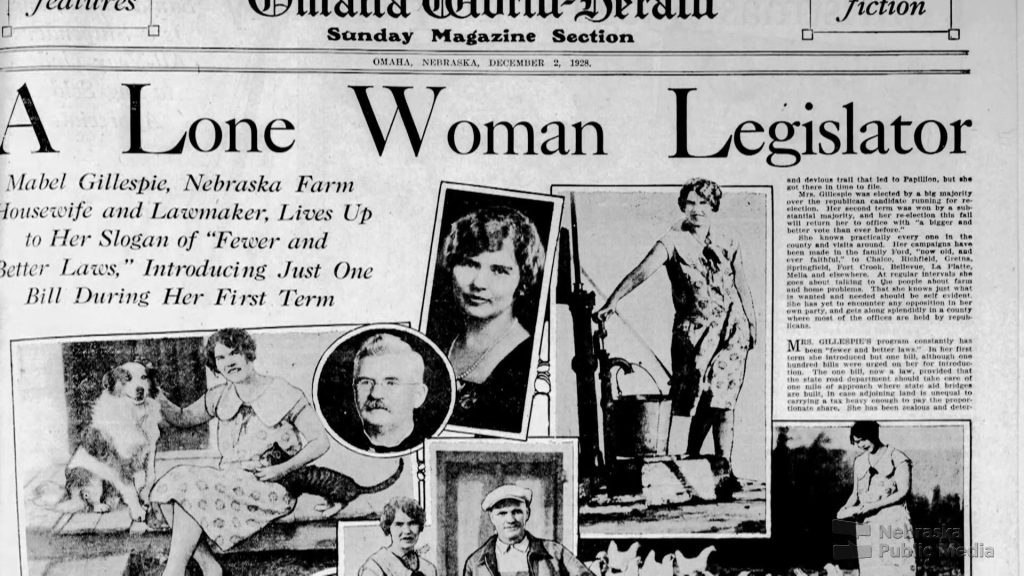
Mabel Gillespie (1867-1923) was one of the early women’s trade union leaders.
In her early career, on behalf of the Consumers League, she surveyed labor conditions in New York canning companies by working for 12-16 hours per day as a cannery hand to collect the information.
Later, in Boston, she organized the union movement in many industries in which women’s labor was involved. She was the first female member of a Minimum Wages Commission in the U.S., and also the first woman on the executive committee of the New York branch of the American Federation of Labor.
Another philanthropist was Sir James Gildea (1838-1920), born in Mayo, who served in an ambulance company in the Franco-Prussian War and afterwards raised funds for homes of destitute widows and daughters of officers, and orphaned children of soldiers. He was one of the founders of the St. John’s Ambulance Association.
Editor’s Note: This article was originally published in the January February 1993 issue of Irish America. ♦
Leave a Reply