
Halloween is a night of magic, mystery and merry making. Ghosts haunt the imagination and trick-or-treaters go begging from door to door. Though the evening’s colors are black and orange, they could as easily be forty shades of green because the customs of All Hallows Eve are Irish as the shamrock.
The ancient Celtic year was divided by the four seasons. Samhain (November I) marked the beginning of winter and lasted for three days, commencing the preceding eve (October 31). It was the most sacred time of all. The old was dying, and the new was yet unborn.
Cattle were slaughtered and salted to feed the people through winter. Crops were gathered in and stored lest the shape-shifting Pooka, a nocturnal hobgoblin who delights in tormenting mortals, destroy the fruits of the field and bring on a season of famine. With storehouses full, the Celts indulged in a few days of revelry before facing the unknown.
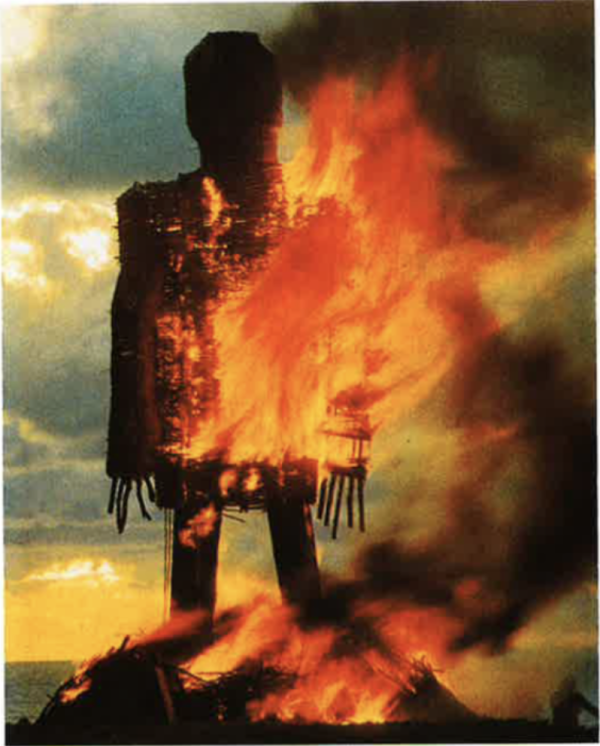
Druids lit huge bonfires to ward off the dark forces. In the great halls people listened spellbound to the storytelling harpist who sang of the magical Tuatha De Danaan and how they were conquered by the Gaels. Undaunted by defeat, the Tuatha De plagued their conquerors with trickery, depriving them of milk and grain.
When a compromise was reached, the land was divided in two parts. The Gaels had won the right to live above ground; the fairyfolk agreed to live underground. Earthen mounds marked the entries to their dwelling places. But on Samhain Eve the veil between this and the Otherworld was thin. The fairies roamed at will, the mounds glowed with eerie light and many a mortal disappeared, lured to live forever below ground with the fairy Sidhe.
This was Feile Na Marbh, Feast of the Dead. Children born that night were blessed with “double sight,” able to see and play with the fairies. Spirits appeared to ordinary folk advising them of future events. Long dead ancestors sought the warmth of a hearthfire and communion with the living. In every window, flickering candles lit the way for lost souls.
In 432 A.D. Saint Patrick brought the Christian faith to Ireland. For centuries, martyrs and saints were honored by the faithful on May 13, but the old Celtic ways were slow to fade away. In 844 A.D. Pope Gregory IV transferred the saints’ feast to November 1st, renaming it All Hallows Day.
Five hundred years later, Celtic descendants were still celebrating their three-day long Feast of the Dead. In the 14th century, Rome decreed November 2 would be known as All Souls Day and Mass would be said for the departed who had not yet been admitted to heaven.
Christianity had replaced the Druid faith, but the Celtic ceremony of honoring the dead on the 1st and 2nd of November had remained. Samhain Eve was now All Hallows Eve. It was still an occasion for feasting and revelry. It was still the night when souls roved free. And it was still the time to seek answers to things unknown.
Hollowed out turnips were carved with fearsome faces, lit with candles and placed in windows to scare away ghosts.
People wore masquerades when out traveling to disguise themselves from creatures of the night. Youngsters went from house to house chanting for food for the poor in the name of Fionn Mac Cuill, a tricky descendant of the Tuatha De Danaan.
No Hallows’ Eve dinner was complete without a steaming bowl of potato-cabbage Colcannon. Hidden in it were fortune telling tokens: a button for the bachelor, a coin for the richman, a thimble for the spinster. And whoever found the gold ring in the fruity Barm Brack would certainly marry within the coming year!
In memory of the departed, crispy wafers called “Soul Cakes” were kept by the door in easy reach of hungry guests – both mortal and immortal. Revelers bobbed for apples in buckets of water and quenched their thirst with mugs of spiced cider. Through the evening happy music from pipes and fiddles kept all but the friendliest spirits at bay.
Finally at midnight, church bells began to toll. For the following two days candles burned bright in every home in memory of all those who had gone before. Just as they had done for a thousand years during the Celtic festival of Samhain.
Recipes
Colcannon
- 6 medium potatoes, peeled & quartered
- 1 small cabbage, cored & chopped fine
- 1 bunch scallions, minced
- 1 cup milk
- Fortune telling tokens wrapped in parchment paper
- 1 stick melted butter
Cook potatoes and cabbage separately until each is tender. Drain and set aside. Warm milk with scallions. In a large bowl, mash potatoes, add scallions and enough milk to make a fluffy puree. Fold in cabbage. Mound in a serving bowl and hide fortune tokens in it.
Press a well in the center and fill with melted butter.
Makes 6 to 8 servings.
Barm Brack
- 1 3/4 cups raisins
- 1 3/4 cups golden raisins
- 3/4 cup dark brown sugar
- 1 cup cold tea
- 4 ounces mixed candied citrus peel, chopped fine
- 4 cups all-purpose flour
- 2 teaspoons baking powder
- 1 teaspoon pumpkin pie spice
- 1/2 teaspoon cinnamon
- Pinch of salt
- 1 ring wrapped in parchment paper
- Grated rind of 1 orange 8 tablespoons melted butter
- 2 eggs, lightly beaten
Preheat oven to 350 F. Grease a 9-inch round cake pan; line with waxed paper.
In a saucepan, heat raisins and sugar with tea, stirring, until sugar dissolves.
Cool. Sift dry ingredients together; set aside. Add candied peels and grated rind to the raisin tea mixture. Stir in butter and eggs. Gradually add dry ingredients. Combine well.
Pour into prepared pan and hide the wrapped ring deep in the batter. Bake for 1 1/2 hours, or until a cake tester can be withdrawn dry. Makes 1 cake.
Soul Cakes
- 1 3/4 cups Irish oatmeal
- 1 tablespoon melted butter
- 1/4 teaspoon baking powder
- 8 teaspoons hot water
- 1/2 teaspoon salt
Preheat oven to 350 F. Pulverize 1 cup oatmeal in a blender.
In a small bowl, combine ground oats, baking powder and salt.
Stir in butter. Gradually add water to make a thick paste.
Gather into a ball, place on a board lightly sprinkled with 1/4 cup oatmeal and roll around until completely covered with flakes. Spread another 1/4 cup of oatmeal on the board and flatten the ball into an 8″ circle 1/4″ thick. Cut in wedges and transfer to a pan covered with another 1/4 cup oatmeal. Bake 15 minutes. When wedges are light brown, turn off heat, open oven door and let sit in the oven for about five minutes until firm and crisp. Makes 8 Soul Cakes.
Hot Spiced Cider
- 2 quarts apple cider
- 2 cups fresh orange juice
- 2 teaspoons whole cloves
- Cinnamon sticks
- Thin half-round orange slices
Warm cider, orange juice and cloves in a stainless steel pot. Serve with orange slices and cinnamon stick stirrers. Makes 2 1/2 quarts.
Editor’s Note: This article was originally published in the September October 1993 issue of Irish America. ♦
Leave a Reply