
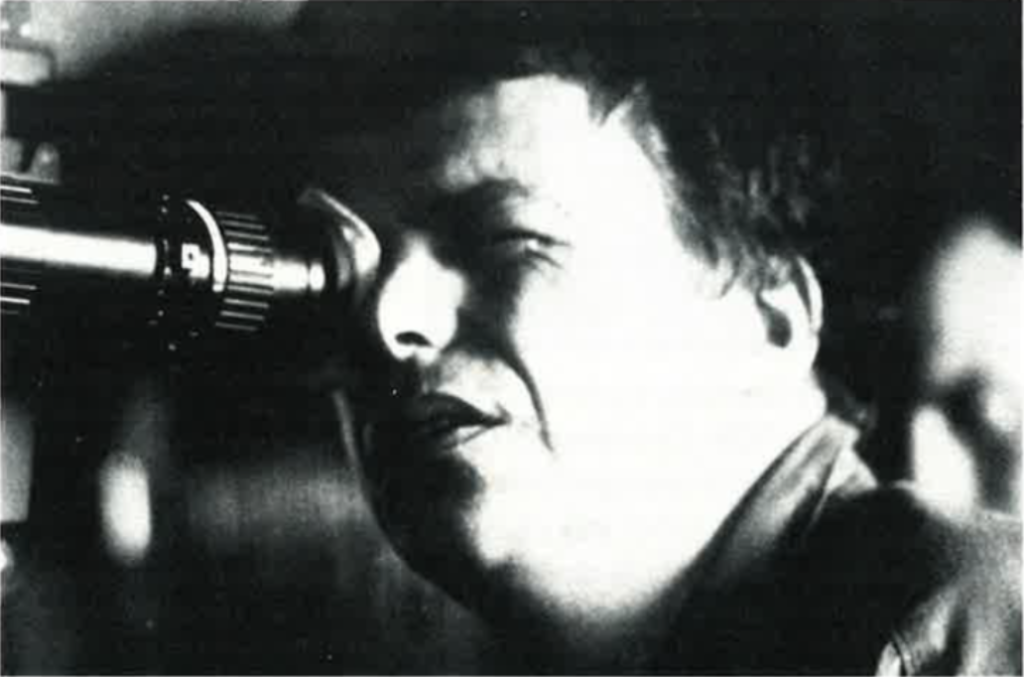
“What The Crying Game is saying is that there is a war going on there — a war that nobody is admitting to. There is a conspiracy and an accepted level of violence, but what it comes down to is warfare. To that extent, it is about Ireland.” Irish director and screenwriter Neil Jordan is speaking at a press conference about his latest movie.
Currently playing to packed movie houses across the U.S., The Crying Game has been nominated for six Oscars and has garnered many other prestigious awards for both the director and members of the cast. At the time that Jordan is speaking. However, it is still two days to the U.S. release of his movie and he has no idea that it is going to be such a huge hit.
After the press conference I requested more time with Jordan. Even though he was on a tight schedule, he graciously agreed to fit me in, saying that he wanted to speak to the Irish media, particularly. When we met again two days later, our opening conversation, however, was not about The Crying Game, but about Someone Who’ll Watch Over Me. We had both attended the opening, the night before.
Jordan thought the play, which stars Stephen Rea (who also plays the lead in The Crying Game), was great, and hoped for Irish writer Frank McGuinness that it would be a big success. We talked about Frank Rich’s New York Times review of the play, which was less than favorable, and how certain people at the opening night party, who hitherto had proclaimed that they loved the play, changed their tune on hearing the review.
Neil Jordan: … And there’s a certain desire to love the spectacle of defeat, you know what I mean? It’s weird.
Patricia Harty: Yes. I think it is particularly Irish. Maybe that’s why a lot of our writers and creative people leave.
Jordan: Yeah. Why do I stay there?
Harty: Why do you stay there?
Jordan: Well, I’m not there very much, really. A lot, not there. But I stay there because my children are there, that’s why. Twenty years ago I would have probably left and never come back, you know? But it’s changing a bit, becoming more cosmopolitan, I suppose….
Harty: We Irish can be so quick with the put-down. We saw something of it last night.
Jordan: I’ve had that all my life. I published my first book when I was almost 20 years old. And I was quite successful. And, you know, it was unbearable to live in Dublin after a while. Then I did Angel, the first movie. And then it was so difficult of me that I should have left there. You know, I went to London for a while. But I think it’s changed a bit, you know. I think it’s more — people are beginning to realize that success is not necessarily a bad thing. You know, they’re beginning to celebrate themselves, their own successes, and the culture. A lot of it has to do with U2. It sounds stupid to say that, but a lot of it is to do with that. Because they’re so widely successful. And they happen to live there [in Ireland].
Harty: So you think that’s changing then?
Jordan: I do, I do think it’s changing. I do. It’s definitely changing. But it’sstill barely under the surface in a way, that begrudging kind of thing
Harty: The Crying Game and Danny Boy are both about the North. I find in the South of Ireland, that nobody wants to even talk about the North. You talk about it, and they label you a provo.
Jordan: Well, they will always try to do that.
Harty: When did you write The Crying Game.
Jordan: It was germinating for ten years.
I had just done a story about the North, Danny Boy, and I didn’t want to do a film that was just about the bare reality. I wrote the story outline down, two pages. So I had the story. I returned to it last year.
Harty: What message did you want to get across?
Jordan: I didn’t want to get any message across. I made it because I wrote it. And I wanted to make a film that came out of the North. I wanted to make a film that deals directly with the consequence of living there, you know, in its broadest sense. And I wanted to make a thriller. A film that starts with politics. And the story bends and twists the whole political issue into totally different areas. Into areas that actually have to deal with politics, but that have to do with a lot more things besides.
It was a different film to make, you know. To deal with a figure of a terrorist, the central character, in any way other than a stereotypical fashion is kind of not allowed. You’re not going to do that, either in England or Ireland. So, it wasn’t easy to make. The more people who said to me,
“You can’t make this,” the more I wanted to make this film. You could say, if I want to do things, I always do them.
Harty: I really liked Angel (Danny Boy). It just seemed so honest.
Jordan: I have no alternative but to do the themes the way I see them. Even if I tried to do standard commercial fare, I can’t really. My only option is to do things like Angel, the way I see it. And I’ve realized that this is probably the best thing to do. I did two movies in Hollywood. I was, you know, trying to speak a foreign language, it didn’t work. You know, with the last two movies I made, The Miracle and this one, I just realized that there’s no point in trying to pretend I’m somebody other than Neil Jordan, you know.
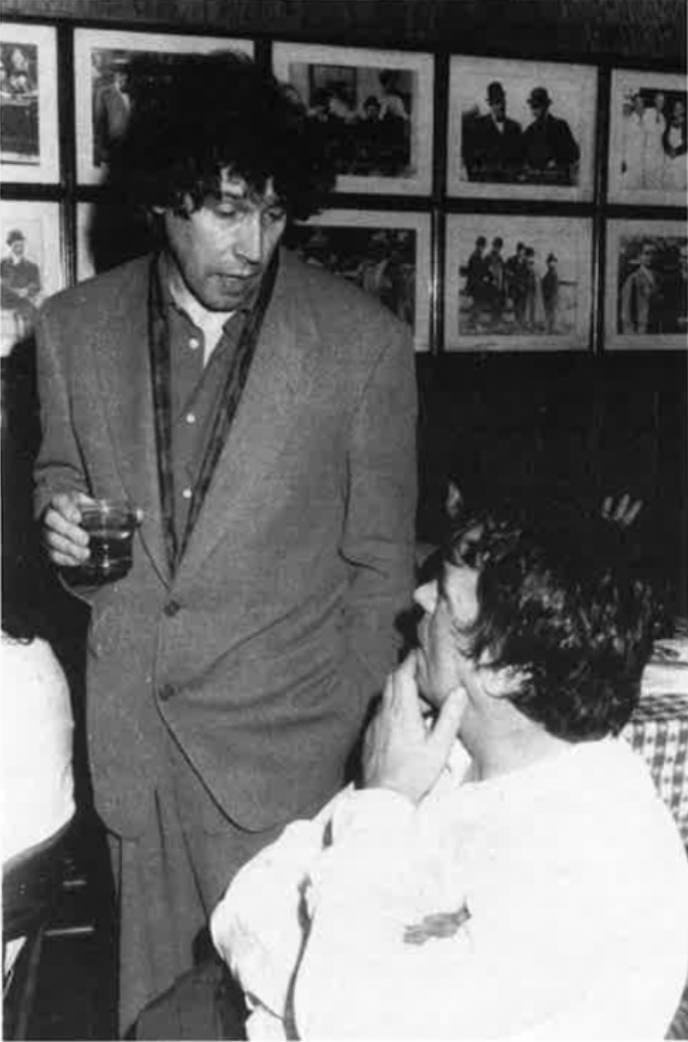
Harty: You’ve managed not to get grouped with the whole Irish thing.
Jordan: What is the Irish thing?
Harty: Well, you know ….
Jordan: Oh, Brian Friel.
Harty: When people think of Neil Jordan they don’t necessarily think, “Oh, the Irish director.”
Jordan: By a stretch, no. Nor British or – – – I’ve been called a couple of things. (Laughs).
Harty: How do you feel about the success of recent Irish films?
Jordan: Thrilled. It was difficult for me at the start because there hadn’t been a film made for 20 years. Jim Sheridan’s work is wonderful. The thing I would be worried about is that we propagate images of this charming little place across the water which is dangerous. But it’s a bloody country, a savage place—and somebody has to make movies, and I hope it doesn’t fall entirely on my shoulders.
Harty: You started as a writer and went into directing. Are you happier doing film?
Jordan: I’m writing, too. I have a piece now – – – You know, I have to do the films. I like it. It’s a crazy kind of — it’s a crazed world. You have to battle against all these strange forces. But when you see a film that works, you realize that it can be a wonderful thing to do. It’s worth everything. And you do so rarely see it. But, you know, every time I see a great movie, like Clint Eastwood’sfilm, Unforgiven, I think, my God, this is exactly what I should be doing.
It’s a good medium. It’s an interesting medium. I mean, I’m a writer. I started as a writer. I am a writer really, you know. But in film I’m dealing with character. As a director, I have to deal with character. I’m dealing with language. I really like to put language in my movies, you know, how people speak. I mean, it satisfies all the things I would do as a novelist, plus a few more.
Harty: The title, does it have any hidden meaning?
Jordan: No. It’s just a title. I think it’s a good title.
Harty: Who were your peers when you were growing up?
Jordan: John McGahem was the one. Friel was a writer I admired perhaps. And Dermot Bolger —in terms of Irish people, it was those.
Harty: Did you always think you would be a writer?
Jordan: Nothing like that. I had no option. I tried to be a teacher. I couldn’t get a job. I tried to be a lot of things. I mean, if I could have gotten a job doing something on the outside, 1 probably wouldn’t be writing now.
Basically I tried. And there wasn’t anything I could do. I’ve always been doing things. When I was at the university, I studied history and English. I got involved in a theater group, Jim Sheridan’s Theater Group [The Project]. When I began to write, I set up a publishing firm for new writers. And it was actually very successful, you know.
So, I was writing and doing various publishing things. Then I started getting involved in films and watching stuff. Do you know what I mean? And I suppose all my life I’ve been busy with a lot of different things I like to do – and read.
Harty: You must have had a lot of confidence in yourself?
Jordan: None. None whatsoever. No, when I started writing stories, I didn’t think anyone in the world would read them. When they began to be published, I was amazed. When I published my first stories, the first review I ever got was on the Irish television. And Thad to sit in front of the TV, you know, live, on television, while someone read his review of my couple of stories, yeah? Thankfully, he loved it, you know, but it was a terrifying experience. By that time I thought he was going to tear it to shreds. But I never had any particular confidence. I’ve just probably got a naivety. Instead of saying. “Why should I do this?” I say, “Why not? Why shouldn’t I do it?” But I wouldn’t put myself through that experience again. If l had a play on Broadway, I wouldn’t attend. (Laughs)
Harty: It [Someone Who’ll Watch Over Me] got a good review in London, didn’t Jordan: Yeah. It’s a great play. Just because one critic doesn’t like it, doesn’t change the nature of the writing.
Harty: Isn’t it too bad that critics can have such power? How has The Crying Game been received so far?
Jordan: Great. Good.
Harty: In London?
Jordan: Every review seems to be critical, you know. I’m so overwhelmed by interviews.
Harty: Let’s talk a little about censorship. Like Section 31 in Ireland. [Radio and television censorship of Sinn Fein members].
Jordan: It’s [the Irish] trying to attempt to just not have these problems and just trying to pretend they’re good Europeans, you know. AndI find it odd to be there. It’s like living in a strange paralyzed world that actually — who won the election, by the way? When was it?
Harty: It’s tomorrow, isn’t it?
Jordan: Is it tomorrow? But it’s—you know, living in Dublin often reminds me of a Chekhov play. I mean, you know those Chekhov plays where the three sisters in this country house discuss what may be important to Moscow … you know what I mean. Whereas, underneath, their whole estate is crumbling and collapsing. It often reminds me – in Ireland it often reminds me of that.
Harty: Well, I find it amazing that the journalists over there don’t rise up.
Jordan: Against what?
Harty: Well, against Section 31.
Jordan: Section 31. I must — I agree. I agree with you. A lot of them would agree with you, you know. Because to censor uncomfortable facts rather than to actually deal with it, is not right. I mean, I’m not a – I don’t even know if I would call myself a Nationalist. But I just do like to, you know, I do like to talk about what’s going on over there.
Harty: Well, it’s freedom of choice, too, freedom to listen.
Jordan: The condition of the Irish is interesting, really, because you have to realize that lots of people who have left, have done so because the country failed the party for them in some way. And they may be three and a half million people living there, but the Irish diaspora embraces about 60 million people all over the world. And I feel that’s who I want to release my films to. I want, you know, to embrace it.
Harty: Right. They’re trying to get this immigrant vote put through.
Jordan: Yes. It would be amazing, wouldn’t it?
Harty: Yes. I left because I wanted to, but a lot of people left who didn’t want to leave.
Jordan: [Silence].
I switched off my tape recorder and we sat in silence. He read the excellent reviews of The Crying Game, which his publicist Mary Flanagan had just brought in. It occurred to me to ask one more question. He lifts his head.
Harty: Do you believe in angels?
Jordan: Yes, absolutely. I talk to mine all the time.
Neil Jordan: The Story So Far
Neil Jordan, 42, born in Sligo, and brought up in Dublin, began his career as a novelist. In 1974 he founded the Irish Writers Cooperative, to help establish new writers. In 1979 his collection of stories, Night in Tunisia, won the Guardian fiction prize.
He has also published two novels, The Past and The Dream of the Beast.
He began his film career as a creative consultant on Excalibur, directed by John Boorman, in 1981. In 1982 he made Angel (released in the U.S. as Danny Boy), which he wrote and directed. Set in Northern Ireland, it starred Belfast actor Stephen Rea, as a dancehall musician whose girlfriend is killed in a bombing. It won for Jordan the London Evening Standard’s Most Promising Newcomer Award, 1982.
His next film, The Company of Wolves (1984), adapted from a story by Angela Carter (kind of a bizarre Little Red Riding Hood), was honored with Best Film and Best Director Awards by the London Critic’s Circle.
Cathy Tyson and Bob Host Jordan’s third film, Mona Lisa (1986), starring Bob Hoskins, the hood who falls in love with a high-priced call girl, Cathy Tyson, really showed the world the incredible talent of the writer/director. Mona Lisa was a huge success, winning numerous international awards, such as Best Actor for Bob Hoskins at the Cannes Film Festival and an Oscar nomination for Best Actor.
Mona Lisa brought Jordan to Hollywood. But his next two movies, High Spirits (1988) starring Peter O’Toole and Daryl Hannah (high-jinks in an Irish castle) followed by We’re No Angels (1989), which starred Robert De Niro and Sean Penn as escaped cons disguised as priests, received little attention.
The Miracle (1991) with Donal McCann and Niall Byrne, a father and son comedy shot in his native Ireland, put Jordan back on track by winning the London Evening Standard’s Best Screenplay award.
Then came The Crying Game, a movie that was difficult to raise money for. “It was seen as the kind of film everyone should be making, but everyone was afraid to make it,” says Jordan. Jeff Berg, Jordan’s agent, agreed. He said in a recent Entertainment Weekly that “There was absolutely no appetite for the film in the script stage.” Stephen Wooley, who had produced four of Jordan’s other films, was committed to the project. However, he had his own problems, his production company was in severe financial trouble, and he really had to hustle to get the money. Eventually, with cast and crew deferring 30 percent of their salaries, the film started production. There was one more problem, however, the investors were insisting on a more uplifting ending. Jordan shot the new version, just to prove that it wouldn’t work, and the original ending was restored.
The success of The Crying Game, which has to date grossed $13 million, is a fairytale ending for these committed artists who took part in the production.
Stephen Rea chosen as best actor by the National Society of Film Critics, is finding out just what being given the star treatment means in America. The 50-year-old actor has become a media sensation, featured on magazine covers and television.
Neil Jordan has been nominated for several best director and best screenplay awards, and Oscar or no Oscar, financing for his next and future projects shouldn’t be a problem.
Jordan is presently working on a film called Jonathan Wild, about an 18th-century gangster, and Warner Brothers have signed him to rewrite and direct Anne Rice’s Interview with the Vampire. Unfortunately, Jordan’s Michael Collins script, “the best piece of writing I’ve ever done” (Entertainment Weekly), which Warner Brothers commissioned nine years ago but kept on the back-burner, is probably not going to get the go-ahead as Kevin Costner’s film on the life of Ireland’s legendary revolutionary is already in pre-production.
Editor’s Note: This article was originally published in the March April 1993 issue of Irish America. ♦
Leave a Reply