
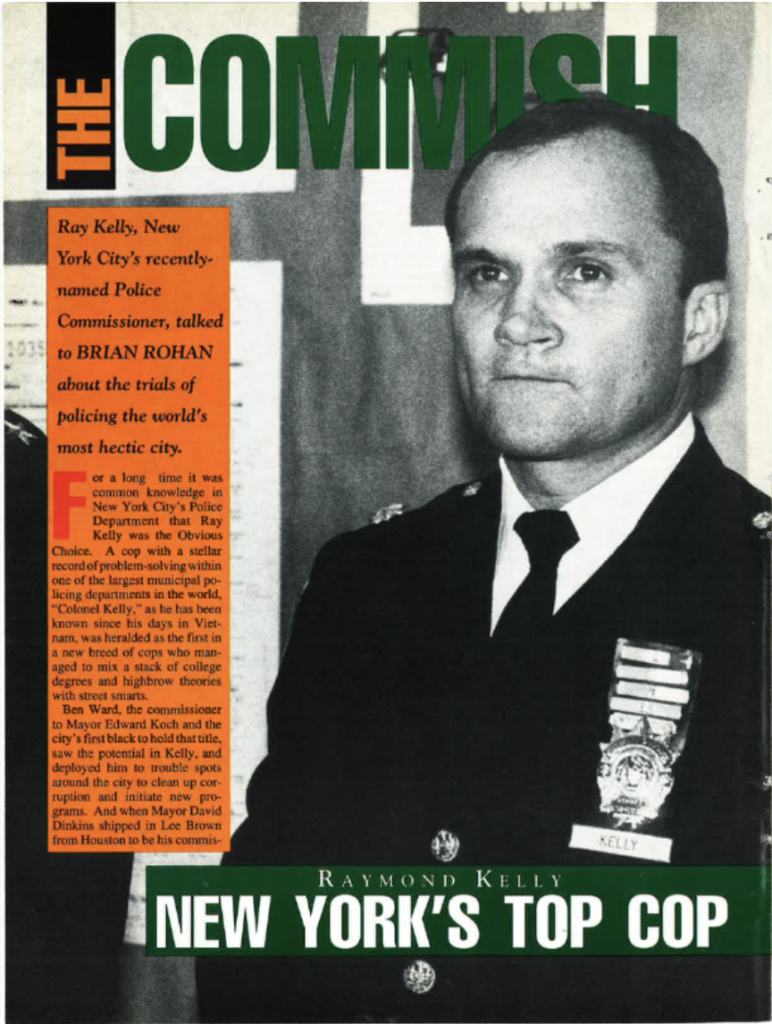
Ray Kelly, New York City’s recently-named Police Commissioner, talked to Brian Rohan about the trials of policing the world’s most hectic city.
For a long time it was common knowledge in New York City’s Police Department that Ray Kelly was the Obvious Choice.
A cop with a stellar record of problem-solving within one of the largest municipal policing departments in the world, “Colonel Kelly,” as he has been known since his days in Vietnam, was heralded as the first in a new breed of cops who managed to mix a stack of college degrees and highbrow theories with street smarts.
Ben Ward, the commissioner to Mayor Edward Koch and the city’s first black to hold that title, saw the potential in Kelly, and deployed him to trouble spots around the city to clean up corruption and initiate new programs. And when Mayor David Dinkins shipped in Lee Brown from Houston to be his commissioner, everybody knew who was really running the show — Brown’s First Deputy, Ray Kelly. While Brown — who is currently in the running for the job as President Bill Clinton’s FBI chief – was busy giving verbose lectures on policing theory and trying to find his way around his new city, Kelly was the guy on the ground, behind the scenes. He was the main architect behind the drafting of the “Safe Streets, Safe City” program, acknowledged to be the most comprehensive nuts and bolts analysis of urban policing ever. Like Brown, he had the stacks of college degrees and citations, but unlike Brown, he knew the city and how to communicate with its citizens.
So when Brown resigned last summer due to his wife’s illness, again, the Colonel was the obvious choice. Or was he?
Other factors still stood in his way: The past year has been among the most troubled in the department’s history. At a level not seen in 20 years, the department was rife with corruption scandals, the worst of these involving the man who has since been dubbed by newspaper headlines as the “Coke Cop,” Brooklyn Officer Mike Dowd. Dowd was arrested on charges that he was a hired enforcer for drug gangs and had also masterminded a ring of cocaine-peddling cops. Between 1986 and 1989, Dowd’s name came up 12 times in investigations by the NYPD’s own Internal Affairs Division — yet he wasn’t busted on the “Coke Cop” charges until last May — by another police department, the one in Suffolk County, Long Island, where Dowd lived with his family in a large house in an exclusive area. Strike One against Ray Kelly as commissioner: the city needed to bring in someone from the outside — as they had done with Brown from Houston — who couldn’t possibly have any ties to the corruption he’d have to sort out.
The other major problem with the NYPD was, as Kelly admits himself, that it was —and still is — “overwhelmingly white.” In a city that is more than half black and Hispanic, the police force is made up of only 11 percent of the former and 14 percent of the latter. Indeed, a University of Nebraska study of the 50 largest police departments in the country listed New York’s last in the hiring of blacks. Strike Two against Kelly — he was white. And if that wasn’t bad enough, he was Irish, and if he was appointed, he’d be the 30th out of New York’s line of 37 police commissioners with Irish heritage!
Still, Mayor David Dinkins, the city’s first black to hold that position, liked what he saw in Kelly. By late summer, indications were that he was leaning Kelly’s way. But then, on September 16, came the great police riot of 1992. The rank and file’s perception of an unsupportive and overly-critical Mayor, as well as their opposition to civilian review board proposals, led thousands of cops to besiege City Hall. The cops, some of whom were openly drinking, stormed City Hall steps, climbed windowsills, blocked traffic on the nearby Brooklyn Bridge and reportedly shouted racial slurs. The media and the public loudly criticized the action. For Kelly, it seemed a certain Strike Three.
But in November, after months of interviewing by the Mayor’s search committee, Kelly was appointed. The critics howled. Black activists in particular railed against the Mayor’s choice, seeing months of talks about reform being washed down the drain because the Mayor had to kiss and make up with his white police force. Kelly had his work cut out for him.
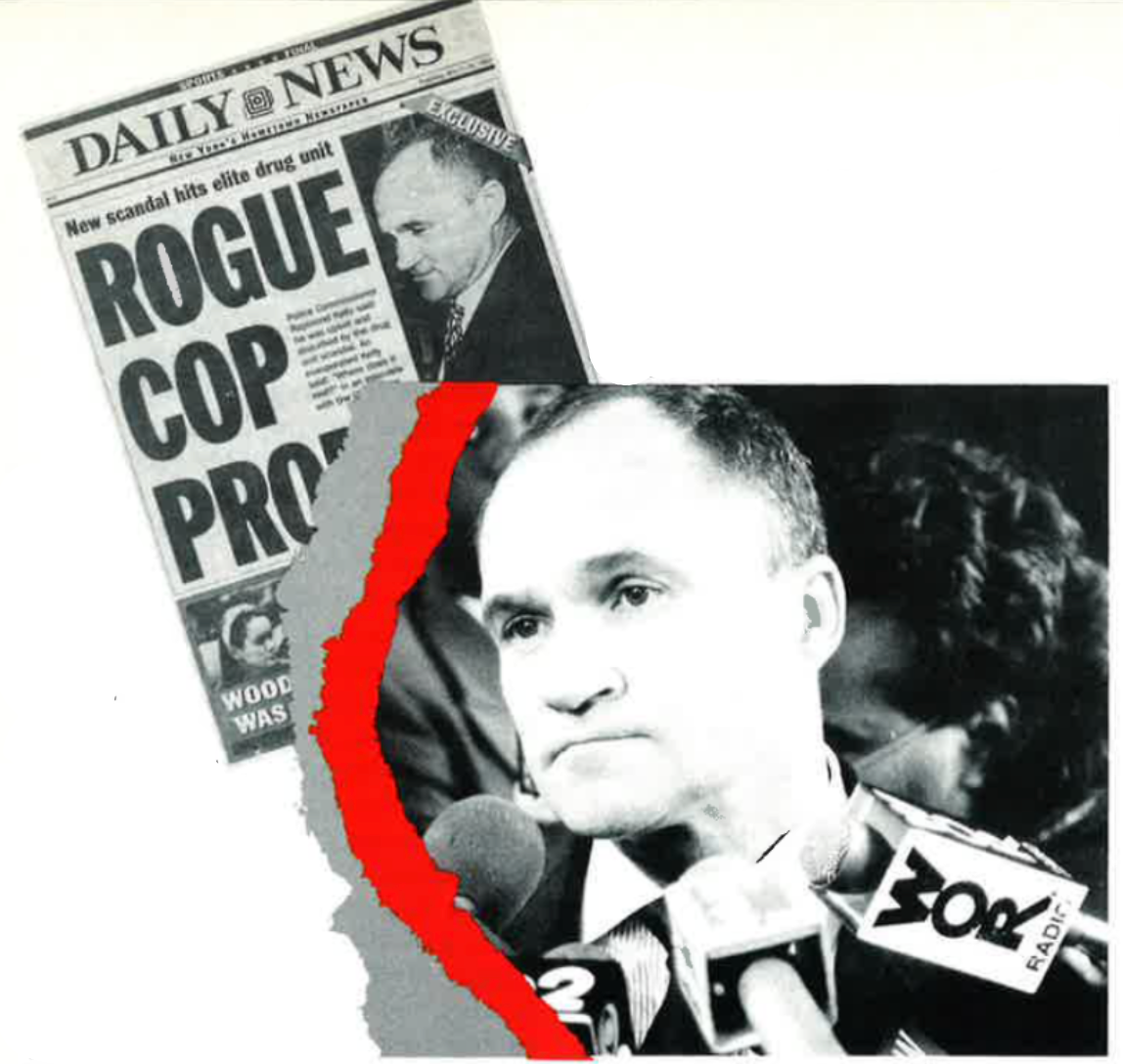
To Kelly, though, his appointment was no mystery. With his pug-nosed cockiness, he asserted to Irish America, “I was simply the best qualified for the job. Instantly, he hit the ground running. His main philosophy as top cop is to change before being forced to change. With the Mayor’s independent commission threatening to take away much of the department’s powers in policing itself, Kelly shook up Internal Affairs and 41 supervisory personnel – more than 20 percent of the entire division — were transferred. And his overtures to blacks and Hispanics, which include recruitment drives at Baptist churches and other community centers, have resulted in a change of heart for many. In the months since November, 1992, even activists such as the Reverend Al Sharpton have come round to endorsing Kelly’s actions and applauding his appointment.
Much in the same way that former critics have been fooled by Kelly’s history and assumed
allegiances, Kelly the man is a paradox of the Jimmy Cagney-style tough guy and the savvy public administrator bordering on politician.
At age 51, Kelly is physically imposing far beyond his 5’10” frame. Built like a pit bull, Kelly has massive shoulders, a government-issue crew cut, which he’s probably had since even before he joined the Marines, and a handshake you’d remember for days. Crossing his left leg over his right knee as he sits in his office in One Police Plaza, his tough-guy delight is almost palpable at his visitor’s attempts not to stare at the bulge in his left sock.
Eventually, he gives the unsolicited answer: “Yes, it is an ankle holster.”
“I have fewer bodyguards than anyone who’s had this job in a long time,” he says with pleasure, reconciling his military toughness with municipal cost-savings. With further study though, Kelly’s appearance is belied by the somewhat softer man behind the badge, reflected in his pudgy, theatrically expressive face. His steely dark eyes crinkle up at the edges in a smile; his assertive bottom lip curls into a warm yet still toothless smile. And surprising, too, are his political and other beliefs, the beliefs which have made him amenable to the very liberal Mayor Dinkins.
Born the youngest of five on 91st Street at Columbus Avenue on Manhattan’s West Side, Kelly is the son of a father who was a milkman in the days of horses and carts and later a shipbuilder and an IRS clerk, and a mother who was a fitting-room clerk at Macy’s. After attending St. Ann’s Academy (later known as Archbishop Molloy High School), he went on to Manhattan College, where he joined a Marine Corps training outfit. He also saw an ad in a student publication for the NYPD cadet corps, and signed up. While working as a student operator at the old Police Headquarters’ famed Canal Board switchboard, he was turned on to the police forever.
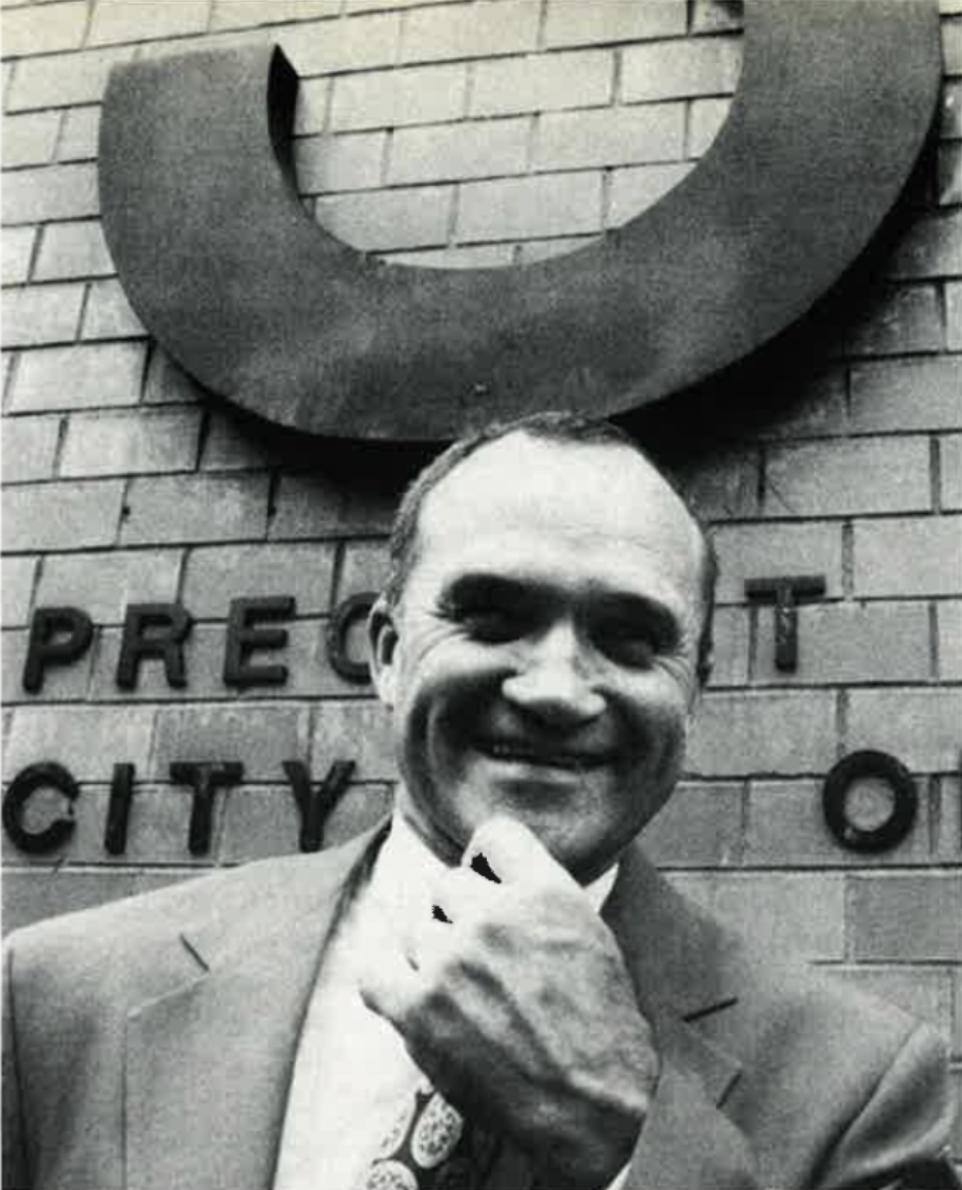
“The lifeblood of the city ran through that switchboard,” he said. “Flashing lights, pulling switches — I was hooked.”
Yet he spent only five days with the force after graduating before going on military leave with the Marines in 1963.
He spent a hazardous year on amphibious assault duty in Vietnam, serving in one of the war’s first big maneuvers, Operation Harvest Moon.
In June 1966 he was returned home to his wife, Veronica Clarke from Brooklyn, who had since given birth to their oldest son James, whom Kelly had yet to meet.
On top of graduating first in his class from the police academy, Kelly also pulled off the difficult task of passing the sergeant’s exam before ever spending a day on the beat — for these he was awarded a trophy by Mayor John Lindsay in 1967. Since then, the Colonel’s military sense of discipline and his keen penchant for taking orders have turned him into a designated troubleshooter within the department. In 1981, then-Commissioner Robert McGuire granted Kelly’s first precinct command post, sending him to clean up the then-troubled 88th Precinct in Fort Greene, Brooklyn. A year later, the 88 carned a unit citation for excellence. And in 1985, then-Commissioner Ben Ward sent him to the even more troubled 106th Precinct in Queens, where cops had been found to be torturing suspects with electric stun guns. Eighteen officers were fired in that scandal, and it was Kelly’s job to shape up the ones left behind.
The role that was given to Kelly, akin to that of the big guy at the end of the hockey bench sent in by the coach to rattle some heads, didn’t endear him to everyone on the force. He also spent a suspiciously long time away from socializing with his officers — which he eschews as being counter-productive to gaining respect — in comparison to the time he spent with his nose in a book. As well as his Manhattan College degree and a law degree from St. John’s, he also received in the mid-80’s — on scholarship — a master’s degree in public administration from Harvard.
Because of all this, Kelly’s had to deal with the street cop’s resentment towards college boys, coupled with the notion that he was a “white collar cop.” Which, when talking to the very intense, physically imposing man who weightlifts several days a week, is a bit surprising.
But the tag remains, especially with an older generation of cops, some of whom had a resentment for kids who studied too much in high school, never mind a grown man who leaves his job to go to Harvard.
Yet Kelly succeeds where others (most notably his aforementioned predecessor) have failed, because he never forgets the personal touch. As Eric Pooley reported in New York Magazine, he has become known within the force for his unannounced visits, late at night, to outlying precincts, as well as for radioing out 10-85 calls (“Officer needs car”) to unsuspecting patrol squads, whom he then rides with and talks to.
Even his occasional critics have to respect the knowledge and experience brought to the job by Kelly, famed for knowing minute details about every street in the city. And unlike some of his predecessors, the tireless Kelly, who rarely vacations, always seems to be first on the scene. He and his officers were praised highly, for example, for their response to the February 26 bombing at the World Trade Center, where they quickly cleared the area and worked closely with the FBI in capturing the first suspects.
As Kelly sees it, his job is either to shape up the NYPD or have it shaken up for him. With regard to the lack of minorities on the force, Kelly is particularly active, pushing to dismantle some of the barriers perceived to be inherent in the department against minorities.
“The perception among some minorities is that the police department is not a welcome place for them,” he explains. “I don’t agree with that, but unfortunately, perception is fact.”
“If we don’t do something about this (the lack of minorities on the force], we’re going to have some federal commission force us to initiate a quota system, which I don’t want to happen. It’s much better for everyone concerned if we fix up our own house.”
Kelly admits that this has led to concern and criticism from some of the white, Irish cops whom he grew up on the force with, but he says that, more and more, they are becoming a rarity.
“Cops today are too sophisticated for that,” he says. “The vast majority of the cops that I have heard from agree that the best thing, the smart thing is for a police department to look like the community it serves. We’re not talking about anybody losing their jobs here, and we’re not talking about any hiring quotas either, we’re simply talking about putting an end to the perception out there that the police force is not a welcome place for minorities.”
Another controversial and somewhat related issue, which Kelly is slightly less vocal on, is the long-talked-about residency requirement for cops, to combat the public perception that the police force is made up of suburbanites out of touch with urban realities. Kelly points out that most city employees (less uniformed ones, such as cops and firemen) are required to live within the city’s five boroughs, and many other cities across the country require their police officers to do the same.
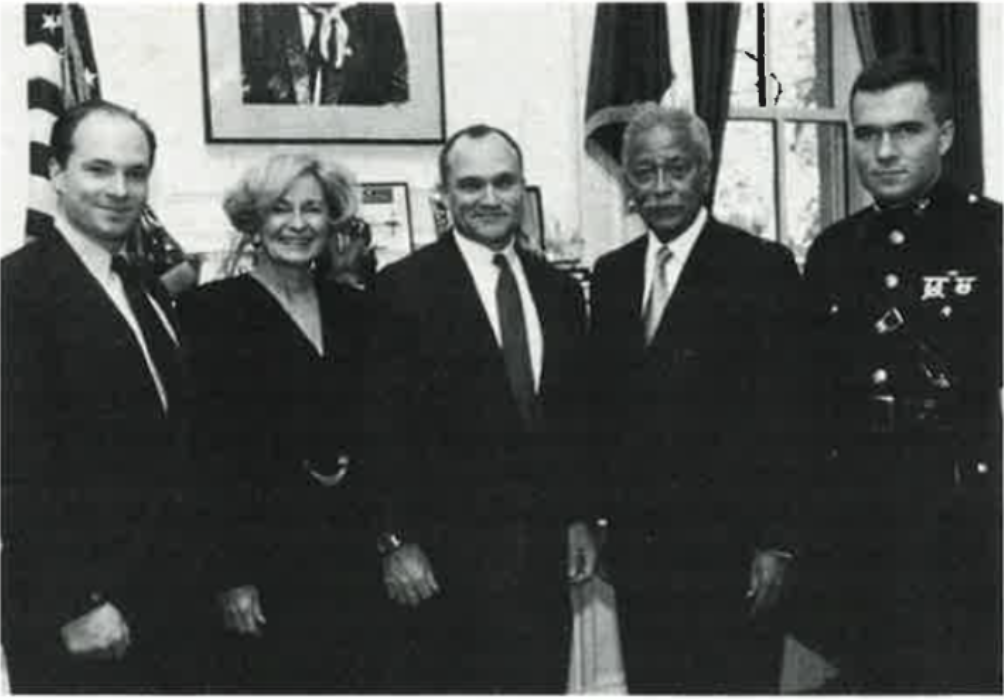
Yet, and this is a point that his detractors like to point out, Kelly is not as vocal on this issue as he is on others, possibly because he himself moved back to the city, to a Battery Park apartment, only three years ago, and he still retains the Garden City, Long Island house that he and his family lived in for many years previous.
“I would like to see some sort of a residency requirement which would only affect new cops joining the force,” says he. “I see nothing wrong with mandating that officers live in the five boroughs for at least their first five years.”
One of the biggest burdens he’s had to shoulder in his first six months on the force has been an issue which he now says should not have been the department’s responsibility in the first place — the controversy regarding efforts by the Irish Lesbian and Gay Organization [ILGO] to be included in the city’s St. Patrick’s Day parade. According to Kelly, the events of the months leading up to March 17 earned him heaps of criticism and “two or three death threats.”
The reason for this was that Kelly, the soldier who never really got out of uniform, took the fall for his commanding officer, Mayor Dinkins, who is also a former Marine.
In January, the permit to the parade was granted not to the traditional holder, the local branch of the Ancient Order of Hibernians, but to a newly formed group who vowed to include the ILGO in their line of march. Since the issuing of such permits comes from the police department, Dinkins announced loudly that the decision was Kelly’s and Kelly’s alone. This announcement was widely known among informed sources to be a joke — of course the decision was the Mayor’s — but yet Kelly said nothing and took his lumps.
For the first time ever, Kelly broke his silence to Irish America magazine and admitted that the decision was “absolutely” the Mayor’s.
“I didn’t get my message out properly,” says he about the perception of many of the city’s Irish who were angered by the decision. “My position all along is that it’s not up to the Police Department to decide upon the content of the parade. We’re responsible for enforcing the law and for public safety. Once it gets outside of that, once you start talking about content, that’s an issue for the mayor and for City Hall.
“It [the criticism he received] is my own fault because I should have put out a paper or a press release saying this but I didn’t. I don’t want to be involved and the Police Department should never be involved with content or philosophy or ideology of the parade. Our function is public safety.”
Kelly declined to say what the decision would have been if it was his to make, except that he “didn’t personally have any problem” with ILGO marching. And although he refuted any
claims that there had been a rift between he and the mayor, whom he counts as a close friend, he had a few very rare stiff words to say regarding the whole imbroglio:
“My position is that, hey, you’re the chief policy maker in the city and you want to make a discrimination as to who’s in the parade? Fine. But accept the responsibility for doing it.”
With the federal court decision which granted the permit back to the AOH, the parade controversy seems to be over by now, but undoubtedly other conflicts and hard times are to come as Ray Kelly the Marine and career cop matures into Ray Kelly the public official. Although Kelly has never been to Ireland and admits that he is “probably guiltier than anybody regarding the losing of ethnicity,” he retains a sharp appreciation for his Irish heritage.
Kelly’s grandparents came to Manhattan from County Roscommon, and in recent years Kelly says he has been inspired to check up on his ethnic background. In December, he was honored at a function of the New York City Brehon Law Society, an Irish American lawyers’ group, and recently he was named to this magazine’s list of the “Top 100 Irish Americans.”
On the day we met him, just five days before St. Patrick’s Day, he was eager to talk about Irish history, in particular, the Irish in America, and the historical role of the Irish on urban police forces: “There wasn’t any such tradition in my family, but I know a lot of the officers have a very long tradition of service to the force. going back to their great-grandfathers. We don’t have as many Irish-born cops as there once was, I suppose mostly because of immigration changes, but we still have quite a few and we have plenty of Irish Americans like myself. I’m proud of the fact that I’m the 30th Irishman out of 37 to hold this job.”
“I’m also proud of the fact that under every railway line in this country there’s the blood and sweat of Irish workers, and that’s something I’ve always tried to tell my sons. It reminds me of something I once read, from back when they were building the railroads in the last century, which said something like, ‘There’s steam power. coal power, but the best power is Irish power.”
Kelly is very proud also of those two sons of which he speaks, even if he thinks it “very unlikely” that they’ll be following him into the police force. His youngest son, 24-year-old Greg, did follow his father into the Marines, where he is currently in flight school, and James, now 27, is a computer consultant. Kelly’s wife Veronica has continued her career, selling medical supplies, and his brother, Don, is well known in the local Irish community as a vice president of Emigrant Savings Bank who is active with the Emerald Isle Immigration Center, an offshoot of the Irish Immigration Reform Movement.
Kelly admits that he rarely goes on vacation (“I don’t really feel the need for one”), and when he does it’s usually only for an extended weekend in Florida, but yet he says that he will definitely visit Roscommon sometime soon. As he says it, though, you get the immediate sense that this son of New York will be thinking about getting back to the action of the city the whole time he’d be over there. For now, that is what keeps Kelly going. the action, the excitement of having the job that Theodore Roosevelt once had, that ranking position in one of the world’s busiest cities, that which many see as an “impossible” job. Does he ever want to leave it?
“I hear of cops who can’t wait to retire, who retire the day after they hit 20 years [the minimum tenure needed for a full pension], and I just can’t understand them. I’ve been a cop for almost 30 ycars, and if anything, I miss walking a beat, being out there on the streets, talking to the people. If I had to do it over again, I wouldn’t change a thing.” But what about the pressure, the media criticism, the internal politicking? Says he, expectedly, in his best Cagney smile, “What? I get a kick out of it.”
Kelly will continue to get a kick out of it for as long as he can survive on the job, which will most likely be for the length of Dinkins’ stay in City Hall, or less than that if his efforts don’t stem the tide of public criticism of the department quickly enough.
In a way, commissioner is the last job you would think Ray Kelly would want, as unlike any other job on the force, there is no place else to go within this department that Kelly loves. It is for this reason that Kelly has attacked the job with the intensity of a pit bull: for the love of the department and for the city, and for the desire to keep walking a beat forever.
Editor’s Note: This article was originally published in the May June 1993 issue of Irish America. ♦
Leave a Reply