
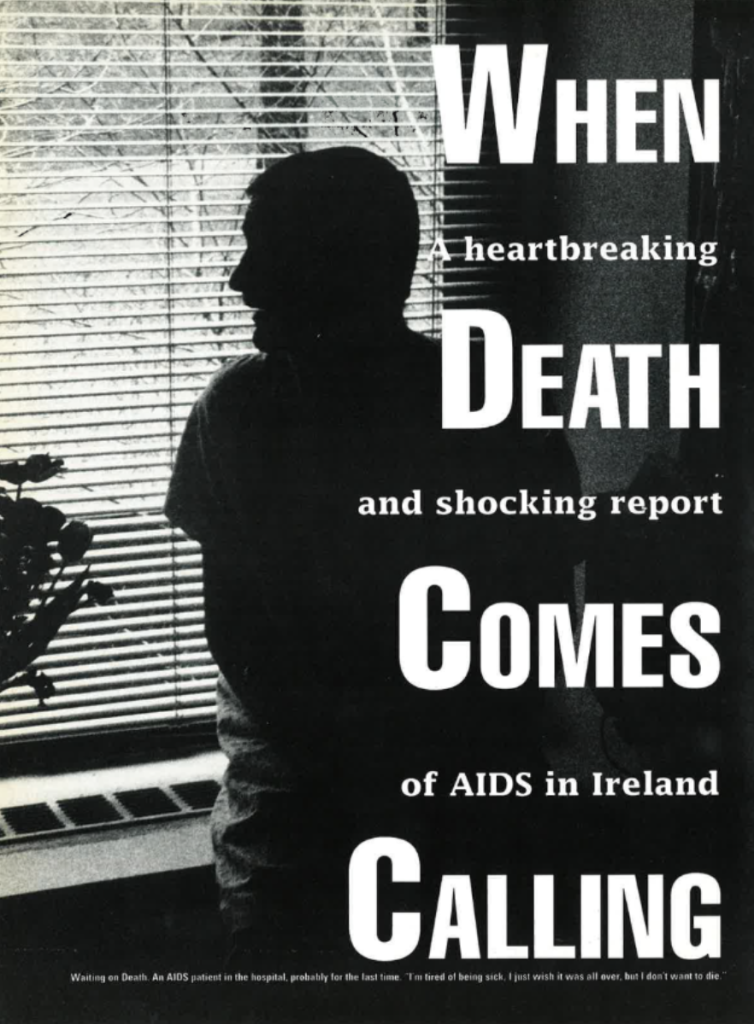
Many Americans think of Ireland as a land of green pastoral scenes, and young lads and colleens merrily waltzing down country roads, but there is another Ireland that is refusing to remain hidden, one where thousands of young girls go to England for abortions, where children are abused, and where AIDS has made its own deadly impact especially in the poor, drug-ridden inner city.
Oistin MacBride spoke to many people, both in the United States and Ireland when he interviewed those infected with the HIV virus, medical professionals, councillors and the friends and families of those who have died as a result of AIDS. Here are his report and pictures.
CONSERVATIVE ATTITUDES AND DEAD FRIENDS
Edel and Pamela sit smoking in the kitchen talking freely about their friends and Pamela’s two brothers who have all died of AIDS. Name after name is recited with anecdotal remarks interspersed about “his poor mother” or “didn’t he used to live on St. Mary’s Row.” Then a young boy, as sweet as a jar of cookies and angelically polite, comes in from the front room with his granny and diverts the conversation to toys and sweets. All present are anxious that he doesn’t pick up the tone or the content of the increasingly depressing conversation. He’ll doubtless know about it soon enough given the fact that Dublin is an epicenter for AIDS in Ireland.
It is unusual even yet in Irish society to hear people of all age groups and both sexes talk more freely about a “sex related” issue given the ingrained conservatism and politeness of Irish people on sex, drugs, religion and politics. It is a sign of the times that Edel and Pamela and the granny are all facing the harsh reality of friends and family dying.
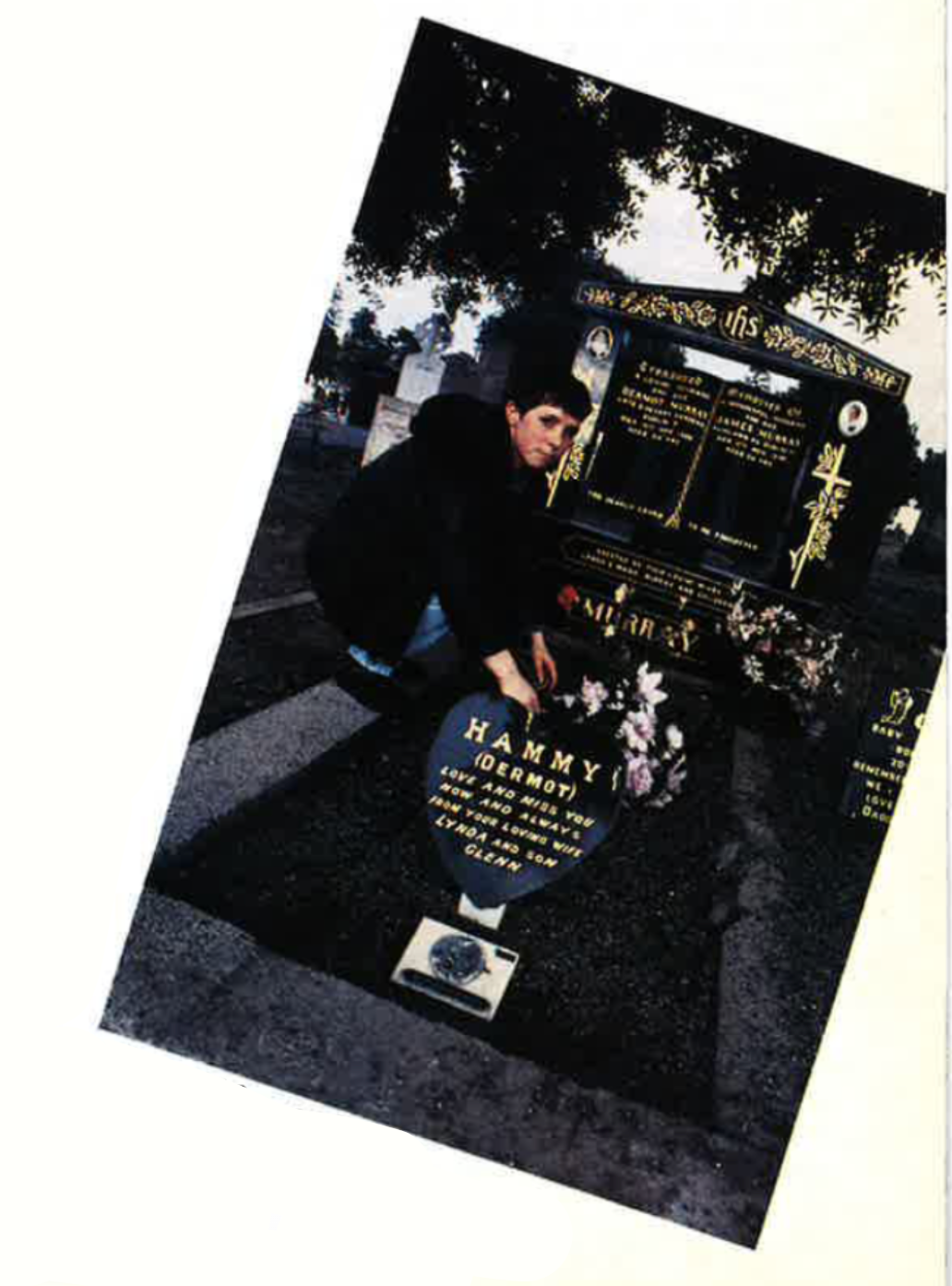
Jim and Dermot Murray, Pamela’s brothers, died within a week of each other from AIDS.
In Glasnevin Cemetery, a sprawling mass of monuments over rolling hills and under dozens of spring-laden trees, an overzealous gatekeeper initially and without explanation tells us that we can’t take pictures in the graveyard.
When he learns the purpose of our late evening visit he like any good gatekeeper can identify many more graves of people who died from AIDS. Each story becomes more and more poignant and the names of the dead are the same as those recited in Pamela’s kitchen.
There are fresh flowers on Jim and Dermot’s grave, and an ornate and unusual headstone that incorporates wedding photographs of “the two lads.” Both were handsome and both were married with children. They were devoted and loving husbands according to the inscriptions, and watching the two girls tighten their lips and swallow as they talk “matter of factly” it is clear that the lads are very much missed.
“QUEERS” AND “DRUGGIES”
It is a fact that the majority of people who are HIV positive or have full-blown AIDS in Ireland got it from intravenous drug use. (Department of Health press releases describe them as drug abusers while counseling and voluntary groups call them drug users. It is a typical Irish use of semantics to marginalize or confer a slight on a group of people.)
That fact along with the illegality of homosexuality in Ireland allows many to say with righteous indignation that “it’s only queers and druggies” and thus to dismiss the possibility that they could get it from normal, though unsafe sex.
Legislation is currently being proposed that would legalize homosexuality at the age of 17, which would be even more liberal than England where the legal age is 21.
The minister of Health Brendan Howlen TD has also produced a “Major New Initiative” which includes a Multi Media Prevention Campaign, a more “liberal” approach to the use of methadone, in a controlled way in the fight against HIV/AIDS and the deregulation of condom sales. The moves came after a meeting of the National AIDS Strategy Committee which encompasses many of the groups involved in voluntary care, such as Chairde and Body Positive, as well as government departments and medical professionals.
NOT A WORD FROM BONO, CHRISTY OR SINEAD
Playwright Tony Kavanagh, a friend of the Murrays, now resident in New York, is incensed by the whole issue. Ireland is in the denial phase he says because AIDS is centered in inner city Dublin and the government, in the opinion of people of that area, always looked down on them as if they were “nothing but a band of thieves and robbers.”
Their attitude he says is “let them f…off, it’s their own problem; but when it goes to Dalkey or Ballsbridge (affluent Dublin suburbs) then they’ll take notice.” His slating encompasses Bono, Christy Moore and Sinead O’Connor who is singing about “black kids on mopeds being shot in London, but none of them are saying anything about what is on their doorstep. Open your eyes, look around you, it’s coming right at you.” He speaks angrily about lack of counseling for those who are positive and the stigma attached leading to them being treated like “lepers.” Not he stresses by their own community who are very demonstrative in their kindness and concern.
BODY POSITIVE
Body Positive, which commissioned a three-year research program entitled: Facing the Reality: Living with HIV or AIDS, says that pre and post-counseling of people who tested for the HIV virus was received by only the minority of people in the past but that 90 percent of those who tested since 1990 did receive counseling of varying degrees.
“It’s heartbreaking,” Kavanagh says, as he talks about another neighbor and friend Anthony Skully (30) who was HIV positive. “His wife went to buy a batch loaf and when she came home he was hanging out of the bleeding ceiling.”
ON THE STREETS
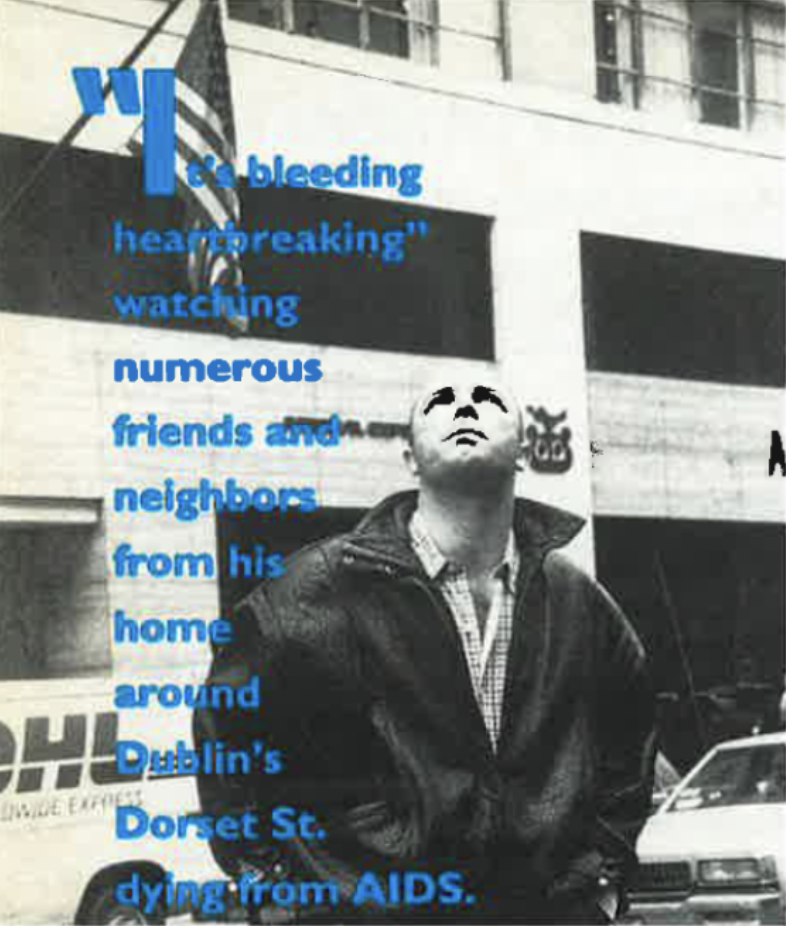
Speaking from the experience of living in Dorset Street he talks about drugs and rent boys, married men who are positive, a subculture of closet gays, jails and their drug culture and how it all interlinks into the deprivation of the inner city. It is beyond many people’s experiences but it is very real and shocking. It includes a bisexual prison officer selling sexual favors in an AIDS-ridden jail where drugs were more freely available than on the street. It is a story that many testify to but that none have bothered to try to prove.
All of this allows sensationalism and fear to permeate media and public attitudes towards AIDS. AIDS professionals, people who are positive, and all those who are affected by the virus reject both attitudes.
FEAR
Fraids is a condition identified by psychiatrists and stands for “fear of AIDS.” It is so profound that one man bathed his penis and feet in undiluted bleach after using public toilets, and a woman rubbed her lips raw from fear of another person’s spittle falling on her.
Fear breeds knee-jerk reactions not only in individuals but also governments and institutions. Clergy telling infected people to stay away from services.
Doctors and dentists making it clear they don’t want AIDS patients. The red tag policy where stickers are put on AIDS patients charts in hospital, segregation in the prisons, and perhaps one of the cruelest aspects of all is the fact that people who die from AIDS in Ireland are buried in a plastic bag thereby depriving their family and friends of the central part of the mourning process in Ireland, a Wake.
NOTHING TO DO WITH US
Dire predictions by, among others, Dr. Charles Everett Koop, the former U.S. Surgeon General, of 100 million people being infected by the year 2000 have failed, so far, to materialize producing both an attitude of carelessness and one, prevalent among Irish males in particular, that AIDS has nothing to do with them.
A vicious circle then ensues. Carelessness allows the disease to spread and more people die. A new campaign of awareness, with a stronger, reinforced AIDS warning is needed, which then produces what one commentator called a “nation of sexual cripples.” There is a fine line between awareness and phobia and the question remains how much fear is enough. Twelve million people are affected according to the World Health Organization, 500,000 of them in Europe. According to the WHO, the next epicenter is Asia, where the numbers continue to rise inexorably and exponentially.
A POOR DISEASE
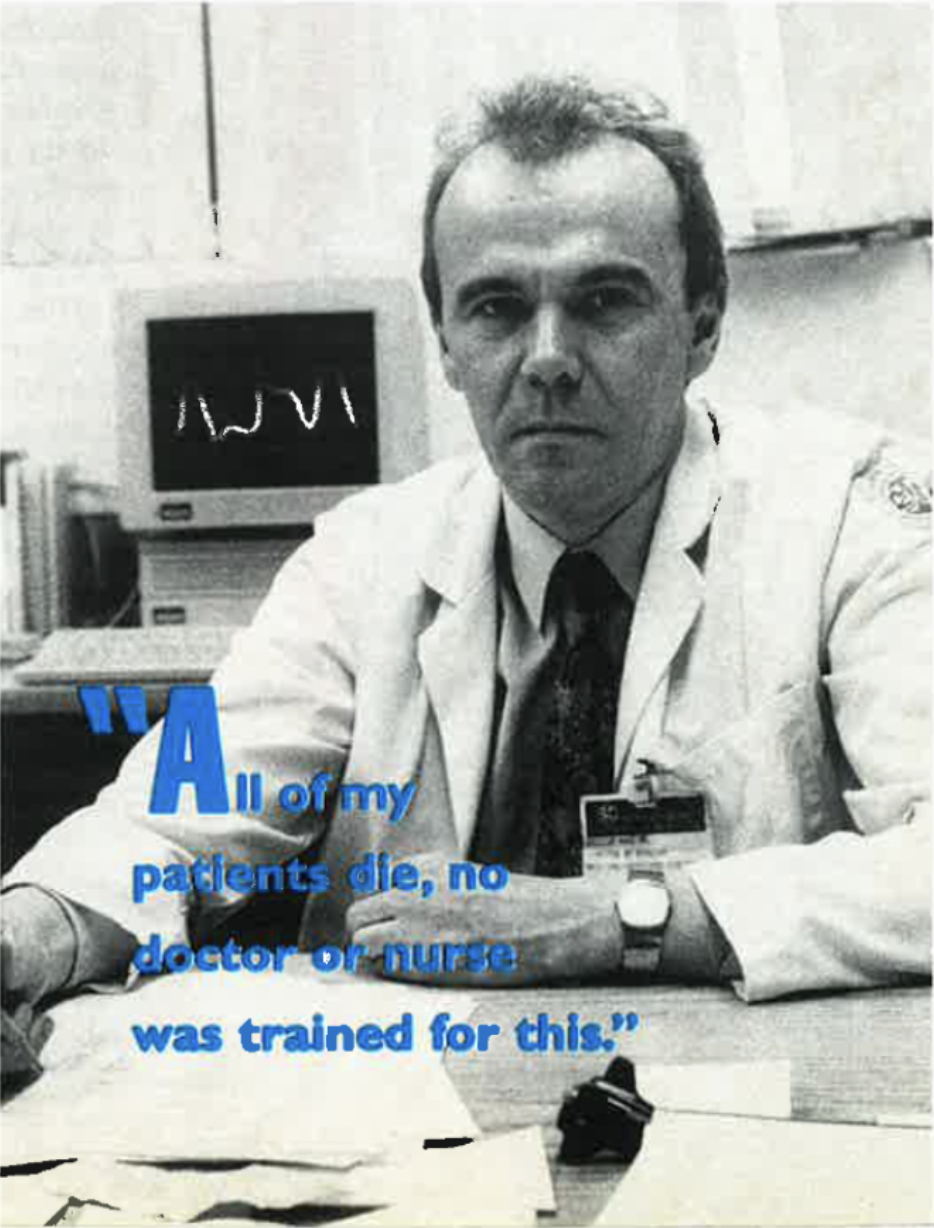
patients die, no doctor or nurse was trained for this.”
It is, in the words of a number of recent commentators, rapidly becoming a “problem of the poor” a view shared by Dr. Billy Hall, Director of Virology at New York’s North Shore Hospital, which is part of Cornell University. A native of County Down and a graduate of Queens University, he is soon to become Head of Virology at Rockefeller Hospital rubbing shoulders with no less than 16 Nobel Laureates.
Groups of low socio-economic status (SES) are more likely to be in the high risk categories, defined in a recent submission to the International Journal of STD and AIDS by Messrs, Peruga, Kofie and Martinez as “having sex with an IV drug user, a prostitute or an anonymous partner; sharing needles; or injecting drugs.”
Other studies are less definitive saying that while low SES may deprive people of the necessary decision-making elements it may also deprive them of the means of affording or supporting those behaviors.
ALL OF MY PATIENTS DIE
Dr. Hall’s patients are now more frequently young black or Hispanic heterosexual women. He has more patients than in the whole of Ireland and they all develop full-blown AIDS and die. “No doctor or nurse was ever trained for this. They were trained to cure, not to lose every one of their patients.”
In the corridor outside his office young and old, male and female and a wide variety of ethnic backgrounds are represented. There are grandmothers, jocks, children and junkies and all are HIV positive.
A 17-year-old girl sits sobbing around the doorpost as we talk. Her baby of four months died a horrendous death from AIDS. I hear of a grandmother who has not told her children she is positive for fear that they will stop her seeing her grandchildren. When she visits them she carries bleach and rubber gloves in her pocketbook and scrubs the bathroom before she leaves her daughter’s home. When they visit her she always orders takeaway food and uses disposable plates and utensils for fear of cross infection.
Maggie, the first infected person that I was ever aware of meeting, is in hospital and is slowly going blind and dying. You would never think it, though to talk to her. Before this article is printed she may already be dead. “I live every day with dying,” she says and yet she is very much at peace with the world. She was on her way up professionally and was in a faithful long-term relationship.
She got AIDS from her partner who had a partner prior to meeting Maggie. He died in 1988 and in spite of feelings of anger, betrayal, hate and bitterness Maggie was able to forgive him and he went to his grave at peace with her and the world.
She then showed me pictures of a sparkling wedding last year when she married a fellow AIDS patient. He will probably die before her. It’s a tragic situation that tears at the heartstrings and is being replicated all over the world while a cure for
AIDS eludes scientists in spite of the millions of dollars spent on research.
Therein lies yet another problem. With AIDS defying the normal human assumption that it is only a matter of time before a cure is found and drug companies seeing no result for their investment, AIDS is rapidly becoming just another one of the hazards of daily modern life, it is rapidly slipping down our “anxiety agenda.” The WHO has identified four sites in Brazil, Rwanda, Thailand and Uganda for the large-scale trials of AIDS vaccines, but there are four candidate vaccines to choose from and the “window of opportunity for effective vaccination” is limited. The US Army was also recently allocated $20 million to conduct phase III trial of efficacy. There are no predictions as to how long it will take to complete the trials let alone how long before an effective vaccine.
Dave Murray, a native of Donegal and late of the Bronx, works with Body Positive. He has had full-blown AIDS since May 1990 and rhetorically says he’s well, past his “sell by date.” He refuses to be classified as a “victim” or “a sufferer” and through dry retching coughs talks about the aims and aspirations of BP. He has lost two stone in weight, 28 pounds, and at one stage his T-Cell count was less than 50 but he refuses to be pessimistic or to allow himself to suffer from depression. There is a commonality of experience between himself and many other infected people.
They talk about landlords not wanting them, insensitive local doctors, how they discovered they were positive and how they told their families.
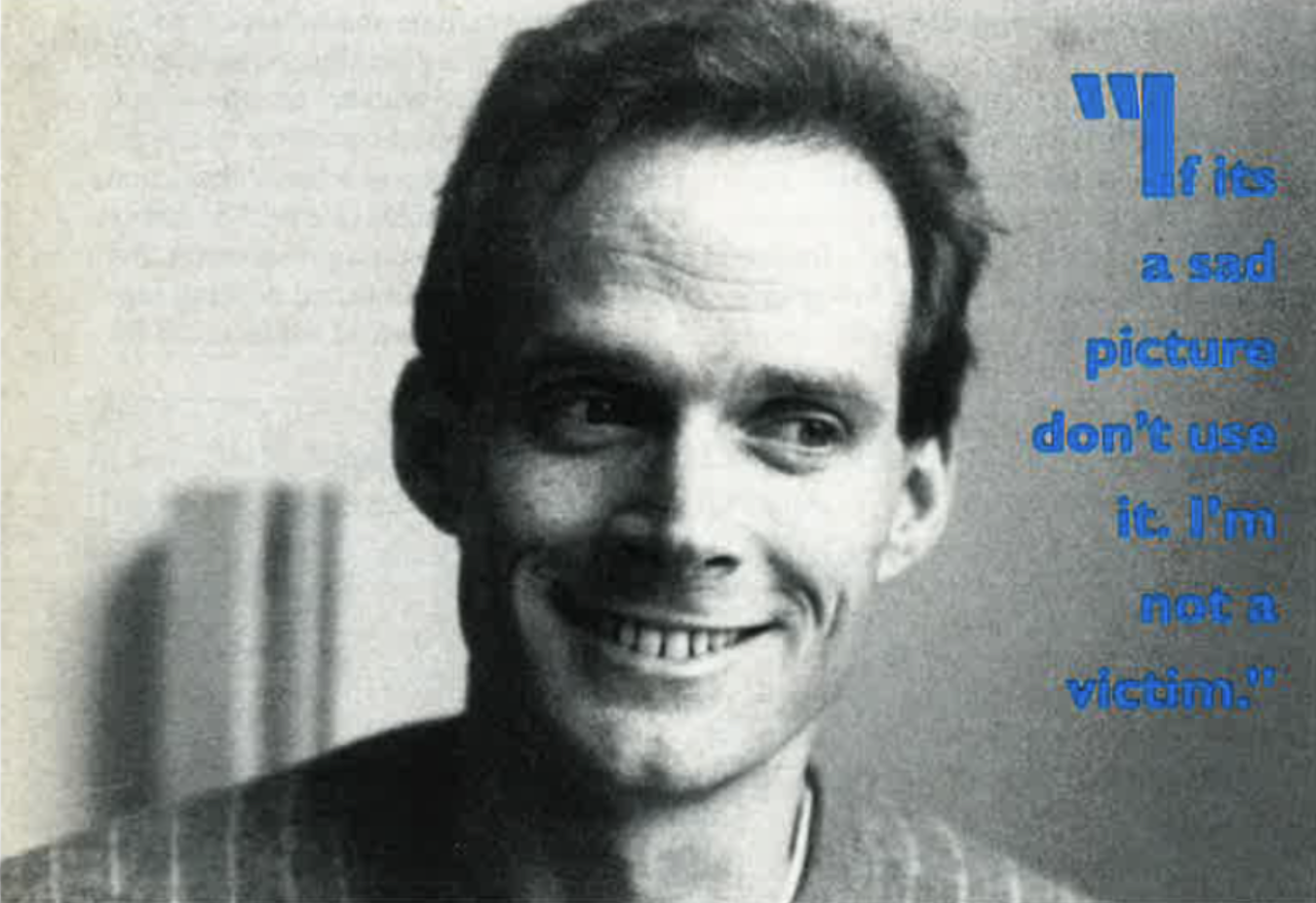
“Respectability in death” is very necessary in Ireland and families often refuse to publicly acknowledge their child has AIDS. The usual explanation is cancer.
It’s the Irish way, like coroners putting down suicides as “accidental death” to save the family feelings.
ALL OVER IRELAND
From Cork to Derry and all points west of Dublin there is AIDS in Ireland; that is a fact. Those 1400 plus who tested positive are all dead or dying; that is a fact. There is no cure; that is a fact but amidst the facts there is a degree of ignorance and recklessness that undoubtedly compounds the situation and helps spread the disease. Perhaps it is Ireland’s perceived sexual conservatism that has prevented a massive spread of the disease or perhaps the same conservatism has prevented those at risk from testing and all the voluntary agencies are right when they say that the official figures can be tripled or quadrupled.
AIDS is a shocking disease but apathy and ignorance in the Emerald Isle are much more shocking.
TECHNICALLY SPEAKING
The Acquired Immune Deficiency Syndrome is a group or complex of specific infections and cancers which occur because the body’s immunological system has ceased to function efficiently. The damage to the immune system which impairs its functioning is caused by Human Immunodeficiency Virus (HIV).
There is no exact pattern for every person who gets HIV infection and there is no way of predicting how long it will take for each individual to develop AIDS.
The current average is ten years but can be anywhere from two to fourteen years. After infection a person can experience flu-like symptoms which most people would rarely notice.
If they then take a blood test they will test positive.
They will then go through the asymptomatic phase displaying no outward signs of infections, but the infection is still active in the lymphoid tissue, belying the notion that there is a period of dormancy between infection and the onset of AIDS.
They will then develop stage three which is characterized by persistent lymphadenopathy.
Stage four is full-blown AIDS and the person is prone to opportunistic infections such as cancers, viruses in the blood, weight loss and wasting, brain wasting, parasites in the gut and pneumonia among other things.
CDC4+ lymphocytes (T-cells) are a measure of a person’s immune status. A normal level is 1,000; less than 200 usually indicates full-blown AIDS. The level can rise and fall.
Some recent research suggests that AIDS is not a new virus but an old one that has become more aggressive because of the “social upheaval of the 60’s and 70’s which notonly spread its movement through populations but rewarded it for reproducing more aggressively within the body.”
The secret of the virus’ success is mutability. It can produce such a variety of offspring that when one treatment responds positively it merely mutates to another variant (at a million times the rate of our own genes).
From an evolutionary perspective the use of condoms and clean needles (as well as preventing the spread of the disease) could push it towards a more benevolent form by “depriving it of the high transmission rates they need to survive.”
Studies among gay men, who were the first to highlight the pandemic, show that safer sex habits have resulted in a five to ten fold decline in infection.
Combination therapy, i.e. a number of drugs taken together, is generally accepted to be the way forward as regards treatment.
There are other viruses such as HTL.V, which is a relative of HIV and which is making much the same progress as its more virulent relative. “If human activity can turn one virus into a killer, it is only prudent to suspect that it can do it to another.”
Editor’s Note: This article was originally published in the July August 1993 issue of Irish America. ♦
Leave a Reply