
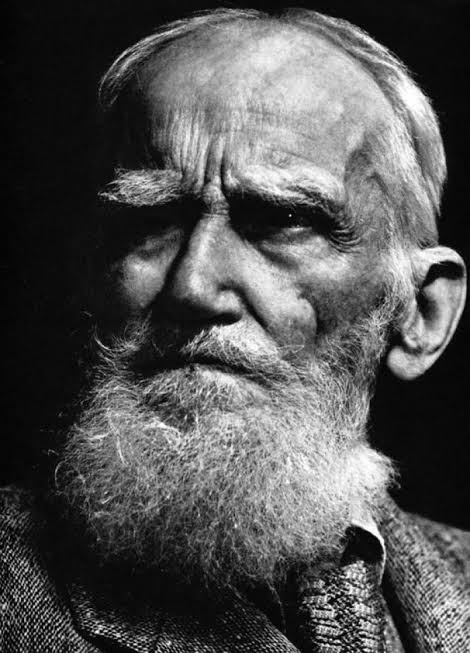
From unpretentious origins in Dublin, Bernard Shaw grew up to be the most celebrated playwright and polemicist of his generation. His life spanned an extraordinary period from publication of Darwin’s Origin of Species to the dropping of the first atom bombs.
Believing that an author’s business was to mind everybody else’s business, Shaw involved himself in everything. His plays examine ever-topical subjects such as feminism, disarmament, medical ethics and the conflict between human and property values. But the great preservative of his work is his wit. He used his humor as an anaesthetic for the operation he wanted to perform on society, changing grievous inequality into common wealth. On the stage he conducted a revolution that led from sentimental Victorian melodrama to the modern theater of fantasy and ideas. – Michael Holroyd
Over 300 books have been written about George Bernard Shaw since his death on November 2, 1951. The most definitive, by far, by Michael Holroyd who was paid an unprecedented $1 million for his life of Shaw. Anthony Burgess has called Holroyd’s work “one of three great literary biographies of the century.” Time magazine said that Holroyd “provides not only a sense of what it must have been like to know Shaw but also, far more enriching, a sense of what it must have been like to be Shaw.” Holroyd divides his story of Shaw into three volumes.
The first is called The Search for Love and it takes us back to Shaw’s birth (1856) and youth in Dublin through a series of poignant and tantalizing love affairs, to his marriage in 1898. Following his mother to London, he tried to set himself up as a professional man of genius.
He wrote five novels which were all rejected; elected himself a leading member of the Fabian Society which, in time, was to be the precursor of the Labour Party in England; established a reputation as a brilliant music critic and started composing plays — his first play finally reaching production after he reached age 40. The second volume called The Pursuit of Power is the story of G.B.S. in his prime. By 1914 the author of Pygmalion — which became My Fair Lady years later — was the most popular writer in England. This is the period of his great middle plays: Caesar and Cleopatra, Man and Superman, Major Barbara and Doctor’s Dilemma.
In the final volume, The Lure of Fantasy, 1918-1951, Holroyd brings his Olympian biography of Bernard Shaw to its triumphant climax. The story opens with G.B.S. campaigning in the general election of 1918. Then we follow Shaw through the production of Saint Joan, which won back for him the popularity he had lost during World War I as a result of his “unpatriotic” pronouncements. It is also the period when he wrote Heartbreak House, Back to Methuselah and The Apple Cart. In the early thirties he set off on a series of world pilgrimages to spread the message of Socialism. By his 95th year, at his home in Ayot St. Lawrence, G.B.S. had become the world champion of unorthodoxy and a model to all of those out of step with their times.
Michael Holroyd was born in 1935 and educated at Eton.
He is internationally recognized as an outstanding biographer and man of letters. His previous biographies include Lytton Strachey and Augustus John. Mr. Holroyd lives in London and is married to the novelist, Margaret Drabble.
Michael Scanlon: When you look at the three main genres of English literature — poetry, narrative and drama – do you not find it a remarkable fact that Ireland produced the most outstanding artists in all three categories for this entire 20th century? There’s Yeats the poet, Joyce the novelist, and Shaw the dramatist. All are Irish and all are the most dominant writers in their fields. Do you have any insights as to how this little country of Ireland could produce such giants as these?
Michael Holroyd: Well, part of it may have to do with the fact that they were outsiders. I think that Ireland has always been the outsider and in an awkward position, a sort of junior brother to England.
This may be unfortunate but it is often very good for the artist and the writer. And these Irish writers seem to have thrived on that. The whole art of Irish writing seems to be about turning your disadvantages into some form of asset by some magical literary means. And it seems to have been a necessary process for these writers to find another country and to re-establish themselves elsewhere. And even with Yeats he didn’t stay in Ireland as much as he would like us to believe. Another side of the Irish is the wonderful irreverence they have. And added to the irreverence is the magical side – the faeries and all that. I think these are two very powerful qualities when they come together in literature. You know, the Irish certainly feel a superiority when they come to England, and rightly so, I sometimes think. Oscar Wilde said that England is a country of intellectual fogs and the Irish ability to clear the air is a very healthy thing for the Irish to do.
I understand you have some Irish in you.
Yes, my grandmother was Irish. She was from County Cork and she was Catholic, and so I’m partly Irish. I always assume that everyone’s got an Irish grandmother!
Do you think having some Irish in you influenced your wanting to write about the famous Dubliner, Bernard Shaw?
I really didn’t know Ireland all that well before writing this life of Shaw. But in writing this book, I went and lived in Dublin and settled down about a mile away from where Shaw lived. I wandered around, walked the streets, worked in the library, of course. I went to the place in Dalkey about fifteen miles outside of Dublin, where he had the one gleam of happiness in his youth—a youth he once described as “rich only in dreams, frightful and loveless in realities.”
Throughout the three volumes of this biography, I stressed Shaw’s Irishness.
There’s a whole section in this last volume which deals with Wilde, Joyce, Yeats, O’Casey and Shaw in a way that is very seldom done. Shaw is not usually defined with these other Irish writers but I believe he is really quintessentially Irish. If you talk to actors, for example, they sometimes tell you they can leam their Shaw lines better if they get the Irish intonation, beat, rhythm to it. Then they can get the music of it.
And Shaw was supposed to have had a most pleasing speaking voice himself, didn’t he?
Yes. He retained his Irish accent. His accent was an old-fashioned Protestant-Dublin accent that you would hear about seventy-five years ago in Dublin but which you don’t hear often these days. He must have known how effective it was. You’ve only got to say “pass the potatoes” with his voice and it sounds witty.
But Shaw had a rather ambivalent relationship to Ireland. He once wrote: “Personally, I like Englishmen much better than Irishmen (no doubt because they make more of me.)”
Well, he fled his native Dublin for London at age 20 and once said: “If you want to bore an Irishman, play him an Irish melody or introduce him to another Irishman.”
But Shaw wasn’t the only great Irish writer that went away from Ireland. Beckett went. Joyce went. O’Casey went. And Wilde went. There’s a streak of truancy, of exile, among the artists and writers in Ireland. Shaw is just one among many.
These artists were not happy in their own country and Ireland seemed to be best in their imagination, rather than in actuality.
Was Shaw close to the other Irish writers you just mentioned?
He never met James Joyce although he thought Ulysses was a wonderful book and when Shaw got the Nobel Prize for Literature in 1926, he kept only one letter of congratulations and that was from his fellow townsman, James Joyce.
But I thought he initially had reservations about that book?
Well, he found it almost unbearable to read in one way because it reminded him so much of his Dublin adolescence which was not a happy time for him. And so he read Ulysses almost as a work of sociology rather than as literature.
How did he feel about O’Casey, Yeats and Wilde?
I think of all of them, Sean O’Casey had the most unstinted admiration for Shaw. And O’Casey’s beautiful wife, Eileen, has even written about Shaw’s last days. As for Yeats, their bond had to do with common enemies. Yeats said of Shaw, “He can hit my enemies that I can’t hit.” Then there’s Oscar Wilde’s famous quote describing Shaw, “He has not an enemy in the world, but none of his “friends like him.” And Shaw said of Wilde’s De Profundis, which recounted Wilde’s miserable life in prison, that it was one of the great Irish comedies and that Oscar didn’t really suffer in prison because he had no talent for unhappiness, he was a happy chap. The Irish have always had this sort of to-ing and fro-ing. They thrive on it.
What about his humor for which he is so famous?
His humor is very like Beckett’s, or like Swift. It’s much blacker than I had thought it was when I began my book. It’s quite a subversive humor. It’s challenging and sometimes abrasive. It’s certainly dark. And personally, I like it all the more for that. I find it more modern. And there’s something perhaps Irish about this. I don’t say black humorists are Irish, but there is quite a lot of that vein in Irish writing.
Now his wife was Irish too wasn’t she?
She certainly was, from a distinguished family in the south. Her name was Charlotte Payne-Townsend. The Irish have said that he married above himself somewhat. He called her “my green-eyed millionairess. And I propose to make her my widow.”
Shaw once wrote: “Marriage is popular because it combines the maximum of temptation with the maximum of opportunity.” But it’s said he and his wife never really consummated their marriage.
They were lovers before they married, and not after!
How do we know that?
Well, that’s the latest scholarship! (He laughs) And I think that it just happens to be true. Don’t forget they married in their forties and Shaw was very ill at the time. He almost had his foot amputated. He then had a fall and broke his arm. And under those circumstances sex was out over the first eighteen months of their marriage. And then it became a habit. They were loving friends, shall we say, rather than sexual partners. But insofar as one can tell from clues here and there, they certainly had a love affair before they were married. And I’m sort of glad of that because people have suggested that he was entirely sexless. That’s not true. He was very attracted to women, but quite vulnerable, in a way, and didn’t like being in that position. He had a disastrous relationship with his mother.
How long did it take you to write this life of Shaw?
It took me just over fifteen years. And I hadn’t realized that it would be so long. But I can’t say I could have shortened it.
He wrote ten letters a day, every day of his life, and people kept his letters and they are distributed around the world, so I had to go to Moscow and New Zealand and Texas, New York, Dublin and Stockholm.
The challenge for me as a biographer was to truly find what he was actually like.
What his fears were like, what he thought when he was by himself, what his silences were like, what the private man was like.
Why he had become such an extraordinary publicity phenomenon. What were the roots of his private life. It was three years before I decoded his style. It was like breaking a cipher and I found how many of his serious ideas came to him initially as jokes. And I had to unwrap the joke and find the serious content and I got my ear in there to discover there was an undercurrent of passion, of intimacy, of personal feelings behind this phenomenon. His love of opera, for example, was a clue about how passionate a man he was. Opera allowed him to feel passions without being ridiculous. And that’s why he loved theater because you could be extreme, extravagant, do all the things that perhaps you couldn’t do in home life.
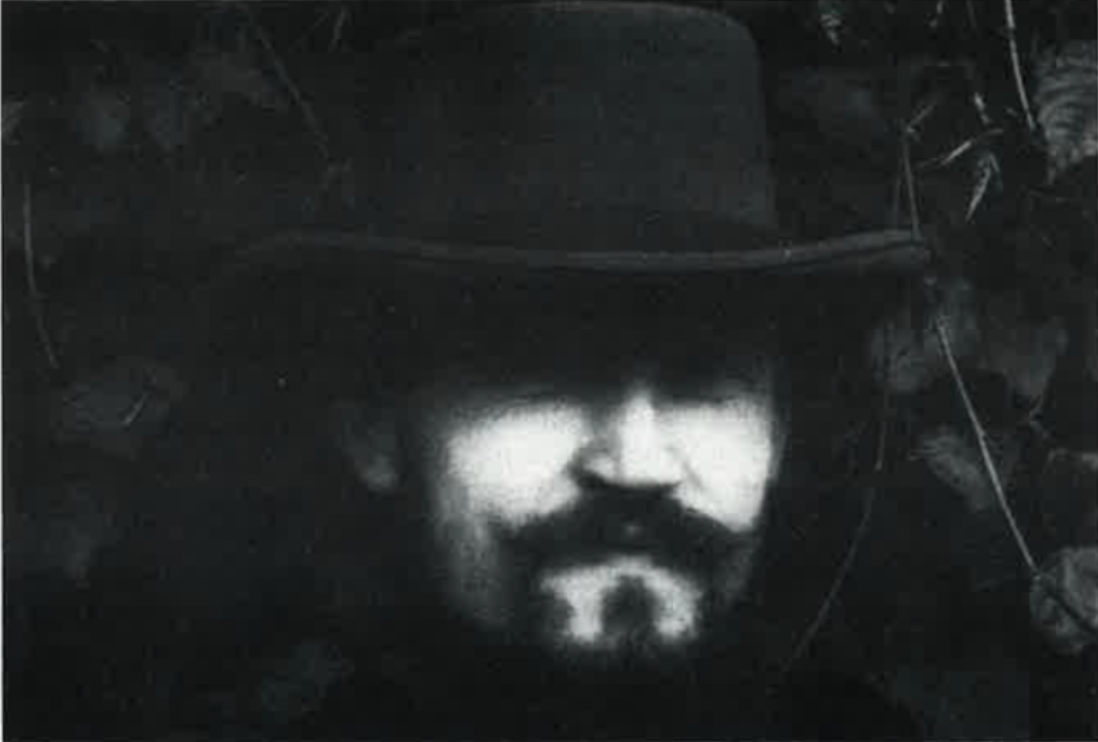
You call the last volume of your biography of Shaw, The Lure of Fantasy and you use this quote of Shaw’s at the very beginning: “To men who are themselves cynical, I am a pessimist, but to genuinely religious men, l am an optimist, and even a fantastic and extravagant one.” He is also quoted as saying: “There is only one religion, though there are a hundred versions of it.” Where did he stand on God and religion?
Shaw claimed to be, shall we call it, agnostic. He didn’t believe in a personal God, sitting on a cloud with a long, white beard, who would take individual revenge against some people who were naughty.
But Shaw was a religious man, I think. He had a moral commitment to optimism. He believed there was something we couldn’t understand. He would call it energy-the life force. He said at the end of his life: “I believe in life everlasting but not for the individual!” He believed in the beat of life and he didn’t think everything was to be explained in material terms. And these feelings were intensified in the later part of his life.
What did he think of America?
Well, when he first came here, he was getting up on eighty years of age. He’s very like America himself in some ways. He said: “I’m like New York, I’ve always got to be up and doing things. “He attacked America too. He said: “Americans are conceited enough to think themselves the only fools in the world.” He liked individual Americans very much.
Gene Tunney, the boxer, was a good friend of his and seemed a Shavian hero. It was as if Shaw’s idea of brains over brawn was actually happening in the Tunney-Dempsey fight. They took to one another.
We are now at forty years after Shaw’s death. How do you think he is being thought of now?
Well, I think he’s out of fashion at the moment. I think his plays demand a sort of acting which is big acting, operatic acting, because he based his plays on opera.
What I hope my book says to a new generation of directors is: “Look, here’s a playwright with a future as well as a past; here’s a playwright that if you dramatize him, if you treat him as opera, if you go big with it, quite extravagant, cut him if necessary, be less reverential, you will suddenly find someone who is very much of today, because his themes-disarmament, feminism, medical ethics, the relationship between Ireland and England, the peaceful invasion of Europe by the United States, children’s rights my God, the property rights versus human rights.” All these are part of the current debate. Shaw had a sense of topicality.
And so I’m hoping new directors will pick up an autobiographical subtext, a passion with ideas, and they will lock into that passion. Shaw had an instinct for what would recur and recur and therefore a lot of his work has a curiously prophetic ring.
I think, for example, that the heroine of The Millionairess is a prototype of Mrs. Thatcher. Absolutely. She is the embodiment of a form of capitalism. I believe there’s a Shaw to be rediscovered. He’s still with us, in a way, still controversial.
And still eminently quotable?
Yes, he was an epigrammatic writer.
There’s the way he talks about himself sometimes: “I am much overrated as an author. Most great men are.” Or sometimes he’s funny about the English: “The English have little religious sense, so they invented cricket to give them a sense of eternity.” And then there’s that story of the Swiss actress, who wrote him saying that since he had the greatest brain in the world and she the most beautiful body, they could produce the perfect child together.
And his reply was, “Yes, but what if the child had my body and your brains?” He said: “Shakespeare is a far taller man than I am. But I stand on his shoulders.” You can’t tell if he is vain or modest but when you look more closely, you certainly realize there is quite a modest side to him.
He once said, “We all have our little solitudes. My friend, H.G. Wells has spoken to us sometimes of the secret places of the heart. And there are lonely places of the mind.” And in the preface to his first novel Immaturity he says, “I have felt only at case with the mighty dead.”
I found writing the last chapter of this final volume intensely moving. It describes the death of his wife, Charlotte, and his own death. I went to his home at Ayot St. Lawrence [outside London] to give a reading shortly before I came here to America this time and I decided to perhaps do a rather foolhardy thing. I read the
chapter on his death in the room in which he died, in front of an audience. And I found it, at one point, almost impossible to carry on. And I hadn’t realized I was so affected by Shaw. And so his death, in a sense, was something finished for me, an occupation gone.
One of my favorite quotes from Shaw is: “Some men see things as they are and ask why? I dream things as they could be and ask, why not?”
Yes, and in his play about Ireland, John Bull’s Other Island, Shaw says that if you live in contact with dreams you’ll get something of their charm: live in contact with facts and you’ll get something of their brutality. And then he went on: “I wish I could find a country to live in where the facts were not brutal and the dreams not unreal.” This was his fantasy, his form of utopia.
Editor’s Note: This article was originally published in the November 1991 issue of Irish America. ♦
Leave a Reply