
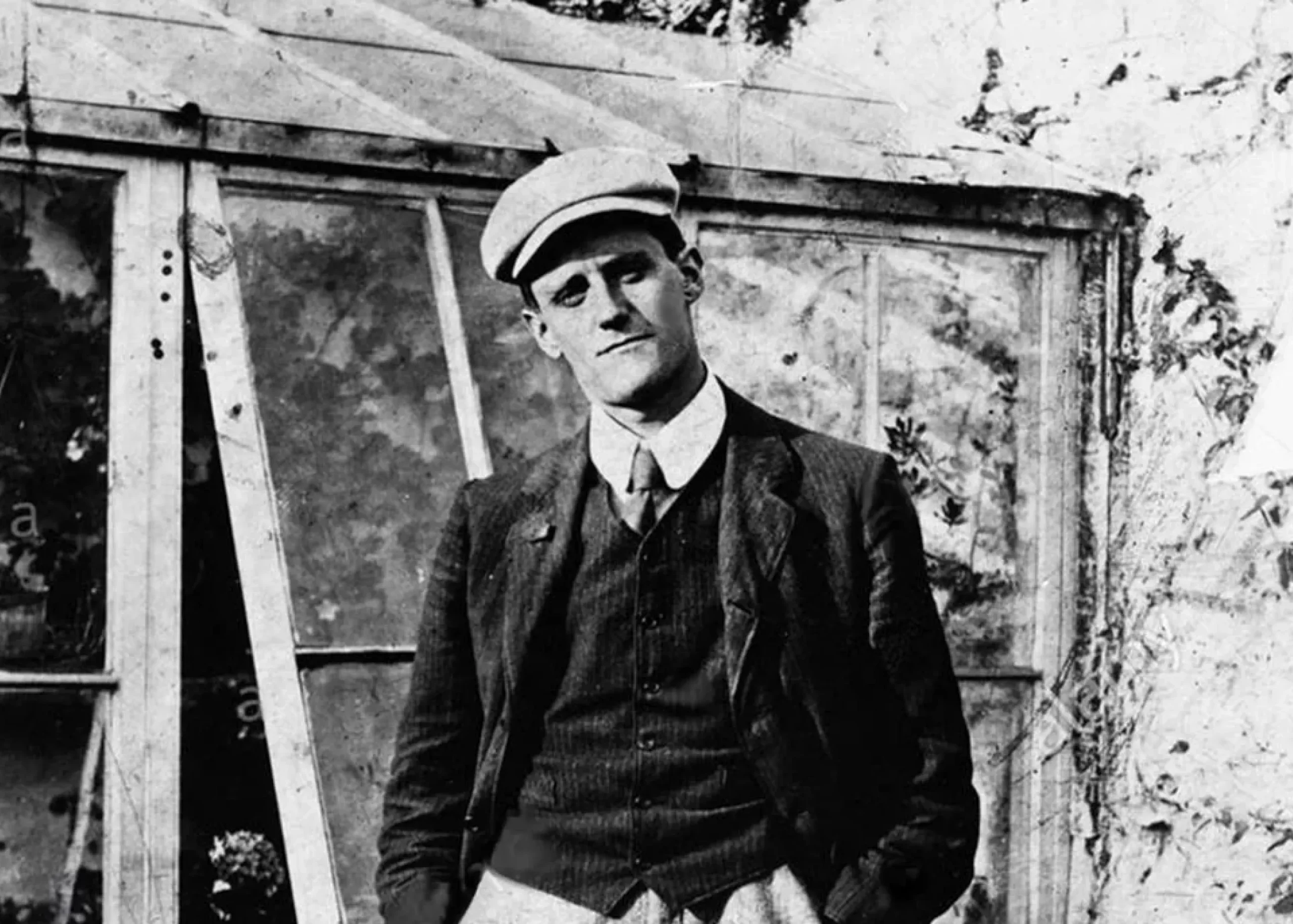
STEPHEN JOYCE has visualized his legendary grandfather, the author of Ulysses, as gazing down from literary heaven, transported as he surveys the manifestations of his monumental prominence in modern letters. When contemplating the celebration of Bloomsday this coming June 16 in Ireland, America, and presumably other parts of the planet as well, a day when scholars, students, and general well-wishers gather together to recount the quirky rambles of Messrs.
Dedalus and Bloom across the length and breadth of Dublin, this vision tends to keep coming to mind.
From the first celebration in 1954, when Flann O’Brien and twenty or so fellow Dubliners set out from Sandycove one morning to track the fictional steps of fifty years before (encountering a surly Lennox Robinson en route, who refused them the loan of his hound for “a little tableau of Sandymount Strand”), Bloomsdays have continued to transcend the ordinary.
Notwithstanding the fact that the venture of these particular celebrants was abandoned after a few hours (no doubt in the comfort of some pub along the route), an enduring literary trend had been set.
While this was a modest enough beginning, subsequent Bloomsdays have become, by turns, profound, scatological, silly, roisterous, and grotesque, all in the best Joycean tradition. Judging from the experience of recent years, we can only wonder what Bloomsday 1992 has in store for us. Revisiting the various scenes and phenomena of Bloomsday 1991 may give us some idea.
By all accounts, the festivities in Dublin last June 16 were reminiscent of the days when drays, lorries, traps, and hackneys filled the streets. Men appeared in bowler hats with waxed moustaches and steel-rimmed spectacles; women were dressed in period gowns with feathers in their hair.
At a garden party in Merrion Square there was even a Ulysses look-alike contest. Irish, German, Dutch, and Swiss television crews and radio journalists from Belgium and France were on hand to record these scenes. There seemed to be a sense of spectacle in the air.
It was a memorable day for society as well as for literature. At a breakfast sponsored by Shell Oil Corporation at the Royal Marine Hotel in Dun Laoghaire, present among the invited guests were the Dutch ambassador, the First Secretary of the Belgian embassy, and the mayors of Dublin, Trieste, and Zurich, three of the cities most associated with Joyce. At the South Bank Restaurant in Martello Terrace, a giblet soup described by the Irish Press as “snot-green” was served to diners. As though that were not enough, at yet another venue the National Jazz Society performed something called “Joycenotes,” an original composition by Louis Stewart.
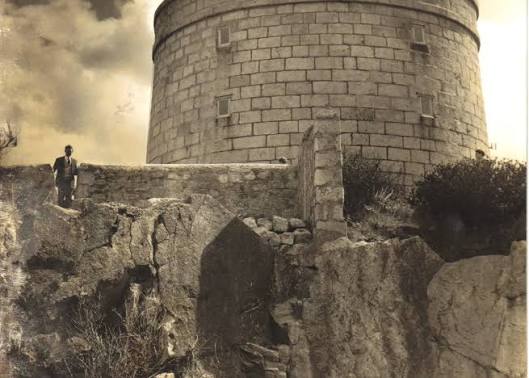
But there was sustenance for the more scholarly Joyceans among us too. The RTE (Irish national television) did their annual and justly acclaimed reading of the entirety of Ulysses. Actors Barry McGovern and Jeanane Crowley performed at an early morning reading at the Martello Tower. Gerald Davies portrayed Bloom to Catherine Niessen’s Molly at a number of locations, including Eccles and Duke Street. Patricia Leventon opened her one-woman show based on the Penelope chapter of Ulysses at the Andrew Land Theatre. Someone even had the idea of recreating the famous concert in August of 1904, when Joyce and John McCormack shared the bill, at the site of the Ancient Concert Rooms (now the Academy Cinema and Theatre).
The annual peripatetic appreciation of Ulysses, from the Martello Tower to the site of Bloom’s lodgings and back again, was well attended by what appeared to be an assiduous group of pilgrims (some with orthodox text in hand and some with revised) down to the last man and woman.
While it rained intermittently for a few hours, there was a consolation of the usual pub stops. If they missed much of the pomp of the day, these uncompromising souls may nevertheless have been closer to the raison d’etre of the affair.
On this side of the Atlantic the idea of setting aside a day to remember mostly fictional events of long ago involving Irish men and women who never lived, did not immediately catch on. Even at present, in cities like Chicago, Philadelphia, Cleveland, Detroit, Milwaukee, and St, Louis, Bloomsday is largely unobserved, despite the existence of centers of Irish studies in many of the universities in and around these cities. New York, Boston, and, surprisingly, Los Angeles, on the other hand, are examples of places where Bloomsday has enjoyed a remarkable vitality.
Last year was the tenth “Bloomsday on Broadway” at Symphony Space on the Upper West Side of Manhattan. Every June 16, director and playwright Isaiah Sheffer organizes and directs a massive presentation based on Ulysses and other Joyce works. The performance, which sometimes runs as long as 16 to 20 hours, involves between 100 and 110 actors, many of them famous personalities from the New York stage, including, to name a few, Patrick Bedford, Aideen O’Kelly, Swoozie Kurtz, Christine Baranski, Fritz Weaver, John Rubinstein, Fionulla Flannagan, Dermot MacNamara, Barbara Feldon, James Norton, and Lois Smith. While some of the dialects might meet with disdain from a Dubliner, the commitment and professionalism has been admirable. The program continues to be much more than just actors reading. Last year there was a talk by Frank McCourt on Gogarty as Buck Mulligan as well as Molly Manybloom, a musical based on the Penelope chapter of Ulysses by Victoria Bond. The entire evening was broadcast on WNYC in New York.
Over in the East Village, Emelda O’Reilly and Helena Mulkens organized a Joycean pub crawl. Beginning at the SinÉ Cafe, the light-hearted action moves to the Beowulf, to Brownies on Avenue A and 10th Street, to Delia’s around the corner on East 3rd Street, and back to Brownies.
Interspersed with the drinks and revelry were readings from Ulysses and some Irish balladry. While the actors are neither as accomplished nor as renowned as those at Symphony Space, and the connection to the Joyce canon seemed at times a little tenuous, there was a lot of refreshing innovation and energy at work.
Boston and environs, long an important center for the study of Irish culture, seems also to have recognized both the serious and carnival aspects of Bloomsday. This June 16th was the 13th annual celebration at the School for the Arts at Boston University. Here too, the emphasis was not on slavishly reading the text of Ulysses, but rather on using that text as a theme for a number of original literary and musical creations. Along with dramatic monologues of Leopold and Molly Bloom by local actors, there were medieval harp melodies, Latin and Gaelic songs, and the famous marrow-shaking sermon from A Portrait of the Artist as a Young Man. The annual James Joyce Ramble, a 10-kilometre race, though delayed a week because of rain, was still a great success. At each milepost, actors urged the runners on to greater glory with recitations from selected passages of Joyce.
Not the least of the commemorations of Bloomsday in this country has taken place for a number of years in Los Angeles at Molly Malone’s Pub. Originated by Dublin-born actor Redmond Gleeson, the evening is unique in that all of the players are Irish, eliminating any awkward striving for the proper dialect. This past year they included Helena Carroll, Barbara Dowling, James Lancaster, John O’ Leary, and Mr. Gleeson. Beginning with an extract from the opening chapter of Ulysses, the ensemble gave lively and full-blown dramatizations. Ms. Dowling captured beautifully the naiveté and sensuality of Gerty Macdowell. The Polyphemus chapter provided an opportunity for a brilliant comic turn by Mr. Gleeson with strong support from the other members of the ensemble. As in prior years, Ms. Carroll, gave a consummate performance as a primal Molly Bloom.
Sitting in the smokey darkness of Molly Malone’s as midnight drew on, one was tempted to reflect on the passing of yet another Bloomsday, and, at the same time, to speculate on what might be expected in Bloomsdays yet to come. After consuming several frothing pints of Guinness, with the dank redolence of the cockles and mussels flown in for the event lingering in the air, one could indeed imagine that most venerable of Irish novelists looking down from the vast skies with a profound smile of approbation.
Editor’s Note: This article was originally published in the June 1992 issue of Irish America. ♦
Leave a Reply