
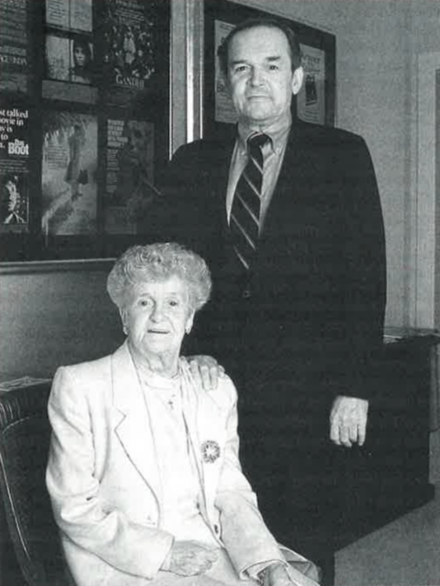
Forget it. He’ll cancel. How could he spare the time with all this going on?” So said our friend, the Hollywood expert, when Irish America arrived in Los Angeles for the interview with Frank Price, head of Columbia Pictures. The article would kick off a series on Irish Americans in Hollywood concentrating on those behind the scenes. Frank Price, who had headed Universal Studios and previously run Columbia, from 1978 to 1983, represented a level of achievement in Hollywood corporate-structure not usually associated with Irish Americans.
Irish Americans have always placed strongly on the talent side. Legends such as Jimmy Cagney, Spencer Tracy, Maureen O’Hara, Gene Kelly, John Wayne; directors John Ford, John Huston and Raul Walsh were strongly connected to their heritage. The craft unions, too, had Irish Americans at their core from the beginning. A new cast of Irish and Irish American actors, directors and writers filled contemporary Hollywood.
Jim Sheridan, Ron Howard, Gabriel Byrne, Liam Neeson, John Patrick Shanley, Anjelica Huston and Aidan Quinn are some exaiples.
Now Irish America wanted to look at the system itself, at studio executives and producers. In this group Frank Price ranked high on the list. He was very interested in the Irish history of his family, and would be happy to meet with Irish America. In fact, would we like his mother, Winnie, to join us? She actually remembered the great grandfather who headed the Moran family and whose Irish roots Frank Price had traced. Winnie was also the one who had introduced the young Frank to the movies. She didn’t just bring him to a theatre. She arranged for one of her customers at the Warner Brothers Studio commissary to take him onto the set. Winnie Price had worked in the Executive Dining Room at Warner Brothers lot in Burbank. Later, Columbia Pictures would share the lot and later still her son would head Columbia and, if he wished, commandeer the choicest table.
A good story, right? But now the Hollywood expert said we’d never get it because of this. This was the inner studio machinations involving Frank Price, Peter Guber, the head of parent company Sony Pictures, Mark Canton, Guber’s colleague from his days at Warner Brothers, and the Sony Corporation that bought Columbia for $3.4 billion in 1989.
Sony had paid hundreds of millions of dollars to Warner Brothers to obtain the services of Peter Guber and then partner Jon Peters only to let Peters go at a rumored cost of $15 million.
In 1990 Frank Price was brought in. His careful, serious style seemed the perfect antidote to the flamboyant Peters.
But now the expert was quoting from the New York Times – “Mark Canton could be moving into one of the most powerful jobs in Hollywood” because “Mr. Guber feels very comfortable with him. No one faulted Price’s performance.”
The first picture he greenlighted, Boyz ‘N The Hood, was a critical and financial success. This was the man who had overseen such films as Tootsie, Out of Africa, Ghostbusters, Gandhi, and Passage to India. He had been running his own company, Price Entertainment, when Sony had sought him out for Columbia in 1990. It was the comfort factor, the Times explained. There are all kinds of high level negotiations going on,” the expert concluded, “so forget it. He’ll never see you.” But he did. As you’ll learn from the interview, movies, while an important part, are not Price’s whole life. There is his fascination with Irish-American history in general, and that of his own family in particular. And there’s books. His mother taught him to read at age four. Once through that door of the imagination, he never retreated. Even now, while he prefers books to movies, he sees the story, a common element of both, as the foundation of good movies.
While faxes whizzed and conference calls took place somewhere, we sat in the elegantly understated conference room in the Irving M. Thalberg building. Once this had been MGM’s lot, when old Hollywood remained in the graceful art deco design of the buildings and the rows of hooded sound stages. But recent corporate takeovers were erasing this history. MGM was a high-rise across the street and workmen had just replaced the Columbia Studios sign with one that read Sony Pictures Studio. Still, all was serene in the conference room. Our interview was unhurried. We lunched with Frank and Winnie Price in the executive dining room and returned a few days later for another session.
“Did you ask him about it ?” the expert wanted to know.
“It really wasn’t our focus but yes, I mentioned it.”
“And?”
“He smiled and said, ‘Don’t worry.’”
Now, in the interview Frank Price has mentioned working on the Dodge assembly line in Flint, Michigan during school vacations, and his great interest in Walter Reuther and the organization of the United Auto Workers. Not the type to be intimidated by management. So when the news broke, just as we were going to press, we were not surprised.
The announcement came not from Sony but from Price himself. He would be reactivating Price Entertainment. The New York Times said that he would be paid $15 to $20 million and retain control of many of the scripts he had developed at Columbia, which have “potentially high commercial value.” Price “declined to comment” for the New York Times but he did talk to Irish America.
“My headquarters will be at Sony,” he said, “but I won’t be making pictures exclusively for them. I have two superb Nancy Dowd scripts in the works.” (She won an Academy Award for Coming Home, and her Irish roots go through Springfield, Mass. to Kerry’s Dingle Peninsula.) “I also have a project about Machine Gun Kelly — a love story, really, between George Kelly and Kate Shannon. Our first movie will go into production in March. It’s called The Gladiators and stars James Marshall from Twin Peaks, Cuba Gooding from Boyz ‘N The Hood and Brian Dennehy.
So, enjoy the interview. In addition to Frank and Winnie Price, you will also meet his wife Katherine. And the expert?
Well, he’s still shaking his head. How could someone find their great-grandfather more interesting than studio politics!
We’re sending him a copy of the article.
Frank Price: My great-great-grandfather William Moran and his wife arrived in this country in 1842. Three days later, Mark Moran, my great-grandfather was born. So that must have been some crossing.
They were from County Mayo.
Winnie Price: We went to see some Morans in Mayo. But we couldn’t locate anybody who knew the family for certain.
Frank Price: They went to Scranton, where Mark Moran grew up. The next thing we know is that he fought in the Civil War, in the Pennsylvania Regiment, and was captured at the Second Battle of Bull Run. Then he was in the mining business. He became a mining superintendent and engineer. We know he dug mines in Nova Scotia, and then came to Decatur, Illinois, because they had started a coal mine there which got in trouble. They called him in to take it over. And he sank the first mine shaft in Decatur.
Winnie Price: My grandfather Mark Moran was quite a man.
His first wife Mary Ellen Doyle, my grandmother died and he married again. He had 23 children. I remember his wake. It was in the house. They picked me up to show me him in the casket. My father, Richard Arthur Moran was bom near Scranton in 1869. He was a policeman when I was born. He had worked in the mines, and then he became an associate of his brother in the funeral home business. His other brother, my uncle Tom, was a state representative in Springfield. We had a strong sense of our Irish heritage.
We would have a big parade the week before St. Patrick’s Day in Decatur and then go to Chicago for the St. Patrick’s Day parade.
My mother’s name was McConnell. She was a great Irish dancer and a good story-teller.
Frank Price: Mark Moran was quite a figure. He managed to become very successful and educate all those children.
Winnie Price: He helped each one get a house.
Frank Price: This was at a time of “Help wanted. No Irish need apply.” Somehow he managed to overcome whatever prejudice there was, and became not just one of the miners, but the superintendent.
Winnie Price: We had a Moran reunion every year.
Frank Price: I remember a huge reunion at Fairview Park in Decatur. 1 was about five. I tap-danced and sang and I made a lot of money at that reunion.
Winnie Price: He took dancing and he hated it. He didn’t want to practice, he didn’t want to take dancing. I made him!
And I think it served him well. He was in a revue in Alton, Illinois. All the children wore eggshell, satin shirts and striped velvet pants with a velvet brocade. And silver shoes.
Frank Price: [Laughing] You have the picture! But the relatives liked it. The first time I went to Ireland I was walking in Dublin and elsewhere and it was amazing to me to see people who looked exactly like aunts, uncles, cousins, see the facial types, and there’d be that recognition. It was like a Moran reunion.
I also came to understand much more about my mother’s family. As a child, it had embarrassed me a bit that my uncles tended to go to bars and taverns in Decatur. On my father’s side, that really wasn’t done. In Ireland I saw that the culture of the pub as a gathering place had come over with them. I also learned that in thinking of myself and the family, it was somehow both Irish and American.
Irish America: Tell me about Mr. Price.
Winnie Price: I got married to my husband, also a Frank, in Champaign, Illinois.
Frank Price: You eloped.
Winnie Price: No! I just went to get married.
Frank Price: That’s what it’s called!
Winnie Price: Frank asked me if I wanted to get married, and I said “Yes.” My husband had grown up in Decatur, but he had a brother living in Burbank. He had a sign business there, and he kept after my husband. He said, “Come to California, come to California.”
Frank Price: It was the middle of the Depression.
Winie Price: Frank Jr. was seven. So we decided to go. We spent a week in Missouri getting the car fixed, and picked up a dog.
Frank Price: A local gambler took a liking to me and gave me this pup, a fox terrier. We had gotten acquainted with the local people. They were very nice to us. It took a long time to get across the country.
It was the time of the Dust Bowl.
Winnie Price: It really was like The Grapes of Wrath. When you got to California, you were stopped. They would let some get by, and some didn’t. They let us by. But the others had mattresses on top of their trucks, and blankets…you’d see them washing those blankets, trying to get them clean enough to pass.
Frank Price: We had very little money, but we were rich compared to them.
Winnie Price: I went to work at Warner Brothers in the commissary in 1938, and I worked for five years, sometimes at the counter and sometimes in the executive dining rOom.
Frank Price: But you had your regular customers at the counter.
Winnie Price: Yes, my regulars were the studio police and the people from wardrobe. I had some directors and different actors would come in for a fast cup of coffee. He was nice, Errol Flynn was. Once I gave him a cup of coffee, and somehow or other a fly had gotten into it.
I said, “Oh, I’Il give you another cup.” He said, “No, that’s all right,” flicked the fly out and drank that cup of coffee. Jimmy Cagney and George Brent would come in.
Cagney was like you see him in the movies. Frank was introduced to the studios when he was nine. The picture he got to see them making was The Sea Wolf.
Frank Price: Right. With Edward G. Robinson.
Winnie Price: One of my customers took him to see the set.
Frank Price: I stood on this big stage there. Warner Brothers had two ships built on it, and the stage could be flooded. One ship had been already used in The Sea Hawk, with Errol Flynn, and I stood on the deck of that to watch them shoot The Sea Wolf. I remember they had been hosing down Edward G. Robinson, wetting him down, and putting fog into the shot-this was supposed to be at sea. That was fascinating to me. But I was actually somewhat intimidated by movie production. That seemed a very glamorous world, and if anything, unattainable. As I grew up my ambition was newspaper work. I liked to write. I admired Hemingway. I thought I would support myself doing newspaper work while I wrote short stories and novels. My mother taught me to read very early. I showed up on the first day of kindergarten with The Wizard of Oz under my arm. I wanted to read to the class. Books thrilled me. Print. Today I still love print.
It’s something that fascinates me. I like it better than motion pictures. There’s something permanent about print. And I think that’s probably out of my childhood and my early experiences.
I loved the fairy tales. I loved The Wizard of Oz. I remember when we lived in Glendale, finally the Glendale Public Library gave me special permission to read books in the adult section, because I had run out of books to read in the children’s section. I was reading for story.
And I still read for story.
Irish America: How does the way a story is told in a movie differ from the way it is told in a book?
Frank Price: Movies are basically a simple form. I think a movie has the content more often of a short story than it does of a book. It can’t contain the richness and texture of a book. You have a limited amount of time in a movie. But it’s still the story that’s central. I’m sure that’s why the Irish were drawn to the business, because it was a chance to tell good stories. Rousing tales.
Irish America: So you wanted to work in print?
Frank Price: I went to Michigan State for a year, majoring in journalism. We were living in Flint, Michigan, I went to high school there. It was a General Motors town, of course, and during school vacations I worked on the assembly line. I had also worked on the Flint Journal throughout high school as a copyboy and then full time as a reporter. It seemed pointless to be taking journalism classes. And I really couldn’t afford to go to school. I went to New York looking for a newspaper job. In February, I got a night job with the Associated Press-police and fire. But it didn’t start until April. I had to eat in the mean-time, so I found a job as a clerk in the CBS Television Story Department. When April came around, I had learned two things.
One, a journeyman newspaper man in New York with six years experience was paid $120 a week. The story editor in charge of the department was getting $750 a week. I stayed in the story department and became a reader. I loved reading so it was great. I was a reader and then story editor.
We had a number of series going at that time. Casey, Crime Photographer was a new series. That had to do with the use of photography in forensic crime detection.
Darrin McGavin played Casey. It was live. I wrote a story for it that they bought. I also sold a number of scripts to Matinee Theatre, a daytime dramatic anthology show. As, I said, I have always read a great deal. As story editor, I actually got paid to do what I would have done anyway! During those years I had to become familiar with everything. If there was a writer mentioned, and I didn’t know or hadn’t read his or her work, I would go read it, because you had to have that expertise in that job.
In searching for stories, I would select a magazine, for example, Black Mask Magazine, and start reading the recent issue, and then read back to Volume 1, Number 1 – I’d read every short story or novelette that was in it. I did that with The Saturday Evening Post. I did manage to read most commercial fiction that was written in this country from the 1950’s back into the 1920’s. After I moved to Los Angeles, I made a transition to Westerns. I wrote for Wells Fargo and Wagon Train. Then I became producer of a show called The Tall Man, which starred Barry Sullivan, and I was on that for a couple of years. Then I did the series, The Virginian.
One very good source for Western stories was the series of state guides that the WPA published during the Depression years. There was a section in each of those books on state lore, and legends that were told, and then the state history of people in Colorado or Nevada or Idaho. I found good material.
I joined MCA-Universal in 1959, and I spent the next 20 years there, first as a producer on the lot and then as an executive, responsible for all the business we did at ABC. Then I was put in charge of Universal Television, the largest independent supplier in the business.
It made for a difficult first year of transition, because as a producer I was used to doing it myself. That would mean sitting at the movieola and working on cutting the picture. Now I was in a position where I basically had to talk to somebody, and they could go to the movieola and do it. It was a very different thing. And it was a little frustrating at first, because I had to learn to be sensitive to someone else’s feelings, and yet be able to get them to do what I thought they should do.
But I knew, once I was working as an executive, that the minute I went to that cutting-room and said, tHere’s the way we should do it,” that was the end of my effectiveness as an executive. I was then competing with the producers and the directors, and that would be no good. So I had to learn how to do it another way.
I came to Columbia in June of 1978.
Irish America: What kind of a transition was it, from television to the movies?
Frank Price: Substantial. They were two very different businesses, because different people conducted them. Most of the relationships that I had in television didn’t help. I had to build new relationships. At the studios, the prestige business was the motion picture business. When the studios started into television, the people who had made the B pictures and the lower budget shorts tended to be the ones who got into television. That continued over the years.
As people became successful in television, generally they repeated those successes. They didn’t move over into motion pictures. There are some examples of people who did. But with the vast majority, if they succeeded in television, they continued to do television; if they succeeded in motion pictures, they continued to do that.
At the time that I moved over from having run a television operation, the only one who had made the transition was Barry Diller. Barry had gone to Paramount, and then I went to Columbia. Now, today, practically all the heads of studios have formerly been in television. But at that time, it just wasn’t the case.
All the agents were different. For instance, the person that represented Robert Redford didn’t represent the television stars. The directors that worked for features weren’t doing television; they were doing motion pictures. It was an entirely new group of people.
Fortunately, I had done all that moving when I was a kid. I knew every time I left town, well, I had to make new friends when I hit the next school or the next town.
So it never bothered me to make that kind of transition. I knew how to go in and not get beaten up on the playground.
Irish America: What are some of the differences between motion pictures and television?
Frank Price: With television you’re trying for that broad audience. Motion pictures can be more specialized. You can do something like Boyz ‘N The Hood, which you probably wouldn’t do for television because you would figure it wouldn’t draw a big enough audience. But it becomes a very good bet if you go to motion pictures.
Irish America: Tell me about Boyz ‘N The Hood.
Frank Price: I’d never read anything like John Singleton’s script before. He was writing it about something that he knew. It wasn’t a script that looked like the fifth carbon copy of some other movie you had seen. That movie was authentic. You could feel it in the script. You could read it there. The movie is the script. Everything was in the script. John is primarily, in his own mind, a writer.
There aren’t that many variations in story form. We all come back to formulas that we like, that we appreciate. And they’ve been in place certainly since the Greeks. I mean, I recall with Tootsie that the Greek playwright Menander did the same story.
The same comedy. The same morality.
Basic stories have worked for a long time.
In some respects, we’re telling fresh versions of them, giving the corroborative detail that makes it contemporary.
Irish America: What are the movies that you’ve really loved working on?
Frank Price: Tootsie is one of my favorites. That took a long time to get done. We were working on that for four years. I knew all along that Dustin Hoffman in that role would be a big hit. But we couldn’t get the script right. Finally Larry Gelbart did the draft that brought it home. We tried a couple of directors who really just didn’t work out, and I finally went after Sidney Pollack, who was very surprised when I approached him, because he said he’d never directed a comedy.
I had known Sidney since he had directed a TV series called Shotgun Slade that I wrote for him many years ago. And I knew that Sidney had a good feel for comedy even though he hadn’t been identified with a comedy. I thought Sidney would do a much more real comedy than the directors known for comedy.
While Tootsie has a farce premise, it all had to be done with great reality.
We released it in 1982. That was a memorable year. At the Directors Guild award ceremony before the Academy Awards, I had a somewhat difficult evening, because of the five nominations for Best Director, three of them were our pictures.
Tootsie, was Sidney Pollack. Gandhi was by Richard Attenborough. And Wolfgang Peterson was nominated for Das Boot. The three of them sat at my table. So I had to be very impartial. Dickie won. It was terrific. Gandhi went on to win the Academy Awards for Best Picture and Best Director.
We did Stripes at Columbia. Then I had a dinner party in New York to celebrate my wife’s birthday. Sidney Pollack was there, Dustin Hoffman and Bill Murray.
They got acquainted that night which led to Bill being in Tootsie. Of course I had so much fun with Bill Murray. I had seen Meatballs and I thought Bill was a leading man. To find somebody that could be tunny and also a leading man was rare.
The next one up was Ghostbusters. That was tough only because there was great pressure from the Columbia executives in New York. Two executives flew out to L.A. to meet with me after the Coca-Cola takeover. It was a $27 million picture and they thought it was too risky. I made my case. We went ahead. They were delighted with the results. Out of Africa was another picture that I had developed. I wanted Sidney to do that one, but he didn’t want to spend a year in Africa. So I was chasing him for a long time, to keep persuading him that it wasn’t going to get done unless he did it. Ultimately, he did it. It won Best Picture and Best Director.
Irish America: Are there stories you still want to tell?
Frank Price: I really want to go into the roots of Decatur. As a matter of fact, I have a couple of books I received from the Decatur Historical Society that are good. I really want to know why those people went there, what they were all up to. People came from all over this country and all over the world to this little town in the middle of Illinois. How did they arrive?
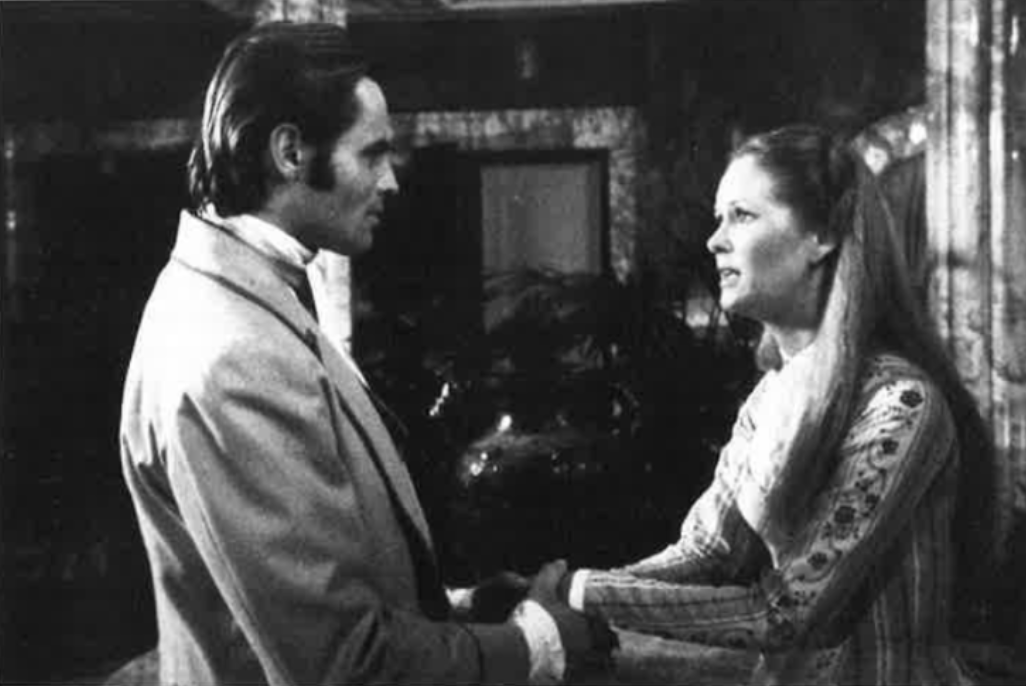
I had fun doing Captains and Kings when I ran Universal Television. That was a good fictional depiction of the Irish arriving here at the time of the Famine. My wife Katherine played two roles: the dying mother; she dies aboard the ship. And then, she came back as our hero’s sister. So as you see, the whole family was involved in Irish stories. [Katherine Price confirmed her interest later].
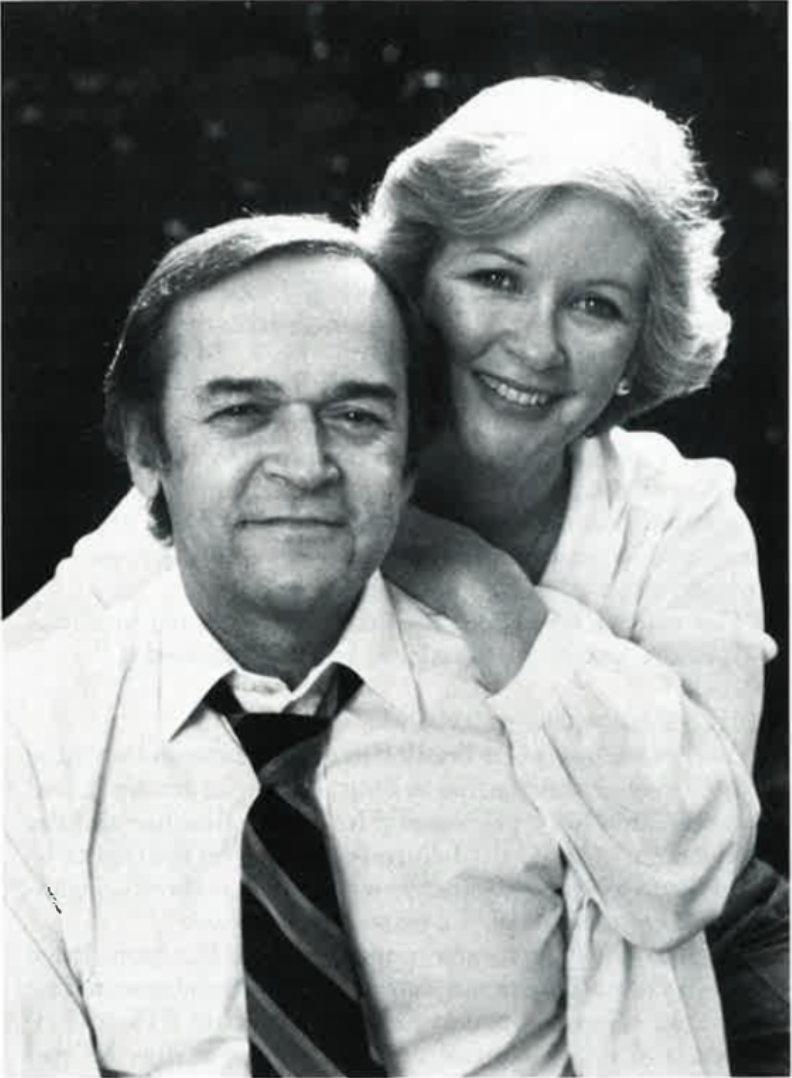
Katherine Price: My father, Roy Huggins is a television producer. He created Maverick and went on to Cheyenne, Run for Your Life, The Fugitive, Rockford Files and now Hunter. The name Huggins might sound English but it is Irish. My father just mentioned this morning that there was a Hugginstown in Ireland, maybe spelled with one “g.” I did read that “hu” meant “God” and the rest denoted your job under the Druidic system. My father’s grandmother was an O’Hickey from Cork. There is a family myth of a connection with Captain Blood. The Huggins went from Ireland to Nevis in the West Indies and became very wealthy plantation owners. This wasn’t talked about in the family.
They came to the United States around the time of the Civil War after slavery was abolished. We always thought they had come straight from Ireland. So this was quite a surprise. My father’s family was just so Irish, but it turned out they went from Ireland to Nevis to Canada, then to Wisconsin for a while, and finally west to Washington State, where my father was born. My mother’s family were Irish too.
They worked as telegraphers on the railroads and came west. My grandmother was Betsy Boyle. She married a Porter.
There was a lot of Irish in that family too.
I knew Betsy very well. She had vivid blue eyes, white skin and almost black hair. If you were to paint a picture of an Irish girl, she was it. Everybody loved her for her spunk and personality. My father’s mother was from an Irish Protestant family named Crawford. So, when I say I feel connected to Ireland on many levels, you know what I mean. When Frank and I were in Ireland, we tried to find out more about the history of these families. It’s exciting.
There are a lot of rousing tales.
Next month: Behind The Scenes: A look at Irish Americans on the studio executive level.
Editor’s Note: This article was originally published in the November 1991 issue of Irish America. ♦
Leave a Reply