
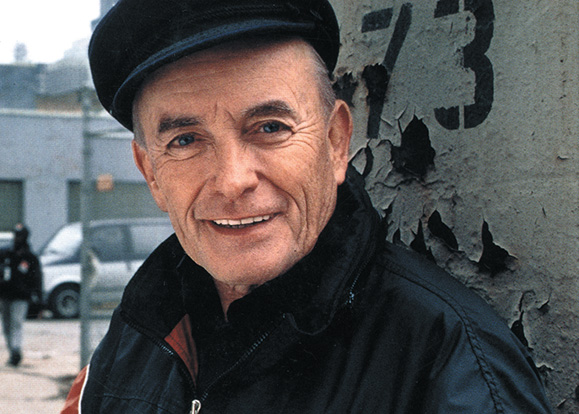
He is a Catholic priest, a journalist, and an author who has written scores of books and hundreds of popular and scholarly articles on sociology, education and religion. As Doctor of Social Science at the University of Chicago, he currently heads a research group that focuses on ethnic pluralism and ethnic family structures.
But he is best known as one of America’s most successful and prolific novelists who has made millions of dollars weaving tales about the people he knows best – the Irish professional class of America.
He is, of course, Father Andrew M. Greeley – a Chicagoan, who is passionately proud of the city where he was born and bred. In 1986 he established a $1 million Catholic Inner-City School Fund to provide scholarships to schools within the Chicago Archdiocese where minority students comprise over 50 percent of the student population. In 1984, he contributed a $1 million endowment, establishing a chair in Roman Catholic studies at the University of Chicago. And he funds an annual lecture series on “The Church in Society” at Saint Mary of the Lake Seminary, which he attended back in the 50’s.
He has written three books directly about the Irish: That Most Distressful Nation; The Irish Americans: The Rise to Money and Power and The Irish.
We met the afternoon before he was to be interviewed on “Good Morning America” about his newest novel, An Occasion of Sin. He had just finished a vigorous swim as we sat down for some steaming hot tea. I couldn’t help but notice a nimbleness about the man – a kind of wink, nod, and smile bubbling just below the surface – his bright, blue eyes reflecting a quick intelligence and a burning curiosity for just about everything.
Michael Scanlon: Why don’t you start off by telling us the plot of your new bestselling novel, An Occasion of Sin.
Andrew Greeley: Well, I first got the idea to write this novel after reading a wonderful book called Making Saints which is about how the Church makes saints. It’s by Ken Woodward, who is the religion editor for Newsweek magazine and it’s a marvellous book. The morning after I finished reading Ken’s book, I woke up thinking: could God make a saint out of someone who doesn’t believe in Her? And the answer to that is, yes, of course, God can do anything She wants to do.
So I got this idea about a Cardinal McGlynn who was just a fairly decent man. And he is killed accidentally in Nicaragua in a gunfight between two groups, the Sandinistas and the Contras, neither of which want to kill him. He’s hailed as a martyr by the left and denounced by the right and then quickly forgotten. Except a year after his death, miracles start occurring. And the book is an investigation of this “Jumpin’ Johnny McGlynn” and his financial manipulations, his ambitions. Did he buy his way into power, did he smuggle money into Poland for Solidarity? And what about this woman, Mary Elizabeth, who was so close to him all his life and was supposed to be running the diocese financially when he was Bishop? What was her relationship to him?
And how does it all end up?
[He smiles]. Ah, well, people will have to read the ending to find out.
Let me pose a metaphysical question here. What do you think makes a person a saint?
The saints are stories of God’s love. A saint is somebody who God loves particularly. And the person responds to that love. So a saint is somebody who is caught up in a very passionate love affair with God.
I noticed you referred earlier to God as “She.”
Oh, did I now?
Well, it seems to me that if the Republic of Ireland can have a woman president from Ballina in the County Mayo, it’s all right for me to refer to God as a woman. [He laughs.] But seriously, in the Catholic tradition, God has often been described as womanly as well as manly. Most recently John Paul I, the September Pope, in one of his audience talks before he died, said we must think of God as a strong and powerful Father but even more as our tender, loving Mother. God is neither male nor female, both male and female, and you can think of God either way, because all of our talk about God is metaphor anyway. So whichever metaphor you’re most comfortable with. That’s part of the Catholic tradition.
I bring up this point because the New York Post had a front page headline a while ago about Cardinal O’Connor referring to God only as Our Father and as a man.
Well, I don’t know if that’s what His Eminence really said. But if he did say something like that, he’s at odds with Saint Bernard, Saint Anselm, John Paul I and Jesus Himself, who in the seventh chapter of Saint John’s Gospel, in verses 38-42, compares himself to a “nursing mother.” You know, I’m really struck by the imagery of God in recent motion pictures. In fact, I’m giving a lecture at the Smithsonian Institute on the subject of how God is played in the movies. You know there’s George Burns in Oh, God, Jessica Lange in All That Jazz, Michael Caine in Mr. Destiny, and Danny Aiello in Jacob’s Ladder— they all play God. And they’re all very interesting metaphors for God!
And what is your thesis about this?
My thesis is that in each of these films, God is presented as active, loving, lovable, flexible, and deeply concerned about his people, and really in love with them.
And this is a very appealing notion of God.
I think most of the people who made these films are not necessarily religious men and women. But what they’ve put into the films is the God of the Hebrew prophets, the God of Isaiah, the God who fell in love with his people, the God who suffers when His people suffer, the God who rejoices when Her people are happy. So I think it’s a profoundly orthodox metaphor for God, and I just find it very interesting. And the thought that God might be Audrey Hepburn- I suppose it dates me to say this – but I think it’s just wonderful. I mean… I hope She is! [He laughs.]
Here you are going off and giving a lecture at the Smithsonian Institute about God in motion pictures. You’re a Catholic priest, a professor of sociology and have written many books on sociology and, of course, you’re the famous author of several best selling mysteries and novels. How are you able to write so much?
Well, it’s celibacy and hard work! But then, of course, there’s probably that Irish facility with words. Glibness may be our blessing or our curse-I’m not sure which but whatever it is, we’re glib.
And do you think that same glibness is what has made the Irish so successful in politics?
Well, yes, I think it’s that plus the experience of learning how to survive under a thousand years of oppression. That develops all kinds of political skills, which are passed down from generation to generation.
This penchant for politics among the Irish seems almost genetic, doesn’t it?
Boy, it sure does. I mean, you look at Chicago now, for example. The mayor, the president of the County Board, the county treasurer, the county sheriff, the assessor for the county, the majority leader in the state senate, the speaker of the state house, the chairman of the finance committee- they’re all Irish! With open primaries these days, people run and since the Irish are good at politics, they win.
In your book The Irish Americans, you make the point more than once that the only way to really understand the character of the Irish is in the context of their suffering for hundreds of years under British rule.
You know, I was in Ireland a few months ago for an international sociology meeting, and it came home again to me with terrible force the enormous suffering in the history of the Irish people, and how miraculous it is that anybody survived at all. And one of the things you see in Ireland, particularly in the intellectual class, is how strong the self-hatred is. How hard it has been for them to shake the image the English had of them. I think in this country, Irish Americans have lost that self-hatred. It seems to be non-existent in my nieces’ and nephews’ generation. It doesn’t occur to them that they should be defensive about being Irish. In Ireland that’s not so, particularly, as I say, among the scholars. There are terrible feelings of inferiority. We’re always trying to prove ourselves to the bloody Brits, you know.
What about in America? Do you see any distinction between Irish Americans in different parts of this country?
Well, it seems to me there is a difference between the East Coast Irish and the Chicago Irish. You see, the Irish came to Chicago at the same time everybody else did, maybe a little before most of the others. So it was ours from the beginning and we never felt intimidated in Chicago.
In Boston, the Irish felt intimidated by the Brahmins. In New York, we feel intimidated by the Jews. For some reason we tend to always hold ourselves up to the Jews for comparison. And I don’t think it’s fair to either group. I mean, the Jews come from a thousand years of urban life, or at least village life; they’ve been the people of the Book for a long period of time.
We’re just a half a step out of the bogs. I think a more appropriate comparison for the Irish would be with the Swedes, Germans, Italians, or Poles in terms of artistic and literary productivity and interests and sophistication. And when you make that comparison, the Irish in this country are the most affluent, intellectual and successful gentile ethnic group in America. And the data supports that.
You’ve just compared the East Coast with Chicago. What are your observations about the Southwest of this country — in Arizona where you have taught for so many years?
What strikes me is how powerful the human propensity to form neighborhoods is. And even in Tucson, there are neighborhoods aborning. And the wise church person takes advantage of that. The neighborhood parish is a natural thing. You could make the case that the neighborhood parish is one of the Irish contributions to American society, to worldwide Catholicism.
Now the Irish in Ireland itself don’t seem to be doing too well these days, as evidenced by the massive number of young people fleeing Ireland and flocking to England and America looking for employment.
Yes, that’s right. There’s a 20 percent unemployment rate in Ireland right now.
It’s an intriguing notion, isn’t it, how the Irish have been able to flourish so well here in the U.S. but unable to use that same productive energy for themselves in their own country? What do you make of that?
Ireland is a country that was occupied by a colonial power for eight hundred years. Many of their natural resources, like their forests, were stripped away. So they’re short on natural resources and short on capital. What’s amazing is that they’ve survived politically-that the country hasn’t torn itself apart.
Just seven or eight years after the civil war was over, the people that lost the war took power in a peaceful election. And it’s alternated back and forth. That is a major political achievement.
What they need is a lot more foreign capital. And they haven’t been able to attract and keep enough of it. Part of the present problem is they don’t have money for productive investment because they’ve taken so much away in taxes. And a lot of the taxes go to their educational system.
An Irish kid of college age is now twice as likely to attend university than his British counterpart. The Irish government gives a first-rate university education to a lot of young people. But because they put that money into higher education, they can’t put it into businesses which would hire the young people. So the countries that import bright young Irish men and women are getting a wonderful resource for which they haven’t had to pay. The Irish, you know, work the longest hours of anybody in Europe, and on a lot of measures have the Protestant ethic: ambition, work ethic, things like that. The last Protestants in the world are the Irish and the Irish Americans – they’re both high on the work ethic. So I don’t think it’s lack of ambition or lack of hard work or lack of character on the part of the Irish that’s made for a bad economy.
It’s just a lack of opportunity.
Now I want to turn to the novelist, Mary Gordon, who wrote a controversial essay about the Irish for the New York Times a couple of years ago. She says that even though the Irish have a certain earthiness and love of nature and song, the central part of the Irish character is a sexual puritanism. And she says this puritanism goes to something deeper about the Irish which is a real fear of exposure, a need to keep things hidden and never to make a scene. According to her, this fear of exposure in the Irish has led to a lack of good Irish American creative writers.
I think when Mary Gordon wins the Pulitzer Prize as Edwin O’Connor did for The Edge of Sadness, then she’s got reason to say that the Irish haven’t produced any great writers in this country. And until then her essay was just very narcissistic and self-serving. I just think she’s dead wrong. I think the Irish in America have produced lots of good writers, and some great ones. My friend, Professor Charles Fanning from Massachusetts at Bridgewater, has just written a book called The Irish Voice in America-Irish American fiction from the 1760s to the 1980s [University of Kentucky Press.] He wrote a long reply to Mary Gordon, going through scores of Irish writers’ names. She ignored him and the New York Times ignored him.
It seems to me that Mary Gordon makes far too much of a very biased sample, which is her own family, who obviously think she writes dirty things. My family doesn’t think I write dirty stuff, and I think there is more eroticism in my novels than there is in hers. She may come from a fairly rigid family, but she shouldn’t generalize about the whole Irish population.
You know, there’s a wonderful young Irish scholar and philosopher named Richard Carney at University College Dublin who wrote a book called The Irish Mind.
He argues that it is the essence of the lrish mind that it is able to balance contradictions. And he summarizes this in a great phrase from James Joyce: “a word can mean two thinks,” as in t-h-i-n-k-s. He’s right, of course. The essence of Irish culture is this love of paradox. In our research, for example, we found that the Irish are, at the same time, the highest on fatalism and the highest on hope. They are a paradoxical people.
Mary Gordon actually uses you to buttress her argument. In your book about Ireland, That Most Distressful Nation, she quotes you as saying: ‘The two most devastating things that can be said to the young Irishman who attempts to move beyond the rigid norms are, ‘Who do you think you are’ and ‘What will people say?’”
I think that applied in Ireland and in America to the generation before mine and to my generation somewhat. It doesn’t bother the young people today at all, because they don’t even hear it. I mean my sister would never say that to her kids.
Are you first-generation Irish?
No, I’m third. My grandparents were born in Ireland-Ballina in County Mayo. I plan to set my next Blackie Ryan mystery entirely in Ireland.
You know, when I arrived in the Academy and began to read sociology and social sciences and books of criticism, I discovered an awful lot of stereotypes about the Irish. And I decided to find out if they were true. And most of them weren’t. The Irish are not the heaviest drinkers in this country. The Irish are the least likely to be racist of any of the ethnic groups. And the largest support for the ordination of women to the priesthood comes from Irish Catholic males over fifty. I’ve said this before and I’ll say it again: at a certain age in life, we’ve had a mother and a sister and maybe a wife and a daughter, and we have no choice but to support ordination of women!
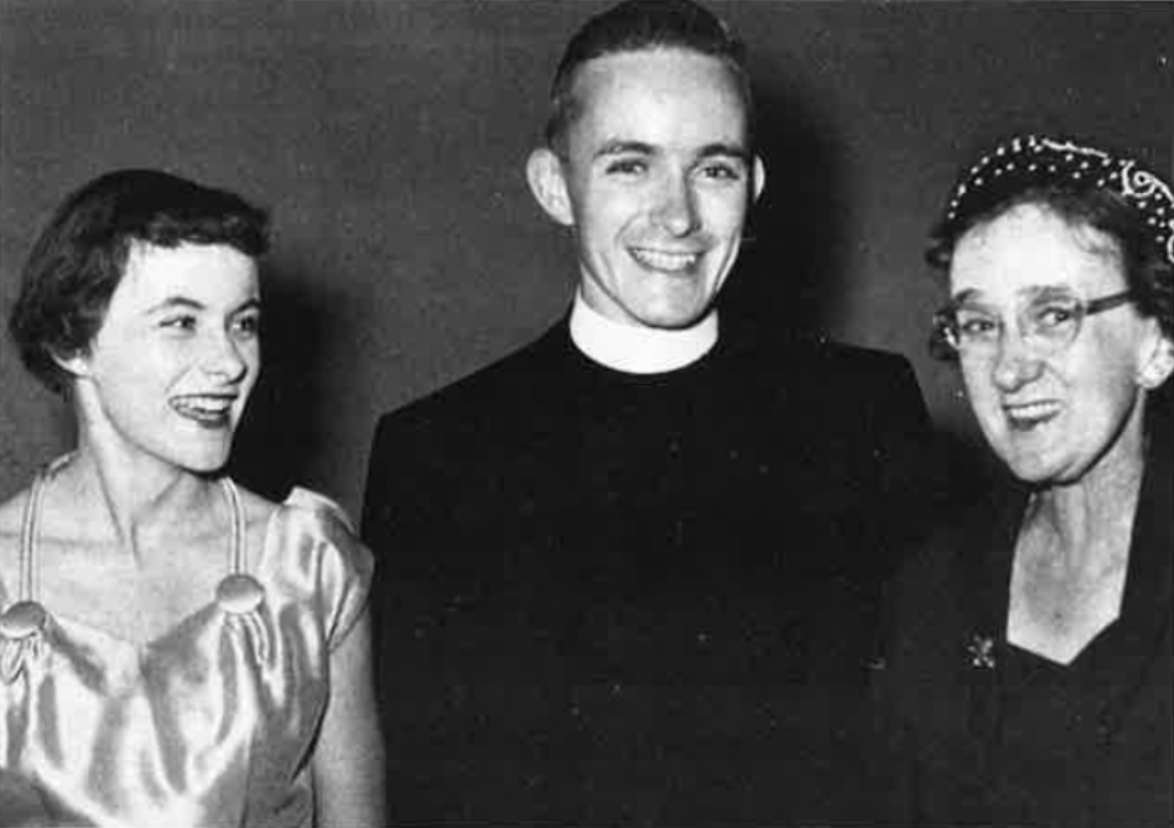
Now what about this subject of the strong, independent Irish woman? Monica McGoldrick, the renowned family therapist, makes the point that Irish women have always been the most likely of all European women to emigrate on their own without the accompaniment of their families.
There’s a number of reasons for this.
Like the Blacks, the Irish women were more employable at one time in this country than the Irish men. And so you had a fair number of father-absent families. In some families, the woman was the principal wage earner when there were hard times. So that may have reinforced the strong Irish woman tradition.
Now, in Ireland, many will tell you it’s a patriarchal society and women don’t count at all, at all. But the Gallup people did a study among the nine countries in the common market a number of years ago on attitudes towards the role of women. There were about thirty-five indicators, and on all thirty-five, the most feminist countries were either Ireland or Denmark – with Ireland having a few more first places than Denmark. For example, they’d ask a simple question like, “If there were a political meeting at night, is it all right for a woman to go by herself?” And in Ireland about 90 percent said, well, why not? In continental countries, a majority said, “No, we have to go with our husbands to the political meetings.” There were many more questions like this. So Ireland may not be a feminist country, but it is more feminist than any place in Europe.
But with this tradition of strength and independence, Ms. McGoldrick also observes that the Irish often have a difficult time connecting with and expressing their feelings.
Well, yes, I think that’s true. Irish people often keep their pain inside themselves.
Jews, the Hispanics, the Italians externalize it. With the same degree of suffering, somebody that’s Jewish will scream bloody murder and the Irish will grin and bear it.
They feel it’s not right to complain. I suppose it comes from living under an oppression that was just terrible, and what good would it do you to complain? If you complained, if you externalized your pain, you were just imposing it on others.
I am reminded of the example of Jackie Kennedy at the funeral of JFK. So many Irish people have commented how they so admired her stoicism and her dignity. On the other hand, some say she set the grieving process back a hundred years.
Well, yes. I think it’s wonderful to be able to externalize the pain and put it out there and just deal with it. You know,
Mayor Daley’s sister-in-law died last summer and I went to the wake and everybody in the family was weeping the men as well as the women.
And I said afterwards, “I think this is just wonderful. In most respects you guys are pretty Irish. In this way, you’re not. You’re better than the rest of us because you can weep.”
Getting back to impressive Irish women for a moment, what about Mary Robinson, the president of Ireland?
Ah, yes, I saw her when she opened the Royal Dublin Society annual show. And she says: “This is my Ireland: the Ireland of horses and cattle and flowers, and I’m so proud of it.” And she has this strong west-of-Ireland face and accent. She is a smooth one.
Father Greeley, you are obviously a man of great pride in your Irishness. What are you most proud of?
Well, G.K. Chesterton said the only kind of pride that was legitimate was the pride in something which you had nothing to do with. I had nothing to do with being Irish.
And so therefore, it is perfectly legitimate to be proud of it. I have nothing to do with the Chicago Bulls, so I celebrate that. I guess I’d say I’m most proud of our ability as Irishmen and Irishwomen to survive all that genocide and oppression, and then come as the poorest of the poor to this country and make it and still be Irish. I think that’s well worth celebrating.
Editor’s Note: This article was originally published in the October 1991 issue of Irish America. ♦
Leave a Reply