
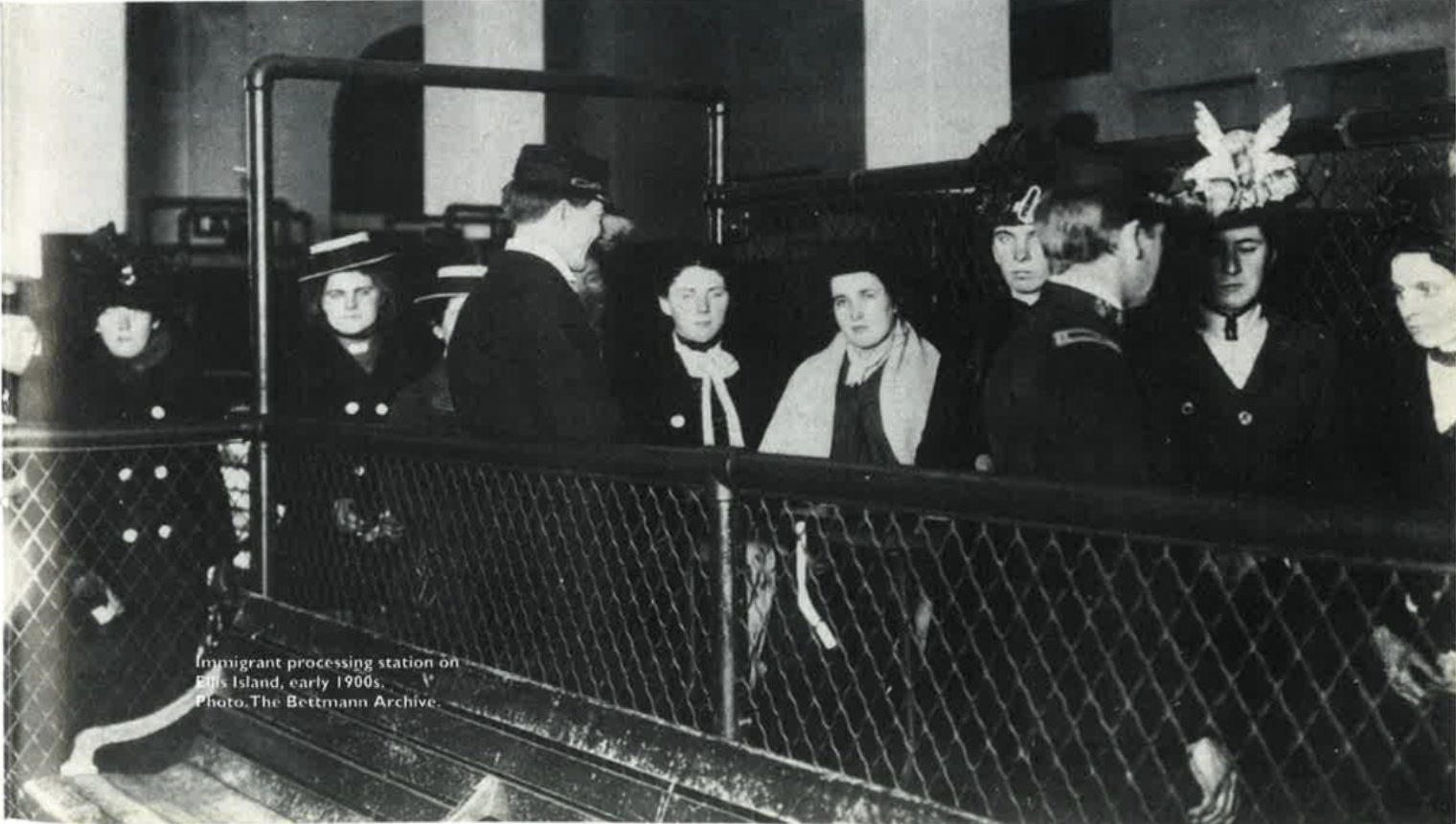
A sentimental nineteenth century novel of virtue rewarded tells the story of an Irish immigrant girl who came to New York in the 1870’s. Subtitled “A Tale Founded on Fact,” Annie Reilly or the Fortunes of an Irish Girl in New York describes Annie’s arrival at Castle Garden: immigrants confused and exhausted, luggage broken or lost, possessions scattered, indifferent officials, “sharks and runners” ready to prey on immigrant ignorance. Fortunately for the fictional Annie, she has the address of a friend in New York and a wise travelling companion, Mrs. Duffy, who shows her safely to the streetcar which will take her there.
The portrayal may, indeed, be founded on fact but it describes one of the luckier Irish immigrant girls who arrived at Castle Garden. As she leaves the scene of utter confusion, escorted by Mrs. Duffy, Annie notices “a few, lonely, dejected creatures remained behind hoping to find employment through the free labor bureau.”
What about those real Irish immigrant girls without Annie’s resources? They arrived in America jobless, homeless and friendless. What was done to safeguard their arrival in New York?
One of the most significant efforts to provide for the welfare of the Irish immigrant girl was the inspiration of Charlotte Grace O’Brien (1845-1909), the daughter of the Young Irelander William Smith O’Brien who was transported to Van Diemen’s Land for his part in the 1848 Rebellion. In 1881, she wrote two articles: the first, “Eighty Years,” published in The Nineteenth Century, described the anguish of emigration; the other, “The Emigration and the Waste-Land Clauses,” a criticism of assisted emigration, appeared in Fortnightly.
While she spoke out against emigration, Charlotte Grace O’Brien was, nonetheless, a realist. Obviously, she could not stop emigration but she could help protect those leaving Ireland for America. Inspired by J. F. McGuire’s The Irish in America she visited the ships in Queenstown and was appalled at travel conditions for emigrating Irish. She began to visit the ships daily to campaign for better conditions and opened her own lodging house for 105 travellers.
In 1882, eager to learn what lay in store for the young immigrant girls passing through her lodging house in Queenstown, she decided to investigate conditions in New York. She sailed to New York, lived in a tenement house in Washington Street and became convinced that something had to be done to protect the Irish immigrant girl from the moment she arrived in America. Advised to see the progressive Archbishop John Ireland of St. Paul, Charlotte Grace O’Brien presented her plan to him and won his support. A home for Irish immigrant girls was proposed at the 1883 meeting of the Irish Catholic Colonization Society in Chicago.
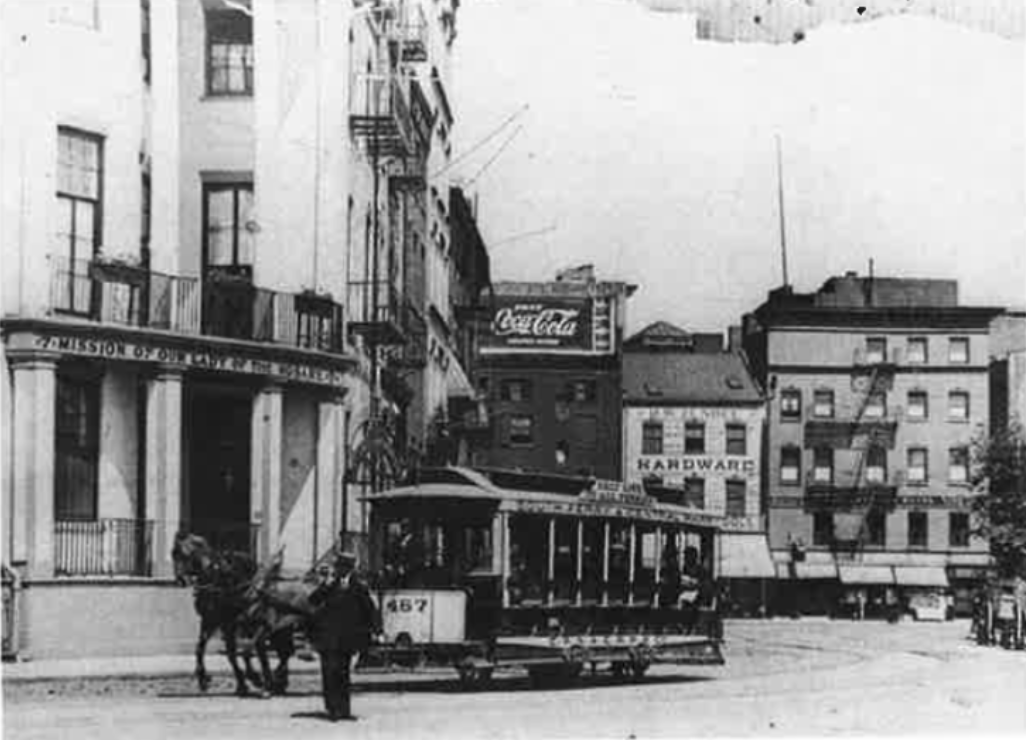
Cardinal McCloskey of New York took the initiative. He appointed Father John Riordan chaplain of Castle Garden with particular responsibility for safeguarding the interests of Irish immigrant girls. On October 1, 1883 Father Riordan established the Mission of Our Lady of the Rosary for the Protection of Irish Immigrant Girls.
Its objectives were three: to establish a Catholic information bureau at Castle Garden, to provide a temporary home for Catholic immigrants, and to build a chapel for Catholic immigrants.
The Mission began to function in January, 1884.
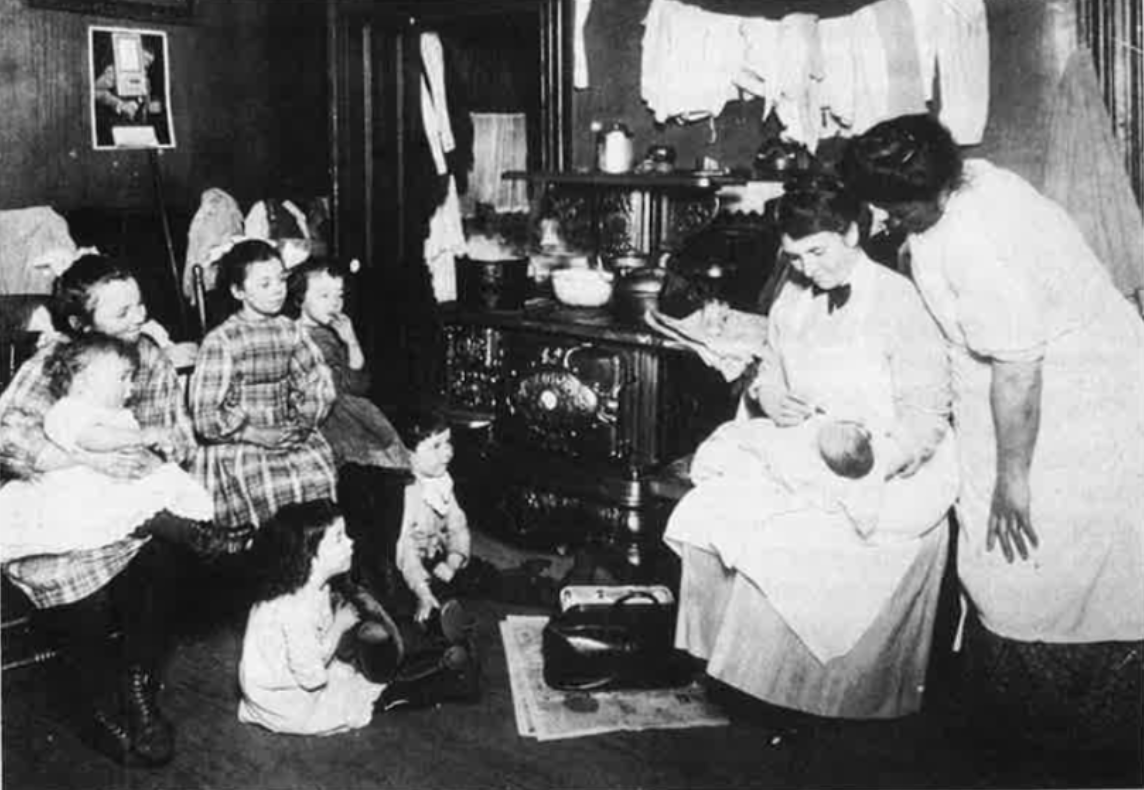
For a few months, immigrant girls were sent to local respectable boarding houses. In May the Mission opened its own temporary home at 7 Broadway with a Mrs. Boyle, recruited from the Labor Bureau, serving as matron. Father Riordan acquired a permanent home for the Mission in December 1885 when he purchased 7 State Street from Isabella Wallace for $70,000. In its first year, the Mission received 3,341 immigrant girls.
By the end of 1885 the Mission had a parish as well as a home. In September of that year, Cardinal McCloskey had directed that St. Peter’s parish be divided and that the 1,500 Catholics living at the tip of Manhattan-the area bounded by Wall Street, Broadway, the Battery, the Hudson River and including the harbor islands—make up the new parish of Our Lady of the Rosary. In addition to parish support, the Mission began an active program to raise money to fund services offered free to immigrant girls.
The Mission relied on an annual subscription every October, the month dedicated to the Rosary, as its chief source of revenue. The Mission Newsletter for 1900 described its operation: Cards of membership are sent to authorized collectors in every State of the union. The Collector’s duty is to secure members for the Society. Membership is 25¢. This entitles the membership to a share in the merit of the good works accomplished by the Mission and to the benefit of masses which are offered at the Home every week during the year for the living and the dead.
Other fund raisers included an annual picnic, an annual ball and the very successful Metropolitan Fair. Opened by Cardinal Gibbons on May 5,1890 at the Old Armory on Broadway and 35th Street, the Fair ran for three weeks and raised $40,000 them with advice and accompanied all girls not settled by 4:30 p.m, to the Mission home.
A Mission milestone was its Silver Jubilee celebrated at the Mission Chapel on Rosary Sunday, October 8, 1908 and a month later at a Carnegie Hall concert.
Statistics compiled for the jubilee give some sense of the degree to which the Mission had succeeded. Between 1883 and 1908, 307,823 Irish females aged 14-44 arrived at the Port of New York; their average age was 23. During that time the Mission served nearly one-third of those immigrant girls. They found jobs for 12,000. Possibly the best measure of the Mission’s success was its support by the young women it served. Writing about the Mission’s Silver Jubilee in an article in The Catholic News, Father Michael Henry, Mission rector in 1908, wrote: The Mission has received no financial aid from city, state or federal sources, no generous bequests from philanthropic millionaires.
It has depended entirely for support on voluntary contribution and has been supported almost entirely by the dollar cheerfully given by the Irish working girl whom it was probably the first to befriend on her arrival in this country. She has been the mainstay of the Mission and to her credit must redound much of the great good which the Mission undoubtedly has been instrumental in doing.
The Mission’s fortunes followed those of Ellis Island. After the great tide of European immigration between 1901-1914, numbers decreased during World War I. Post-war immigration was curtailed by the quota laws in 1921 and 1924.
While Irish emigration was not seriously limited by these laws, there were changes in emigration procedure. Emigrants were examined at American consulates abroad and were able, as a result, to bypass Ellis Island. Still the Mission continued to open its doors to arriving Irish immigrant girls.
When Father Patrick Temple arrived at the Mission on October 1, 1930 five ships with several hundred Irish girls aboard landed at the Port of New York; fifty went on to the Mission.
During the Depression, visas were restricted for fear immigrants would become a public charge. Immigration from Ireland to the United States dropped to 801 in 1931 while 3,407 Irish returned home to the Irish Free State in that year.
With few immigrant girls arriving at 7 State Street, Father Temple kept up interest in the Mission with a quarterly called Old Castle Garden which ran to forty numbers between 1931-1940. Publishing articles on Irish Catholic culture and American history and culture, Old Castle Garden reflected the piety and patriotism that characterized Irish Catholic sensibility of the day.
In addition to the articles documenting the Mission’s history and offering sensible advice about education and employment, the quarterly offered the immigrant literature as a way to deal with loss. It published poems which articulated the Irish immigrant experience: Thomas Daly’s”At Castle Garden,” Patrick MacDonough’s “A Hosting at Castle Garden,” and James Reidy’s “The American Wake.”
By World War II, Ellis Island was no longer a reception center for immigrants but a detention and deportation depot, and changes in lower Manhattan reduced the parish population to about fifty families. While the Mission of Our Lady of the Rosary for the Protection of Irish Immigrant Girls never closed, the premises have become the Saint Elizabeth Seton Shrine.
Unmarked at State Street, the Mission’s monument is the grateful memories of the more than 100,000 Irish immigrants it served.
Editor’s Note: This article was originally published in the September October 1993 issue of Irish America. ♦
So interesting! Really amazing in light of our poor help for immigrants now, but there are many Catholic nuns today especially here in California, Texas and Arizona near the USA/ Mexico border who are helping.