
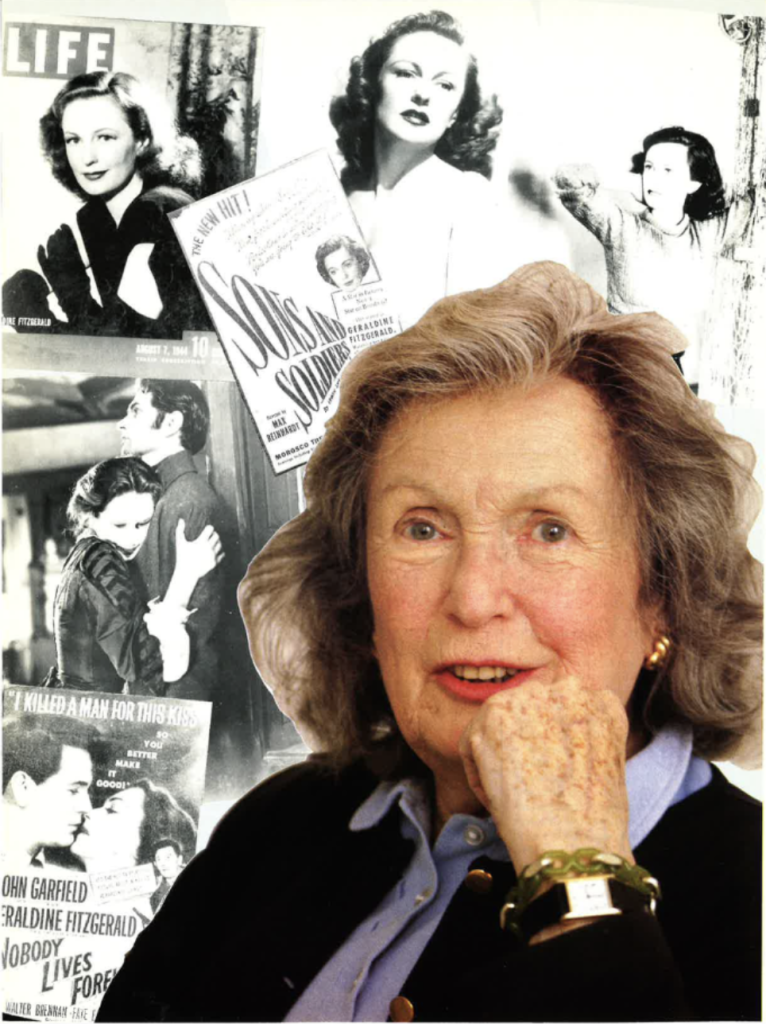
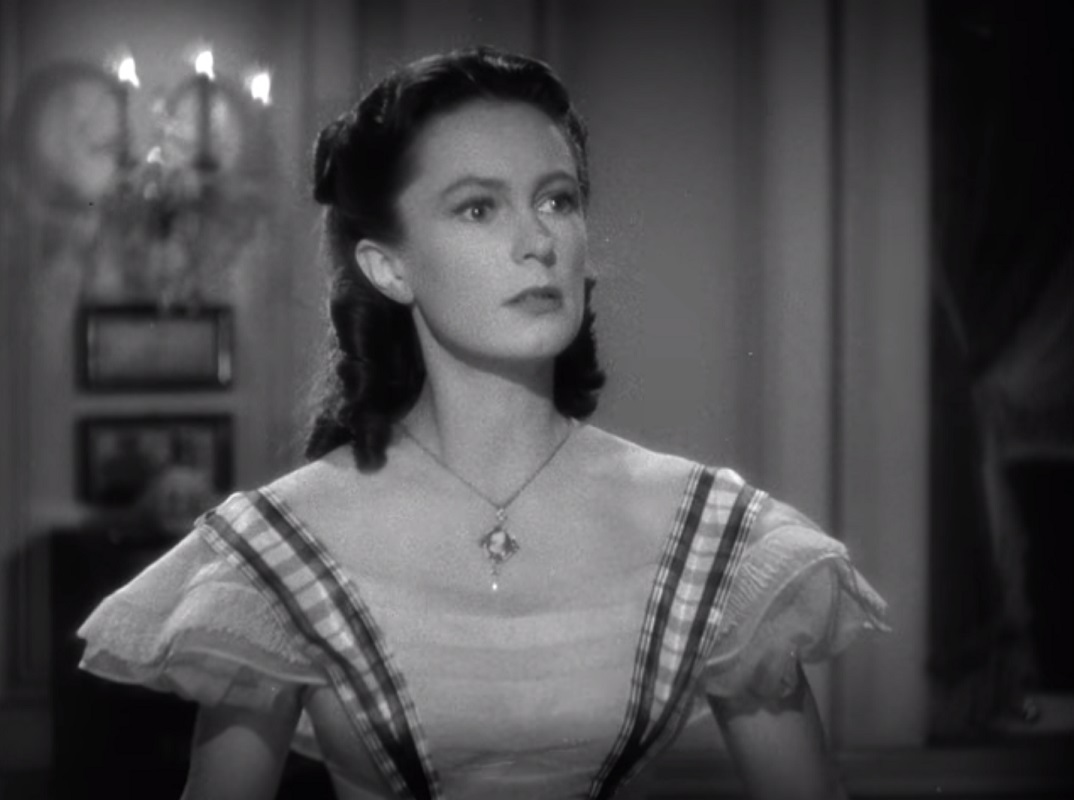
Geraldine Fitzgerald left her home in Graystones outside Dublin as a young girl and moved into the city to pursue her career in the theater, a career that would eventually take her to the stage in New York and to the Hollywood screen. Along the way she would come in contact with a host of characters, including the great Orson Welles, and Laurence Olivier with whom she would share the spotlight in one of the all-time movie greats, Wuthering Heights.
Always an independent thinker, Fitzgerald went her own way, turning down as many great parts as she played. John Huston offered her a part in The Maltese Falcon, but she didn’t feel that it was right for her at the time.
Turning her back on Hollywood she returned to New York and started her own theater, the Everyman Company. And in later years she went on to direct such Broadway successes as Mass Appeal with Eric Roberts and Milo O’Shea.
Janet Noble met with Geraldine Fitzgerald at her apartment in New York where she lives with her second husband, Stuart Scheftel, grandson of Isadore Straus, who founded Macy’s.
Janet Noble: You’re certainly a woman of infinite variety: a stage and film actress, director, writer, cabaret singer, as well as a wife and mother.
Geraldine Fitzgerald: Yes. And, for all that, my children turned out rather well. Michael is a film director and my daughter, Susan, is a psychoanalyst.
You’ve had such an interesting career, Ms. Fitzgerald. Where shall we begin?
Call me Geraldine. I was born in Dublin during the beginning of World War I which was also the beginning of the great Irish Rebellion. There were constant shots and crashes and bombings all over Dublin then, and we children didn’t mind a bit. Because children don’t, usually, if people don’t tell them to be afraid. We lived in one of those rows of Georgian houses in Fitzwilliam Street. The roofs adjoined and snipers used to run along them, firing at people on the other side of the road. And that was just above our nursery. We used to ask the nurse about it and she’d say: “Ah, go to sleep. It’s just the snipers.”
Well, Dublin became quite dangerous so my family moved to Graystones, an area which later became famous because the rock group U2 are from there. As children, there were four of us, we thought it was the end of the world. In winter, it was quite gray and dreary and we didn’t like that. As soon as I could, I went back to Dublin, stayed with relatives and got a job as a waitress.
When did it come to you that you wanted to be in the theater?
I think when I was terribly young. I liked the idea of singing and dancing and making people laugh. I don’t know that I ever gave a name to it… just that I couldn’t be happy until I got myself into a theater. I didn’t care if I was just a face in the crowd, as long as I was up there. When I got to The Gate Theater, those were two of the happiest years of my life.
Did you study acting at all?
No. In those days, outside of Russia and a few other places, there was a set idea about acting: If you had the talent, you could just do it. You joined a stock company and found your way. Nothing was said about developing your ability. So, I got myself into the gate and later, went on to London to work.
And picked up your craft as you went along.
Yes, such as I did. Later on, I met the Russian actor Sokolov, one of the originals from Stanislavsky’s inner circle, and he began to teach me about technique. Now, I know, there are schools for acting in Dublin and I think that’s great. The Irish have so much histrionic talent. The Irish have such skill with words. Even the uneducated Irish create word pictures that would have made Shakespeare burst into tears. Milo O’Shea says it’s because we had not been allowed to be taught to read.
That sounds right to me. The Irish were subjugated for so long. When you see your reality so clearly, you learn to change it so you can survive. Language is powerful. It takes on double meanings….
And is richer for it.
Shelia Richards was your aunt. Was she a big influence on you?
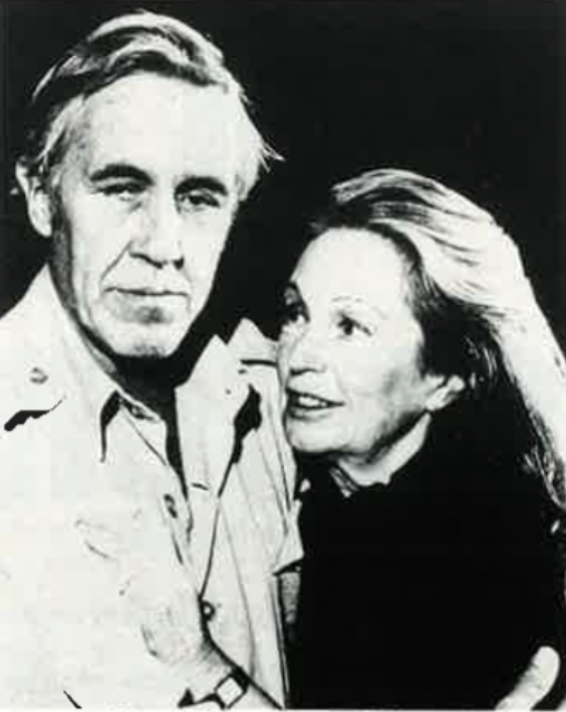
Oh, yes, a great influence! She was an actress at the Abbey Theatre and often worked with William Butler Yeats. For the family, we children used to act out the little stories that we knew. And I was always the director, I remember that. I would always be shouting things like, “Don’t stand so near the bush!”
When you were at the Gate, was Orson Welles there, too?
No. He had just been there and had made a great impact. They all talked about him.
Later, when I came to America and was having trouble getting work, I got a call to go to see him. He had The Mercury Theatre at that time with John Houseman. I instantly knew that I would stay here in America. It was my destiny. Because, all my life, I’ve had strong intuitive feelings about what I should do. I felt I had arrived in the nick of time.
Why did you come to America? You had been working in Ireland and England successfully. You’d made the movie The Mill on the Floss with James Mason, for instance.
Well, I was married then to a young man who owned and trained horses, Edward Lindsay-Hogg, Michael’s father. As an avocation, he liked to write songs. So, we thought we’d try America. But it didn’t turn out the way we expected. We were here for a couple of months, staying at the Stanhope Hotel and we couldn’t leave because we couldn’t pay the bill. Later, Michael made a film about just that kind of situation with John Malkovich and Andie MacDowell called Object of Beauty. Anyway, we were just about to wire our parents for money to go home when I got the call to see Orson. I went in and saw John Houseman and he wanted me to audition.
I said I wouldn’t do that. He said, “Well, you can’t expect us to take you on spec.” And I told him I was kind of a film star in England and he said, “Here in America, we don’t think England has a film industry.” Then Orson came in, this great mass of energy, and Houseman told him I wouldn’t audition. And Orson said, “Oh, don’t be silly. You know we’re going to take her.”
That was a very creative, exciting time in the theater here.
It was extraordinary! The Group Theatre was coming into being. There was all that young talent. It was smashing!
And from the Mercury Theatre you went to Hollywood?
Well, I was perfectly happy with the Mercury Theatre. I did Heartbreak House with them. I didn’t want to leave but they were planning to do all five of Shakespeare’s king plays and, as they had а терепогу company, there was nothing for me. It sounds so funny to say it, but I had to go to Hollywood, and so 1 did. I made a test out there and they liked it, so I signed with the proviso that I could have six months off every year to do theater.
Those were the grand old days of the studio system.
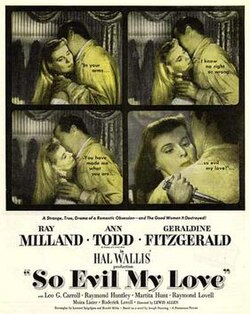
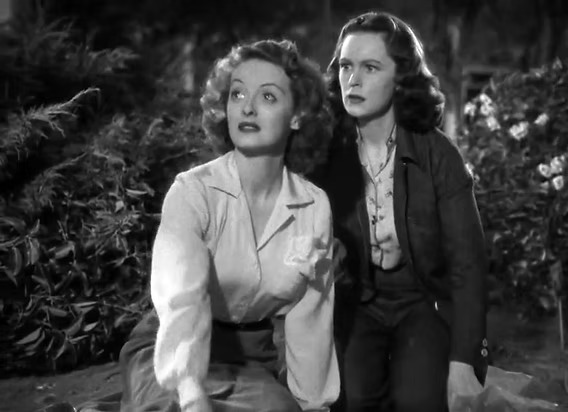
And I was with Warner Brothers, the most rigidly systematic studio. Humphrey Bogart once told me, “Listen, you must not be so choosy about what films you do. There’s no way that you can control that. Don’t bother to try. Just say yes, yes, yes, as I have done.” But I couldn’t take that in. It was only years later that I understood. But in Hollywood you did make some wonderful films. Dark Victory with Bette Davis and Wuthering Heights with Laurence Olivier.
Yes, but that was later, after I caught on to saying yes. Then, my second husband came home from the war and I didn’t want to be separated from him again, so we came to live in New York and my daughter was born here. My Hollywood career sort of petered out.
And you worked on stage here, again?
Yes, and became a director. I like that more than anything.
You founded a theater, the Everyman Company, in 1968.
My partner was a Franciscan, Brother Jonathan Ringkamp. It was street theater and was so successful that it gave rise to the annual summer street theater festival at Lincoln Center. We were different from the other street theaters at the time. They were usually on little trucks and would go to Harlem and do bits of this and that. And people would throw everything at them that wasn’t edible. We didn’t want to do that, because it was quite clear that it didn’t bring happiness to people. So we went out to Coney Island to the high school graduations and announced that we were starting a theater, we would like them to come, and they should take note of two things: one, we were going to do musicals and they could help create them, and two, no one would be tried out and no one would be tured away.
We had companies of 80 to 100 people. Someone always gave us a big space, an unused police precinct or something. And Jonathan and I realized in those days that everyone has talent. Big revelation! I myself, was rather put out by that. I had always believed that talent was just for some people. But that’s not true. It’s in everyone, waiting for the chance to come out. We did rock musicals then. Today, they’d be rap. Variations on the Everyman play. We were everywhere-Coney Island, Red Hook, all over Brooklyn. We did that for about 10 years. It really caught on.
Could you talk a bit about Brother Jonathan? How did you meet?
In 1968, John Lindsay was Mayor of New York. He called up all the creative people he could think of, successful or not, and invited them all up to Gracie Mansion.
We went and he said, “Can all of you think of anything to do this summer? Because it’s going to be a very bad one. “There was a lot of talk and we noticed that no one listened to what we said, so we decided to go off on our own. We only had about $30 between us that day, so we bought the script of Everyman and went out to Coney Island. Brother Jonathan was a marvelous man. He taught me so much about directing.
James Higgins (Irish America’s photographer who has wandered in): This scrapbook is great!
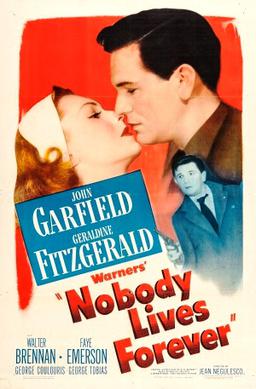
(He holds up a copy of a glamorous movie poster for Nobody Lives Forever, in which Geraldine languished in the arms of a vigorous John Garfield, and reads the legend): “I killed a man for this kiss, so you’d better make it a good one.”’
Geraldine Fitzgerald (Laughing): That was his line, of course.
Have some more tea, James. Are you from Dublin?
I am.
I thought so. Have some cake.
Janet Noble: So, that was your first experience directing and then you went on to direct Mass Appeal on Broadway with Milo O’Shea and Eric Roberts. What was it like working with Roberts?
He was absolutely marvelous. When he appeared in the congregation in the church, he was like an archangel or something. Very talented. Did you ever act on stage?
Yes. I was lucky enough to have worked with Charles Ludlam on the Grand Tarot back in 1971.
Oh, he was a great friend of mine! Whenever Charles had a show we used to go to the opening and go out to supper after. I thought he was a genius. A very funny man who could create such an image of beauty. And everything he thought of was so funny. I know. I’ll never forget what I learned from him.
I wanted to ask you about the Irish community during your years in Hollywood.
Oh, yes. Pat O’Brien was there. And James Cagney.
Did you all hang around together?
I knew them all but no, I hung out with people like Hecht and MacArthur. Because I was very sophisticated, I thought, at that time. I was from the Mercury Theatre and all that. Herman Mankewitz was a great friend of ours. Not at all a good group for a young actress to be in because they were so clever and intellectual and hard to please. I would tell them what movie I was to be in and they’d say, “Oh, that’s rubbish!” It was, but that’s not what I needed to hear.
But weren’t you nominated for an Academy Award for Wuthering Heights?
Yes, but I refused the nomination. I didn’t think actors should be put in competition with each other in things to do with art, there should be no competition because each artist is unique. When you’re young, you’re very principled and that’s how I was then.
What did your friend Bette Davis say about your refusal to be placed in nomination?
“Good for you, Fitzy!” She always called me that. I think one of her greatest films was Of Human Bondage. She showed such extraordinary talent in that film. She had such strength and vividness on screen that, too often in her career, she was asked merely to caricature herself. She was a very talented actress and a great friend.
What was it like working with Max Reinhardt on Broadway?
He was a great director. A genius. You have to use that word about some people because that’s what they are. He adored actors.
He said actors were the bravest people he knew. “They have the smell of the gallows,” he said.
“They will reveal their innermost selves. Offstage, if the public knew what their inner selves were like, they’d hang them. They’re criminals. The only human beings who have the guts to reveal who and what they really are.” He loved the actor’s go. Thought it was the most precious thing. In case he’d offend you, even though he was in his seventies at that time, he’d get up on the stage and come over and put his arms around you and whisper directions in your ear. And, Reinhardt used to give wonderfully pictorial directions.
One day, he said to a young actor in the company, “At this point, you should stand like a king.” And the actor said, “Well, I’m sorry, Mr. Reinhardt, but I’m an American and I don’t really know what a king is. I’ve never even seen a king.” And Reinhardt said, “But you have seen children of seven, have you not? They stand like kings, because they know you are going to give it to them. They might put out their hand, but they won’t bend any more than that. And if you want to see an emperor, offer something to a baby in his carriage. He’ll just lower his eyelids. And then, tum away.” He’d offer these concepts, these direc-tions, and you’d remember them always.
That particular play was Irwin Shaw’s Sons and Soldiers. He was away in the war during rehearsals. The play needed some work but Shaw wouldn’t allow anything to be changed. [Sons and Soldiers was the last play that Reinhardt would direct; he died soon afterwards.]
Here’s a quotation I found in my research on you: “No one had ever thrown away good breaks with such monstrous frequency.”
Yes. For one, John Huston wanted me to be in The Maltese Falcon. I didn’t want to do it. I forget why. Some silly reason. I think I thought roles like that just grew on trees. That was the most awful one I threw away. I would have liked to work with him. He was a friend. But, after that, I never did. The next chance was his last film. But I wasn’t free then to do it. Another genius.
What projects are in the works?
We’re working on a musical version of John B. Keene’s play Sharon’s Grave. We just had a workshop of it at Symphony Space and are planning another in Connecticut. Bill C. Davis wrote the book and I wrote the lyrics. It will take about two years to develop and we’re hoping to bring it to Broadway because that’s the only way you can recoup all you’ve put into it. I’m directing and we have some wonderful actors involved. It’s a very dark story.
We haven’t talked about your singing career.
I had always wanted to sing but nobody ever wanted to hear it. Even my children; when I’d sing them lullabies, they’d say, “Don’t, Mum.” Then I was in a film called, Rachel, Rachel, directed by Paul Newman. I was playing this crazy Aimee Semple MacPherson type and I had to sing. The sound man kept fiddling with his dials and looking up and finally he said, “I can’t handle it.” So Thad to do it separately, in a sound studio. Anyway, on the set, I met this young man who said he could teach me to sing. I started studying with him. He’d take me along when he sang in clubs out in New Jersey. I’d sing one song, an Irish one. And they didn’t like it very much. But I kept at it.
What did people say, who knew you as an actress, when you told them you wanted to be a singer?
They reacted rather the way my children had done with the lullabies, But I kept on and we put together an act. Then one day 1 read that they were having open auditions at a club called Reno Sweency. I went, but they didn’t take me. Later, I got a call and they asked me if I was still serious about singing there. It was Yom Kippur, something had happened, and they were without an act. So I went and that was the beginning of it.
You’ve seen many changes in your lifetime, haven’t you?
I’ve seen enormous changes. In Ireland, there’s a broadening of everybody’s interest and feelings about what they can ask of life and hope to achieve. There’s such an explosion and release of talent there. I hope it becomes a major cultural center in Europe.
And in America?
I came here in the mid-thirties. Everyone was hopeful then. The times were difficult, but everyone helped each other. Roosevelt got the economy going again. I don’t know why we can’t get that feeling and do that again. I think we can. If the artists can do their work, their spirit is very uplifting to the public.
What advice would you give to young Irish actors coming here?
Well, I didn’t come here alone. I don’t know that I could have done it. It’s a help. I think, to have the support of companions.
Thank you for giving us so much of your time this afternoon.
Not at all. It’s been awfully nice having you here. Will we all meet again?
James and I said we certainly hoped so. And then she saw us out to the elevator. Down in the street, I wondered how I could possibly capture the feel of the interview.
There had been such warmth and laughter around Geraldine Fitzgerald’s table, such wisdom in her eyes. I felt as though we had just had a close encounter with some kind of Druid.
Janet Noble is a playwright whose most recent play “Away Alone” about the Irish immigrant experience was very well-received by audiences in New York and Ireland.
Editor’s Note: This article was originally published in the January February 1993 issue of Irish America. ♦
Leave a Reply