
In 1744, Joseph Leeson, a member of a prosperous Dublin family and soon to become the First Earl of Milltown, embarked on his first tour of the European continent to further his education and collect objects of art for his stately new country mansion in County Wicklow. A compelling portrait depicting Leeson in a sumptuous fur-lined robe was painted in Rome during this trip by the master portrait painter Pompeo Batoni.
This painting is one of 44 old master paintings chosen from the prestigious National Gallery of Ireland in Dublin for an exhibition that is touring the United States this year and next. This unusually generous loan by the National Gallery will give art enthusiasts an opportunity to see works by such artists as David, Gainsborough, Poussin, Velázquez, Goya, and Tiepolo which rarely travel outside of Ireland.
“Master European Paintings from the National Gallery of Ireland: Mantegna to Goya” also adds to our understanding of the sophisticated taste and discerning eye of the Irish. This sampling of the Gallery’s holdings of over 10,000 works of art includes significant examples of virtually every major European art movement from the 15th to the early 19th century, created by artists from Italy, France, Germany, the Netherlands, Spain and England. Beginning in the mid 18th century, Leeson and other prominent members of the Irish aristocracy began to embark on “grand tours” of the centers of continental culture, cultivating their knowledge and acquiring extensive collections of art which decorated their urban homes and country residences.
Local artists were soon encouraged to study the old masters abroad as an essential component of their education. A century later during the Great Irish Industrial Exhibition of 1851, the Fine Arts Hall was fülled with over a thousand paintings, many from local collections. The Hall was a very popular attraction, luring in over a million visitors. Realizing a pressing need for a public art gallery, the Irish Parliament passed an act in 1854 “to provide for the establishment of a National Gallery of Paintings.”
During its 128-year history, the Gallery and its line of distinguished directors have accumulated an impressive array of artworks, on a limited but wisely apportioned budget. Many of the great local collections were donated to the museum, most significantly the 1897 donation by Geraldine, Countess of Milltown, of her collection which had been initiated by Leeson 150 years prior. The holdings of the Gallery have more recently been enriched by the Irish writer and dramatist George Bernard Shaw, who bequeathed a third of the residue of his estate, which grew immensely with the success of My Fair Lady, the stage and movie version of his Pygmalion. With his gift, Shaw wished to acknowledge the importance that the National Gallery had played in his education in Dublin.
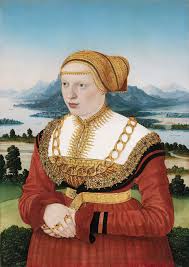
The selection of paintings on tour in the United States offers an enlightening overview of European styles from Italian Renaissance religious scenes to French neoclassical court portraiture. The great master of Renaissance perspective, Andrea Mantegna, is represented with a canvas depicting the brave and pious Judith after beheading the feared Holofernes, painted in gray monotone to mimic the effect of ancient sculpture, reflecting the contemporary interest of the new humanism of the Renaissance. A pensive musician is portrayed tenderly stringing his lute by the Florentine painter Filippino Lippi, a student of Botticelli. and the German Conrad Faber depicted a wife of a ruling house in opulent fabrics and jewelry before a background of a vast beautiful landscape. From Titian, the Venetian master painter of religious images, is an emotionally stirring portrait of the suffering Jesus Christ, Ecce Homo.
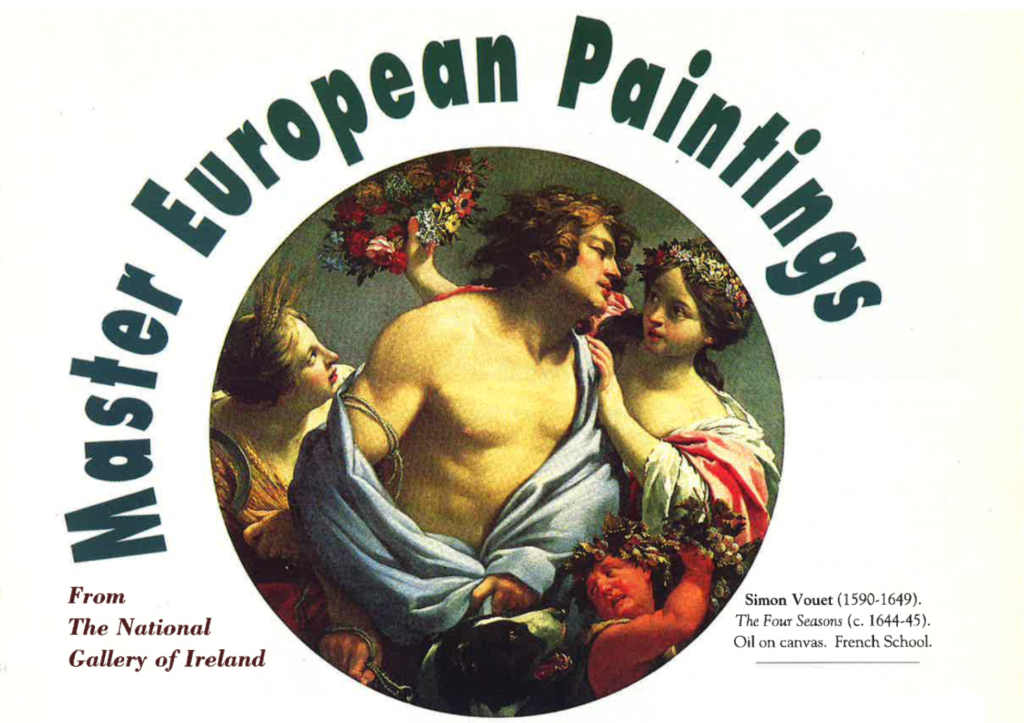
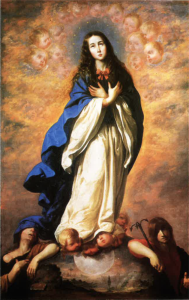
From the mid 1600’s, the collection includes two allegories of the seasons personified as frolicking youths. These paintings by the Italian Bernardo Strozzi and the French Simon Vouet are lively examples of the sumptuous Baroque style. Continued interest in religious themes. and a move towards classicism are seen in a masterfully composed scene of the Holy Family with Christ and John the Baptist as infants by Nicolas Poussin, one of the great French painters of the 17th century. More religious imagery appears in two depictions of the Immaculate Conception, one from 1660 by Zurbaran from Spain, and the other from 1769 by the master Venetian painter Tiepolo.
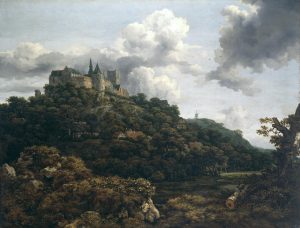
The Irish collectors seemed to be especially fond of Northern European landscape painting. This selection includes a majestic view of a German castle from 1653 by the Dutchman Ruisdael; a 1663 masterpiece by Meindert Hobbera, who perfected the depiction of picturesque wooded landscapes; and a dramatic scene of turbulent clouds and windswept trees by the 18th-century English painter Thomas Gainsborough.
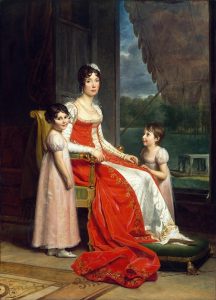
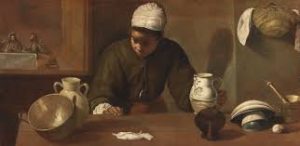
The scope of the collection from Ireland is completed by an exquisite royal portrait. in the French neoclassical style. Painted in 1808 by David’s pupil Gerard, Napoleon’s sister-in-law Julie Bonaparte is portrayed as the beautifully sophisticated Queen of Spain accompanied by her smiling daughters. Other highlights of the show are an early Velázquez genre scene, a portrait by Rembrandt’s student Drost, two Hogarth genre scenes, and a late Goya portrait. This
“Grand Tour” of the American continent of old master paintings from Ireland’s collection will add significantly to this country’s artistic experience.
“Master European Paintings from the National Gallery of Ireland: Mantegna to Goya,” sponsored by IBM and Aer Lingus Ireland, will be at the Museum of Fine Arts, Boston, January 13- March 28, 1993; and the IBM Gallery of Science and Art, New York City, April 27 – June 26, 1993. The exhibition will be accompanied by a fully illustrated catalogue with essays by staff members of the National Gallery of Ireland.
Kathryn Hixson is a writer in Chicago who has written extensively on the visual arts. She is contributing editor and Chicago correspondent to Arts Magazine, contributing editor to the New Art Examiner, and Chicago correspondent for Flash Art.
Reprinted with permission from USAir Magazine, Pace Communications, Inc., Greensboro, North Carolina.
Editor’s Note: This article was originally published in the January February 1993 issue of Irish America. ♦

Leave a Reply