
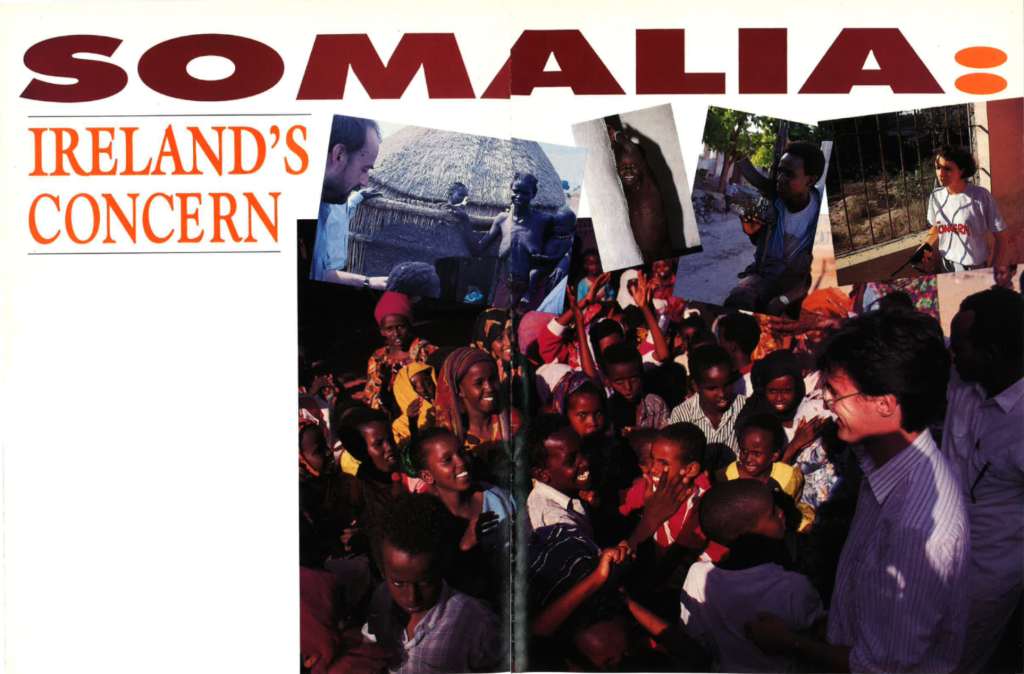
The Irish have an unparalleled history of helping out in the trouble spots of the world, and Somalia is no exception.
Concern, formed in Dublin 25 years ago in response to appeals for immediate aid, by the Catholic and Protestant Bishops of Biafra, are very much experts in the field, and have administered to millions of people in the most turbulent and tragic situations in the world. That they are now Concern Worldwide with offices recently opened in New York reflects a natural development and the global tasks they undertake.
Oistin MacBride recently spent time with Irish Concern volunteers in Somalia, Sudan, and Kenya.
On the day he left Somalia, 23 UN peacekeepers were killed in Mogadishu by one of the city’s many warlords.
It was a timely reminder of the volatile and precarious nature of the task the volunteers of Concern have set themselves in one of the world’s worst trouble spots. Here are his report and pictures.
Concern Worldwide are opening a school in Wil Wal, north Mogadishu, Somalia. It will soon have over 900 pupils. But first the playground has to be cleared of the remains of the dead. It is nauseating to discover that the little broken pieces of roofing asbestos jutting out of the ground are “gravestones,” and that the pervasive smell is from corpses rotting inches below the ground. When you look down and discover bleached and broken human bones at your feet, the sheer horror and sadness that is Somalia is overpowering.
In the middle of this phoenix-like resurrection, that will return the building to use, from a mere shell, in less than two weeks, is the diminutive smiling figure of Concern’s Assistant Field Director for Somalia Mary Considine, a native of County Longford who has been in Mogadishu for the last 12 months. At 28, Mary is the veteran of four emergencies in Sudan.
Ethiopia, Liberia and now Somalia, where she was among the first of all the volunteers from any of the NGO’S (non-governmental organizations) to arrive in “Mog.”
A phalanx of noisy bedraggled children follow her through the gravestones and the ruins while re-hired teachers and a headmaster vie for her attention as she talks to the plaster-covered builders and the women sitting cross-legged in the shade weaving mats for the classrooms.
The threat of danger is very real and very deadly. To her right and left in the play-ground/graveyard, at the school gate, and at the street corners leading to the school are her guards. Young stern-faced men, seven in all, with Soviet bloc AK47, German G3’s and U.S. M16’s, shadow her every move.
Concern’s Darkest Hour
Within a seven-week period Mary’s co-worker, Valerie Place, and her friend from her two years in Liberia, Sean Devereaux, were both shot and killed. It was Concern’s darkest hour, and as her fellow worker Pauline Moore ironically observed a few days before the 23 Pakistani peacekeepers were killed near Concern’s Mogadishu headquarters, “the potential is there for it to happen at any time.” In the days that followed, the “security situation” (a constant part of Concern’s language) deteriorated and the volunteers were moved out of Mogadishu to the Kenyan capital, Nairobi, two hours’ flight away.
Hot, Hot, Hot
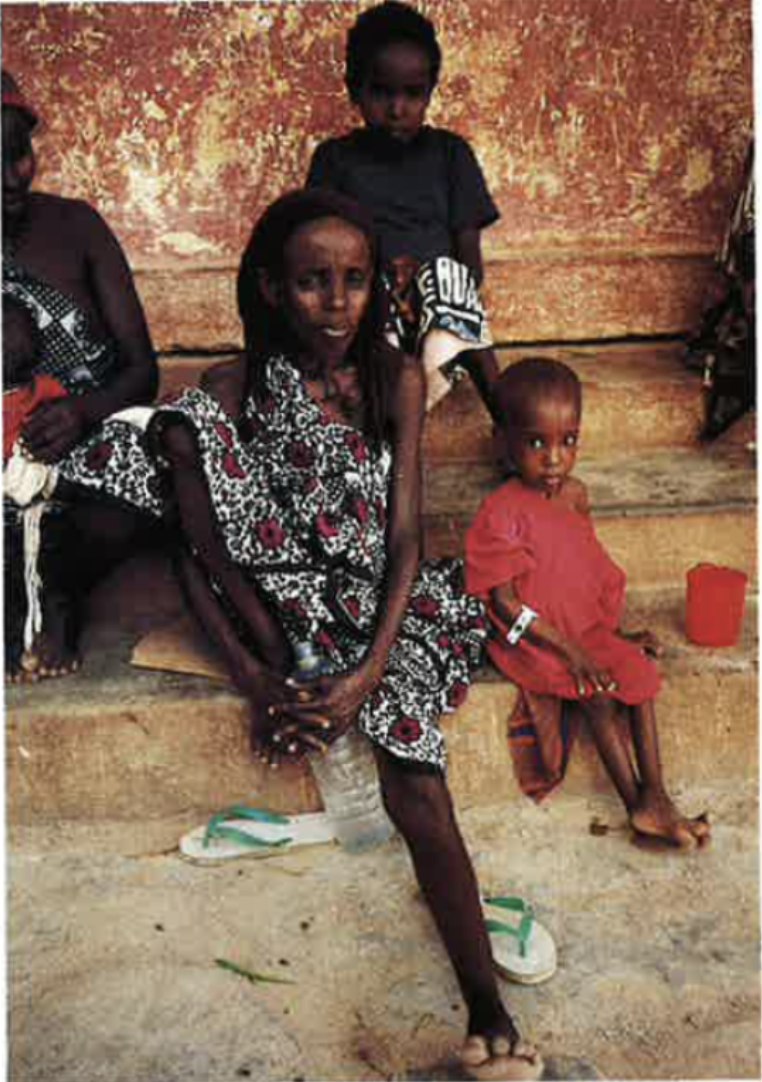
Besides the very obvious security risks, and the ever-present danger of serious illness from typhoid, malaria, yellow fever, meningitis, hepatitis and polio, there is also the discomfort of diarrhoea, dust, bites from strange insects and sunburn (with temperatures going over 120 degrees at times and humidity that instantly soaks the uninitiated in floods of sweat, dehydration is very rapid and very dangerous) that a volunteer must come to terms with before even beginning rehabilitation and development work.
One Year On
Over 350,000 Somalis died as a result of three years of civil war that precipitated the famine and focused unprecedented attention on places like Mogadishu and Baidoa. According to the Center for Disease Control (CDC) in Atlanta, Georgia, this famine was the worst since nutrition records began.
According to Concern’s own report the numbers that died are “much greater than the accepted definition of a severe famine out of control and considerably worse than was seen at the height of the 1984-85 famine in Ethiopia.”
While it is accepted that “the food emergency” is over, recent events have shown that there is no sense of normality and certainly no thought by Concern that the job is done. Their operation is very much ongoing and very much needed.
At the famine’s peak there were 38 Concern volunteers “in country”, now there are 23 doing the development and reconstruction work. There are a total of 75 volunteers in Somalia, Sudan, Kenya, Ethiopia and Tanzania and a coordinating office in Nairobi. Other Irish charity organizations such as GOAL also have volunteers in Africa.
Hi-Tech Aid
According to Concern’s Field Director Mike McDonagh, a native of County Clare and a veteran of no less than eight emergencies, they have administered a budget in cash and kind of over 30 million pounds in one year, all of it donated and directly benefiting several hundred thousand people. An affable heavily-bearded character who runs the aid operation through delegation and the authority of experience, he is justifiably proud of the “sheer professionalism” with which Concern and its volunteers operate, and he along with ALL the volunteers rejects any labeling of “do-gooders” or “missionary zeal” in relation to their work. He also emphasizes repeatedly that the work being done would have been impossible without the logistical back-up from staff in Dublin, Belfast and London. He is a natural ambassador who concisely and precisely summarizes the situation in lay terms for an endless stream of journalists, bureaucrats and network anchormen.
Belfast to Baidoa
He points to the state-of-the-art communications from satellite phones that cost £20,000 each, to Codan radios for every vehicle, to hand-held walkie-talkies which are absolutely mandatory for every volunteer because of the security situation.
In the midst of the chaos of Mogadishu they need all the accouterments of a modern office from fax machines (via a satellite on the roof) to laptop and desktop computers, all the way to filing cabinets and correction fluids. Easy when you are in Manhattan or Belfast but a logistical nightmare when you are in Mogadishu or Baidoa.
Humidity, dust, inflated transport costs, security and generators for power are just some of the problems they have faced and overcome in setting up and running the office and home in Mogadishu. Although the two buildings are within sight of each other, 100 yards apart on either side of the same street, the volunteers have to drive between the buildings escorted at all times by their armed guards. It is an extraordinary situation and lifestyle but it is normal for them.
Comparing the sheer size and nature of the catastrophe with the ages, experience and previous lifestyle of the volunteers puts a sobering perspective on the awesome task they are performing. Most are in their twenties and come from a wide variety of backgrounds – teachers from Cork, nurses from Kilkenny, doctors from Dublin and administrators from Derry, all volunteering for periods from three months to two years.
An indicator of how things are “better” is that they can now go out of their compound after a 12-hour shift to “parties” held by other NGO’s, military battalions and U.N. agencies. Armed convoys of vehicles take them along cratered, pitch black roads to another secure compound where they can “relax” with other aid workers, soldiers and officials amidst the beer and wine, AK’s and M16’s, flak jackets and steel helmets, pistols and the obligatory walkie-talkies.
Memories and Tears
It is poignantly clear that the death of Valerie Place has had a profound effect on all her friends in Concem. It is impossible to lose sight of her memory when all around are little personal signs of her contribution to the people of Somalia and Concern.
Valerie’s friends speak with an intense and deeply emotional candor about her killing and the ever-present dangers that they face. Conversations that are littered with horror stories and beyond the comprehension of most people are common, as the volunteers take R and R in Nairobi.
To hear their warm reflections of a person whose life and death obviously deeply affected all their lives, is to be caught in a web of emotion that with one blink would bring tears to your eyes.
It is not that death is a casual event to them, or that it has lost its frightening reality, but that they are in their own way coming to terms with their own vulnerability.
Memorial cards sit on desk tops, color photos hang on the wall, and a bright monument stands as an eternal testimony to Valerie Place in the Pan Africa Feeding Center. To hear and see her memorialized in such simple and personal ways is to intrude on a private grief yet it is a grief that is shared from her home in Dublin through all the ranks of Concern to the mothers and children of Pan Africa where Valerie was instrumental in setting up the school.
Pan Africa was one of the first schools to be opened in Somalia after the civil war and it is unusual in that it cares for displaced people, over 1,200 in all, who are homeless because their houses have been destroyed or looted or because of the proximity of the fighting. When it was a feeding center over 1,500 a day were being cared for by Valerie and the Concern team.
They saved the lives of many thousands of people and they also started adult education classes and income generation schemes.
“I didn’t come here to die, I came here to help you.”
These were the words of Concern nurse Siobhan Lagan to one of her abductors after he stuck an AK47 assault rifle in her chest and took her possessions including her vital walkie talkie radio. Her anger in hindsight was tempered by the fact that she survived the hijacking and abduction but was exasperated by the fact that their own guards were involved in the incident from the beginning.
On Tuesday, May 18, Siobhan from South Derry and Anne Duffin from Dublin were as usual traveling in their UNHCR landrover (UN High Commission for Refugees) between El Wak and Barachi, in Somalia but close to the borders of both Kenya and Ethiopia. As they drove along the bush road they were forced to a stop by a vehicle in front (which they mistakenly believed was their escort from Kenya) and a number of shots were fired. They both instantly fell to the floor of the jeep and although neither is over five feet they insist that they made their bulk even smaller as they took cover behind the seats. During this heart-stopping melee a gunman got into the driver seat and another in the passenger seat beside him before driving off at high speed.
Anne Duffin, still in the mistaken belief that their guards or escorts were driving them out of the scene of the ambush, repeatedly slapped the driver on the shoulder over the back of the seat and told him to slow down as his crazy driving was going to get them killed. It was then they realized the awfulness of the situation as the gunman in the passenger seat stuck his rifle in Siobhan’s chest and took their rucksacks, radios, camera, keys and diary. They drove for several more miles before the gunmen forced them out of the jeep and abandoned them in the bush.
With sheer determination, good common sense and lots of Novenas they made it back on foot to Barachi to a building designated as the mayor’s office. They had wisely gone in the opposite direction to the fleeing gunmen.
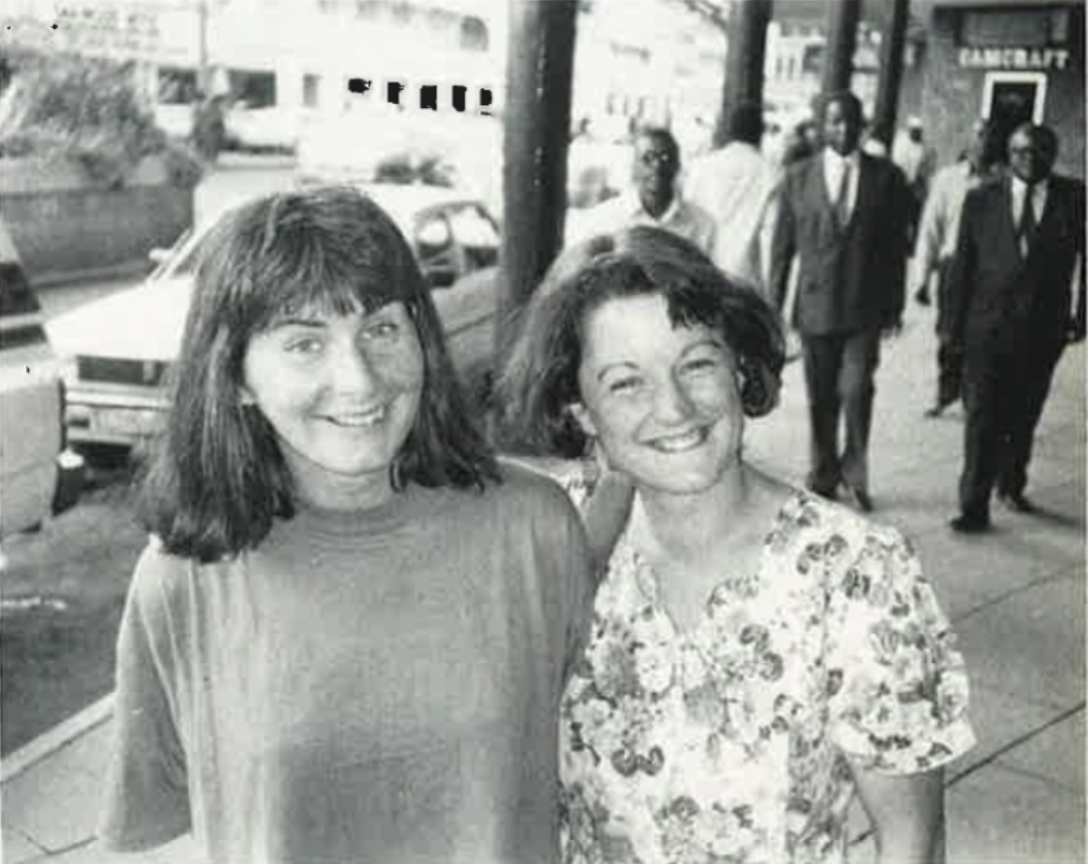
Their ordeal was, however, by no means over. The gunmen returned to the mayor’s office and many more shots were fired at other aid vehicles and in their general direction. More Novenas and the Memorary were recited while repeated negotiations were held to try to ensure their safe passage. As with everything in Somalia it was done repeatedly and at what seemed like a snail’s pace. All the while the two girls maintained cool heads and pounding hearts but were absolutely determined not to allow the slightest hint of their fear to be seen by the gunmen.
Finally after over two hours the girls decided to make a move and to hold their heads high regardless of the consequences.
In their bright colored cotton “hijack dresses” they walked out of the building. smiling, to the nearby jeeps. Anne Duffin brazenly waved to the mesmerized gunmen and shouted goodbye as they got on board the relief vehicle. As they did so, three gunmen were making their way to the rear of the mayor’s office to shoot them through a gap in the window shutters, a fact related to them later by local people incensed at their treatment at the hands of the gunmen. In Nairobi on a well earned R&R the details of their ordeal are related with all the intensity of a Jeffrey Archer novel, but their story is real and the consequences unthinkable. Anne Duffin’s spellbinding narrative would almost convince you she was talking about someone else’s brush with death, but regardless of how it is related or rationalized in its aftermath, the dangers and starkness of life as an aid worker are blatantly clear.
The Pleasure and the Pain
Why? The question that every volunteer has been asked by journalists, friends and, of course, family. As in every other profession or vocation in life everyone has their own reason and they are as varied and as colorful as the volunteers themselves.
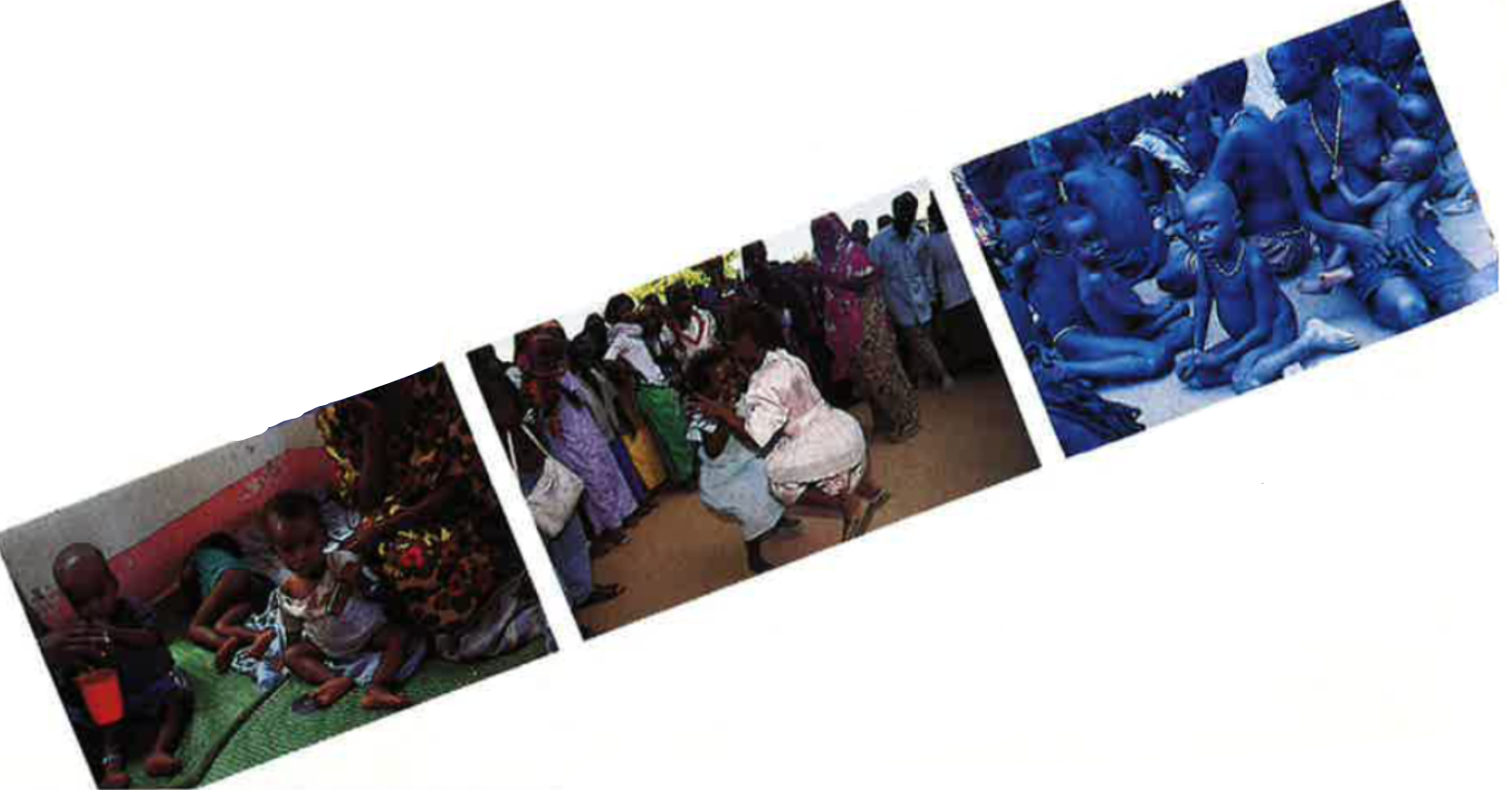
Jim Shechan is a 28-year-old teacher from Mitchelstown, County Cork, who has been in Somalia since February of this year when he began his two-year contract with Concern. Nothing in Cork or anywhere else for that matter, would have prepared him for Mogadishu; the pleasure and the pain. Few teachers would be greeted with the joyous acclaim he receives at all of the 18 schools Concern has set up in the capital. Smiling happy children singing and dancing at the drop of a hat show their happiness and unbridled enthusiasm for being back at school. No matter that many are sitting on the floor and that chalk is rationed, they greet him with the kind of affection normally reserved for a visiting head of state. At one parents’ day he is even adorned with a garland of flowers and feted by one teacher after another while all the time children with dazzlingly bright new clothes and huge disarming smiles crowd round him like the Pied Piper, pulling at his sleeve and smiling up at him.
“Ducksie,” as he is affectionately known by his fellow Concern volunteers because it is Somali for teacher, is continually embarrassed by the volume of attention he receives but he is evidently at home crouched down holding the children’s hands, looking at their books and congratulating them on their singing and dancing. The smiles make it all worth while and the sheer energy of their dancing, accompanied by hundreds of other children making music with their hands, feet and mouths, is exhilarating. It is just as well because there is still the pain, just a few feet away.
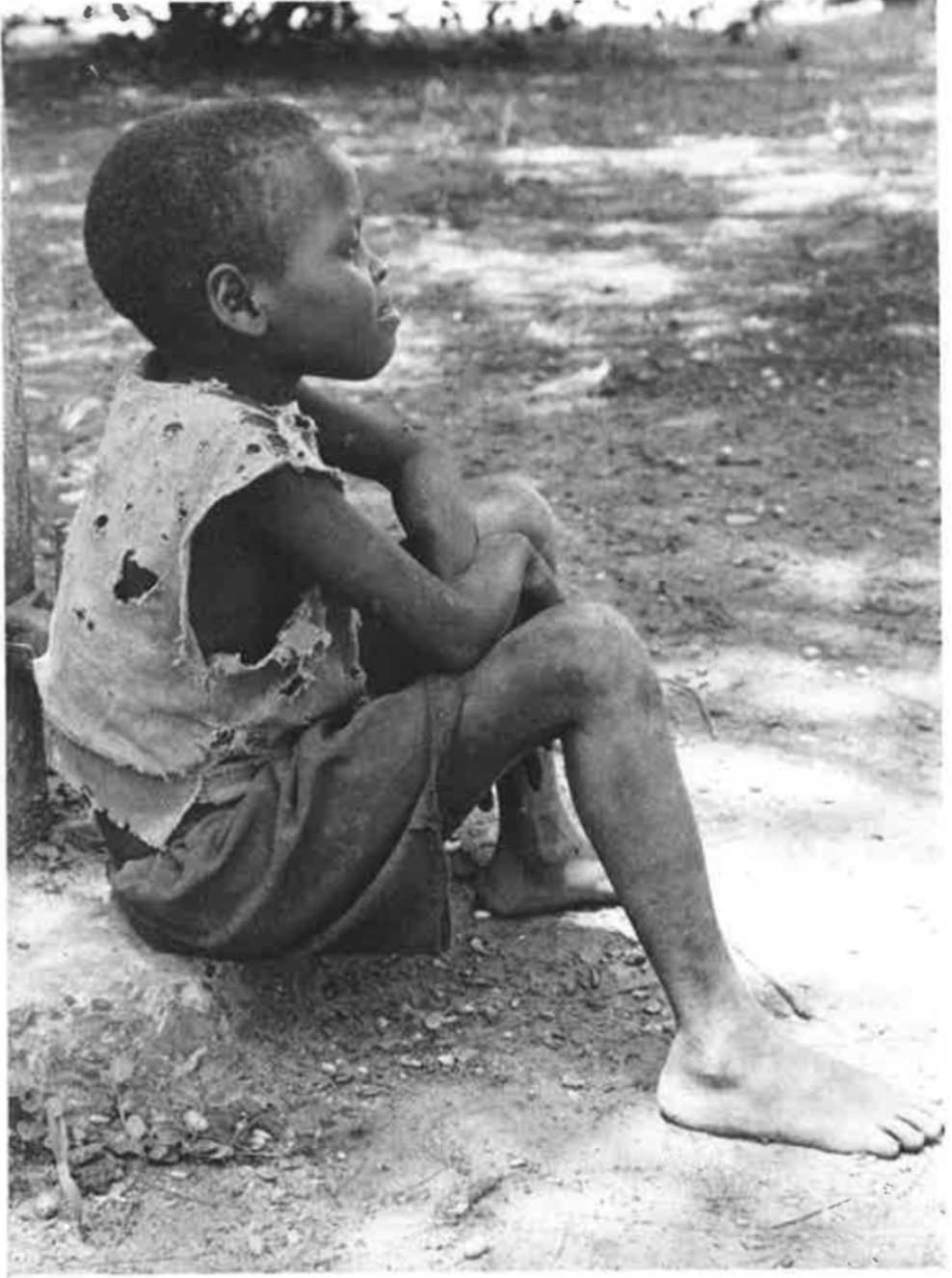
In a mother and child unit a stick-like child is given food via a syringe while others lie on mats beside emaciated parents, listless and staring. They are however being cared for and should make full recoveries. From the smiles, to the sick, to the graves in the playground is only a few feet but it is a million years in terms of human suffering and the history of Somalia over the last torturous year.
When It Rains People Die
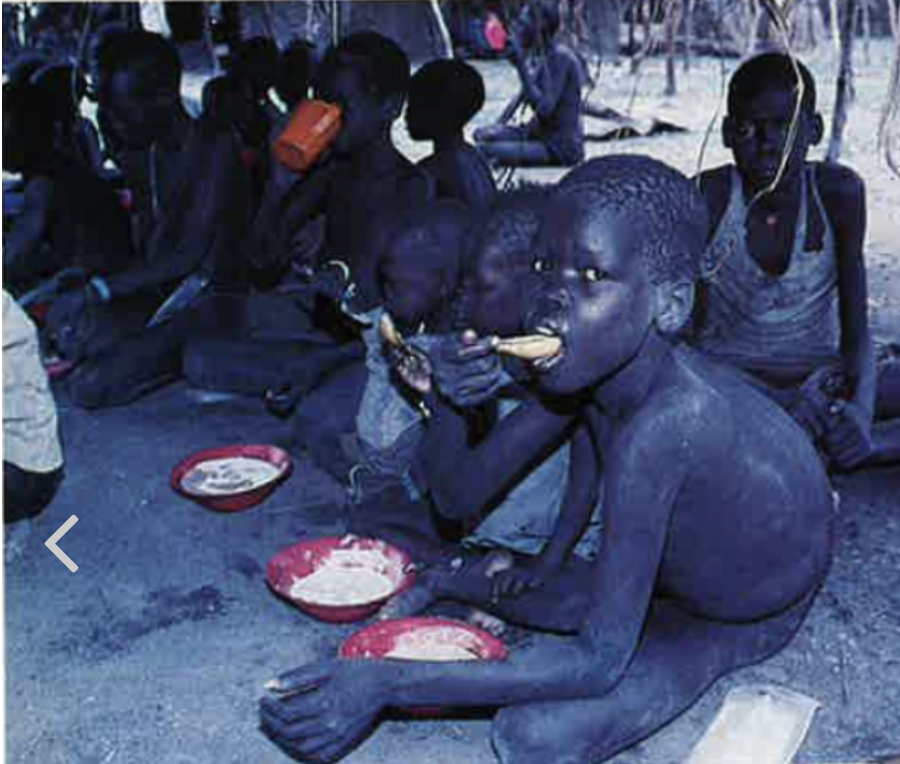
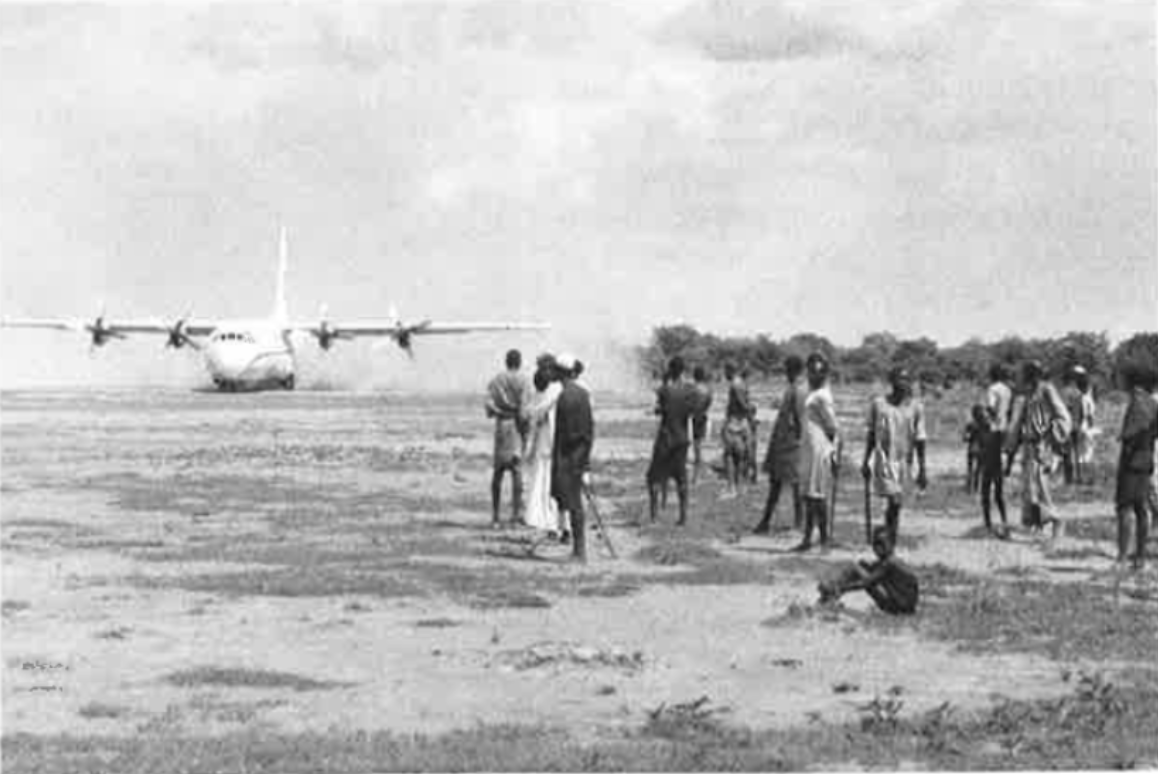
In southern Sudan Concern are running a feeding center at Ayod, i.e., when their plane can land on the dirt airstrip. As soon as it rains the light plane that takes them on their two-hour commute between Lokichokio in northern Kenya and Ayod simply can’t land. The problem, among a multitude, with this arrangement is that the volunteers must make their journey (the equivalent of a twice daily commute between Dublin and Paris) in the plane chartered by Concern to Ayod and allow the pilot to assess whether it is safe to land. If it is too soft due to the rain, the plane would instantly nose-dive into the dirt. There is also the possibility that once landed they couldn’t take off again and would be obliged to stay overnight. Due to the very fluctuating “security situation” this is judged to be too dangerous by Concern’s administrators.
To assess the viability of landing, the pilot engages in a practise which although safe is both stomach-churning and very, very frightening. He or she does a landing approach and touches the rear wheels onto the dirt. Depending on the “feel” of the surface they decide whether it is safe to land. If not, all hands must turn round and head back to Loki, knowing that people are literally dying beneath them.
Fustration and Diplomacy
The sheer frustration of feeding hundreds of starving people one day and then not being able to for several more is an emotional roller coaster no one would ever choose to ride on. It is heartbreaking and it breeds anger, frustration and intense tedium among the cadre of volunteers overseen by Southern Sudan Field Director Marcus Oxley. A civil engineer by trade and a native of West Yorkshire, he must face the problem of what to do with volunteers who are snapping at the bit to get the job done. He listens to their frustrations and notes their irritability with a near rustic aplomb knowing that when such “veterans” of many emergencies are telling him the situation is as bad as any they have experienced, then urgent and massive action is needed.
His diplomacy and experience are very necessary sidearms in such a battle and are equally well employed when dealing with OLS (Operation Lifeline Sudan) and the attendant bureaucracy.
One recent episode required a maximum use of both skills when he and Concern’s telecommunications volunteer Sean McDonnell flew into the village of Akot unannounced.
In an effort to assess the needs in the region and unable to land at the desired village due to a wet airstrip, they chose Akot. As the tiny plane came to a halt it was immediately surrounded by a very large and seemingly hostile crowd.
With not a smile in sight and with great indignance and anger the local commander demanded to know why the Concern workers had arrived unannounced. It was impossible to assess whether the challenge was going to turn violent or if it was merely based on the impoliteness of arriving uninvited. Many of those surrounding the plane carried long sticks with wide metal tips at their heads, and it was clear they were quite capable of preventing both the passengers and plane from leaving if they so decided. Oxley explained the situation innumerable times to the commander, who in turn related it to a variety of local officials before finally agreeing to let them look around the area. Like a proud pedantic headmaster he first of all said they needed little if any help, while all the time admonishing Oxley and company for their unannounced arrival.
However, at the end of two hours he had a “wish list” that contained some element of every aspect of international aid work.
On the edge of their village was a remarkable church constructed like a number of huge tucklas (mud and straw huts) joined together to make it cross-shaped from above. Inside it had all the coolness and tranquility of any church and it had a high altar, pulpit and fresh flowers. The caretaker, who was appropriately enough called Joseph and who wore only a bright yellow shirt, explained that they had a service every evening and twice on Sunday. The seats were branches laid across forked sticks buried in the ground and were worn china-smooth with use. The commander, happy to have his wish list noted, waved goodbye with the final casual remark “Don’t forget to call the next time.” Such are the trials and tribulations of a Concern volunteer!
The work of Concern, whether it is running feeding centers in the midst of the world’s worst famine or running sanitation projects that teach people to dig a hole and bury their own excrement, is quite simply remarkable. In the face of ALL adversity they are on the ground “in country” and doing the business, frequently before governments or international bodies even comprehend that there is a problem. They are both the point and the tail-end charlie facing down every conceivable problem and staying on for years to ensure that their efforts come to fruition.
Their task is immense and ever-increasing but there is no question that they will ever shrink from it. They are a unique community of people who build relationships that last lifetimes and span the continents. They bring out remarkable talents and endless resources in “ordinary people” and refuse completely to be seen as special or in any way missionary. Ordinary they may wish to be perceived, but their collective efforts are extraordinary in situations most of us wish never to experience, let alone have to deal with. They are the surrogate conscience for so many of us who could never do their work.
Editor’s Note: This article was originally published in the September October 1993 issue of Irish America. ♦
Leave a Reply