
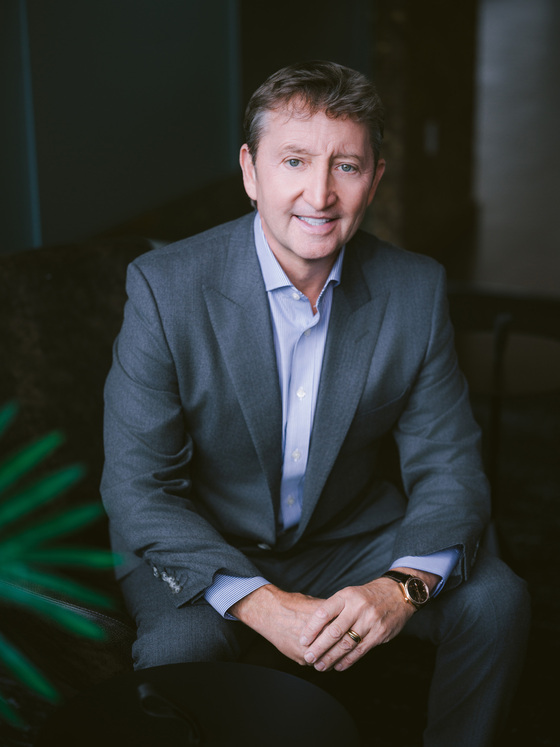
Leadership, Learning, and Life: Tony Reilly’s journey from soccer scholarship to the world of finance.
Tony Reilly, founder and CEO of Ascend Advisory Group, talks to Tom Deignan about his early days in the U.S., his mentors, his company, and how having “more” means giving “more” back.
“I’ve Always Been a Dreamer”
Tony Reilly vividly remembers a life-changing moment from his college days.
He’d come to the U.S. from Dublin in 1986, having earned a soccer scholarship to Sterling College in Kansas. But it wasn’t a game-winning goal or come-from-behind victory that put Reilly on a path to success in the business and finance world. It was a traffic-light stop somewhere in the American Midwest, heading home from a match.
“I went to talk to the coach at the front of the bus,” Reilly tells Irish America. “There was a bank on the corner, and I pointed … and said, ‘Hey coach. Who owns these banks?’”
The coach said he had no idea.
“So, I went back to school, I asked my professors the same question – even the Economics professors. Same answer. So I went down that rabbit hole.”
This was an early but important step in a career that, four decades later, has culminated in Reilly’s well-documented success as CEO of Ascend Advisory Group, based in – where else? – Dublin, Ohio.
This year, Ascend surpassed $2.5 billion in assets under management, up from $27 million in 2001 (as of 12/31/25).
“This milestone is not about assets. It is about trust,” Reilly said back in June. “Every relationship represents years of work, planning, and responsibility.”
With clients in over 40 states now, and blockbuster deals currently in negotiations, don’t expect Reilly or Ascend to rest on their laurels any time soon.
“I eat, sleep and drink this business,” said Reilly, who will deliver the keynote address at Irish America’s Wall Street 50 celebration on October 1 at the New York Yacht Club. “The coming year might be the biggest and busiest of my career.”
Realizing the Dream
Reilly’s business acumen and curiosity are tied to his youth in Ireland.
“I was always a dreamer. Always. Whenever someone would come over the house, they’d ask: ‘Is Tony talking to himself?’ And mom would say, ‘No, he’s probably dreaming up something’.”
As Reilly developed an interest in money and finance, he noticed that four large institutions – Bank of Ireland, Allied Irish, Permanent TSB and Ulster Bank – represented the nation’s entire financial sector.
Reilly wondered: Was America’s system similar? Different? And how did this impact the economies of each country?
This became one of Reilly’s first big research interests in college. There was just one problem: None of the classes he took offered this as a research topic.
“I tortured my professors but they knew I cared. They said, ‘OK you can write about banks’.”
This also illustrates the kind of contribution immigrants consistently make to the American economy: looking at old things in new ways, with fresh eyes and an innovative perspective.
To this day, Reilly recalls the exact number of U.S. “bank holding companies” – 16,885 – he tabulated during his college research.
And something even more consequential came out of that research.
“I got my first investment job because of that,” Reilly notes.
Motivating the Team
These days, a typical morning in the office for Reilly begins with Ascend leadership team meetings.
Reilly checks in with department heads, from marketing to compliance, to discuss Ascend’s current short- and long-term projects.
“My message to the troops is always [to encourage] lots of growth, lots of change. Get comfortable with the uncomfortable. And then, let’s go!”
This approach has helped Reilly and Ascend successfully compete with many of the world’s biggest financial practices.
“We believe every dollar should have a mission, and it’s our job to help our clients discover theirs. We believe in giving counsel to every dollar,” Reilly says. “It’s bespoke – one family, one business at a time.”
For all of the progress and success at Ascend, some things have not changed for Reilly.
For example, he still makes a point of advising individual clients.
“I’m a big believer in that,” he says. “It really helps if leadership is also a practicing advisor to clients every day. Then I understand the challenges advisors are facing out there.”
In fact, spend some time talking to Reilly, and it becomes clear how deeply connected his past and present are.
Success comes not from barging blindly into the future, but by reflecting upon valuable life and work experiences.
So it’s no surprise that Reilly sees close connections between his parents’ agricultural life in Ireland and his own life in finance.
“I’ve always thought of my Dad’s farm: What makes a good farm? A bad farm? What makes profitable crops, profitable livestock? The correlation is not obvious to most people, but that’s what makes it interesting: How do you create wealth? How do you protect it? How do you distribute it?”
And for Reilly, this means doing good and doing well.

Giving Back
“I remember thinking, ‘If I make it, I’ll be very motivated by all the things I can do for people. But it’s very Irish….to worry about what the cynics will say, to worry about the peanut gallery. So I thought, if I help people out after I’ve really made it, it’ll be perceived one way. But if I help them out ahead of schedule, it’ll be perceived a different way.”
So, early on, he created the Reilly Family Fund, which has since distributed close to 500 grants.
“When we see a cause that touches our heart, that’s important to us, or someone down on their luck, people that are sick or doing missionary work, we want to support that…. It goes right back to my upbringing.”
Indeed, Reilly is quick to recognize his parents’ role in his own successes.
“I feel like I won the gene pool lottery,” says Reilly, the youngest of three children. His sister, Rita, lives in Greystones, Wicklow, with her husband, while their brother, Sean, also came to the U.S. and raises horses in Kentucky.
“I can only remember my Mom telling me I was going to go do great things. … And the reality is, there wasn’t a lot to be optimistic about back then. But she was [optimistic] all the time. And Dad always worked really hard. They were both pillars of strength.”
Tony and his siblings came of age in pre-Celtic Tiger Ireland, with its permanently sluggish economy.
“Ask anyone who grew up [at that time]: How many times did you hear the word ‘entrepreneur’? You’re probably gonna get a blank stare. … People were leaving all the time, for Australia and America. And everyone was going one way.”
So when the opportunity for a college soccer scholarship came along, Reilly was not exactly picky.
“There was a point when my soccer coach said to me: ‘You know, you never asked where the college is.’ And I said, ‘I don’t care’.”
None of that made it easy to leave his parents and Dublin at 18 to go to some place called Kansas.
“Everyone was excited, but there was an element of sadness … It shows you how selfless my parents were.”
Reilly added: “Coming over [to the U.S.] in the 1980s, it was such a different time. The magic of the opportunity was just getting to America. I was awestruck. I was blown away.”
Still, with a scholarship that didn’t quite cover all the costs of college, Reilly “took every job on campus you could imagine – cafeteria, mowing the grass, maintenance.” While his fellow students went home for the summer, Tony worked on, living in a mobile home on the school’s grounds.
The Warren Buffett Effect
It was also early in his college career that Reilly was exposed to Warren Buffett’s ideas about life and money.
Forty years later – at the end of 2025 – the 95-year-old Buffett finally stepped down as CEO of the ultra-successful Berkshire Hathaway investment firm.
“If you’ve spent any time with me, you’ve likely heard about the influence Warren Buffett has had on my life and work,” Reilly said recently. “This past year marked a meaningful moment in the markets. Not because of legislation or economic upheaval, but because we paused to recognize Warren Buffett stepping down from his prominent role.”
Reilly called Buffett “one of the most influential investors in history,” who taught many people “the enduring value of patience, discipline, and a steadfast commitment to simplicity.” Reilly went on to say, “Buffett’s impact lives in the culture of long-term thinking he championed, the generations he taught to ignore short-term noise.”
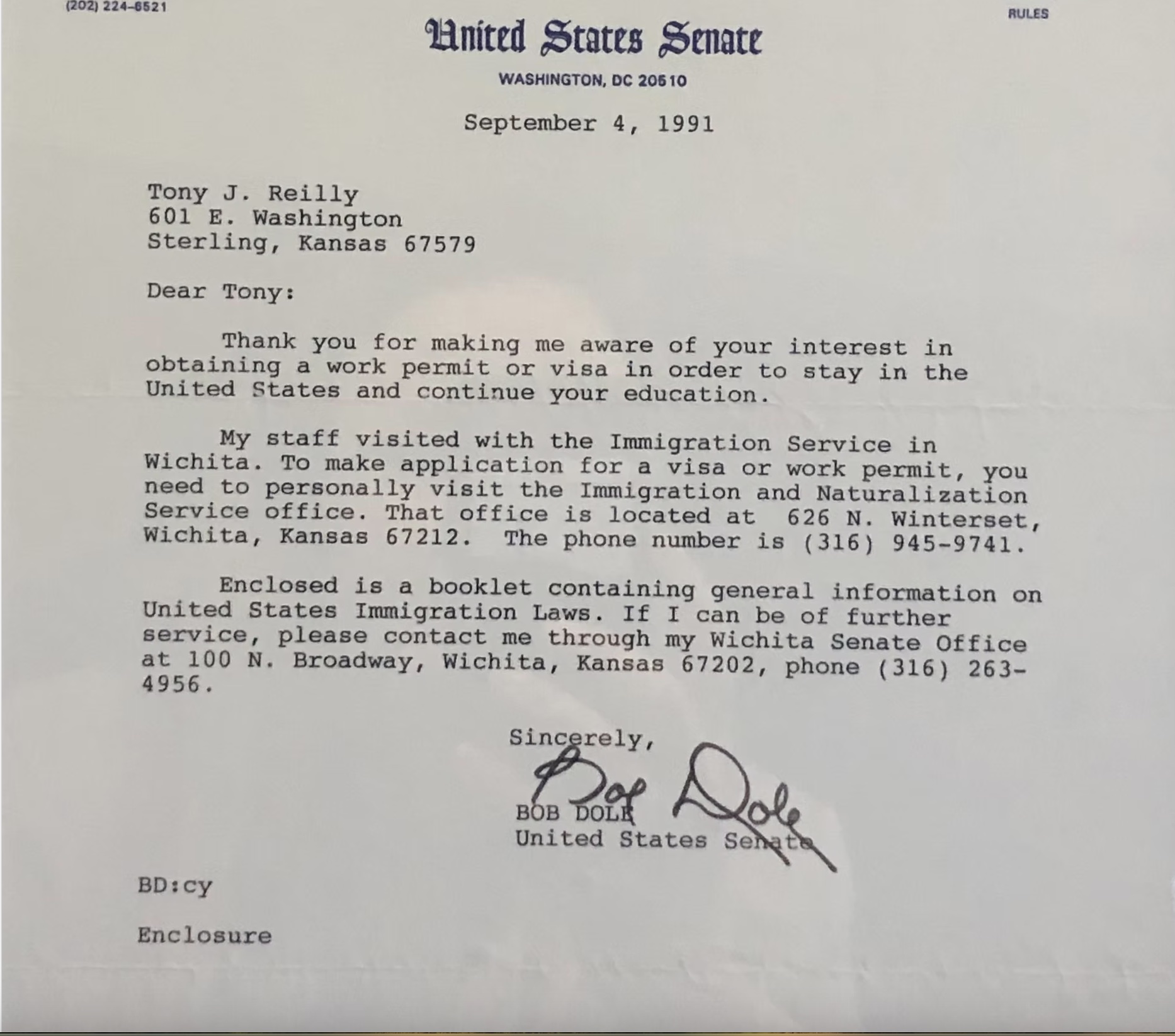
So, armed with this knowledge as well as a degree, Reilly was ready to get to work. With only a student visa, however, he’d be unable to land a long-term job in the U.S. Reilly’s plan? Set up a meeting with U.S. Senator Bob Dole.
All these years later, Reilly chuckles at the naivete and audacity of this thought.
“Dole was a legend in Kansas. I just didn’t know it.”
Nevertheless, the wheels began turning when Reilly saw that the U.S. Senator – and 1996 Republican presidential candidate – would be visiting his college.
“So I tell my supervisor [Reilly worked as a groundsman during vacations] I have to take off Thursday and go see this Dole guy. He sat me down…told me who Bob Dole was. And he says, ‘You’re not gonna go talk to him! You can’t just do that!’ ”
Reilly continued: “Today I’d be intimidated by Dole. But back then I wasn’t.”
And sure enough, Reilly got himself in the line-up to greet Dole. As he shook hands with the Senator, he explained that he was about to graduate and was ready, willing, and able to work, but needed help getting proper documentation.
How did the Senator, with over 20 years of service, respond?
“Son, if everything you say is true, we’re gonna try and help you,” Reilly recalls Dole saying.
Ultimately, Reilly received a much-sought-after Morrison visa, named for former Democratic Congressman Bruce Morrison.
“If I didn’t get that, I’d be going home broke.”
Diamond Hill to Ascend
Reilly advanced steadily at his first job out of college, ultimately rising to the top of the Columbus, Ohio, finance company, Heartland Advisory Group. He played a major role in restructuring the company, and he helped officially rename the firm Diamond Hill after his “favorite hiking spot in Connemara.”
But “Diamond Hill” was not just a nod to Reilly’s Irish heritage.
“I’ve always looked at banks as ‘diamonds in the rough.’ So the name just made sense.”
In 2001, Reilly founded Ascend, though the value he built in Diamond Hill became crystal clear this past spring when it was sold to financial giant First Eagle Investments, boosting their total assets to well over $200 billion. Then, it was recently acquired by Victory Capital Holdings for approximately $7B in August.
Along with high expectations for Ascend in 2027, Reilly is also helping to develop the next generation of Irish immigrant college athletes.
First, scholarships are available to collegiate women’s soccer players through “Sophie’s Grace,” named for Reilly’s daughter, currently a Fordham University student.
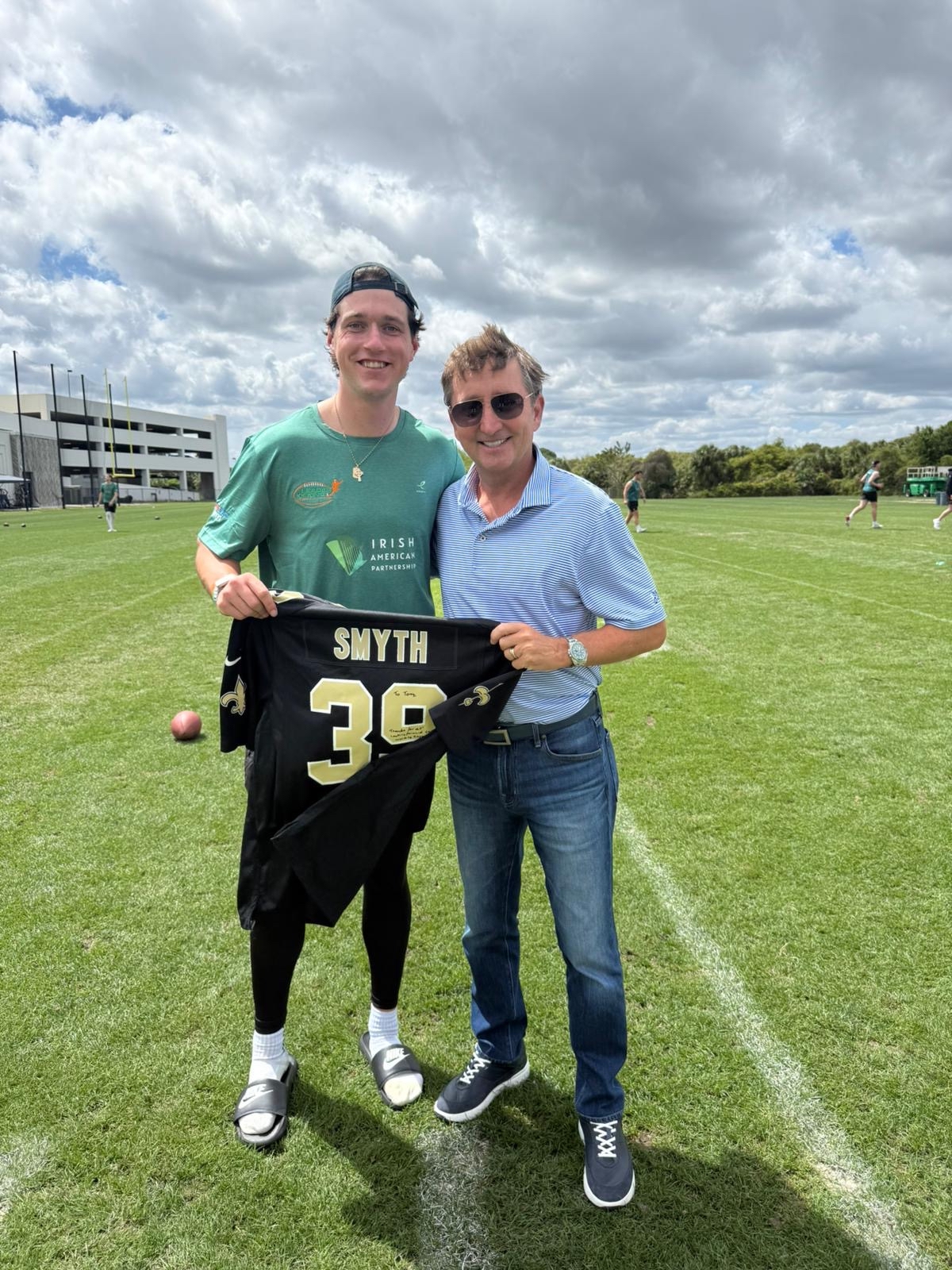
Then there’s the Reilly Family Fund’s partnership with Leader Kicking in Ireland [run by Rugby player Tadgh Leader], which develops Irish soccer players into American-football-style kickers.
Several have already made it to the National Football League, as well as top universities, and Reilly estimates that up to 40 Irish athletes are making their way to U.S. pro and college football teams.
“Worst-case scenario, even if you don’t go pro, you’ve earned an American college degree. And can also get paid for it now, with [Name, Image, Likeness] money.”
In the long run, Reilly looks forward to his daughter becoming more involved in the Reilly Family Fund, which will likely take up more and more of his time and energy down the road.
“The Foundation will be a big part of the rest of my life,” he says.
Just not right now. Because Tony Reilly still has a great passion for helping families and businesses, for swinging that next big deal, and for finding that next diamond in the rough.
“I don’t know when I’ll ever retire. I still get a lot of energy from this business.”
Leave a Reply