

Ex-hostage Brian Keenan speaks to Jane Campbell about his book, his experiences, and his life post-imprisonment.
In 1985 Brian Keenan, feeling that his life was stagnant, left his native Belfast for a teaching job in Beirut.
That he both sought and found change and a challenge is an irony not lost on him, but the change — capture and imprisonment by fundamentalist Shi’ite militiamen — and the challenge — mental and physical survival during four and a half years of imprisonment, were hardly what he had in mind. Now, three years after his release, he is in New York, the first stop on his American book-launch tour.
An Evil Cradling, tells of his imprisonment, but what did he do after he was released in 1990?
“The first thing to do was find a place which was away from nor-mality. Your mind has been conditioned to a very heightened realitly and so day to day life is superfluous. You have to go away and find a place where normal life won’t bother you and the west of Ireland is one place to find it. And then slowly, by act of your own will, you reintegrate yourself back into a style of life that you have chosen for yourself and that has not been chosen for you.”
The words “style of life” and “choice” momentarily lull you, evoking consumer magazines, decisions about what make to buy or where to eat dinner. Then you remember who it is that you are talking to and what exactly, in this context, a style of life…that has been chosen for you,” means. For Brian Keenan it meant conditions of abject squalor. The toilet he used is described in An Evil Cradling.
“Alive with cockroaches, large and shiny. Their hard body armour…made it impossible to crush or kill them. The toilet was their nesting place…I remember once trying to drown them in the water of the toilet hole and to my horror watching them climb unscathed from this pit of excrement and dart glistlening around my feet again.”
It meant being subjected to arbitrary floggings. On one occasion he refused to close a window — having already obeyed a guard’s command to open it, then to close it, then to open it again which led to a vicious beating during which his feet were strung up so that the soles could be beaten. He writes, “And then I heard it. A noise that I have never heard before, nor since, nor do l ever want to hear it again. I know only that it came from me, yet it did not come from me. It was a cry so awful and so excruciating…It was a primordial sound, fusing every moment of anguish in me.”
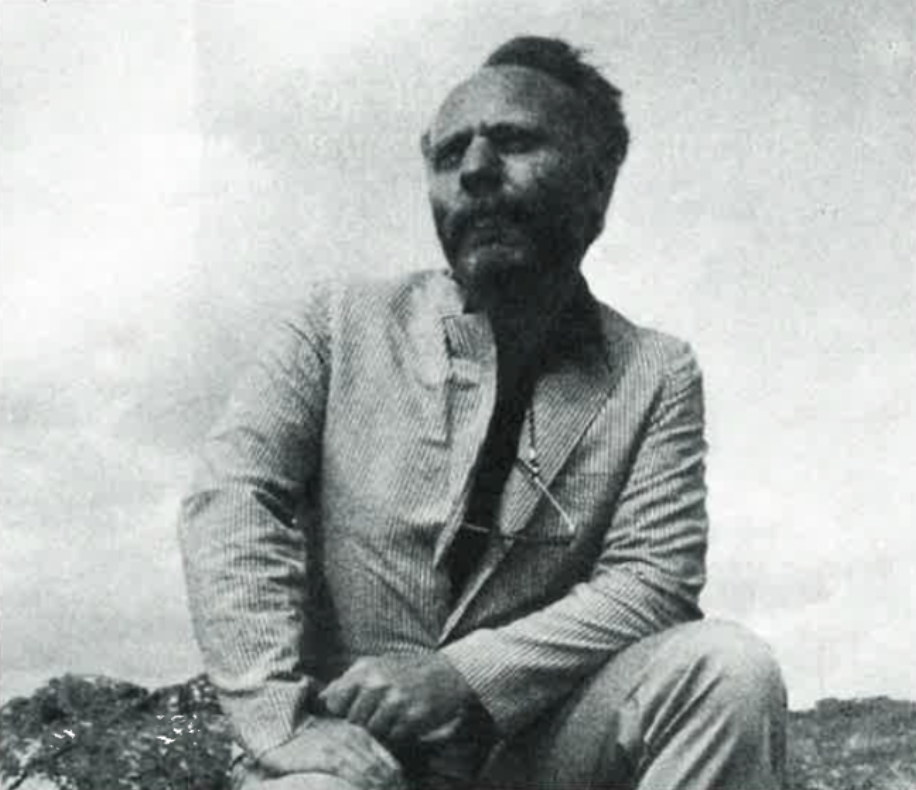
But An Evil Cradling is a vivid account not only of man’s inhumanity to man, but of how stubbornness, humor, friendship and anger can be tools for survival. If the reader derives spiritual uplift from it all to the good, but he is explicit that his own reasons for writing it were largely therapeutic. “It was very selfish. I wrote it for me. If done with sufficient commitment it would be a cleansing out and setting aside, a way of putting an objective distance between that past and my present because I have to put it on a bookshelf and make a story of it.”
Did he ever fear for his sanity?
“Constantly. I can remember moments when I know I was clinically insane, totally off my tree. But I learned very early on that the way to repossess yourself because it’s within us, it’s not a cold contracted outside yourself — is not to fight the onslaughts of the mind. I made a personal decision, “If I’m going to go crazy, fine, go for it.” And in saying that you go beyond it; you lead it it doesn’t lead you. You become your own pied piper and finally it exhausts itself and you can kick it aside, or else even better lift up this poor pathetic weary creature whose been running after you hungry for possession and embrace it.”
Being in prison gave him a new understanding of freedom: “Rousseau talked about prison being a liberating experience. You can take all my clothes off and chain me to a radiator for five years but you can never ever ever ever in a hundred thousand lifetimes take from me my freedom because I and I alone possess that. And learning the absolute truth of that frightens people, whether they be an Arab terrorist with a gun pointed at you or a terrorist in a pinstriped suit or wearing a judicial wig on their head. Once a person knows that you know the reality of that freedom they get very frightened. A guard when I was locked up, grinding a gun into my head said, ‘There is only one life, better you do much,’ and I had to laugh because I knew that with ten times the force of him and his inadequate grinding of the gun. He stopped; he got frightened and walked away.”
He attributes his survival in part to his stubbornness and anger.
“Principles are so crucially important. You have to have something to believe in. Ones firm conviction or belief is what gives us vitality and you have to be stubborn about that and you have to be angry when someone tries to take those things away from you. I believe in the healing power of anger. Because of where I come from I know the value of anger. But it hadn’t existentially penetrated in to me and now that it has I don’t dismiss it; I know its vitality. Anger properly taken hold of is the most powerful revitalizer; it’s like a tonic. But a lot of people don’t know how to do it. They experience anger but it just comes out of them without being properly directed.”
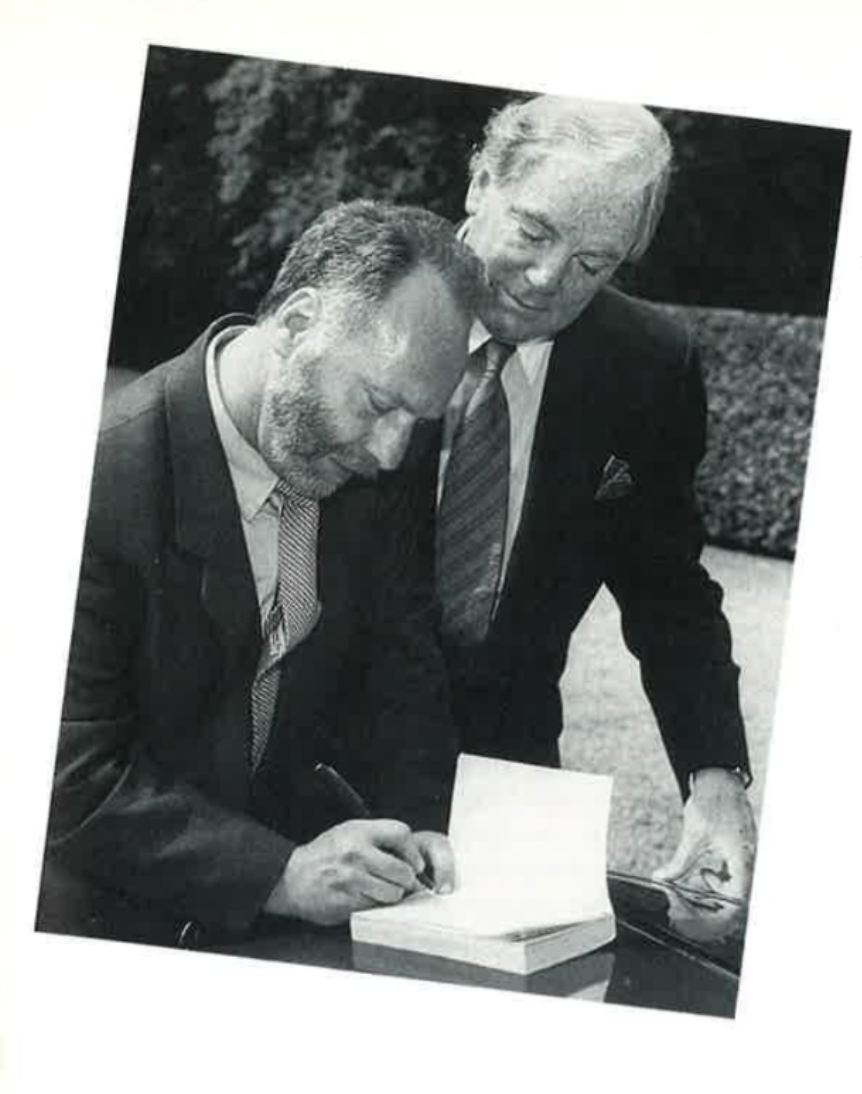
Asked about Ireland he says, “A lot of people seem to think that Brian Keenan because of his experience has some ultimate truths about Ireland and that’s patent nonsense. I always have hope for Ireland and the most positive thing I can give my country is to remain constant in my hope for its future. I don’t want to be a politician to add my solution to all those, resounding empty voices which have been talking for 25 years and achieving nothing. But I do think there’s more potential for creative peace than there is for creative war because there’s no such thing. What changes things is the constancy of hope.” Keenan spent most of his time imprisoned with fellow hostage John McCarthy.
On the face of it they were unlikely candidates for friendship — the working class Irishman and the public school educated Englishman — but each became the others mainstay. The differences in their backgrounds were not ignored; on one occasion, discussing what allowed a man to lock up another for long periods of total darkness Keenan writes that he told McCarthy, “‘In another sense now you know what it is like to be Irish.’ He knew what I was hinting at, for so many people in the history of Ireland had lost their lives or liberty and now here was this English man undergoing something of the agony that people were still suffering in English jails.”
How does he feel about the recent acquittal of the police officers involved in the Birmingham Six case? “The only way I can answer that is to tell you my own feelings: Whenever those who make the law break the law, wherefore is the law and must I then remake it? There is a kind of terrorism which dresses itself up in pinstriped suits and hides in the shadows of the law and is most demeaning of what we are as human beings. If the law makers are the breakers we are in very serious trouble. Very serious trouble.”
In the most desperate of circumstances he and McCarthy found humor. This was a sustaining force and something of a puzzlement to the American hostages who had kept themselves going with debate and conversation but, “Seemed not to have, or to have lost any capacity for playfulness, for laughter.” He muses, “I’m not one for generalizations but I think there’s something in the American psyche that doesn’t know how to laugh at one’s self whereas it certainly is a characteristic of the Irish.” He does not know how much more difficult survival would have been had he and McCarthy not been together and writes.
“John and I… discovered a love for each other which transcended our divisions and backgrounds.” They still see each other but, “Everybody assumes that we’re living inside one another’s pockets and we’re not. When he first came over to see me in Ireland we talked about this, and I said ‘You have your life to live and I have mine.’ What is in the past is over and we’Il leave it there.” If he wasn’t living his life and I wasn’t living mine there’d be nothing to feed the friendship.”
His survival and emergence intact to tell his tale have, ironically, given rise to their own difficulties. “All of us who were hostages have become icons, which is something I’m not happy with. People need reassurance that no matter how awful the trauma or the hurt or the imprisonment or the barbarity, that human beings have the capacity to overcome. Everyone needs that assurance, but it is dangerous to be the symbol or guarantee of that, the person in the flesh who confirms that there is no defeat. Let those who want to be Jesus Christ do so, but I have no desire to be Jesus Christ.” The other unfortunate aspect of his reemergence into “normal life” is that he has become famous, “Which is its own kind of prison. Everyone knows Brian Keenan on first name terms but I don’t know them, so there’s an immediacy in people’s ripeness to me. People will come over and say, ‘Welcome home Brian.’ I’ve been home three years now. And then they sit down and talk. That’s fine but can you imagine being out for dinner with a friend and four people come over one after another and join you. They’re very pleasant and warm and embracing, and then they start to tell you about some grief or loss or hurt because they feel they can off-load that on you because they feel safe. That can happen four times in an evening.”
Asked if there are any lasting marks in his psyche he pauses. “I can’t abide waste. If we were having breakfast and you didn’t eat your bacon and eggs I’d say ‘Eat that!” It’s the only thing that I’ve discovered in myself that wasn’t there previously. I suppose it has something to do with people seeming lackadaisical and disinterested in life. When they half read a newspaper or they don’t eat their breakfast it seems to suggest that they are in some way disengaged from life, that they are only half living.” He looks thoughtful, “I might be wrong about that.”
He is currently writer in residence at Trinity College in Dublin and is on the way to achieving the goals he set himself whilst in captivity. “I remember saying to myself on many occasions that if I ever get out of here I’m going to do three things: I’m going to buy a cottage in the west of Ireland and rebuild it; I’m going to write a book; and I’m going to paint the pictures that I’ve been painting in my head and hanging on these four fucking concrete walls for four years. I’ve written a book, I’ve finished rebuilding the cottage but painting the pictures is quite difficult. I love looking at paintings which I never did before, and an artist friend of mine says I have a sharp eye —maybe I have, maybe from not seeing anything for a long time.”
His personal life has also changed. He went to Beirut a single man believing, as Yeats had written, that a man must choose between “perfection of the life, or of the work.” This is something he now firmly rejects. “My holidays in Lebanon taught me two things. One is that choice is the point of life and if you are not choosing you are not living. The other is that Yeats was an inveterate liar. You can have both if you choose to make that happen. I could recommend marriage to anyone.”
By now we have been talking for some time, and he is glancing over his shoulder out of the window, clearly keen to get on with the day of shopping he has promised his wife. This is the man who wrote of one hellish journey he was forced to undertake, mummified in scotch tape, hooded, gagged, stuffed into the suffocating underfloor of a truck, “That the human mind can travel into those dark regions and return exhausted but intact is more a miracle than that word can ever convey.” Knowing his story, and seeing him today, vigorous, humorous and eager to get on with his life it does seem a miracle.
Inevitably it gives rise to the temptation to regard him with awe — it is a temptation that he of all people would have us resist: “I’ve no time for leaders and I’ve no time for heroes and the last thing I want is to be seen as either one.”
How then should we think of him? “I am my own man and I choose my own way. When I was a kid I remember reading a book by James Joyce and a line from it: ‘I’m not afraid to make a mistake, even a great mistake, even a lifelong mistake, as long as I know I made it.’ Since I was 13 those lines have been echoing round my head and I can’t let go of them and they won’t let go of me.”
An Evil Cradling is published by Viking.
Editor’s Note: This article was originally published in the November December 1993 issue of Irish America. ♦
Leave a Reply